
CAS Insights
Descubrimiento de fármacos
¡Gracias! ¡Hemos recibido su envío!
¡Vaya! Algo salió mal al enviar el formulario.


Filtros
Aspectos destacados del seminario web de CAS Insights sobre el panorama de las patentes farmacéuticas
Resumen del seminario web: Un análisis basado en patentes sobre el rumbo de la innovación farmacéutica, desde la diversificación de las modalidades terapéuticas y la expansión de las dianas moleculares hasta las áreas de enfermedades donde la investigación se está acelerando.

La nueva investigación traslacional en inmunooncología podría llegar a pacientes que no responden a las terapias actuales.
La inmunoterapia está impulsando la oncología de precisión, pero los tratamientos inmunooncológicos existentes no son eficaces para todos los pacientes. Nuestro análisis del panorama de la investigación traslacional revela qué dianas y terapias están mostrando resultados prometedores en ensayos clínicos.
Informe CAS Insights: desbloqueando el futuro de la innovación farmacéutica a través de la inteligencia de patentes.
Cinco años de datos globales sobre patentes farmacéuticas revelan un sector en plena transformación: las plataformas terapéuticas se multiplican, las dianas moleculares se expanden mucho más allá de las proteínas tradicionales y el enfoque de las enfermedades se desplaza hacia patologías anteriormente intratables. Los patrones muestran no solo dónde se concentra la innovación
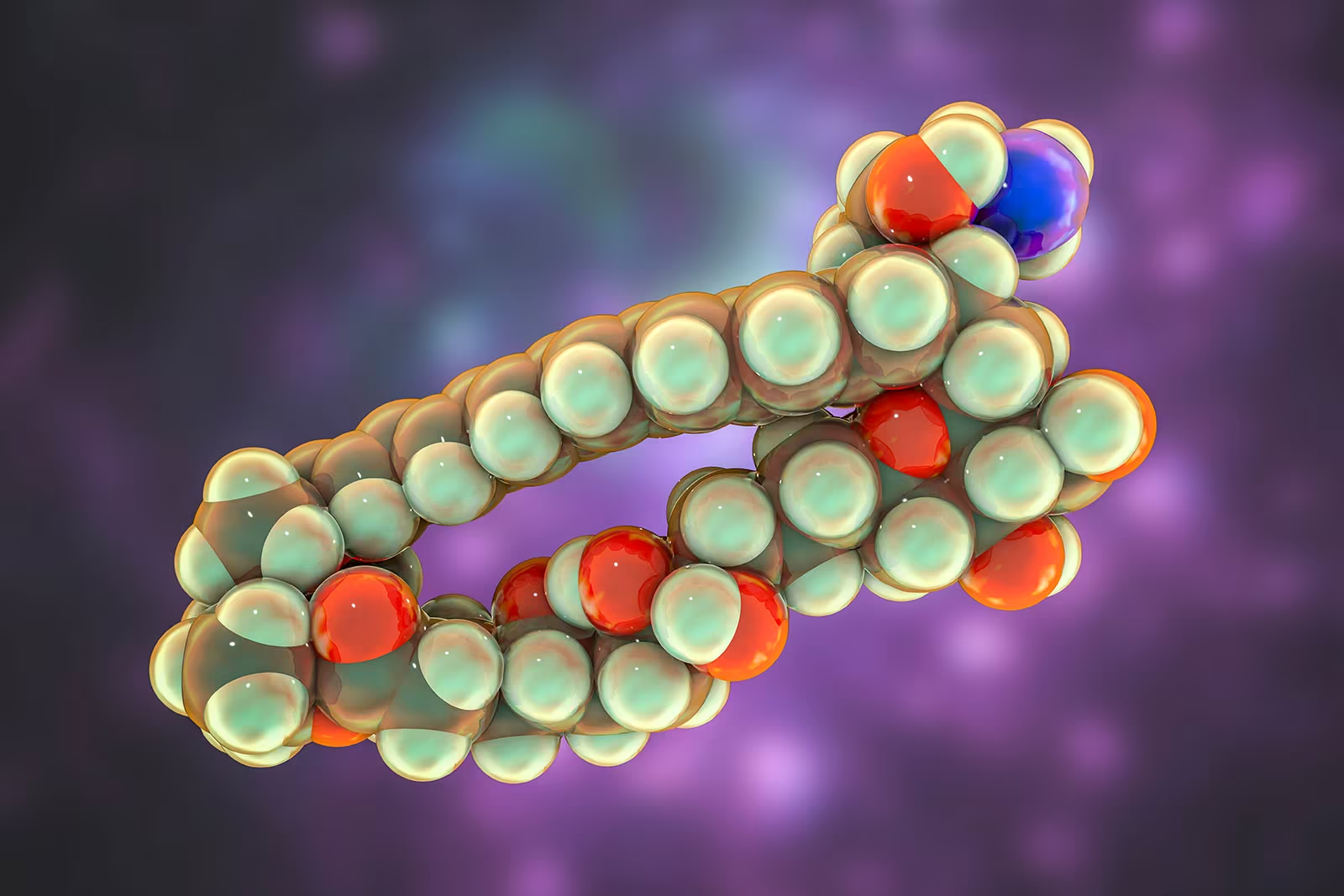
Tendencias y direcciones terapéuticas de los péptidos cíclicos en el descubrimiento de fármacos
Los péptidos cíclicos están mejorando los tratamientos contra el cáncer, las enfermedades inflamatorias e infecciosas, entre otras, a medida que se perfeccionan los métodos de administración oral.
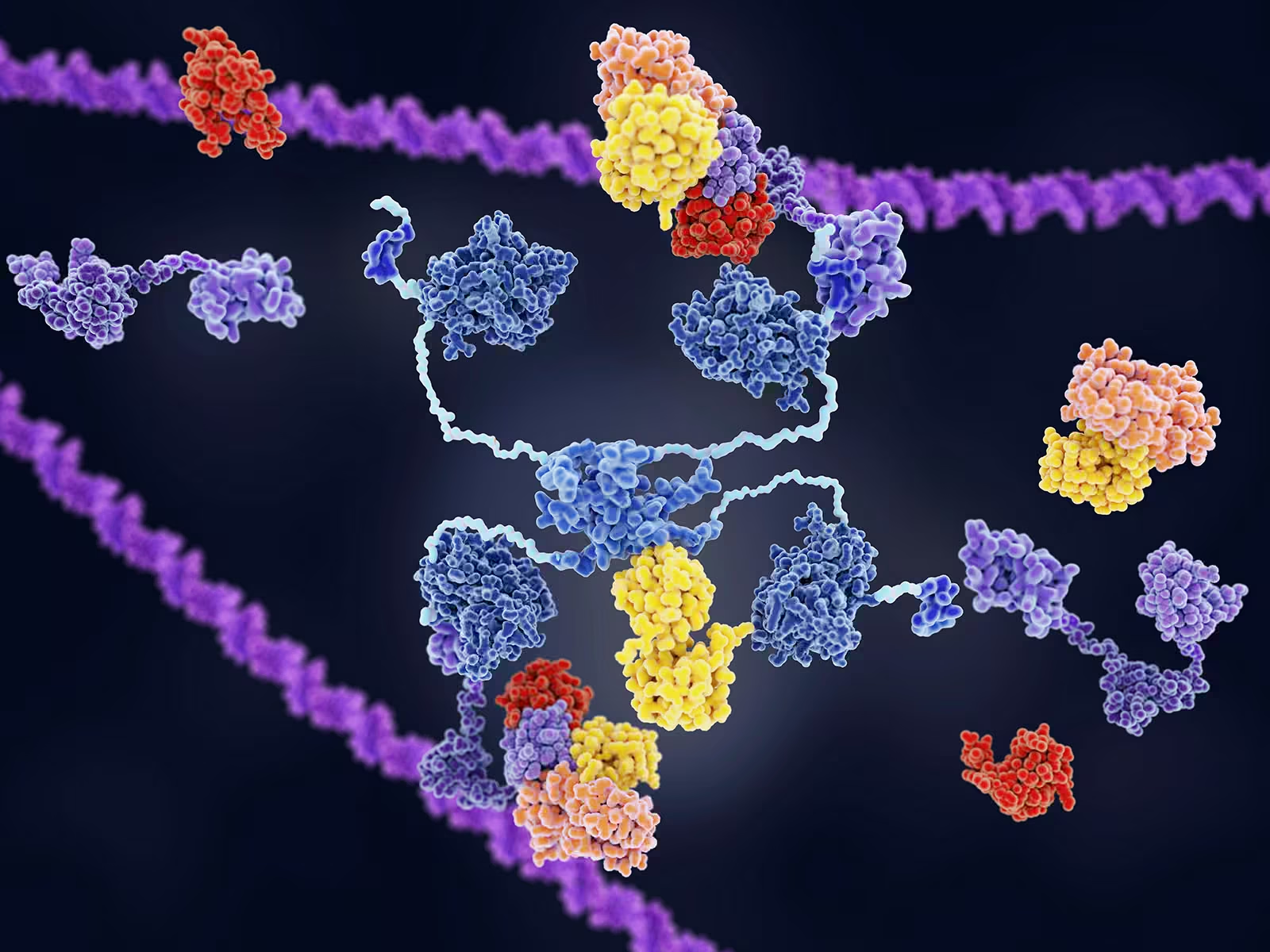
Cómo el análisis basado en IA puede acelerar el descubrimiento de fármacos
Los espiro[2.3]hexanos son un ejemplo de estructuras andamiaje prometedoras pero complejas para nuevos compuestos farmacológicos. Mediante el uso de análisis predictivos basados en IA con CAS BioFinder, los investigadores identificaron candidatos para su validación de manera más eficiente.
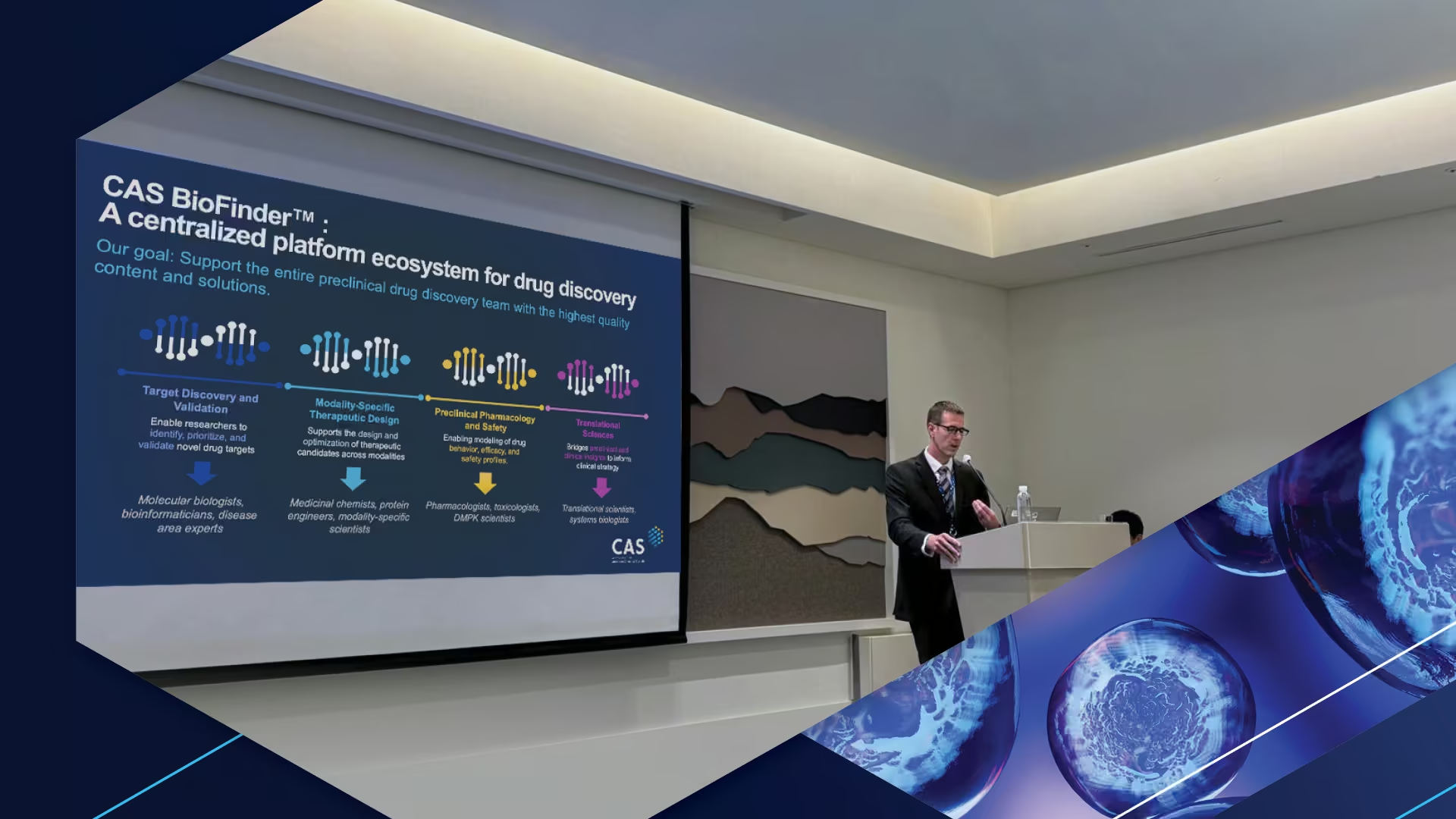
IA en el descubrimiento de fármacos: del potencial a la práctica
CAS organizó cumbres de Life Sciences en tres regiones en 2025 para explorar la integración práctica de la IA en el descubrimiento de fármacos. Descubra más sobre gobernanza de datos, barreras de implementación y desafíos específicos según la modalidad.

Tendencias emergentes en el descubrimiento de fármacos analizadas en el seminario web de CAS Insights
Desde los avances en el microbioma hasta las simulaciones mediante IA, este resumen del seminario web de CAS Insights explora las últimas tendencias en el descubrimiento de fármacos que están transformando la investigación farmacéutica.
Teranóstica: cómo la medicina nuclear está cambiando la oncología de precisión
El enfoque teranóstico de la medicina nuclear permite una terapia oncológica de "diagnóstico y tratamiento simultáneos" utilizando los mismos agentes para ambos fines. La inversión se triplicó hasta alcanzar los 14 860 millones de dólares en 2024, a medida que estos tratamientos de precisión se incorporan a las fases iniciales de la atención.
Las últimas tendencias en el descubrimiento de fármacos
Explore ocho tendencias líderes en el descubrimiento de fármacos que están mejorando el tratamiento del cáncer, identificando enfermedades neurodegenerativas e incluso preparando el terreno para una futura pandemia

Cómo el agua podría sustituir a algunos disolventes orgánicos y hacer que las reacciones químicas sean más ecológicas
Dado que muchos catalizadores y reactivos son sensibles a la humedad, el agua solía descartarse como disolvente potencial. Ahora parece que muchas transformaciones orgánicas pueden lograrse en agua o sobre agua sin necesidad de utilizar productos químicos nocivos o compuestos orgánicos volátiles como disolventes.
¿Son las células MAIT el futuro de la inmunoterapia CAR-T?
Las células MAIT son un descubrimiento relativamente reciente en comparación con otros tipos de células T no convencionales, y los investigadores están avanzando en su uso como inmunoterapias «listas para usar».
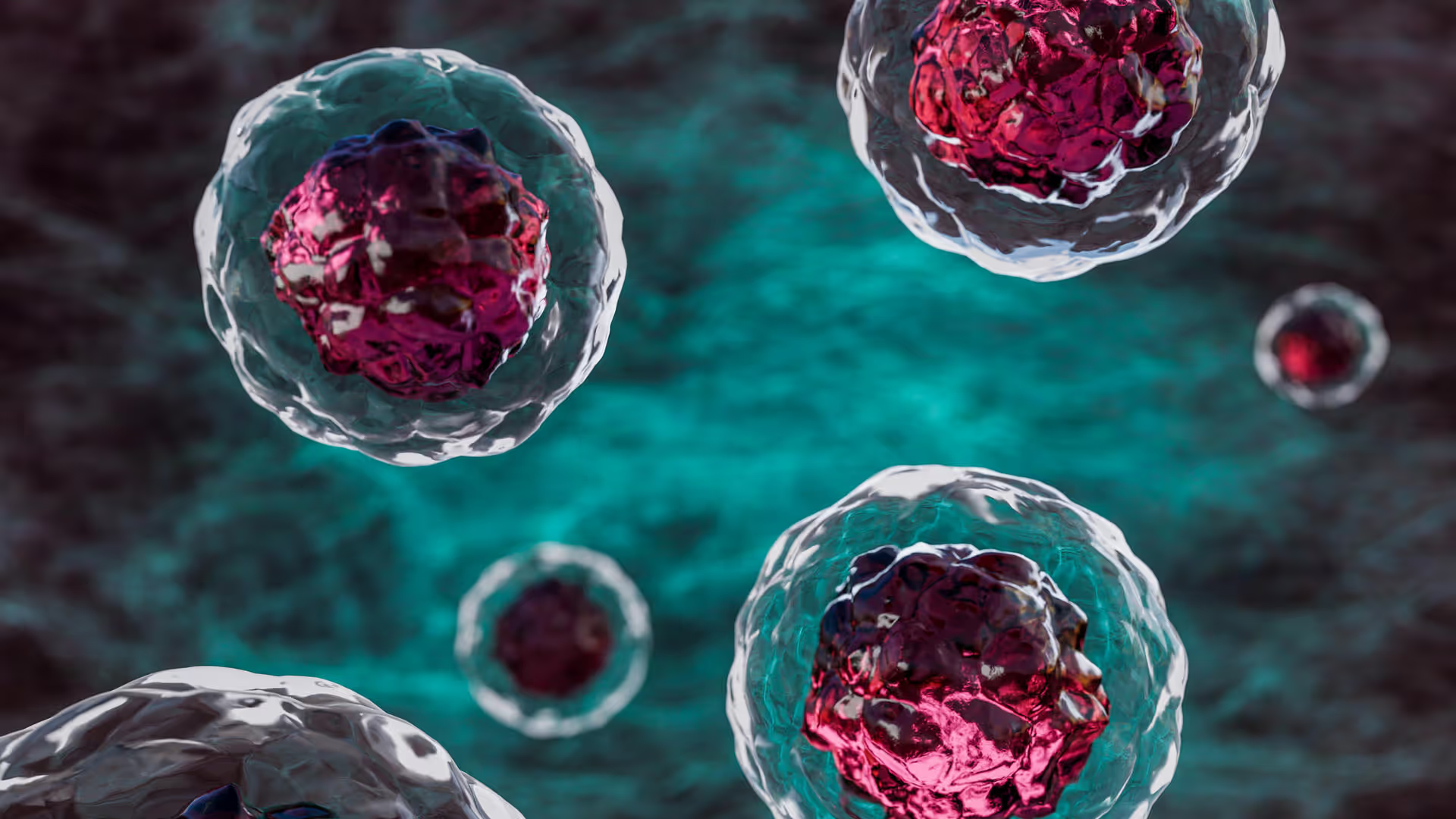
¿Puede la terapia con células madre curar la diabetes?
El tratamiento convencional de la diabetes se centra en regular los niveles de glucosa en sangre, no en reducir o tratar sus complicaciones. Sin embargo, las nuevas estrategias de terapia con células madre podrían dar lugar a tratamientos más eficaces y duraderos.
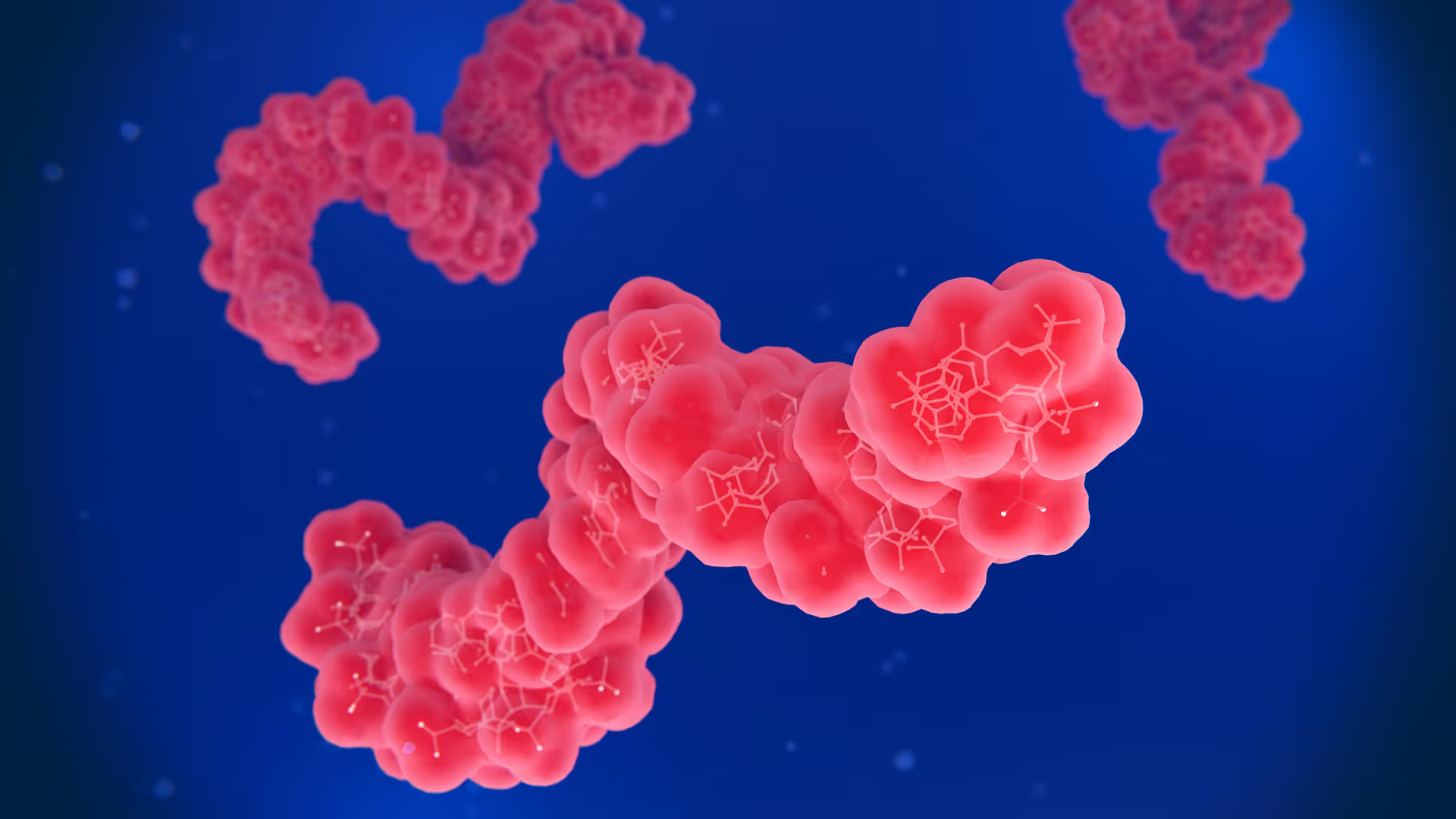
Avances en terapias con microARN mediante nuevos métodos de administración
Los avances en los sistemas de administración de fármacos a nanoescala están abordando los problemas actuales de la terapia con microARN, lo que podría hacer que se convierta en un método de administración más ampliamente utilizado.
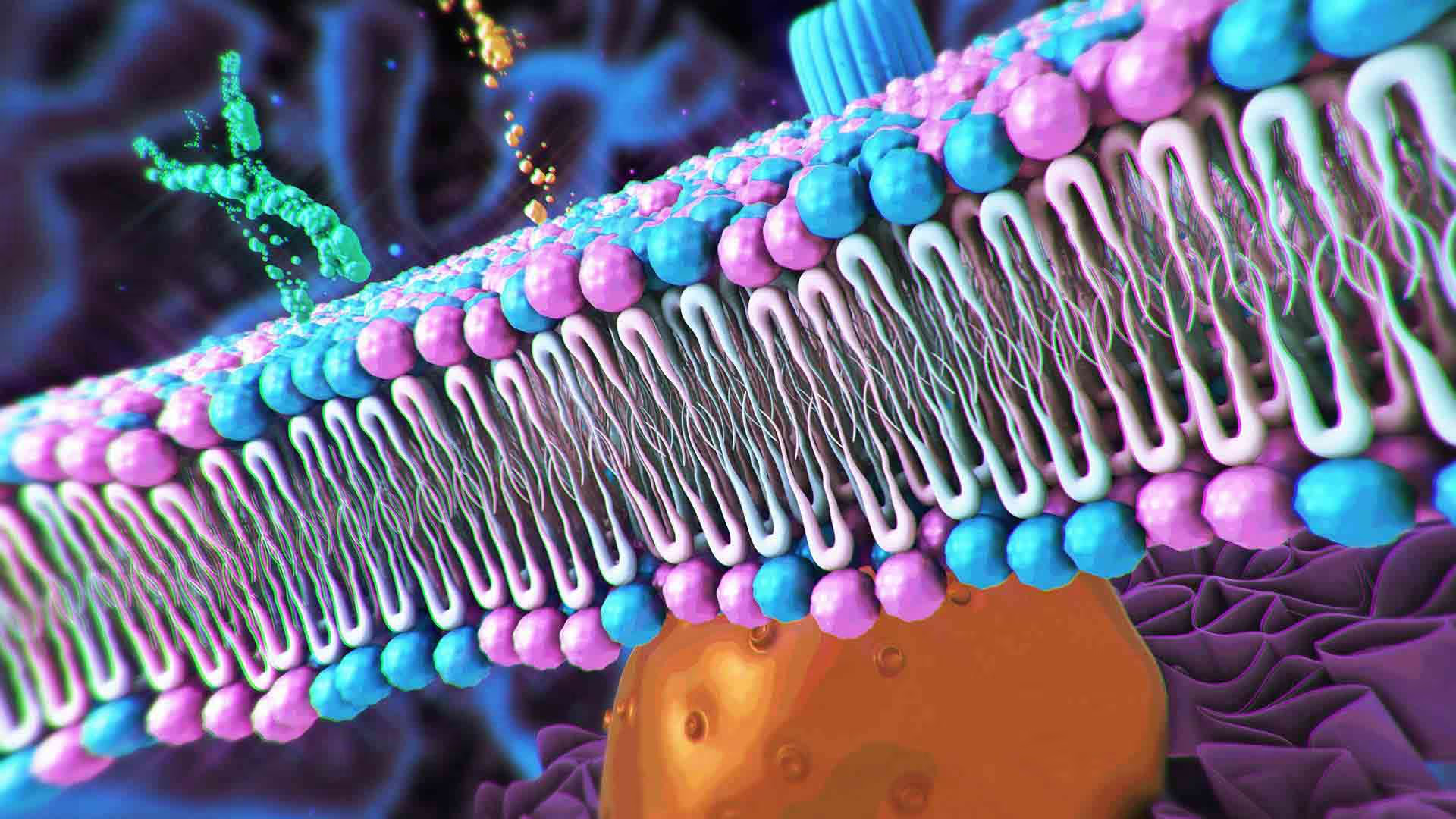
Lípidos en la administración de fármacos: últimas investigaciones e innovaciones en diseño
Obtenga un adelanto del nuevo informe de CAS, "Sistemas de administración de fármacos basados en lípidos: desbloqueando el futuro de la administración de fármacos", con una muestra de lo que hemos descubierto: los diseños de los DDS basados en lípidos más citados.
.avif)
El futuro de las vacunas de ARNm más allá de la COVID-19
La COVID-19 fue el catalizador para el desarrollo a gran escala de las vacunas de ARNm. Lea sobre cómo esta tecnología se encuentra ahora en una trayectoria a largo plazo para abordar una serie de enfermedades complejas.

Infografía: Cómo los medicamentos para perder peso reducen el hambre
Una infografía visual ofrece detalles sobre los agonistas del receptor GLP-1 y los fármacos polipeptídicos GIP para la pérdida de peso.
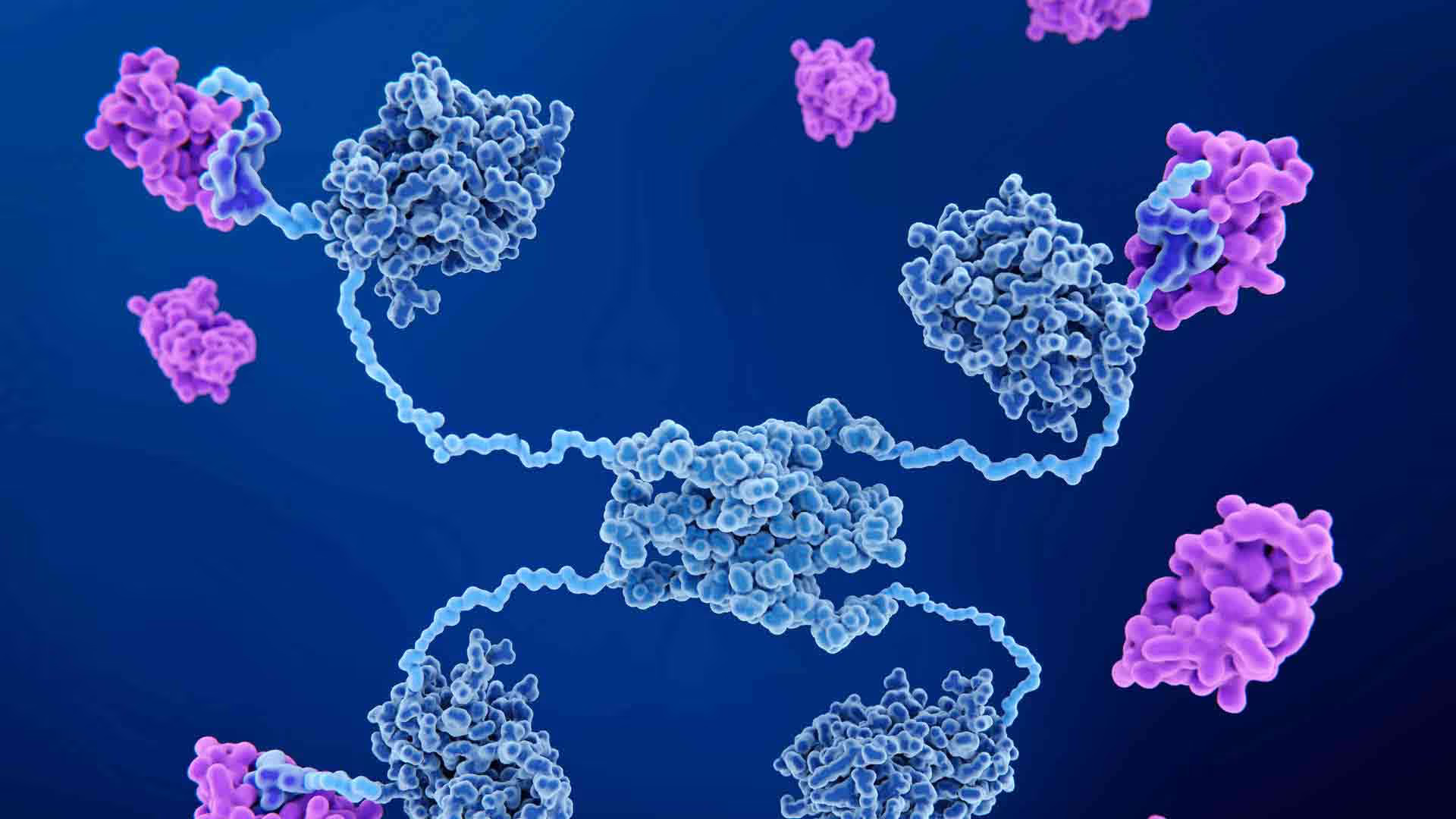
Los inhibidores de PPI muestran resultados prometedores en ensayos oncológicos
Los inhibidores de PPI de molécula pequeña están a punto de mejorar los tratamientos contra el cáncer

Los PROTAC revolucionan los fármacos de moléculas pequeñas
Los PROTAC están impulsando el desarrollo de fármacos de moléculas pequeñas para tratar el cáncer, las enfermedades neurodegenerativas y más

Cómo los modelos predictivos impulsan el descubrimiento de fármacos
Descubra cómo CAS aprovecha la gestión avanzada de datos y los modelos predictivos para revolucionar el descubrimiento de fármacos en esta conversación con líderes del sector.

La terapia con células CAR-T impulsa avances en el cáncer, enfermedades autoinmunes y más
Aunque la terapia con células CAR-T se utiliza principalmente para el cáncer, ha mostrado resultados prometedores en el tratamiento de enfermedades autoinmunes, VIH y otras afecciones

Exploración de cómo la función del GLP-1 puede ofrecer beneficios más allá de la pérdida de peso y la diabetes.
La función de GIP y GLP-1 muestra resultados prometedores en el tratamiento de afecciones cardiovasculares y neurodegenerativas.

Los sistemas de administración de fármacos a nanoescala pueden tratar el cáncer, el VIH y otras enfermedades.
Los sistemas de administración de fármacos a nanoescala pueden mejorar el tratamiento del cáncer, las enfermedades autoinmunes, el VIH y otras afecciones

¿Puede la terapia combinada tratar enfermedades raras y huérfanas?
Cómo las terapias combinadas, que incluyen el reposicionamiento de fármacos, la terapia celular y la terapia genética, están mejorando el tratamiento de las enfermedades raras.

Acabar con el alzhéimer: tendencias emergentes en biomarcadores, terapia génica y más
Los biomarcadores, la medicina personalizada y las terapias génicas están impulsando avances en la investigación. Descubra nuevos tratamientos dirigidos a la genética y a la acumulación de proteínas para controlar esta devastadora enfermedad.

Tipos de oligonucleótidos antisentido: avanzando en las fronteras terapéuticas
Diferentes tipos de terapias con oligonucleótidos antisentido, como los exosomas y las nanopartículas, que ofrecen una nueva esperanza en la medicina genética.

¿Podemos curar el Huntington? Tendencias de investigación en PolyQ y enfermedades raras
Aunque no existe cura para las enfermedades por poliglutamina (PolyQ) como la de Huntington, los nuevos avances, terapias e investigaciones podrían cambiar esta situación.

Perspectiva de I+D: Visiones únicas sobre inmuno-oncología
La inmunoterapia avanza con nuevos enfoques como la terapia de células CAR-T, los conjugados anticuerpo-fármaco e incluso los inhibidores de puntos de control.

Tendencias emergentes en inmunoterapia y cáncer
La inmunooncología tiene el potencial de tratar el cáncer sin sacrificar el bienestar del paciente.

Desafíos y oportunidades en la creación de estructuras de autoridad para las ciencias biológicas
En este artículo, hablamos con Nicole Stobart, Jeff Wilson y Mark Schmidt sobre cómo CAS utiliza estructuras de autoridad para indexar moléculas biológicas.

Perspectivas de I+D: La revolución de los inhibidores covalentes
Antaño se evitaban los inhibidores covalentes debido a sus efectos secundarios negativos, pero los nuevos fármacos han cambiado el panorama.

Perspectivas de I+D: Conjugados anticuerpo-fármaco
Más de 100 conjugados anticuerpo-fármaco se encuentran en ensayos clínicos. Estos tratamientos combinan la capacidad de direccionamiento de los anticuerpos con la potencia de la quimioterapia para transformar el tratamiento oncológico.

Descubriendo el potencial del conjugado anticuerpo-fármaco
Desde 2018, el interés investigador por los conjugados anticuerpo-fármaco ha crecido de forma exponencial debido a su potencial en la lucha contra el cáncer.

Desafíos y oportunidades en el análisis de secuencias durante el descubrimiento de fármacos
Hablamos con Jefferson Parker, de NullSet Informatics Solutions, sobre el análisis de secuencias para el descubrimiento de fármacos y las fronteras de la IA en la biología computacional.

Degradación dirigida de proteínas y proximidad inducida: panorama de los pegamentos moleculares en el descubrimiento de fármacos
La degradación de proteínas diana por proximidad inducida (TPD) es una estrategia innovadora en el descubrimiento de fármacos que ha surgido recientemente.

Desafíos y oportunidades en los estudios de relación estructura-actividad (SAR)
Hablamos con Ben Taft, director sénior de Química en Via Nova Therapeutics, sobre los estudios de SAR y las posibles fronteras de los datos de bioactividad.

Investigación sobre exosomas: del polvo de plaquetas a las terapias pioneras
Visión general de los nuevos contribuyentes, empresas e investigadores en el emergente campo de la investigación sobre exosomas. Este artículo ofrece una visión general de los actores clave en los campos del diagnóstico y la terapéutica de los exosomas, con un análisis más profundo de la cartera de proyectos clínicos actual.

ACE2: Abordar un receptor potencialmente importante en la patogenia de las enfermedades
La proteína ACE2 es la diana fundamental para el COVID-19 y otras infecciones víricas, y este conocimiento ha dado lugar a nuevas terapias.

Exosomas: gigantes emergentes en terapia y diagnóstico
Los exosomas podrían revolucionar la administración de fármacos y el diagnóstico, pero se enfrentan a desafíos en su aislamiento y purificación. Este artículo explora las tendencias recientes en la investigación de exosomas, centrándose en sus aplicaciones en la administración de fármacos, el diagnóstico y la terapéutica. Descubra cómo estas partículas únicas están dando forma al fut

Designación acelerada de terapia innovadora por la FDA
La FDA puede designar a ciertos candidatos a fármacos como «terapias innovadoras» (designación de terapia innovadora o BTD) cuando demuestran una mejora sustancial respecto a las terapias disponibles en un criterio de valoración clínicamente significativo.

Química bioortogonal y sus aplicaciones
La química bioortogonal es un conjunto de métodos que utilizan la química de grupos funcionales no nativos para analizar la biología en organismos vivos.

Las tormentas de citocinas y su papel fundamental en la inmunidad y la infección
Obtenga más información sobre las tormentas de citocinas y su papel tanto en la inmunidad como en las infecciones graves por COVID-19 y otras infecciones virales. Este resumen analiza las tendencias emergentes y las perspectivas sobre publicaciones, hitos y futuras aplicaciones para minimizar el impacto de los efectos adversos de las citocinas.

Seminario web de la ACS sobre pegamentos moleculares y degradación dirigida de proteínas
El panel de expertos incluye al Dr. Benjamin Ebert, jefe de Oncología Médica del Instituto Dana-Farber; al Dr. Phil Chamberlain, cofundador, presidente y director ejecutivo de Neomorph; y a Janet Sasso, científica de información especializada en Ciencias de la Vida en CAS.

Cómo funcionan las vacunas de ARNm contra la COVID-19 para combatir la enfermedad
Cuando se inyectan vacunas de ARNm (ARN mensajero) a un paciente, unas diminutas vesículas lipídicas transportan las moléculas de ARNm a través de los fluidos corporales y se fusionan con células inmunitarias, denominadas células presentadoras de antígenos (CPA).

Designación de terapia innovadora: el impacto real de la novedad estructural
Descubra cómo las empresas mejoran su precisión de predicción, obtienen el estatus de tecnología innovadora y reducen el tiempo de desarrollo y revisión de nuevos fármacos aprovechando los métodos avanzados de aprendizaje automático de CAS.

Descubrimiento de fármacos mediante IA: evaluación de los primeros candidatos diseñados por IA que entran en ensayos clínicos con humanos
Este blog detalla el indicador de innovación farmacéutica publicado recientemente por CAS, basado en la novedad estructural de las nuevas entidades moleculares (NEM), que puede evaluar mejor el carácter innovador de los nuevos fármacos.

El receptor ACE2 como diana terapéutica para la COVID-19
Los científicos buscan formas de detener la propagación de la COVID-19, y el receptor ACE2 es una de las dianas más prometedoras.

Química bioortogonal: una revisión de sus diversas aplicaciones en la ciencia y la medicina
La química bioortogonal es un conjunto de métodos que utiliza la química de grupos funcionales no nativos para explorar y comprender la biología en organismos vivos.

Acelerando el descubrimiento: avances en las vacunas contra la COVID-19 y su impacto futuro
Este informe de análisis explora la investigación y las tecnologías innovadoras que desempeñaron un papel crucial en el desarrollo de las vacunas contra la COVID-19.

Acelerar el descubrimiento: avances en las vacunas contra la COVID-19 y su impacto futuro
Este informe de análisis explora la investigación y las tecnologías innovadoras que desempeñaron un papel crucial en el desarrollo de las vacunas contra la COVID-19.

Abordaje de proteínas RAS «no tratables» en el cáncer
Se estima que uno de cada cinco cánceres humanos presenta mutaciones en RAS. Aunque en su día se consideraron intratables, este blog analiza los avances recientes en inhibidores de RAS y las terapias emergentes.

Con las variantes BA.5 y BA.2.75 de la COVID, ¿vuelven las mascarillas?
La pandemia de COVID reveló deficiencias en el desarrollo y la producción de mascarillas. La innovación será crucial para frenar la propagación de nuevas variantes del virus.

Por qué la variante ómicron BA.5 evade las vacunas
A medida que los casos de COVID-19 vuelven a aumentar en todo el mundo, la subvariante ómicron BA.5 es actualmente la cepa dominante. Este blog explora algunas mutaciones clave que aumentan la transmisión, evaden los anticuerpos protectores y elevan la tasa de (re)infección.

Cómo los pegamentos moleculares están trasladando la degradación dirigida de proteínas a la práctica clínica
La degradación dirigida de proteínas es una estrategia de descubrimiento de fármacos novedosa y en rápida expansión. Es una nueva forma de utilizar proteínas causantes de enfermedades para combatir dolencias graves, con potencial para ser empleada en enfermedades más serias, como el cáncer o las enfermedades neurodegenerativas.

IA en la química: tendencias y oportunidades de crecimiento
La inteligencia artificial (IA) y el aprendizaje automático han crecido de forma exponencial durante la última década, pero ¿cómo ha evolucionado el campo de la química con esta tendencia emergente?

Medicamentos derivados del ARN: tendencias y avances en la investigación
El uso del ARN en la terapéutica tiene el potencial de revolucionar la medicina. Este libro blanco destaca las tendencias emergentes en el sector.

Nanopartículas lipídicas: pasado, presente y oportunidades futuras
Las nanopartículas lipídicas desempeñan un papel fundamental en las vacunas de ARNm contra la COVID-19, pero su uso no es nuevo. Descubra su pasado, presente y las oportunidades futuras.

El progreso y la promesa de la medicina de ARN: un arsenal de tratamientos dirigidos
La última década ha sido testigo de un cambio drástico hacia la medicina basada en el ARN. El rápido éxito en el desarrollo de nanopartículas de lípido-ARN para las vacunas de ARNm contra la COVID-19, junto con varios fármacos aprobados, ha impulsado al ARN a la vanguardia de la investigación y el desarrollo farmacéutico. Explore esta tendencia revolucionaria.

Los grafos de conocimiento aceleran las terapias contra la COVID-19
Este informe técnico detalla el grafo de conocimiento biomédico de CAS y muestra cómo se utilizó en el descubrimiento de fármacos para la COVID-19.

¿Son las proteínas intrínsecamente desordenadas la clave para tratar la COVID-19?
Descubra las importantes funciones de las proteínas intrínsecamente desordenadas y el papel fundamental que desempeñan en el tratamiento de la COVID-19.

Ingredientes de la vacuna contra la COVID para niños menores de 5 años
Este blog enumera y analiza los ingredientes comunes (tanto en el ámbito doméstico como en el científico), así como los ingredientes específicos utilizados en las vacunas contra la COVID-19 que se emplean actualmente en Estados Unidos, y también aborda las dosis propuestas para niños menores de cinco años.

La variante ómicron acelera la necesidad de una estrategia de vacunación contra la COVID-19 más diversa
La significativa evolución de ómicron respecto al virus original de la COVID-19 plantea dudas sobre la reinfección y la evasión de las vacunas. Esta variante podría eludir la inmunidad existente, amenazando los esfuerzos globales de recuperación de la pandemia. Explore los posibles impactos sociales y económicos de este nuevo desafío.
Exploración de grafos de conocimiento para el descubrimiento de fármacos contra la COVID-19
La metodología detrás de los grafos de conocimiento de CAS mejora la identificación de posibles fármacos para el tratamiento de la COVID-19 y otras enfermedades.

Enfoques basados en grafos de conocimiento para el reposicionamiento de fármacos contra la COVID-19
La pandemia de COVID-19 ha impulsado a investigadores de todo el mundo a buscar fármacos y terapias eficaces para tratar la enfermedad.

IA en la química: tendencias actuales y perspectivas de futuro
En los últimos años, la aplicación de la IA a la química ha crecido rápidamente. Aunque se ha hablado mucho de la IA utilizada de este modo, no ha habido un análisis exhaustivo sobre su uso y desarrollo en el campo de la química.

El panorama de la investigación y el avance de las nanopartículas lipídicas
Las nanopartículas lipídicas (LNP) han surgido como vehículos prometedores para administrar diversos tratamientos en la industria farmacéutica. Los fármacos liposomales, basados en una versión anterior de las LNP, ya han sido aprobados y aplicados en la práctica médica.

Revisión de los esfuerzos globales en el desarrollo de vacunas contra la COVID-19
Este informe analiza la investigación de vacunas contra la COVID-19, compara las tecnologías subyacentes, el uso de adyuvantes y sistemas de administración en su aplicación, y ofrece una perspectiva sobre su futura dirección.

Transformación digital rentable en I+D científico-tecnológica
Puede que la inteligencia artificial esté de moda, pero la inversión inteligente está en los datos. Descubra cómo pueden ayudarle las soluciones de CAS.

Búsqueda de candidatos terapéuticos para la COVID-19 mediante un enfoque computacional
Descubra cómo los procedimientos de aprendizaje automático y los recursos de CAS sobre la COVID-19, incluidos conocimientos científicos, conjuntos de datos de acceso abierto e informes especiales, están ayudando en la investigación para luchar contra la COVID-19.
.avif)
Modelos de aprendizaje automático QSAR y sus aplicaciones para la identificación de posibles terapias contra la COVID-19
Para identificar posibles terapias contra el SARS-CoV-2, los científicos de CAS están desarrollando modelos predictivos de aprendizaje automático con el fin de identificar nuevos fármacos candidatos para las dianas virales proteasa similar a la quimotripsina 3 (3CLpro) y ARN polimerasa dependiente de ARN (RdRp).

En el punto de mira: los objetivos más buscados de la COVID-19
Para apoyar los esfuerzos de investigación en curso destinados a identificar nuevos fármacos contra la COVID-19, un equipo de científicos de CAS analizó la información científica publicada y elaboró un informe exhaustivo centrado en las proteínas implicadas en la COVID-19 y en los posibles candidatos a fármacos correspondientes.

Agentes terapéuticos potenciales y datos de bioensayos asociados para la COVID-19 e infecciones por coronavirus humanos relacionadas
Este informe facilita la investigación terapéutica sobre la COVID-19 resumiendo dianas proteicas y posibles candidatos a fármacos. Incluye datos de bioensayos y relaciones estructura-actividad de la literatura científica y de patentes para la COVID-19 e infecciones víricas relacionadas. Explore información clave para apoyar el desarrollo de fármacos.

El enemigo en casa: cómo el SARS-CoV-2 utiliza nuestras propias proteínas para infectar nuestras células
Un paso crítico en la carrera por desarrollar tratamientos contra la COVID-19 es obtener una comprensión clara de cómo el virus entra en nuestras células. Este conocimiento apoyará el desarrollo de tratamientos antivirales específicos centrados en bloquear dicha vía.

Técnicas de ensayo y desarrollo de pruebas para el diagnóstico de la COVID-19
Para facilitar una mejor comprensión y comparación de las pruebas diagnósticas disponibles en la lucha contra la COVID-19, CAS ha elaborado un informe que resume los principios básicos de los ensayos moleculares y serológicos utilizados en las pruebas de diagnóstico del SARS-CoV-2.

Investigación y desarrollo de agentes terapéuticos y vacunas para la COVID-19 y enfermedades humanas relacionadas por coronavirus
Para apoyar la I+D sobre la COVID-19, CAS ha elaborado un informe especial que ofrece una visión general de la información científica publicada, con especial énfasis en las patentes de la colección de contenidos de CAS.
No se han encontrado resultados.
No hay resultados con estos criterios. Intente cambiar su búsqueda.