
Executive Summary
- Emerging viruses such as Nipah, Hantavirus, and Ebola are surfacing in new regions and populations.
- Climate change and animal-to-human spillover are accelerating the emergence and spread of viral disease.
- Faster diagnostics and next-generation mRNA vaccine platforms are strengthening outbreak response.
- Drug resistance is a parallel and growing challenge across the wider infectious disease landscape.
Not long ago, viruses such as Nipah, Hantavirus, and Ebola were seen as rare, remote, or contained. Today, they are surfacing in new places and reaching new populations. Two forces are primarily driving the change: animal-to-human spillover is putting people in contact with pathogens they have never encountered before, and a warming climate is expanding the range of the insects and animals that carry them. At the same time, the science of detecting and countering these threats is advancing quickly.
Can the scientific response keep pace with the emergence of these threats?
A view of the research and patent landscape through the CAS Content Collection™, the largest human-curated repository of scientific information, provides unique insights on emerging viruses and countermeasures taking shape. This can help researchers better understand where the next outbreaks may come from and which tools are most likely to blunt it.
The viruses to watch
A handful of viruses illustrate why emerging diseases have become a research priority. Nipah virus, a member of the henipavirus family, is a high-fatality zoonotic threat marked by complex spillover dynamics and severe neurological disease. New cases in India have renewed focus on the limited countermeasures available. Hantavirus, a rodent-borne RNA virus with case fatality rates as high as 40%, is reshaping zoonotic risk as environmental change and global mobility widen its reach. Mpox, a member of the Orthopoxvirus genus, became the largest outbreak of its kind in history when case counts surged past prior levels in 2024, prompting the WHO to declare it a public health emergency of international concern. Ebola, among the most recognizable filoviruses, continues to challenge the science, and researchers also must work to sustain funding and progress on vaccines, monoclonal antibodies, and other therapeutics between the times when crises draw the world’s attention.
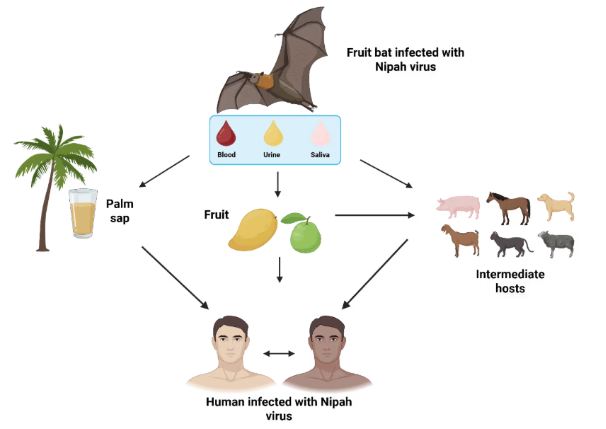
Nipah shows how quickly a high-fatality pathogen can resurface with few countermeasures ready. The full article looks at what researchers know about spillover, why treatment options remain limited, and where new work is showing promise.
Accelerate discovery with AI
Tracking an emerging pathogen of your own?
CAS Newton℠ brings AI-enabled search across the scientific landscape, helping researchers identify patterns and connections in their specific areas of focus.
Explore CAS Newton
As the climate changes, new viruses emerge
The viruses are only part of the story. Understanding why they are increasing points to a broader pattern that connects human, animal, and environmental health. Climate is a central driver: as temperatures and rainfall shift, the insects that transmit disease are spreading into regions that were previously inhospitable, and the rising burden of arboviruses and other vector-borne diseases is pushing public health systems to find more treatment options. The same environmental pressures that expand mosquito and tick habitats also bring rodents and other reservoir species into closer contact with people. Seen together, these drivers reframe emerging viruses not as isolated events but as a consequence of changing temperatures and environments.
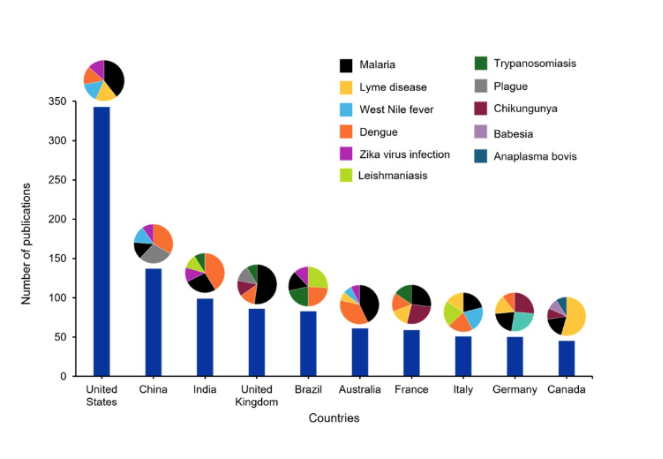
Climate is reshaping where disease-carrying insects can survive, and research output is growing alongside that shift. This analysis maps the rising burden of vector-borne disease and the treatment gaps researchers are working to close.
Detecting and countering viral threats
Faster detection and more adaptable countermeasures are the front line of outbreak responses. Point-of-care testing moves diagnostics out of centralized labs and closer to the patient, building on advances in molecular diagnostics to speed the identification of viral infections and other conditions. Once a pathogen is identified, responding quickly matters just as much, and mRNA vaccine technology has emerged as a platform well suited to that task. Proven at scale during COVID-19, mRNA is now on a long-term path toward many challenging diseases, offering a way to develop and adjust vaccines faster than traditional approaches allow. Antiviral drugs remain a complementary line of defense once infection takes hold.
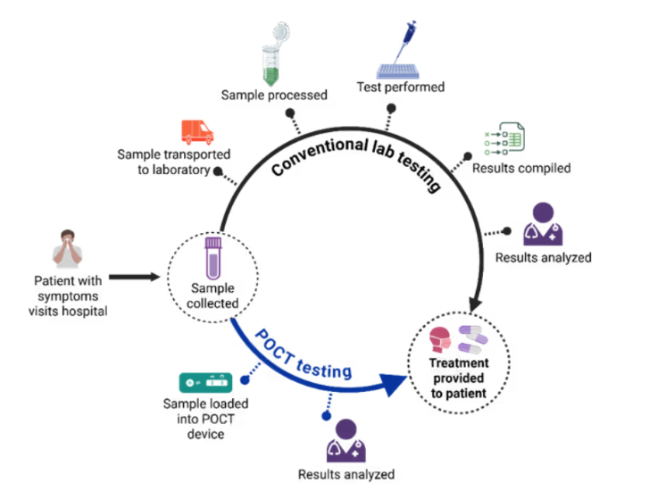
Moving diagnostics closer to the patient changes how quickly an infection can be identified. This article examines how point-of-care testing works, where it helps most, and what still limits wider adoption.
The wider resistance challenge
Emerging viruses are not the only moving target in infectious diseases. Resistance extends well beyond viruses to bacteria and fungi that antimicrobial drugs are struggling to treat, with resistance genes often spreading among bacteria through horizontal gene transfer. These problems are not new, as the race against antibiotic resistance and the ongoing effort to battle antibiotic-resistant infections both show. Fresh approaches show promise. Molecular de-extinction revives genes and proteins from ancient sources in the search for antibiotics that can outmaneuver drug-resistant pathogens, while fungal infections are drawing renewed attention from researchers and the pharmaceutical industry after years of limited investment.
Resistance is pushing researchers toward less conventional sources of new antibiotics. This article explains how molecular de-extinction recovers genes and proteins from ancient organisms, and what that approach could mean for drug-resistant infections.
Challenges and opportunities
The infectious disease landscape is defined by twin pressures: viruses emerging from new corners of the world, and pathogens of every kind evolving to defeat the treatments meant to stop them. Meeting both challenges will depend on faster discovery, stronger surveillance, and platforms flexible enough to adapt as threats change.
The same scientific capabilities driving that progress also raise questions. Advances in AI-driven biological design, for example, are opening remarkable possibilities for research while raising biosecurity questions about how such tools should be used responsibly.
[Placeholder: forthcoming CAS Insights article on AI-designed viruses. SME to add title and URL on publication. Framing to follow the published piece and reflect CAS's responsible-science perspective.]
The emerging viral threats above were analyzed using the CAS Content Collection, CAS SciFinder®, and CAS IP Finder, powered by STN™, which aggregate chemistry and related science data from global sources.
Stay ahead of the science
Get the latest CAS Insights analysis on emerging viral threats and other developing fields delivered as it publishes.