

Executive Summary
- Nanozymes are nanoscale materials that mimic the catalytic activity of natural enzymes.
- Academic research dominates the field of nanozymes, which suggests that fundamental discoveries are still being made prior to large-scale commercialization.
- Metals and metal oxides are often used for nanozymes, but metal-organic frameworks and covalent-organic frameworks offer excellent tunability and stability.
- Research into nanozymes centers on peroxidase and oxidase activities.
- Leading applications for nanozymes are in biomedicine, e.g., diagnostics and therapeutics, as well as sensors and environmental remediation activities.
Nanotechnology is revolutionizing fields from drug delivery to energy storage, and one of the fastest growing areas of research is nanozymes. Nanozymes are nanoscale materials that exhibit intrinsic enzyme-mimetic catalytic activity. Essentially, these tiny materials are capable of accelerating biochemical reactions through mechanisms analogous to those found in natural enzymes.
Since their formal designation in 2007, nanozymes have emerged as compelling alternatives to natural enzymes, offering superior physicochemical stability across extreme pH and temperature ranges, significantly reduced production costs, tunable catalytic properties through compositional and morphological control, and extended shelf life without requiring cold storage. These capabilities stem from the unique properties of nanomaterials, including their high surface area, abundant active sites, and tunable size-, shape-, and composition-dependent electronic structures, which enable efficient and customizable catalytic performance.
Nanozymes represent a convergence of nanotechnology, catalysis, and biomedicine, attracting interest from biochemists, materials scientists, biomedical engineers, and clinicians. Their programmable properties and inherent robustness position nanozymes as transformative tools for next-generation diagnostics and enzyme replacement therapies. They’re driving significant interdisciplinary research momentum, and we took a deep dive into the research landscape to better understand where this field is headed.
Publication trends in nanozymes
Using CAS IP Finder, powered by STNTM, subject matter experts at CAS accessed the CAS Content CollectionTM, the largest human-curated repository of scientific information, to identify and extract data related to nanozymes. This resulted in more than 14,500 publications, 11,000 unique CAS-indexed concepts, and 14,000 substances.
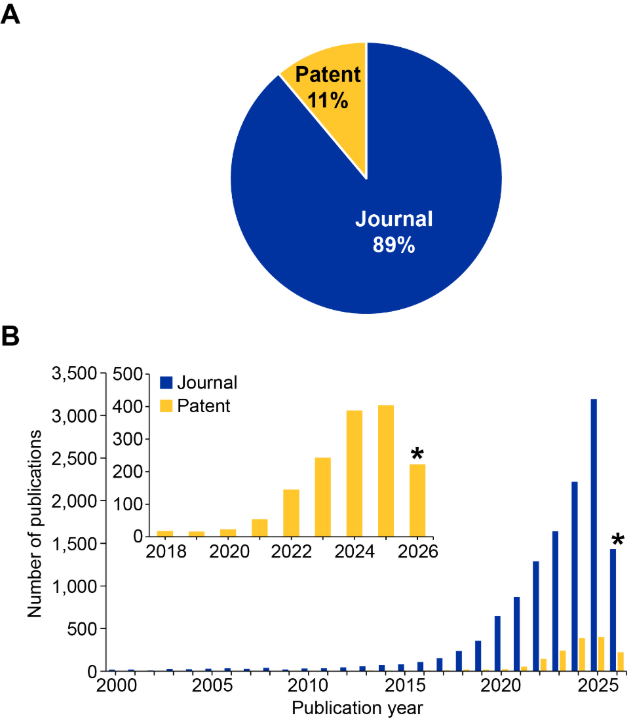
The research landscape is dominated by journal publications (89%) and is characteristic of an emerging field still in the fundamental research phase, where mechanistic understanding and proof-of-concept studies precede widespread commercialization (see Figure 1). Temporal analysis indicates exponential growth in journal publications, particularly after 2018 with this dramatic surge possibly correlating with breakthrough discoveries in single-atom nanozymes and therapeutic applications. Patent filings show a similar growth trajectory albeit with an offset timeline reflecting the typical academic-to-commercial translation pipeline.
Researchers exploring similar trends can take advantage of AI-enabled search capabilities in CAS SciFinder® to identify patterns and trends in their specific research areas.
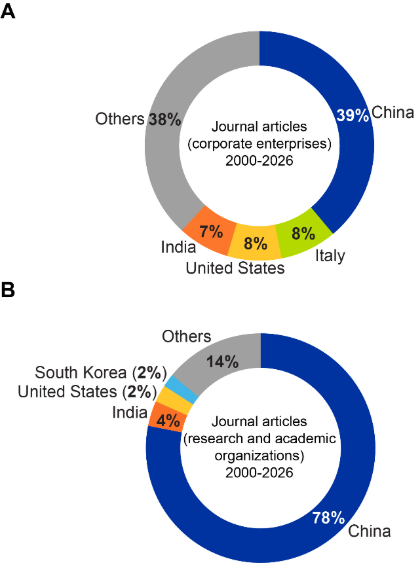
The field remains overwhelmingly academia-driven as evidenced by the >97% contribution of journal articles originating from research and academic organizations. The majority of these institutions leading in nanozyme research are located in China (78%), with India, the U.S., and South Korea represented as well (see Figure 2). China also accounts for 39% of corporate-authored journal publications, followed by Italy (8%), the U.S. (8%), and India (7%).
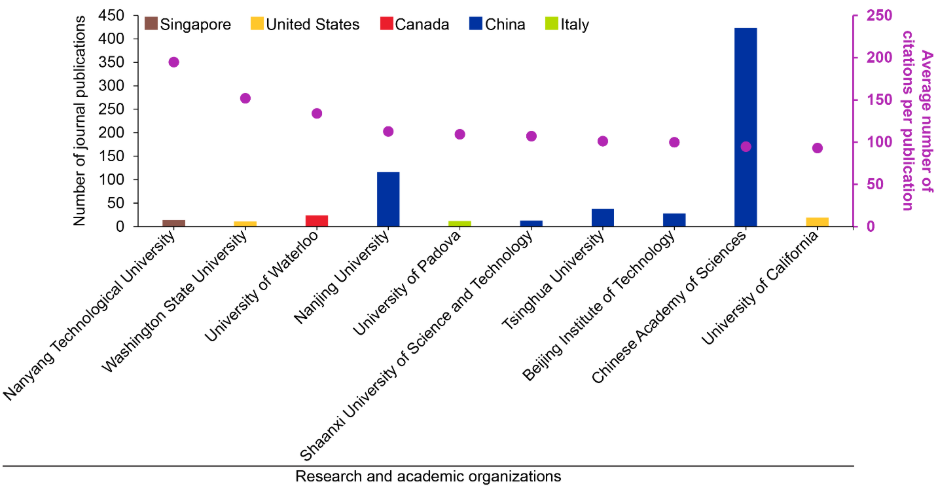
Our analysis considering the dual metrics of research output (number of publications) and research impact (average number of citations per publication) reveals several trends (see Figure 3). Chinese institutions account for five of the top 10 positions, mirroring China's 78% share of academic nanozyme publications. However, other institutions achieve higher per-paper impacts despite lower publication volumes.
Research and academic organizations also dominate patent filings compared to corporate enterprises (90% vs. 10%). The academic predominance indicates that nanozyme research remains university-driven, suggesting the field is still in early-stage development with significant fundamental discoveries emerging from academic laboratories. The limited corporate participation may reflect regulatory uncertainties, unoptimized manufacturing scalability, or ongoing validation of clinical efficacy required before substantial industrial investment. Across academic and corporate organizations, we see again that the majority of these are located in China (see Figure 4).
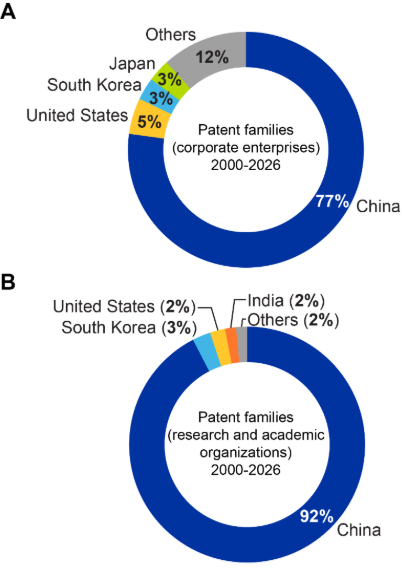
For example, several recent nanozyme-related patents include:
- Guangxi Medical University's nanozyme patents focus primarily on metal-based nanozymes (Pd, Rh, Cu, etc.) supported on 2D nanomaterials (Ti₃C₂Tₓ MXenes, graphene, carbon nitride) and metal-organic frameworks (MOFs) for therapeutic applications in osteoarthritis, osteosarcoma, and neurodegenerative diseases (e.g., CN114917354 A, CN120899942 A).
- Jilin University's nanozyme patents also emphasize metal-based nanozymes (Ag, Au, etc.) with peroxidase and laccase-like activities for biosensing applications, including cancer biomarker detection (e.g., CN109884029 A), pesticide residue monitoring (e.g., CN119500128 A, CN120718082 A), and formaldehyde detection (e.g., CN120094644 A) as well as therapeutic applications (wound healing, antibacterial, etc.) (e.g., CN116602933 A, CN120114614 A).
- Yangzhou University's nanozyme patents focus on metal oxide and MOF-based nanozymes (Fe₃O₄, MnO₂, Cu-ZIF-8, etc.) with peroxidase, catalase, and laccase-like activities for diverse applications including biosensing (e.g., CN114790585 A) with an emphasis on therapeutic nanozymes for treating infectious diseases (e.g., CN116712538 A) and inflammatory conditions (e.g., CN121588060 A) among others.
Material classes influence synthetic biology and catalytic activity
An important aspect of the nanozyme landscape is understanding how material choices influence research focus and real-world adoption. While numerous nanomaterials have been explored, differences in their physicochemical properties, cost, and scalability play a critical role in determining their translational potential. To further understand the materials landscape of nanozymes, we analyzed our data based on CAS-indexed substance classes and identified elements (comprised of metals), metal oxides, alloys and metal-organic frameworks (MOFs) as the dominant categories, each exhibiting diverse enzyme-mimicking activities.
Elemental (metal) nanozymes
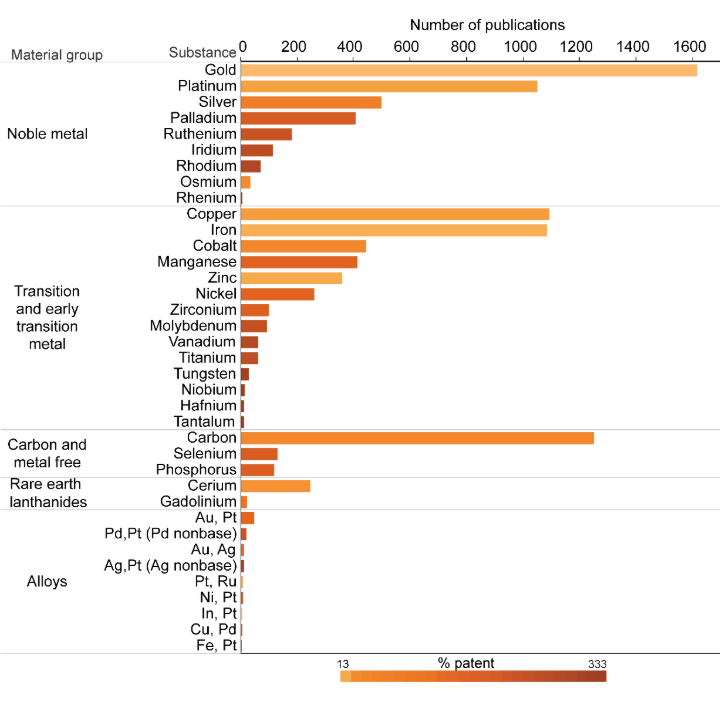
The distribution of elements highlights a clear disconnect between research intensity and commercial translation in the nanozyme space. Elements such as gold, platinum, and carbon dominate academic research due to their well-understood properties and ease of experimentation, yet their lower patent activity suggests limitations in cost-effectiveness and scalability. In contrast, iron and copper show strong alignment between research and patents, reflecting their suitability for real-world applications where economic and manufacturing feasibility are critical (see Figure 5).
This trend is driven by technical factors. Iron and copper benefit from intrinsic multi-valence states that enable efficient catalytic cycling without complex engineering, along with low cost and established biocompatibility. By comparison, noble metals like gold and platinum, despite superior catalytic performance, often require controlled conditions and careful tuning of size and surface chemistry, which complicates scale-up. Additionally, their high material cost further limits large-scale and economically viable applications. Similarly, carbon-based systems, while widely studied, can suffer from inconsistent catalytic activity and limited mechanistic clarity, constraining product development.
A similar pattern is observed for elements such as palladium (Pd), ruthenium (Ru), iridium (Ir), rhodium (Rh), nickel (Ni), selenium (Se), vanadium (V), and titanium (Ti), which show lower publication volume but relatively higher patent intensity. This trend aligns with the functional advantages of these materials, including catalytic efficiency, stable oxidation states, and durability under harsh conditions.
For instance, palladium and ruthenium are widely used in catalysis due to their high activity and selectivity, while titanium and vanadium provide stability and corrosion resistance in reactive environments. Nickel, in particular, offers a cost-effective alternative to noble metals with reasonable catalytic performance, making it attractive for scalable technologies. Similarly, selenium-based systems often demonstrate unique redox behavior relevant to biological and sensing applications. Together, these characteristics make such elements more directly translatable into functional products, explaining their higher patent representation despite relatively less academic exploration.
Alloy-based nanozymes further reinforce this translation-oriented trend by combining the advantageous properties of multiple metals to enhance catalytic efficiency, stability, and tunability. Reported alloy systems in this dataset as seen in Figure 5, including Au–Pt, Pd–Pt, Au–Ag, Pt–Ru, In–Pt, Cu–Pd, Fe–Pt, and Ag–Pt, demonstrate how compositional synergy can modulate electronic structure and optimize active sites beyond what is achievable with single-metal systems. In many cases, these alloys introduce cooperative effects such as improved electron transfer, enhanced catalytic cycling, and increased resistance to deactivation, arising from intermetallic coupling and interface-driven electronic redistribution.
Notably, combinations involving noble metals are often engineered to reduce noble metal content while retaining high catalytic performance, thereby addressing cost and scalability constraints. For example, Au–Pt bimetallic nanozymes exhibit enhanced catalytic activity due to electron transfer from Au to Pt, improving oxidase- and catalase-like performance compared to monometallic counterparts. Meanwhile, non-noble components such as Cu or Fe contribute redox activity and economic feasibility, further supporting scalable applications.
Although alloy systems remain less represented in publication volume relative to single-metal nanozymes, their ability to engineer active sites through compositional tuning and synergistic electron interactions positions them as an important bridge between conventional inorganic nanozymes and more design-driven catalytic systems, with strong potential for real-world translation.
Metal oxide-based nanozymes
A few well-established materials dominate the metal oxides-based nanozyme category, particularly iron, manganese, and copper oxides, which combine strong catalytic activity with scalability, biocompatibility, and proven synthesis routes (see Figure 6).
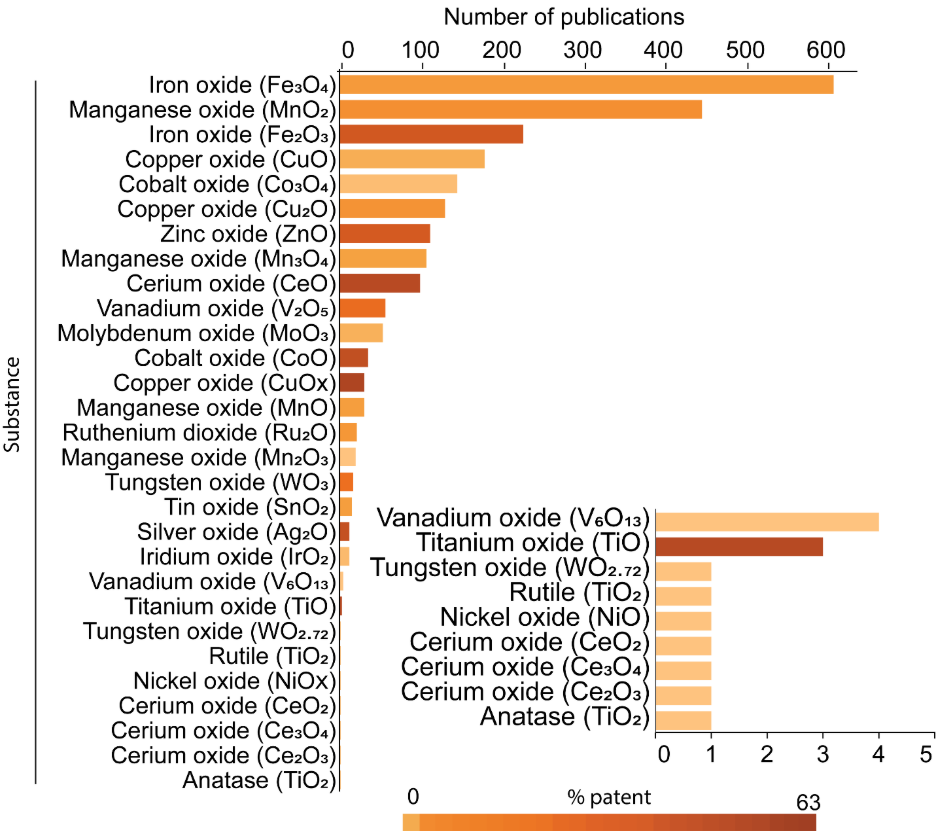
Their high publication and patent activity reflects a successful translation from research to application. This dominance is driven by favorable redox chemistry (e.g., Fe²⁺/Fe³⁺, Mn³⁺/Mn⁴⁺ cycling) that enables efficient catalytic reactions, along with simple and scalable synthesis methods. For example, MnO₂ nanozymes demonstrate environment-responsive catalytic behavior for imaging and therapy applications, CuO nanozymes enable efficient redox-driven catalysis and biosensing through Cu²⁺/Cu⁺ cycling, while Co₃O₄ systems exhibit multi-pathway peroxidase-like activity enabled by Co²⁺/Co³⁺ redox transitions.
Emerging systems such as cerium oxide and vanadium oxide highlight the importance of dynamic oxidation states and environment-responsive behavior, enabling functions such as switching between oxidase and antioxidant activity. These materials show strong potential despite lower research volume, indicating under-exploration rather than intrinsic limitations.
In contrast, several oxides, including molybdenum, tungsten, nickel, and specialty systems, remain less studied, likely due to synthetic complexity, limited characterization, or a lack of established application pathways.
An important insight is that catalytic performance depends not only on composition but also on crystal phase, defects, and surface structure, which influence active sites and electron transfer mechanisms. However, this aspect remains insufficiently explored, as most studies focus on easily synthesized phases rather than systematic structural optimization. Overall, the distribution reflects a field shaped by both material performance and practical factors such as synthesis familiarity and translational feasibility.
Porous framework-based nanozymes
The emerging nanozyme materials landscape highlights a transition from traditional inorganic to more complex and tunable organic architectures such as metal–organic frameworks (MOFs) and covalent organic frameworks (COFs). In contrast to inorganic nanozymes, MOFs and COFs represent a smaller but rapidly emerging class of nanozyme materials. Their lower representation in publication and patent data reflects their relatively recent development and the increased synthetic complexity associated with these systems (see Figure 7).
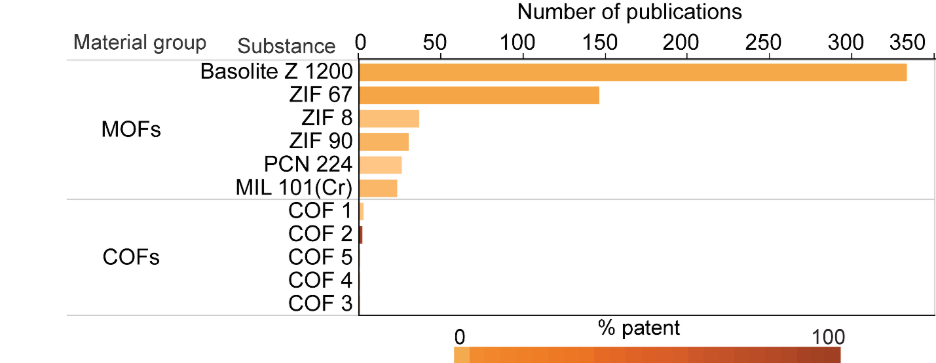
Despite their limited volume, MOFs and COFs offer distinct physicochemical properties that make them suitable for nanozyme applications. MOF-based nanozymes, particularly benchmark systems such as Basolite- and ZIF-type frameworks, dominate this space due to their proven catalytic activity, structural tunability, and accessibility, making them the most studied porous nanozyme platforms.
However, this strong focus on a limited subset of frameworks underscores a major gap, as the vast majority of MOF chemistries remain unexplored despite their potential for tunable porosity, active site engineering, and functional linker design. Likewise, COFs are significantly underrepresented, even though their metal-free composition, high chemical stability, and extended π-conjugated architectures provide unique opportunities for controlled charge transport and tailored catalytic environments, indicating an untapped design space.
MOF-based nanozymes exemplify how tunable porosity and coordinated active sites can enable enzyme-mimicking catalysis, whereas COFs highlight the potential of highly designable, stable, and conjugated frameworks for metal-free nanozyme systems.
Taken together, these trends indicate that while inorganic and alloy-based nanozymes currently underpin the practical and scalable aspects of the field, framework-based materials such as MOFs and COFs are emerging as next-generation platforms focused on achieving higher catalytic precision and functionality. This shift underscores a broader transition in nanozyme research, from material availability and intrinsic activity toward rationally engineered systems with tailored performance for specific applications.
The catalytic divide: Oxidoreductases dominate, hydrolases wait for their moment
The nanozyme activity landscape in Figure 8 reveals a field fundamentally constrained by material chemistry rather than application demand, with oxidoreductase-like activities dominating current research. Peroxidase-mimicking nanozymes represent the most studied class, forming one of the largest and most developed families due to their broad applicability, simple colorimetric detection methods, and compatibility with many nanomaterials.
More broadly, nanozyme research is heavily centered on redox-based activities, including peroxidase, oxidase, catalase, and superoxide dismutase mimics, which collectively define the dominant functional paradigm of the field and underpin most applications in biosensing, disease therapy, and reactive oxygen species (ROS) regulation.
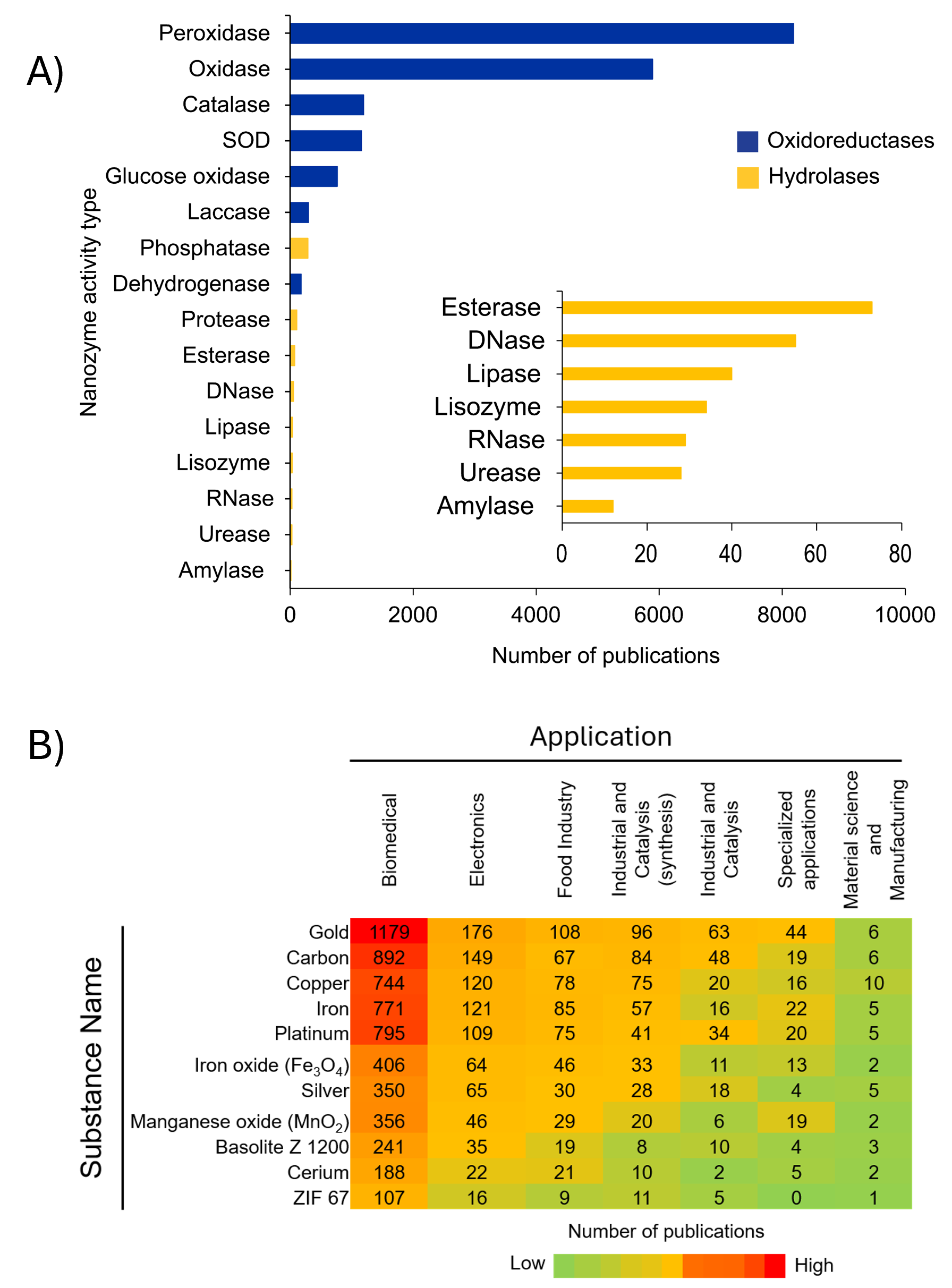
This imbalance reflects a fundamental chemical bias: inorganic nanomaterials inherently favor electron transfer processes through surface redox couples, defect sites, and conductive pathways, which naturally facilitate oxidoreductase-like catalysis. In contrast, hydrolase-type activity, such as protease, lipase, or nuclease mimicry, requires precise substrate recognition, controlled molecular orientation, and multi-step catalytic mechanisms that are difficult to replicate without the highly evolved three-dimensional active sites found in natural enzymes.
The complexity of these requirements has made hydrolytic nanozymes significantly more challenging to design, and their development remains limited and fragmented. At the same time, the widespread use of peroxidase-like nanozymes is reinforced by experimental convenience and application fit. Standard colorimetric assays (e.g., TMB or ABTS oxidation) provide straightforward, reproducible readouts that align well with diagnostics, environmental sensing, and biomedical applications, further accelerating research concentration in this area. This has created a self-reinforcing cycle in which materials that exhibit redox activity are preferentially studied, while more complex catalytic functionalities remain underexplored.
The heatmap in Figure 8B shows how nanozyme research is distributed across specific materials (rows) and enzyme-like activities (columns: peroxidase, oxidase, catalase, and SOD-like activities) using publication counts.
Across all materials, including gold, iron, copper, manganese oxide, carbon-based materials, and MOFs, research is consistently dominated by peroxidase and oxidase activities, which have the highest publication counts. In contrast, catalase and SOD-like activities remain significantly less explored across all materials, with much lower values.
The same activity pattern persists within each material, indicating that most systems are primarily investigated for peroxidase and oxidase functions, with limited extension into catalase or SOD-like behavior. Some material-specific variations are observed, such as manganese oxide showing higher catalase activity, and certain materials (e.g., copper or carbon-based systems) with slightly elevated SOD-like counts, but these remain secondary research activities.
Overall, the heatmap highlights that nanozyme research is concentrated around specific material-activity combinations (e.g., Au-peroxidase, Fe-peroxidase, Cu-oxidase), with limited diversification into other enzymatic functions across all material classes.
Key application domains include biomedicine and environmental remediation
Biomedical applications: This domain represents roughly 65% of all nanozyme research output (see Figure 9), reflecting nanozymes' compelling value proposition in healthcare. These robust nanomaterials can replace fragile natural enzymes for diagnostics (glucose sensors, immunoassays, pathogen detection), therapeutics (antioxidant treatments, antimicrobial agents, cancer therapy), and disease mechanism studies (oxidative stress, inflammation).
The biomedical field's inherent challenges — enzyme instability, cold-chain requirements, and high production costs — create natural demand for nanozyme alternatives, driving sustained academic and clinical research investment. Patent activity in biomedical applications represents the highest patent-to-publication ratio among all application categories. This suggests that biomedical nanozyme discoveries are disproportionately considered commercially viable and worth IP protection, likely due to clear paths toward diagnostic kits, point-of-care devices, and therapeutic formulations with defined regulatory pathways and substantial market potential.
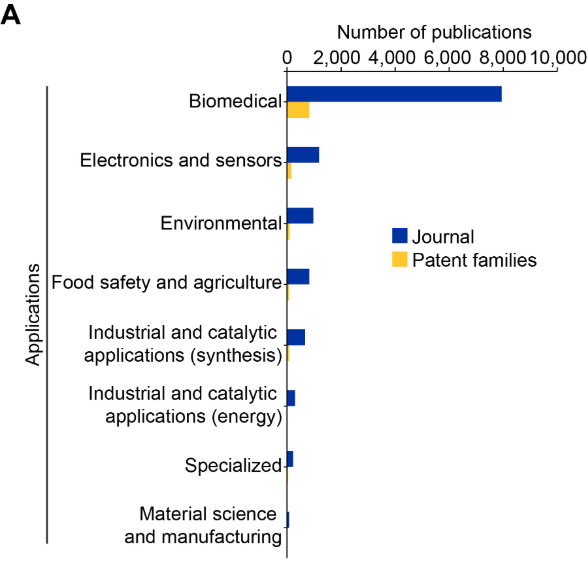
Electronics and sensors: This field ranks second in terms of research output, representing about 8-9% of total output. Nanozymes' catalytic signal amplification capabilities make them valuable in electrochemical biosensors, where they enhance sensitivity for detecting biomolecules, pollutants, or pathogens. The small but visible patent presence indicates commercial interest in sensor technologies, particularly for environmental monitoring, food quality control, and wearable health devices where nanozyme-based transducers offer advantages over conventional enzyme-based sensors in terms of stability and shelf life.
Environmental applications: Accounting for approximately 8% of total research output, environmental nanozyme research focuses on pollutant degradation (organic dyes, pesticides, antibiotics), water treatment, and soil remediation. Nanozymes' peroxidase and oxidase activities enable catalytic breakdown of contaminants, while their photocatalytic properties (when combined with semiconductors) enhance degradation efficiency. The minimal patent activity suggests that while scientifically interesting, environmental applications face commercialization barriers possibly due to cost-effectiveness concerns when competing against established chemical oxidation methods or challenges in large-scale deployment and nanomaterial recovery/recycling.
Food safety and agriculture: These leverage nanozymes for pesticide residue detection, foodborne pathogen identification, and antioxidant preservation. Applications include colorimetric assays for melamine, antibiotics, or heavy metals in food matrices, as well as antimicrobial coatings extending shelf life. The negligible patent activity may reflect regulatory complexities surrounding nanomaterial use in food contact applications, where safety assessments are stringent and consumer acceptance remains uncertain.
Industrial and catalytic applications: There is prominent research across two subcategories, synthesis and energy. Synthesis applications involve using nanozymes as catalysts for organic reactions, polymer degradation, or green chemistry processes, replacing expensive noble metal catalysts. Energy applications focus on fuel cells (oxygen reduction reaction catalysis), solar cells (charge separation), and batteries (redox mediation). The minimal representation of these fields suggest that nanozymes have yet to demonstrate clear advantages over established industrial catalysts in terms of activity, selectivity, or cost-effectiveness at scale.
Specialized and materials science-related applications: These show minimal activity (~1-2%), indicating niche or emerging applications. Specialized applications include energy, environmental, and emerging security-related sensing applications, while material science and manufacturing likely refers to nanozyme integration into composite materials, coatings, or fabrication processes. The lack of patent activity suggests these remain exploratory research areas without clear commercialization trajectories.
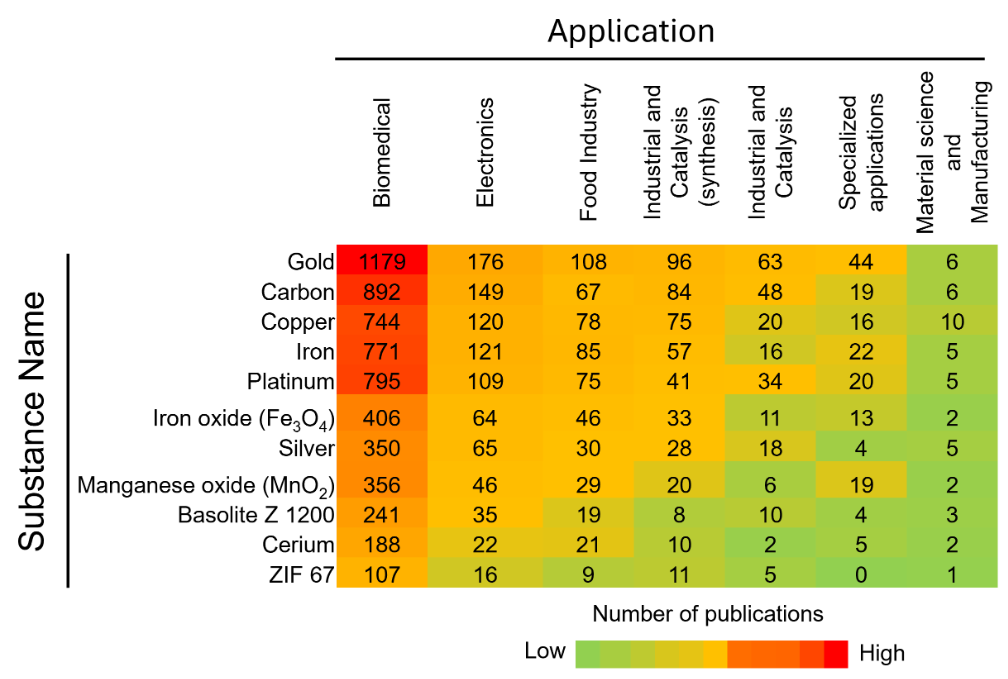
The material distribution across application domains (Figure 9B) highlights a clear dominance of conventional inorganic nanozymes, particularly gold, carbon, copper, iron, and platinum, which exhibit broad applicability across biomedical, sensing, and industrial categories. Among these, biomedical applications overwhelmingly drive research activity, significantly exceeding other use cases. This imbalance suggests that nanozyme development remains largely oriented toward diagnostic and therapeutic applications, with limited translation into large-scale catalytic processes.
In contrast, framework-based materials such as MOFs (e.g., Basolite Z1200, ZIF-67) show lower representation and remain largely confined to biomedical applications. This indicates that, despite their advanced structural features and tunability, their adoption is still application-specific.
Overall, the data reveal a distinct separation between broadly applicable inorganic systems and more specialized framework materials, reflecting a transition in the field from established, scalable materials toward more design-driven but less widely implemented nanozyme platforms.
Overcoming challenges for greater commercial potential
Despite remarkable progress, nanozymes face critical challenges that must be addressed for widespread clinical and industrial adoption:
- Catalytic efficiency remains substantially lower than natural enzymes, with nanozymes typically exhibiting Michaelis-Menten constants (Km) 10-1000-fold higher and turnover numbers (kcat) orders of magnitude lower than their biological counterparts, limiting applications requiring high substrate conversion rates.
- Substrate specificity poses another fundamental constraint. While natural enzymes achieve exquisite selectivity through evolutionarily optimized active sites, most nanozymes display broad, promiscuous reactivity that can generate off-target effects or interfere with complex biological matrices.
- Biocompatibility and toxicity concerns persist with long-term accumulation, biodegradation pathways, and immunogenicity requiring rigorous assessment before therapeutic use.
- Mechanistic understanding remains incomplete. For many nanozymes catalytic mechanisms are poorly defined compared to the atomic-level knowledge of natural enzyme catalysis, hindering rational design and optimization.
Additionally, scalable manufacturing with batch-to-batch reproducibility, regulatory uncertainty surrounding nanomaterial classification and approval pathways, and limited stability in complex biological fluids present practical barriers to commercialization. Addressing these limitations through advanced characterization techniques, computational modeling, surface engineering strategies, and standardized toxicological frameworks will be essential for nanozymes to fulfill their transformative potential as enzyme replacements.
Looking ahead, that potential is evident. The focus on academic research means that fundamental questions are being investigated, and the growing patent activity shows that these findings are beginning to translate into the commercial realm. Indeed, the first nanozyme-based drug, CX213 developed by Cenyx Biotech, has entered clinical trials.
A significant publication-to-patent translation gap outside of biomedicine still persists, which highlights the opportunities for industry-academia partnerships to unlock more applications for nanozymes. Environmental remediation, food safety, and industry catalysis are some of the leading sectors where these innovations will play a key role.
Single-atom nanozymes (SAzymes) are emerging as a promising direction in nanozyme design. By dispersing isolated metal atoms on suitable supports, SAzymes maximize atomic utilization efficiency and create uniform, well-defined active sites, enabling catalytic behavior that closely resembles natural enzyme active centers. Other cutting-edge research areas include cascade nanozyme systems mimicking metabolic pathways and substrate-specific nanozymes through rational surface engineering.
In total, these developments signal the growth of nanozymes as a viable route to next-generation natural enzyme replacements in a multitude of industry applications.