

Executive Summary
- Treatment for mental health disorders has focused on the same targets for nearly 70 years, primarily serotonin, dopamine, and norepinephrine. The research landscape is now shifting to focus on different biological mechanisms and targets, such as inflammation and the gut microbiome.
- Researchers have identified common targets across depression, schizophrenia, and bipolar disorder that could enable more effective and broad-spectrum treatments.
- The current clinical pipeline for these psychiatric conditions contains many novel candidates, such as glutamatergic approaches, 5-HT2A agonists, inflammatory pathway therapies, muscarinic agonists, and cannabinoid-based therapies. The role of inflammation in all these conditions is driving new research, while microbiome-based approaches are gaining traction in bipolar research.
- Identifying relevant biomarkers and overcoming disease heterogeneity will be key advances to developing clinically effective treatments addressing these different mechanisms and targets.
Major depressive disorder (MDD), schizophrenia, and bipolar disorder affect more than 390 million people worldwide and remain among the most challenging areas in neuroscience drug discovery. Together, they represent some of the most studied and therapeutically significant psychiatric conditions, accounting for a substantial share of research and clinical development. As the field seeks to move beyond traditional approaches, these disorders offer an important window into the emerging targets and mechanisms shaping the future of psychiatric therapeutics. However, too many patients still suffer from impaired quality of life, increased mortality risk, and high rates of relapse despite available treatments.
Recent changes in the research landscape may provide hope for millions of patients. Advances in neuroscience, genetics, and systems biology are reshaping our understanding of mental health disorders and driving new approaches to drug discovery. Increasing evidence suggests that depression, schizophrenia, and bipolar disorder share biological features extending beyond classical neurotransmitter dysfunction. Large-scale genomic analyses have identified risk loci shared across all three disorders, and mechanistic work on rapid-acting agents such as ketamine has tied antidepressant response to glutamatergic signaling and synaptic plasticity rather than to monoamine levels.
The convergent mechanisms now under investigation span glutamatergic signaling, neuroplasticity, neuroinflammation, stress-response pathways, and neural circuit connectivity. These discoveries are fueling the search for novel therapeutic targets and expanding the range of mechanisms being pursued across the psychiatric drug development landscape.
The traditional approach to drug development for mental health disorders
For decades, psychiatric drug development has been dominated by therapies targeting serotonin, dopamine, and norepinephrine pathways. While these medicines have transformed patient care, treatment resistance and incomplete symptom relief remain common. Many individuals continue to experience cognitive impairment and residual symptoms that existing therapies don’t adequately address.
For example, depression alone affects an estimated 5.7% of adults globally, with prevalence reaching 8-16% among U.S. adults, while bipolar disorder and schizophrenia impact approximately 0.5% and 0.3% of the global population, respectively.
Beyond their substantial societal and economic burden, these disorders are associated with significant mortality risks. Suicide accounted for an estimated 727,000 deaths globally in 2021, and mood disorders, particularly major depressive disorder, are among the most commonly identified psychiatric conditions in individuals who die by suicide.
To understand how the field of psychiatric drug development is changing, we analyzed publication and patent trends, approved drug classes, clinical-stage candidates, target-level research activity, and therapeutic substance portfolios across the three disorders. Together, these data reveal how psychiatric drug discovery is evolving from a predominantly neurotransmitter-centric paradigm toward a more diverse, biologically informed landscape. By comparing patterns across publications, patents, clinical development, and therapeutic chemistry, this analysis also provides insight into which mechanisms are gaining scientific attention, attracting commercial investment, and advancing toward clinical validation.
Publications increasing, patents diversifying
Scientific activity surrounding psychiatric disorders has expanded considerably over the past two decades. Our analysis of the CAS Content Collection™, the largest human-curated repository of scientific information, identified more than 33,000 journal publications and over 10,000 patent families related to depression, schizophrenia, and bipolar disorder (see Figure 1). Research output increased steadily after 2010 and accelerated further after 2020, reaching approximately 2,900 in 2024 and more than 3,100 in 2025.
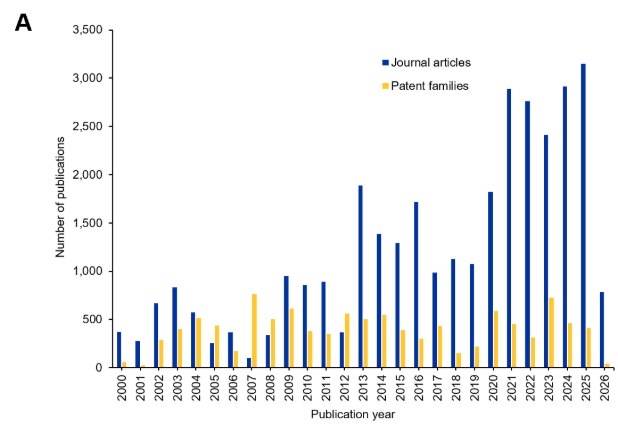
The increase in publication activity observed after 2020 coincides with a period of heightened global focus on mental health following the COVID-19 pandemic. The WHO flagged deteriorating global mental health as an urgent priority in the aftermath of the pandemic, with global burden of disease estimates indicating a 28% rise in MDD prevalence in 2020. Much of the resulting research growth in research appears directed toward interventions and treatments, such as clinical trials, psychosocial and behavioral approaches, and pharmacological therapies.
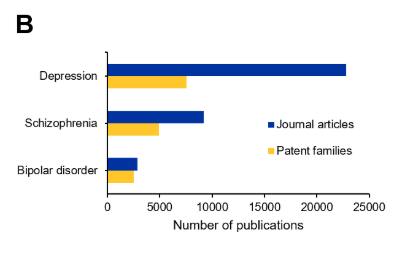
Among the disorders analyzed, depression dominates scientific and commercial activity, accounting for approximately 22,800 publications and more than 7,500 patent families (see Figure 1B). Schizophrenia follows with about 9,200 publications and nearly 5,000 patent families, while bipolar disorder accounts for fewer than 3,000 publications and approximately 2,300 patent families. These totals cover the combined corpus for the three disorders; the per-disorder counts in Figure 1B reflect documents indexed to each condition, so they do not sum to the combined total. The predominance of depression research likely reflects its high global prevalence, substantial socioeconomic burden, and persistent unmet medical need. Despite decades of therapeutic development, many patients continue to experience inadequate treatment response.
Patent activity presents a different picture. Filing volumes have remained stable rather than mirroring the growth in publications, consistent with the sector's historical investment patterns. During the 2000s and early 2010s, several pharmaceutical companies reduced investment in neuroscience research because of high clinical failure rates, limited translational biomarkers, and an incomplete understanding of disease biology.
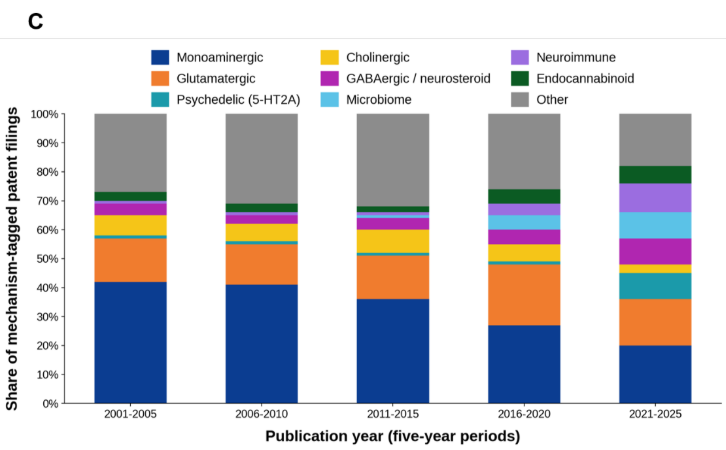
The more significant change is evident in patent composition rather than overall filing volume. Mechanism-level analysis of patent filings reveals a substantial shift in the biological hypotheses being pursued (see Figure 1C). Classifying patent families by the mechanism they address shows that classical monoaminergic targets — serotonin and norepinephrine transporters, dopamine receptors, and monoamine oxidase — accounted for approximately 42% of filings in 2001-2005 and fall to roughly 20% in filings with priority dates after 2020.
The three largest mechanism classes represented 65% of filings in the earliest period but only 46% in the most recent period, indicating that research activity is now distributed across a broader range of biological mechanisms. Conversely, serotonergic psychedelics accounted for under 1% of filings until 2016-2020 and reached 9% by 2021-2025. Neuroimmune filings, microbiome approaches and endocannabinoid mechanisms all show increase over time. These trends suggest that psychiatric drug discovery investment is being distributed across a broader range of biological hypotheses rather than increasing overall.
Speed up drug discovery at every stage with comprehensive pharmaceutical data, AI-enhanced predictive technology, and critical information to prioritize the targets and drug candidates most likely to succeed.
Key takeaway
Psychiatric drug discovery is evolving from a predominantly neurotransmitter-centric paradigm toward a more diverse, biologically informed landscape.
Emerging mechanisms are reshaping drug development for mental health disorders
To test whether this diversification is reaching the clinic, we compared the mechanisms represented among approved psychiatric drugs with those under clinical evaluation (see Figure 2).
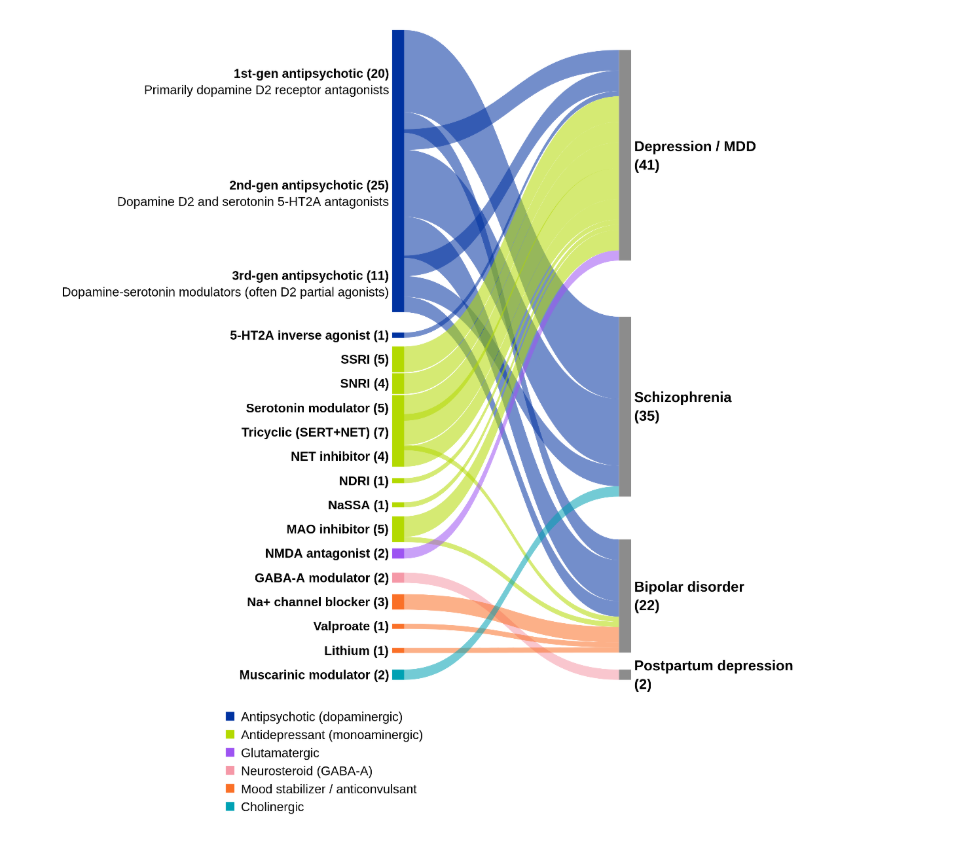
The approved treatment landscape remains dominated by neurotransmitter-based pharmacology. Schizophrenia and bipolar disorder are primarily served by antipsychotics that modulate dopamine D2 and serotonin 5-HT2A signaling, while depression treatments center on SSRIs, SNRIs, and other agents targeting serotonin and norepinephrine pathways. Although therapies targeting NMDA receptors, GABA-A receptors, and muscarinic receptors have gained regulatory approval, these classes represent a small proportion of marketed therapies.
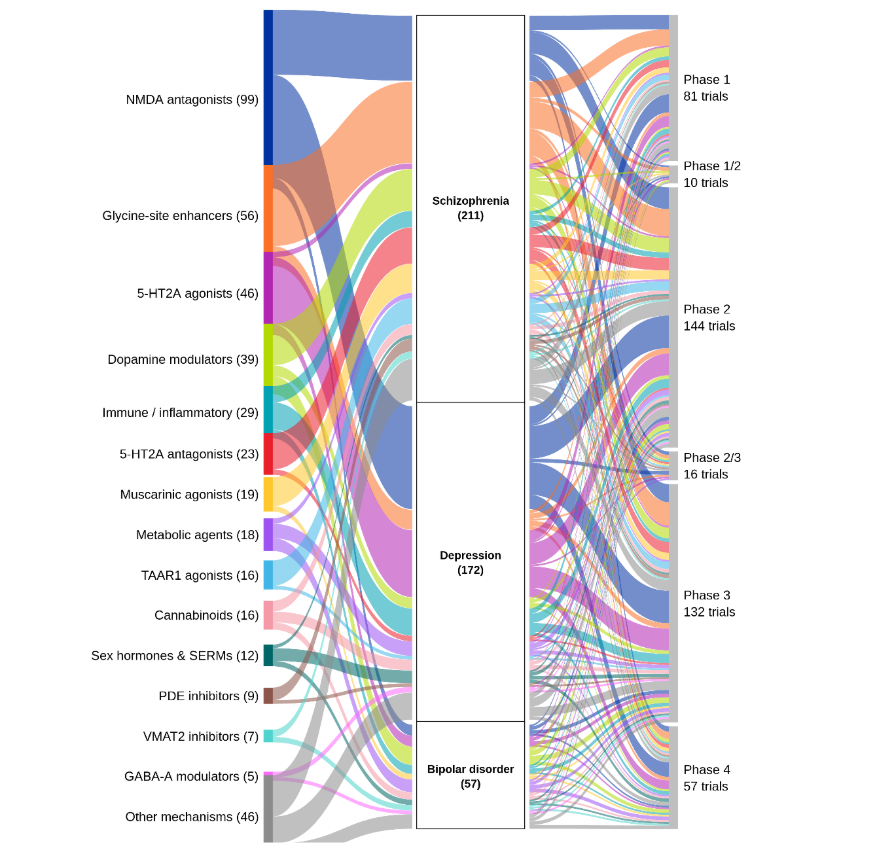
In contrast, the current clinical pipeline encompasses a broader range of biological mechanisms (see Figure 3). Glutamatergic approaches dominate development activity, with NMDA antagonists and glycine-site enhancers representing the largest mechanistic classes. The pipeline also contains substantial numbers of 5-HT2A agonists, dopamine modulators, immune and inflammatory therapies, muscarinic agonists, TAAR1 agonists, and cannabinoid-based therapies. Depression and schizophrenia account for the majority of development activity, with many programs advancing into mid- and late-stage clinical evaluation. Some of the representative clinical stage candidates are summarized in table below:
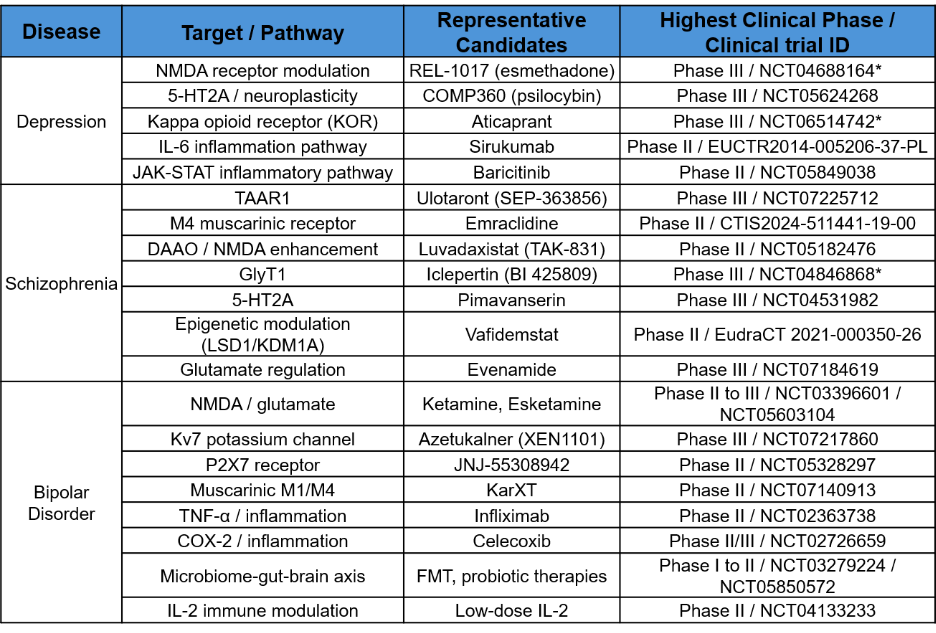
Across depression, schizophrenia, and bipolar disorder, the current pipeline marks a genuine change from the monoamine-centric paradigm that has anchored psychiatric drug development for over 70 years. In depression, NMDA-modulating agents (esketamine, esmethadone) and 5-HT2A-driven psychedelics (psilocybin) offer relief within hours to days rather than the weeks typical of SSRIs, targeting the treatment-resistant patients current antidepressants fail.
The schizophrenia development pipeline reflects one of the most substantial expansions of non-dopaminergic therapeutic strategies since the introduction of dopamine-targeted antipsychotics: muscarinic agonists (KarXT, emraclidine), a TAAR1 agonist (ulotaront), and glutamatergic modulators (iclepertin, luvadaxistat, evenamide) are the first wave of genuine dopamine-independent options, with several aimed at the negative and cognitive symptoms that D2-blocking antipsychotics have never addressed.
A third, cross-cutting theme is the emergence of neuroimmune psychiatry. IL-6, JAK-STAT, TNF-α, COX-2, and low-dose IL-2 candidates spanning all three disorders reflect mounting evidence that inflammation contributes to mood and psychotic symptoms, while microbiome-directed approaches (FMT, probiotics) in bipolar disorder push that systemic view further into the gut-brain axis.
Despite this progress, not all candidates are likely to succeed in late-stage development: aticaprant, (REL-1017) esmethadone, and iclepertin have already reported disappointing Phase III results due to inadequate efficacy, but together they signal a pipeline diversifying from a handful of neurotransmitter targets toward mechanistically distinct and, in some cases, disease-modifying strategies.
Shifting research focus across psychiatric targets
While the clinical pipeline provides a view of mechanisms already advancing through development, target-level research activity offers an early indicator of where scientific attention is accumulating, and where future discovery efforts may emerge. To understand this, we examined CAS-indexed disease-concept pairs, plotting each target’s document volume against its five-year growth (see Figure 4). Colored points are selected concepts: high-growth, high-volume, or established targets shown for comparison, against all other indexed pairs in grey.
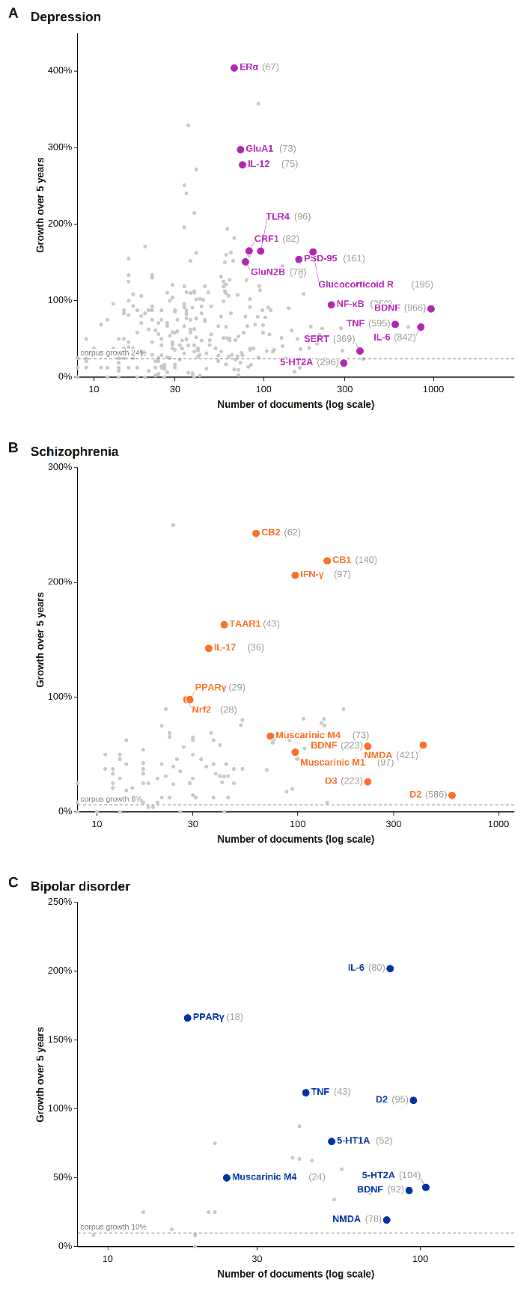
- Depression: The analysis highlights two distinct groups. First, a cluster of fast-growing, smaller-evidence concepts includes estrogen receptor alpha (ERα, 404% growth), the AMPA receptor subunit GluA1 (297%), and IL-12 (278%). ERα is well characterized in the brain, where estrogen signaling through ERα and ERβ has pleiotropic effects on synaptic plasticity, memory consolidation, and neuroprotection, but its specific role in psychiatric disease remains poorly defined. The growth reflects scientific momentum outpacing biological certainty. Alongside these are larger, growing areas: TLR4 (165%), CRF1 (165%), the glucocorticoid receptor (164%), PSD-95 (154%), and GluN2B (151%). The glutamatergic-synaptic trio of GluA1, GluN2B, and PSD-95 is notable, representing the ketamine mechanism appearing as three separate targets. Against this, 5-HT2A receptors (18%) sit below the corpus benchmark and serotonin transporters (34%) only modestly above it, despite large literatures.
- Schizophrenia: Endocannabinoid receptors lead, with CB2 at 243% growth and CB1 at 219%, which reflects renewed interest in endocannabinoid signaling and its influence on cognition, reward processing, and psychosis-related phenotypes. Muscarinic receptors sit lower on the axis, M4 at 66% and M1 at 52%, but against a 6% benchmark these still represent roughly ten-fold gains in relative share, and they are the mechanism with the most advanced clinical position of any target in this panel. The literature here appears to be following commercial development rather than leading it. Meanwhile the dopamine receptor subtypes plotted show considerably slower growth: D2 at 14% on the largest literature of any target examined (586 documents), and D3 at 26%. For a disorder historically defined by D2-targeted pharmacology, these trends indicate a notable shift in research focus.
- Bipolar disorder: Because bipolar disorder has a smaller literature base, fewer high-confidence signals emerge relative to depression and schizophrenia. IL-6 (202% growth) is the clearest signal, consistent with neuroimmune dysregulation and elevated cytokine levels linked to symptom severity across psychiatric disorders. TNF (112%) reinforces it. Muscarinic M4 receptors (50%) are worth noting despite modest growth, given the KarXT precedent in schizophrenia and the plausibility of mania as a next indication.
Several recurring patterns emerge across all three disorders: inflammatory and stress-related pathways are expanding in interest, innate immune signaling is gaining ground beyond neurotransmitter-centered hypotheses, and the classical monoamine targets are losing relative share even where their absolute literature segment remains the largest.
When stakes are highest, you need answers that can be sourced and defended. Most AI tools were built for language, but CAS Newton℠ is built on over 150 years of peer-reviewed scientific literature that is curated by CAS scientists and interconnected across disciplines.
Key takeaway
Inflammatory and stress-related pathways are expanding in interest, innate immune signaling is gaining ground beyond neurotransmitter-centered hypotheses, and the classical monoamine targets are losing relative share even where their absolute literature segment remains the largest.
Translating research momentum into drug development activity
Publication growth reflects scientific interest but does not necessarily indicate drug development investment. A more direct measure of drug discovery activity is the number of distinct substances associated with each target in therapeutic (THU), pharmacological (PAC), and pharmacokinetic (PKT) roles and how that number has changed (see Figure 5). These two measures can move in opposite directions, and the distinction matters: Figure 4 tracks share of published literature, while Figure 5 counts distinct substances in development roles. A target can gain research attention while the chemistry around it contracts.
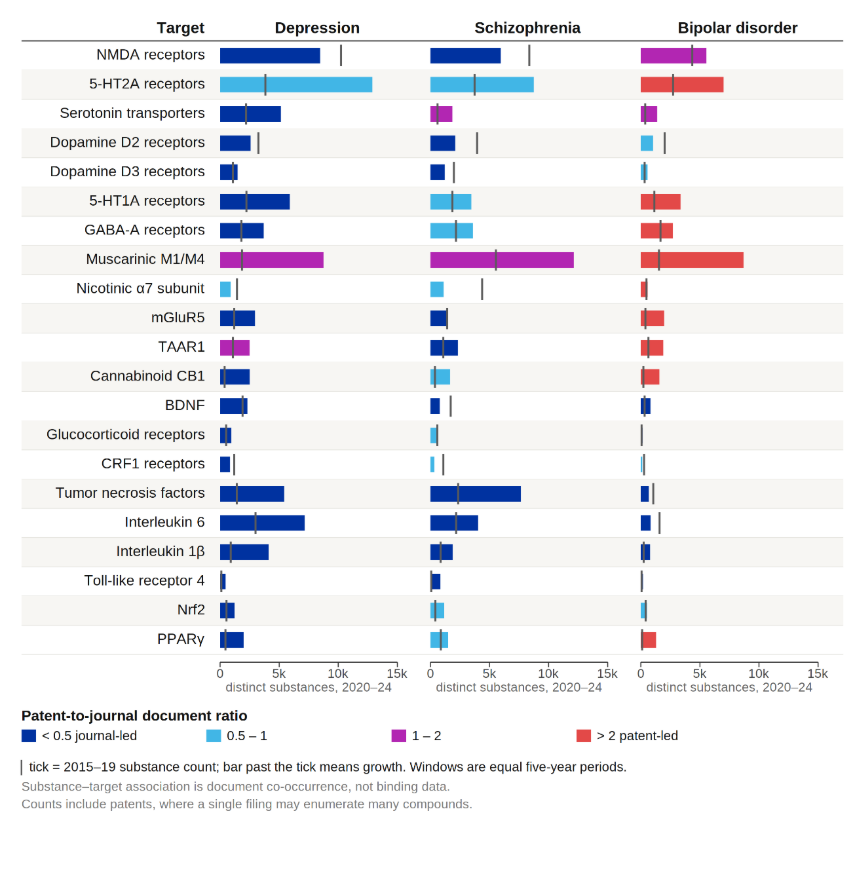
Comparing 2020-2024 with 2015-2019 identifies targets attracting increasing therapeutic chemistry activity. When considered alongside publication and patent trends, these data provide insight into how different mechanisms are progressing through the discovery ecosystem, from scientific investigation to commercial development.
The steepest growth is in immune and stress-related targets. TLR4 substances in schizophrenia rose almost 17-fold, PPARγ in bipolar disorder more than 11-fold, and IL-1β in depression roughly five-fold. Cannabinoid CB1 grew significantly across the three disorders, and muscarinic M1/M4 also showed growth, which is consistent with KarXT’s regulatory progress.
In contrast, activity associated with classical targets is declining. Dopamine D2-associated substances fell in all three disorders, as did D3 in schizophrenia, the nicotinic α7 subunit in depression and schizophrenia, and NMDA receptor substances in both depression and schizophrenia. These categories are the only ones showing consistent declines across the analysis.
Figure 5 also distinguishes where this research is taking place. Immune and neurotrophic targets TNF, IL-6, IL-1β, TLR4, BDNF, and the glucocorticoid receptor are journal-led, with far more publications than patent filings. Muscarinic and trace-amine targets show the opposite pattern, with patents outnumbering journal articles. These patterns suggest that neuroinflammation remains driven by academic research activity, whereas muscarinic and TAAR1 programs show stronger commercial development activity. These findings indicate that not all emerging mechanisms are progressing through the discovery pipeline at the same rate.
Free, weekly briefings authored by CAS scientists and technology experts. Get emerging trends, useful connections, and future opportunities at the intersection of science, technology, and innovation delivered to your inbox.
Key takeaway
Many of the pathways showing increasing activity — including inflammatory, stress-response, glutamatergic, and cholinergic mechanisms — recur across depression, schizophrenia, and bipolar disorder.
Translational challenges and future opportunities
Despite growing innovation, important challenges remain in developing new psychiatric therapies. One major obstacle is the lack of robust biomarkers. Unlike oncology or certain areas of neurology, psychiatry currently lacks widely adopted molecular markers capable of stratifying patients or predicting treatment responses. This limitation complicates clinical development and contributes to high trial failure rates.
Disease heterogeneity presents an additional challenge. Patients diagnosed with the same psychiatric disorder may have different biological drivers. For example, inflammatory mechanisms may contribute to symptoms in some individuals with depression but play a small role in others. Consequently, future success may depend on identifying biologically defined patient subgroups rather than relying solely on symptom-based diagnoses.
The analysis also highlights a broader translational challenge. Several mechanisms showing strong publication growth have yet to generate corresponding levels of therapeutic chemistry or clinical validation, whereas others have advanced rapidly into commercial development despite smaller research literatures. This disconnect underscores the difficulty of translating biological insight into successful medicines and suggests that scientific momentum alone may not predict therapeutic success.
At the same time, the extensive overlap observed among disease-associated targets raises important questions regarding traditional diagnostic classifications. Many of the pathways showing increasing activity — including inflammatory, stress-response, glutamatergic, and cholinergic mechanisms — recur across depression, schizophrenia, and bipolar disorder. Future therapeutic development may focus more on shared biological dimensions that cut across conventional disease boundaries.
The key question for the field, therefore, is no longer whether new mechanisms are emerging to drive drug discovery. Rather, it is which mechanisms can successfully progress from scientific interest to therapeutic chemistry, clinical validation, and patient benefit. As psychiatric research continues to move toward a more biologically informed framework, success will depend on expanding the range of targets under investigation and identifying the patient populations most likely to benefit from each mechanism.
Looking ahead, advances in precision psychiatry may enable a combination of complementary approaches, including rational polypharmacology, selective signaling modulation through biased agonism, and mechanism-based combination therapies, to better address the heterogeneity of psychiatric disorders. For patients struggling with psychiatric conditions like depression, schizophrenia, and bipolar disorder, these advances can mean better treatments and better quality of life.