Portrait of a smiling person with short dark hair wearing a striped shirt.

Magesh Ganesan

Information Scientist

Bio

Magesh serves as a Senior Scientific Information Analyst with a Ph.D. in Chemistry from IIT Madras and brings six years of postdoctoral research experience along with extensive expertise in the publishing industry. He combines his deep scientific knowledge with data science expertise to develop insightful analyses and articles spanning chemistry, energy, and materials science.

Layered purple and blue geometric planes representing two-dimensional MXene material sheets.

Capacitors, catalysts and coatings: MXenes drive industrial innovations

2D materials like graphene and carbon nanotubes are revolutionizing materials science, and now MXenes are introducing even greater adaptability and high-performance properties. Find out why MXenes are versatile industrial materials.

|Article
Aerial view of a dense green forest canopy.

Fossil fuels to biofuels: How biomass can drive sustainability

Biomass is currently just a fraction of our energy sources, but with more sustainable feedstocks and conversion processes, biomass-based chemicals and fuels could become common replacements for fossil fuel-based materials.
|Insights Report
Purple crystal lattice representing a perovskite structure.

Are perovskite solar panels the future of green energy?

Perovskite solar panels are cheaper and more efficient than other PVs, yet advances in materials and fabrication are needed to make them commercially viable. Our in-depth analysis reveals the research hot spots and new opportunities.
|Article
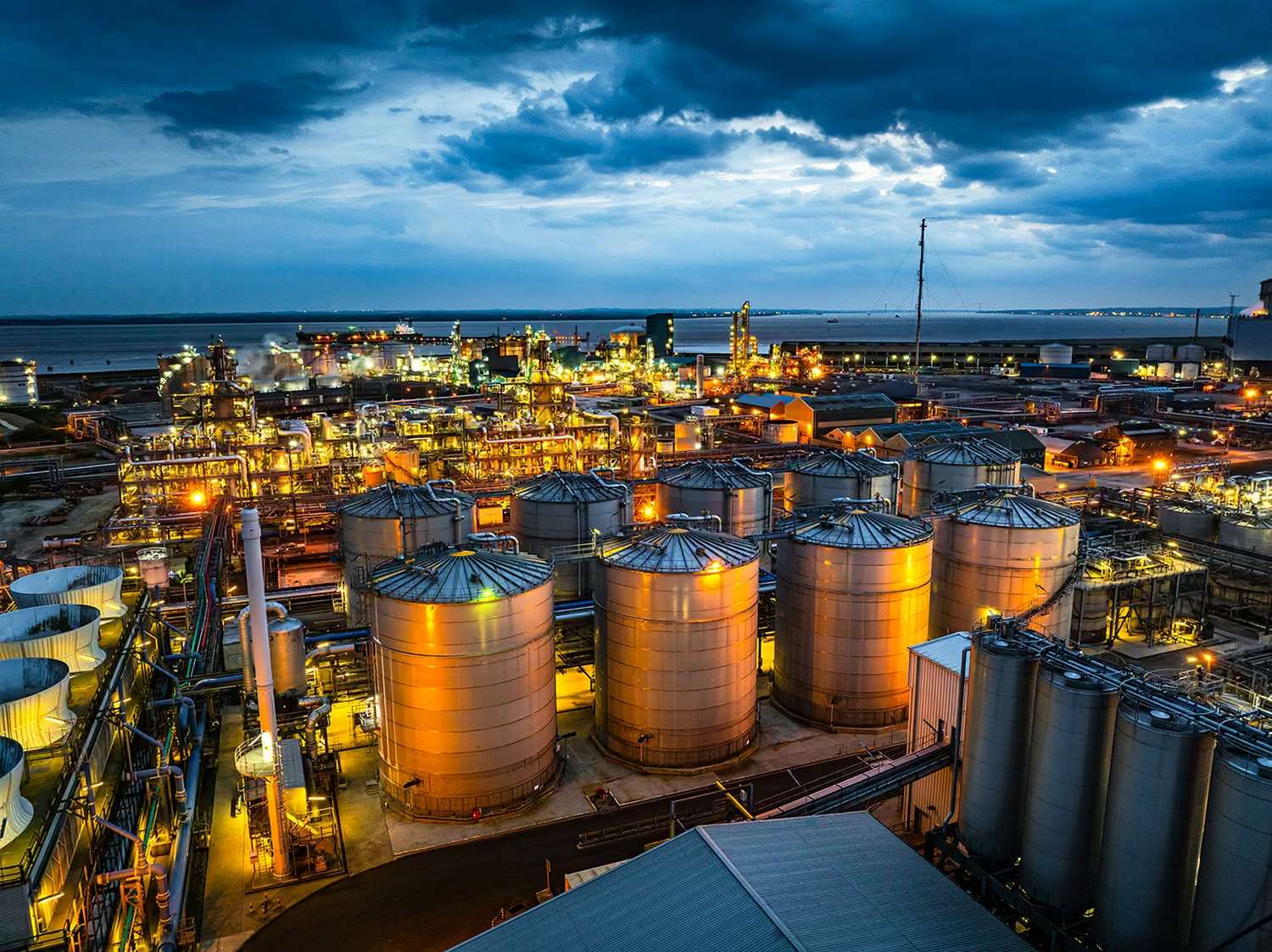
Illuminated oil refinery and storage tanks beside water at dusk.

Carbon capture technology is ready to expand into industrial usage

A recent spike in patents reveals how carbon capture technology is ready to support industrial decarbonization efforts.
|Article
Glowing blue and orange heat exchanger tubes viewed end on.

Thermal energy storage makes the leap to commercial usage

Thermal energy storage systems leverage specialized materials and processes that absorb, store, and release thermal energy as needed. What role can they plan in helping to make renewable energy more efficient?
|Article
Cylindrical lithium battery cells viewed from above among green components.

Could lithium from seawater meet our growing demand for rechargeable batteries?

There are about 200 billion metric tons of lithium in the ocean, and researchers are exploring new ways to extract this element from seawater more efficiently.
|Article
Hexagonal collage of materials science: batteries, architecture, crops and manufacturing.

Materials science breakthroughs 2025: ​Trends to watch

2025 trends in materials science including breakthroughs in metamaterials, industrial decarbonization, and consumer goods.
|Article
Solar panel array in front of an industrial plant with steam rising from a chimney.

Five pathways to industrial decarbonization

Five industrial decarbonization strategies can lower emissions even for the sectors with the largest carbon footprints.
|Article
Orange and teal spheres arranged in a metal-organic framework lattice.

Are metal-organic frameworks (MOFs) at a commercial tipping ​​point?

Metal-organic frameworks improve decarbonization technology, biomedicine and more, and AI makes them easier to use
|Article
Swirl of golden particles and light on a dark background.

Goldene—advancing new applications on the promise of graphene

The opportunities and challenges facing the development of goldene
|Article
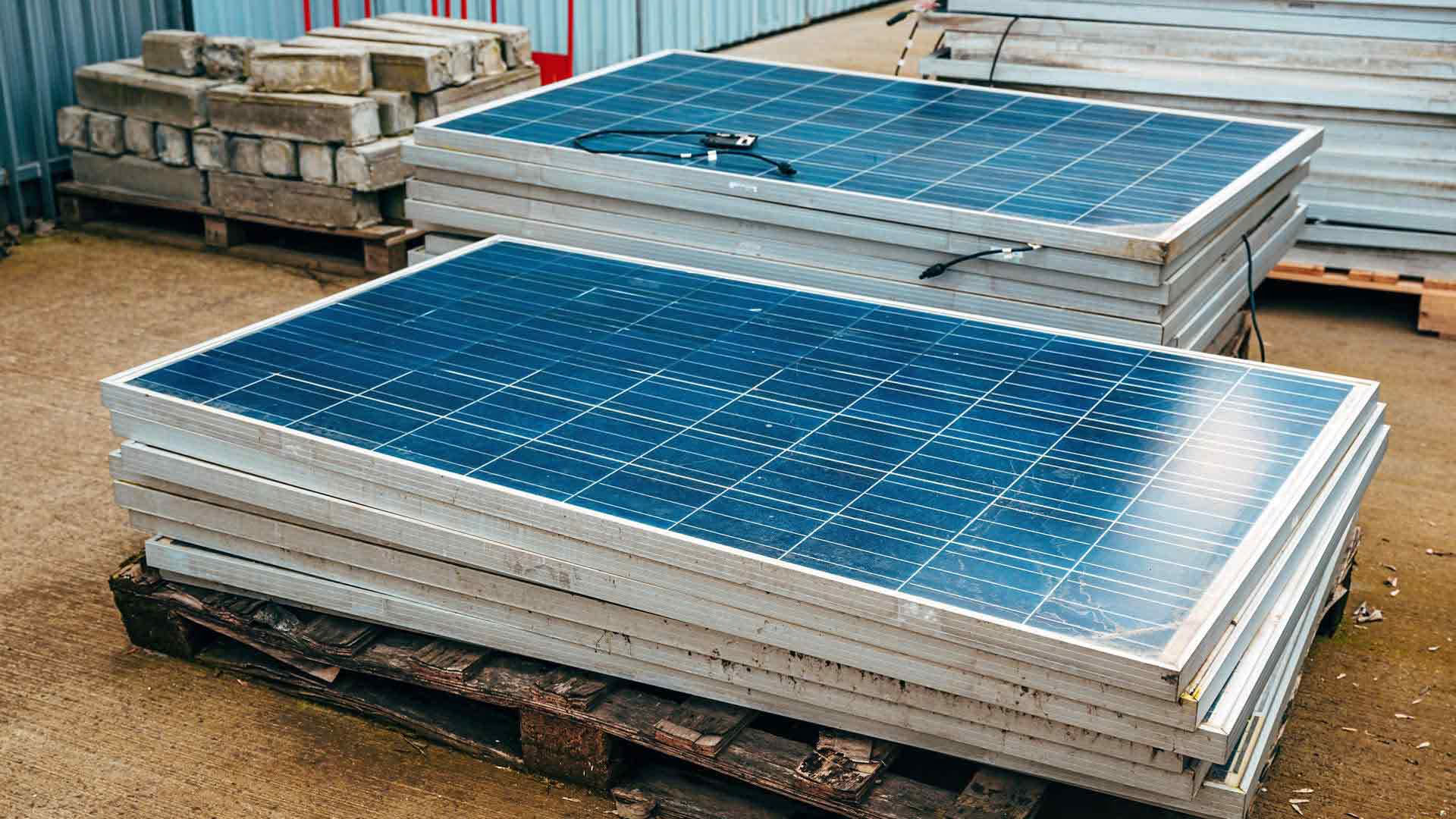
Stacks of used solar panels awaiting recycling.

How to improve solar panel recycling

As solar panel usage increases, researchers are looking for new methods to tackle PV waste.
|Article
Close-up of a colorful, twisted DNA strand model with purple and blue hues on a black background.

Biomedical breakthroughs in self-healing materials

See how self-healing materials that include reversible chemical bonds are reshaping wound care, drug delivery & tissue regeneration in our latest landscape analysis.
|Article
Sunlight rays piercing through clear blue ocean water over a rocky seabed with few small fish.

Hydrogen needs cleaner production: Photocatalysis is the answer

Learn how photocatalysis can produce clean hydrogen from water and solar energy and why it is crucial for decarbonization.
|Article