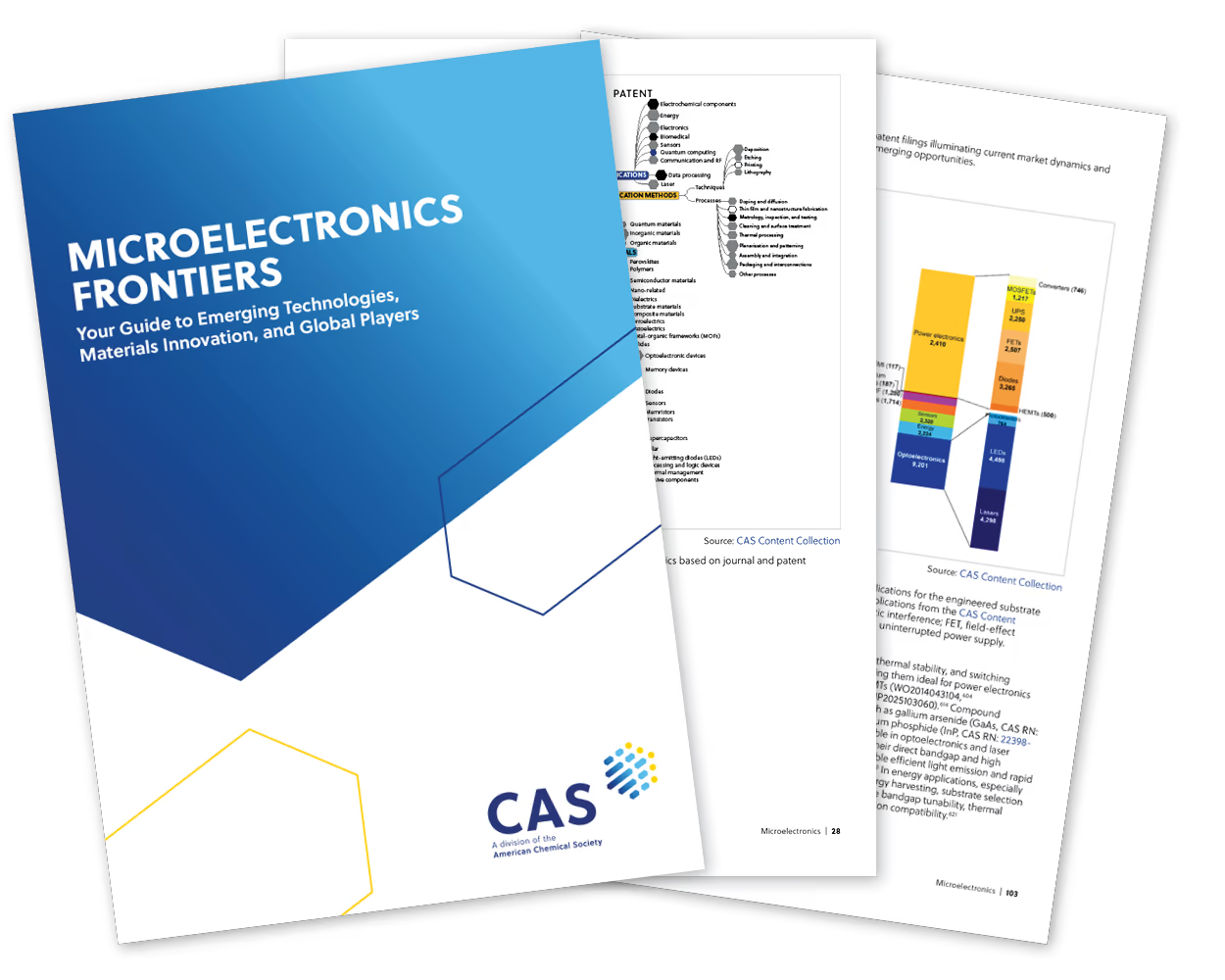
Microelectronics frontiers: Emerging technologies, materials, and innovations.
Use your 2025 budget before it's gone. Invest in strategic intelligence that will power your 2026 initiatives. Through December 31, get this report for just $1,200 per individual license—76% off the regular $5,000 price.
Report summary
Microelectronics have fundamentally transformed the world, enabling the evolution from room-sized computers to sophisticated devices that fit in our pockets and even inside our bodies. As related industries continue to expand—projected to reach $455 billion in 2024—understanding the scientific and technological landscape is essential for strategic decision-making regardless.
The CAS report, Microelectronics Frontiers: Emerging technologies, materials, and innovations, examines today's microelectronics landscape in detail. CAS scientists, experts in scientific information curation and analysis, have analyzed more than 2.2 million documents, revealing patterns in innovation and regional commerce to help you identify breakthrough technologies, assess competitive positioning, and discover emerging opportunities. From that research, 200+ emerging areas were identified, with 11 of the most important topics for extensive analysis:
- MXenes: Synthesis Pathways, Material Variants, and Industrial Applications
- 2D Materials for microelectronics: From Graphene to Dichalcogenides and beyond
- Semiconductor Materials: The Brain of Microelectronics
- Perovskite Materials in Modern Optoelectronics
- Smart Polymers and Smarter Devices
- Substrate materials
- Memristors
- Solar energy technology
- Triboelectric nanogenerators (TENGs)
- Neuromorphic computing
- Biomedical applications
Publishing and industry trends for each of these topics are explored in detail.
These advances will impact your business. In this report, we provide you with the necessary intelligence to understand emerging microelectronic technologies, identify key players, and make strategic decisions quickly.
As research institutions and companies race to develop next-generation materials and devices, they are met with more opportunities, competition, and challenges than ever before. Organizations with very different stakes in this market still need to understand the pace of innovation, regional focus areas, and technology maturity levels. These important details are explored in this report, bringing clarity to readers, wherever they are in the planning process.
We analyzed approximately 2 million journal articles and patents spanning 20 years, identifying over 200 emerging concepts across materials, devices, applications, and fabrication methods. We focused on technologies with documented scientific relevance and commercial potential.
This report will help you understand which technologies are gaining momentum, where breakthrough research is happening, and how to position your organization before market shifts or competitive developments impact your business.
Table of contents
Methodology
Data Scope
To accurately capture publications relating to microelectronics, CAS subject matter experts leveraged CAS's proprietary indexing system and scientific vocabulary ontology to craft a comprehensive search strategy. This methodology resulted in approximately 2.23 million publications in the CAS Content Collection split evenly between journal and patent publications for the period 2004-2024.
Data Analytics
Our comprehensive analysis employs a multi-dimensional methodological framework combining:
- Bibliometric analysis tracking publication and citation trends
- Patent intelligence identifying leading assignees and emerging companies
- Geographical insights mapping global research activity and regional dominance
- Advanced natural language processing (NLP) identifying over 200 emerging topics with expert validation refining categorization
Information Resources
The analysis draws upon the CAS Content Collection, which provides human-curated scientific information including:
- Bibliographic data from 50,000+ scientific journals
- Patent documents from 100+ global patent authorities
- CAS REGISTRY® with 290+ million unique substances
- Indexed scientific concepts, applications, and chemical structures
This curated approach ensures comprehensive coverage of the microelectronics innovation landscape while focusing on technologies with documented scientific or commercial significance.
Insights and CAS TrendScapes from NLP (Natural Language Processing) analysis
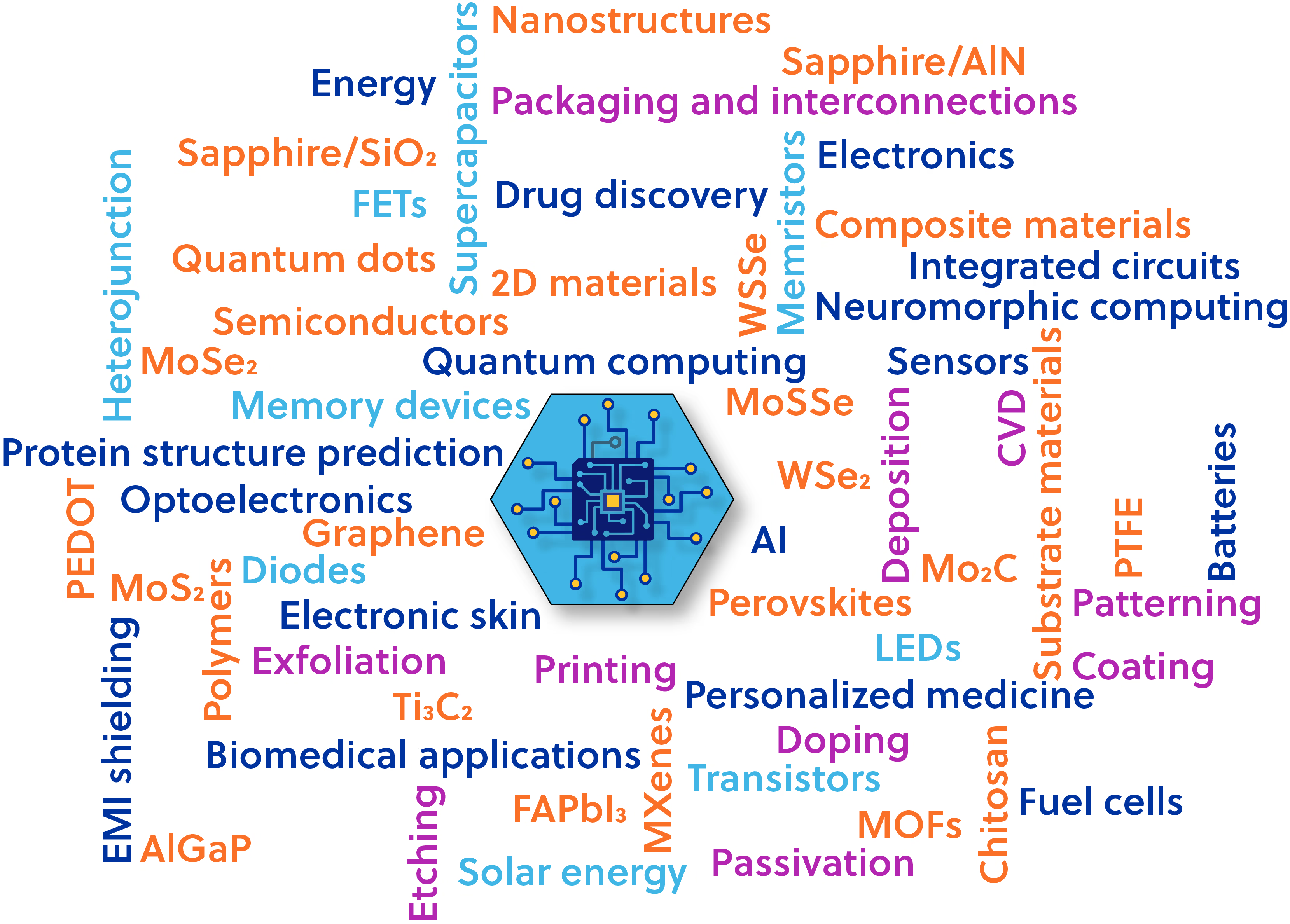
Using NLP-based analysis, we analyzed ~1.2 million journal and patent publications each to identify emerging concepts. The identified emerging concepts were systematically organized hierarchically to generate a CAS TrendScape focused on identifying emerging topics. TrendScape maps are designed to provide immediate visual access to emerging concepts, their categorical relationships, research volume, and current interest levels.
Some examples of the emerging concepts we identified:
- Electronic skin (E-skin) demonstrates notable commercial interest, evidenced by higher average fold increases in patents compared to journal publications. E-skin comprises of soft, flexible, stretchable, and self-healing electronic systems that mimic multifunctional properties of biological skin. Although initial E-skin publications emerged in the 1980s to early 2000s, the field has experienced remarkable acceleration over the past decade, with a 22-fold increase in journal publications between 2015 and 2024. This growth remains predominantly concentrated in academic research, with overall patent volume still lagging considerably suggesting the field remains in early developmental stages, though our NLP analysis indicates faster growth in patent as compared to journal publications (1.3X vs 1.0X)"
- Packaging technologies have emerged as a dynamic domain where multiple fabrication methods converge to address system-level integration challenges. Once a mature, cost-driven sector focused on component protection, packaging has transformed into a critical innovation frontier enabling next-generation electronics. This evolution is driven by a dual-track ecosystem: academic research provides fundamental breakthroughs in materials science and process optimization, while industry patent development delivers production-ready implementations with integrated manufacturing solutions."
- Quantum materials show significant activity in areas including carbon, perovskite, and colloidal variants. Carbon QDs demonstrate the highest growth trajectory, driven by their biocompatibility and tunable photoluminescence properties. Topological materials, including topological insulators and topological superconductors that enable protected quantum states for topological qubits, currently exhibit modest growth (1.1X). However, recent developments may catalyze increased activity: Microsoft's announcement of their quantum chip leveraging topological qubits based on Majorana zero modes and Google's Willow quantum processor achieving breakthrough error correction making a major advance in fault-tolerant computing."
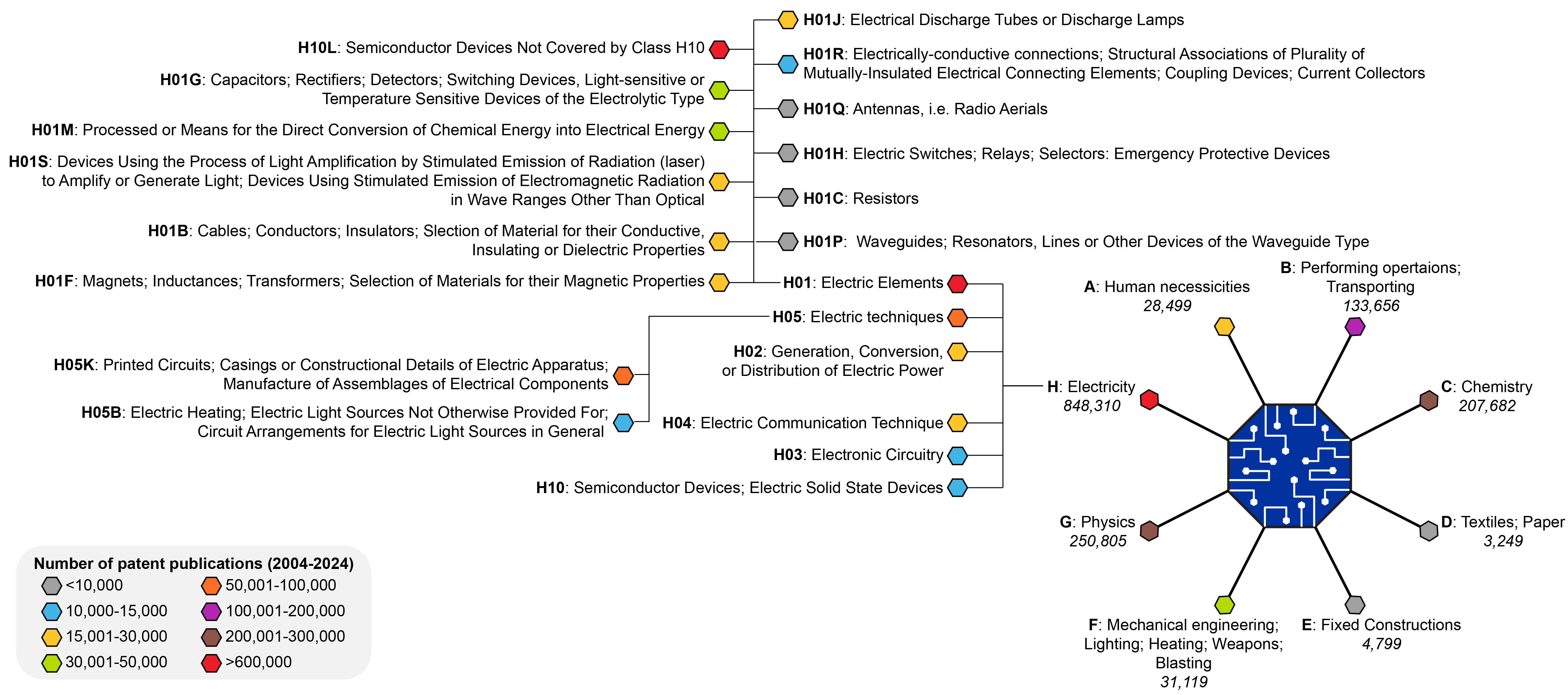
All concepts are organized around four branches: applications, fabrication methods, devices, and materials.
Sample report
Who will this report help?
This report is designed for teams and professionals who need to make informed, strategic decisions about microelectronics innovation and competitive positioning.
- R&D leaders and scientists seeking to identify promising research directions
- Business strategists evaluating market opportunities and competitive landscapes
- Investment professionals assessing technology readiness and commercial potential
- IP and legal professionals understanding patent landscapes and emerging players
- Supply chain managers tracking materials innovation and manufacturing trends
- Academic researchers benchmarking performance and identifying collaboration opportunities
If your organization develops microelectronics technologies, invests in semiconductor innovation, or depends on advanced electronic systems, this report gives you the clarity and foresight to make strategic decisions, saving you time and reducing competitive risks.
Why CAS?
CAS, a division of the American Chemical Society, is a world-leading scientific information solutions organization focused on transforming lives through the power of science. We curate, collect, and analyze published scientific literature to create solutions, including CAS SciFinder® and CAS BioFinder®.
By staying up to date with published literature, scientific advancements, and the happenings of each related industry, we bring together unique expert insights unavailable anywhere else.
Contact us
For questions related to Microelectronics Frontiers: Your Guide to Emerging Technologies, Materials Innovation, and Global Players, please reach out to the CAS Customer Center.