

マイクロRNA(miRNA/miR)は、20〜22塩基長の非コードRNAであり、標的となるメッセンジャーRNA(mRNA)分子と相互作用することで遺伝子発現調節において重要な役割を果たします。推定では、マイクロRNAはヒトゲノムにおけるタンパク質コード遺伝子の最大60%を翻訳レベルで調節できるとされています。これらは分化、増殖、アポトーシス、発生といった様々な生理学的プロセスに関与しており、その調節不全は様々な病理学的疾患と関連しています。
マイクロRNAの重要性は、2024年のノーベル生理学・医学賞によって改めて強調されました。同賞は、「マイクロRNAの発見と、転写後の遺伝子発現調節におけるその役割」に対して、ビクター・アンブロス氏とゲイリー・ラフカン氏に授与されました。両氏は1993年にマイクロRNAの発見を初めて発表し、2000年までにはラフカン氏の研究グループが、様々な動物種間で高度に保存されているlet-7遺伝子によってコードされるマイクロRNA「let-7」を特定しました。それ以来、マイクロRNA治療の開発には大きな関心が寄せられています。
これらの核酸の毒性や効果的な送達に関する問題は、依然として課題となっています。臨床試験に入ったマイクロRNA治療薬は20種類未満であり、第III相試験に進んだものは一つもありません。開始されたマイクロRNA治療試験の約半数は、マイクロRNAの毒性やその他の深刻な副作用のために中断または中止を余儀なくされました。
しかし、新たな研究により進展が見られます。ナノスケールの薬物送達システムの進歩が有効性と毒性の問題に対処しており、送達手法の改善に伴い、マイクロRNA治療がより広く活用されるようになる可能性があります。
マイクロRNAの生合成と作用機序
マイクロRNAは、独立した転写ユニットとして存在する場合もあれば、他の遺伝子のイントロンやエキソン内に組み込まれている場合もあります。マイクロRNAの生合成には、カノニカル経路と非カノニカル経路の2つの経路があります(図1を参照)。

カノニカル経路では、マイクロRNAはRNAポリメラーゼII(場合によってはRNAポリメラーゼIII)によって、長い一次マイクロRNA転写産物(pri-miRNA)としてマイクロRNA遺伝子から転写されます。Pri-miRNAは数キロベースの長さになることがあり、5'末端および3'末端に隣接配列を持ち、複数の成熟マイクロRNAのステムループ構造を含むことができます。Pri-miRNAは、核内タンパク質DGCR8(ディジョージ症候群関連領域8)と酵素DROSHAによってプロセシングされ、ヘアピン型のpre-miRNA転写産物となります。
非カノニカル経路では、mRNAのイントロン内に位置するマイクロRNA前駆体がスプライシングによって切り出され、DGCR8/DROSHAのステップをバイパスします。その後、pre-miRNAはエクスポートイン5の助けを借りて細胞質へ輸送されます。細胞質に到達すると、RNase酵素であるDICERがpre-miRNAのヘアピンループに作用して切断し、成熟したマイクロRNA二本鎖を生成します。マイクロRNA二本鎖の一方の鎖(ガイド鎖)はRNA誘導サイレンシング複合体(RISC)内のアルゴノート(AGO)タンパク質と結合し、もう一方の鎖(パッセンジャー鎖)は分解されます。RISCに取り込まれる鎖は、熱力学的安定性などの要因に基づいて決定されるのが一般的です。最終的に、標的mRNAは分解されるか、翻訳抑制を受けます。
送達手法の改善がブレイクスルーを加速させる
マイクロRNA治療薬を標的細胞へ効果的に送達することは、その不安定さと分解されやすさから、複雑な課題となっています。現在の手法には、ウイルス系(アデノ随伴ウイルス、アデノウイルス、レンチウイルスベクター)と非ウイルス系(脂質ナノ粒子、ポリマーナノ粒子、無機ナノ粒子、細胞外小胞、ペプチド)があります。
ウイルスを介したマイクロRNA送達は有効性が証明されていますが、この手法は高い免疫原性も示します。非ウイルスベクターは、対照的に相対的な安定性と低い免疫原性を示します。そのため、研究者はマイクロRNAを細胞へ効果的に送達するために、多種多様な非ウイルスナノキャリアを研究しています。
脂質ベースのナノ粒子(LNP)は、マイクロRNAを保護し、優れた生体適合性を持つため、最も一般的に使用されるキャリアです。LNPは最近、マイクロRNAをより効率的に送達するために、イオン化可能なカチオン性脂質から開発されました。また、LNPには安定性を向上させ毒性を低減するために、コレステロールやジオレオイルホスファチジルエタノールアミン(DOPE)といった「ヘルパー脂質」が含まれることもあります。ポリエチレングリコール(PEG)を組み込むことで、ナノ粒子の凝集を抑え、循環時間を延長できることが示されています。
Emerging breakthroughs are also occurring with polymer-based carriers, including poly (lactic-co-glycolic acid) (PLGA). Researchers developed a microRNA-210 inhibition strategy with antisense γ peptide nucleic acids (γPNAs) with improved RNA-binding efficacy and encapsulated them in PLGA nanoparticles. PLGA has received FDA approval as a delivery vehicle and is in phase II trials for small interfering RNA (siRNA) therapies.
Inorganic nanoparticles such as gold and silica also show potential as microRNA carriers, but ongoing toxicity concerns, particularly with gold, may limit their clinical usage.
Different strategies of using microRNAs as therapeutics
We examined the CAS Content CollectionTM, the largest human-curated repository of scientific information, to better understand the research landscape of microRNA.There was a notable increase in publications relating to microRNA in the last few years, although journal publications are now decreasing slightly. However, patent publications continue to increase, suggesting sustained commercial interest in this area (see Figure 2).

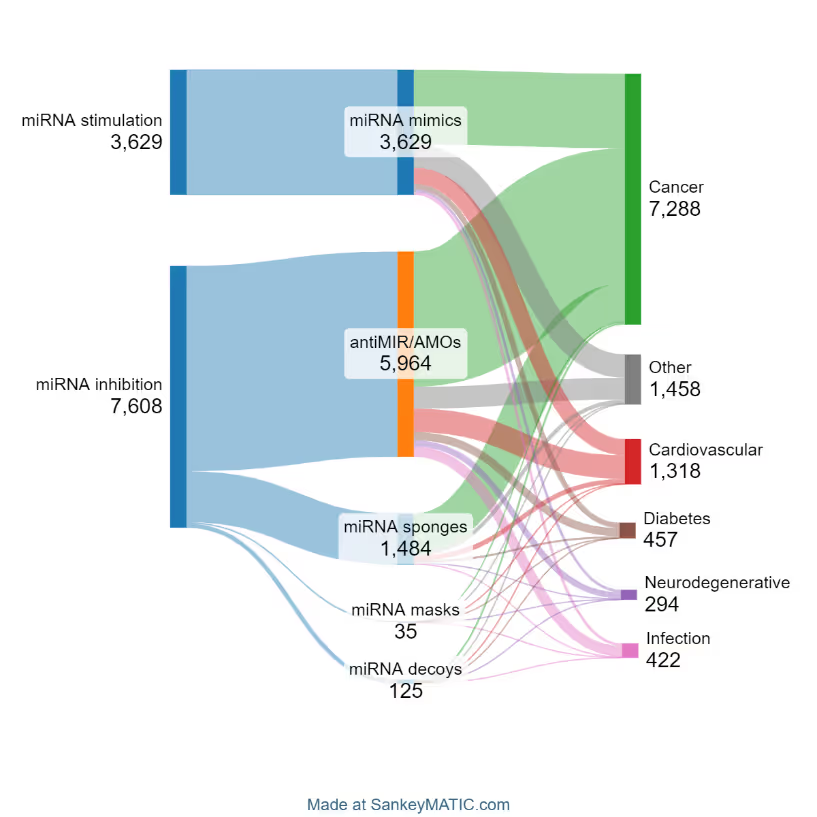
The goal of microRNA therapeutics is to alter and ideally restore abnormal or pathological microRNA expression patterns. There are currently two approaches to achieve this — microRNA stimulators or enhancers and microRNA inhibitors. The first group mainly includes microRNA mimics, while the second group comprises antiMIR oligonucleotides (AMOs), microRNA masks, sponges, and decoys. As seen in Figure 3, most publications pertain to microRNA inhibitors (67.7%).AMOs are the most common among these publications.

These various strategies work as follows:
- microRNA mimic: Synthetic double-stranded small RNA molecules that match the corresponding microRNA sequence, mimicking the action of naturally synthesized microRNA. The aim is to functionally replenish the lost or decreased microRNA expression in pathological conditions.
- antiMIRs/AMOs/antagomiRs: Synthetic single-stranded small RNA molecules based on first-generation antisense oligonucleotides, which may have chemical modifications (e.g., antiMIRs with a 2-O-methoxyethyl modification are also called antagomiRs). These functionally bind to microRNAs with complementary sequences and prevent their interaction with target mRNA, eventually increasing their expression.
- microRNA sponges: Artificial microRNA containing tandem repeats of oligonucleotide sequences with microRNA binding sites (MBSs) for a mature microRNA of interest. They sequester the target endogenous microRNAs, leaving the MBS on target mRNAs free, thus leading to their upregulation. CircmiRs are circular microRNA sponges with the same mechanism of action but are more stable.
- microRNA decoys: A variation of microRNA sponges characterized by stem and loop structures (loop contains MBSs).
- microRNA masks: Single-stranded oligonucleotides with 2ʹ-O-methoxyethyl modification (or other chemical modification). They are perfectly complementary to the MBSs in the 3’UTR of the target mRNA, hindering the microRNA-mRNA interaction and increasing mRNA expression levels.
Exploring the potential of microRNA as therapeutics
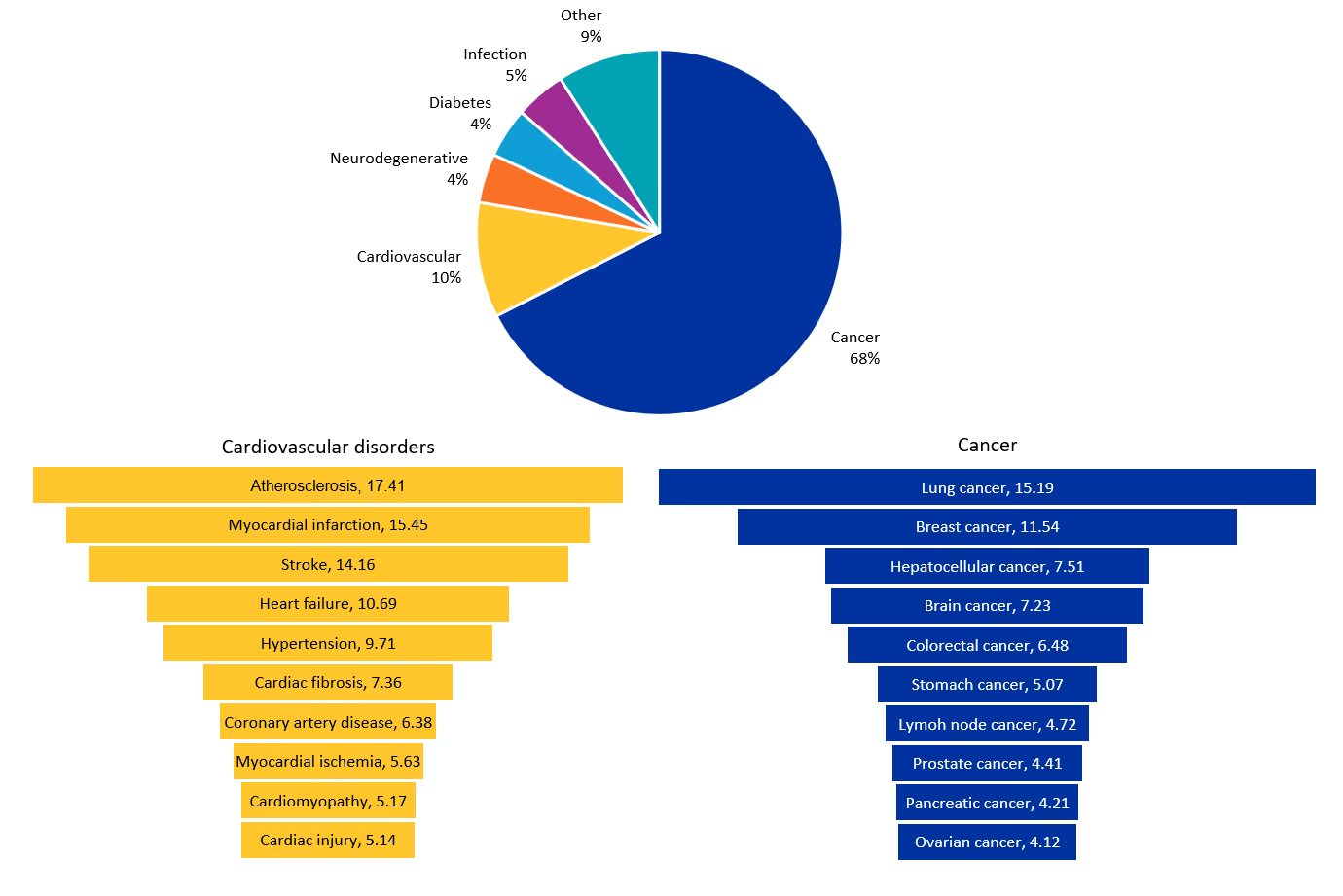
MicroRNA could address a variety of diseases due to its range of functions in gene expression. According to our analysis of the CAS Content Collection, cancer is the most prominent therapeutic area researched (67.5%), followed by cardiovascular disorders (10.2%), infections (4.5%), diabetes (4.4%), and neurodegenerative disorders (4.3%) (see Figure 4).
Cancer
Oncogenic miRNAs (oncomiRs) influence cancer development substantially by participating in many signaling pathways, including the suppression of tumor-suppressor genes and the activation of oncogenes. The miR-34 family (miR-34a, miR-34b, miR-34c), which are under the control of TP53 tumor suppressor gene regulation, downregulate several genes, like Cyclin D1, E2, CDK4, CDK6, BCl2, and Myc, leading to cell cycle arrest and apoptosis and restricting tumor growth. The MiR-17-92 cluster, commonly referred to as “oncomir-1,” targets and inhibits tumor suppressors like PTEN, p21, and E2F, leading to increased cell proliferation, survival, and angiogenesis. MiR-21 mainly targets PTEN, PDCD4, and TIMP3 and activates survival-supportive pathways like PI3K/Akt and MAPK, further promoting tumor growth, invasion, and metastasis. MicroRNAs also play a critical role in modulating drug resistance of cancer cells apart from regulating tumor suppressors and oncogenes.
Cardiovascular diseases
Recent profiling studies have identified many microRNAs that are differentially expressed in cardiovascular diseases (CVD) in a spatiotemporal manner, pointing to a new approach to regulating conditions like myocardial infarction, atherosclerosis, heart failure, stroke, and hypertension, among others. Examples include miRNA-29 in cardiac fibrosis, miRNA-21 and miR-155 in cardiomyopathy, and miRNA-34 in myocardial infarction. MiR-21 and miR-29 also play crucial roles in extracellular matrix deposition during pathological cardiac remodeling. Dicer, an enzyme required for the maturation of all microRNAs, shows aberrant expression during heart failure. Functional studies have demonstrated that cardiac-specific knock-out of Dicer leads to progressive cardiomyopathy, heart failure, and death in mice. The available data suggests collectively that Dicer/microRNAs play critical roles in normal cardiac functions as well as under pathological conditions and are being explored as therapeutic targets in CVD.
Infections
MicroRNAs are being explored in the host-pathogen interactions of more than 50 infections (bacterial, viral, fungal, and parasitic). There are multiple ways microRNAs can help combat infectious diseases. They regulate specific proteins involved in innate and adaptive immune pathways, helping to fine-tune the immune response to infections. They can be used to target pathogen genes and inhibit their replication. For example, treatments like RG-101 and miravirsen (inhibitors of miR-122) target host microRNAs to fight hepatitis C infection. MicroRNAs are also being investigated to create attenuated vaccines by incorporating microRNA response elements into viral vaccine genomes. Some pathogens, such as Ebola, produce their own microRNAs, which can be targeted to reduce their pathogenicity and improve treatment outcomes.
Diabetes
Emerging evidence suggests that microRNAs play a key role in beta-cell functions (survival, proliferation, differentiation, and insulin secretion) and in modulating insulin resistance or sensitivity. They can influence inflammatory responses, which are typically heightened in diabetic patients. By lowering inflammation, microRNAs can assist in managing complications associated with diabetes. Several pre-clinical trials and in-vitro studies aiming to find microRNA-based therapeutics for diabetes have shown promising results.
神経変性疾患
マイクロRNAは、神経変性疾患に関与する遺伝子の発現を制御し、神経炎症を抑制し、神経細胞をアポトーシスから保護する働きがあります。例えば、miR-124やmiR-132は神経細胞の健康と機能を維持し、miR-29やmiR-34ファミリーはアルツハイマー病におけるアミロイドベータ産生に関連する遺伝子を標的とします。さらに、マイクロRNAは脳の修復に不可欠な神経新生を促進する可能性もあり、miR-9やmiR-124が重要な役割を果たすことが知られています。マイクロRNAの調節不全は神経機能の悪化や神経変性疾患の発症につながるため、これらのマイクロRNAを制御することは、疾患治療における新たな方向性を示しています。
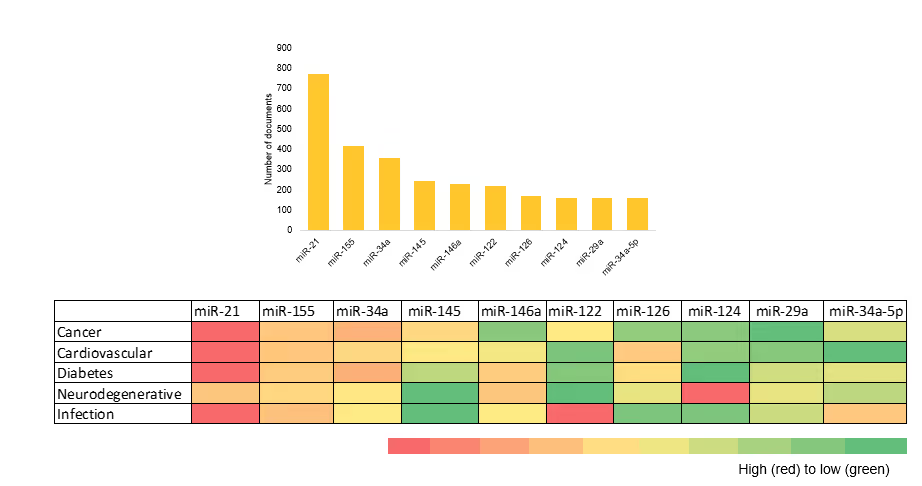
文献データセットにおいて最も頻繁に出現するマイクロRNAをプロットし、分析の一環として主要な5つの治療領域における分布を可視化しました(図5参照)。
また、文献において主要な5つの疾患と最も密接に関連しているマイクロRNA治療の種類を特定するため、共起分析を実施しました(図6参照)。
マイクロRNA治療の展望
マイクロRNA治療は有望な進歩を見せていますが、臨床現場で実用化されるまでには依然として克服すべき課題が残されています。さまざまなマイクロRNA戦略や送達方法の安全性と有効性を確認するためには、臨床試験が不可欠です。また、望ましくない免疫応答、非特異的な組織蓄積、エンドソーム内での分解なども、マイクロRNAベースの治療薬開発における大きな課題となっています。
近年の研究により、画期的な進展が続いており、これらの治療法の未来は明るいと言えます。マイクロRNA遺伝子を標的とするCRISPR/Cas技術や、マイクロRNAの標的を予測する人工知能モデルなど、高度な技術がマイクロRNA治療薬開発にエキサイティングな機会をもたらしています。
マイクロRNA治療は、継続的なイノベーションを通じて、近い将来、多くの疾患における患者ケアを一変させる可能性があります。