ノーベル化学賞 は、科学界で最も権威ある賞の一つであり、スウェーデン王立科学アカデミーによって毎年授与されます。この賞は、化学の分野、そして多くの場合、より広範な科学的状況を大きく前進させた発見をした個人またはチームを称えるものです。
近年のノーベル化学賞受賞者
ノーベル賞の候補者は世界中の有資格者によって推薦され、専門家からなるノーベル委員会によって審査されます。選考プロセスは極めて厳格かつ非公開であり、科学的影響力の検討と審議に数年を要することも珍しくありません。
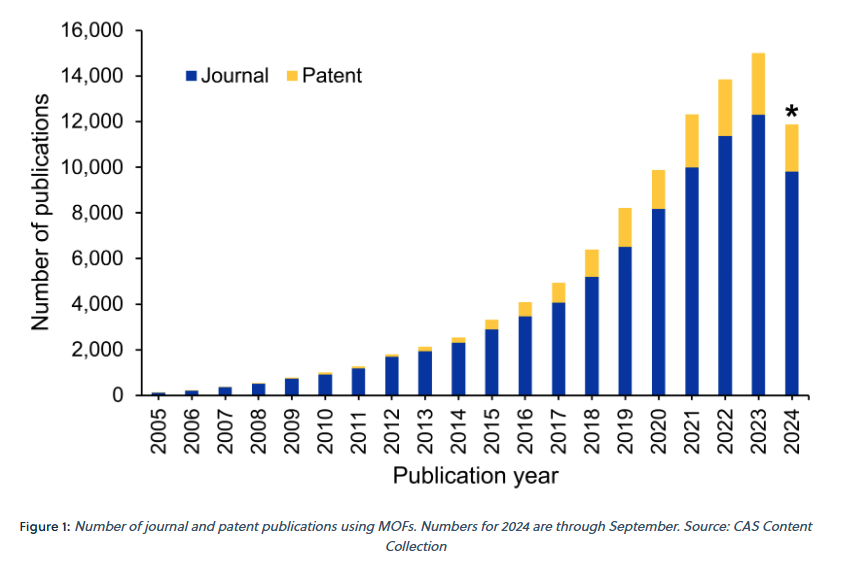
2025年のノーベル化学賞 は発表されました 2025年10月8日、金属有機構造体(MOF)に関連する研究が評価されました。これは、構造を調整可能で高い表面積を持つ、革新的な多孔質結晶材料です。MOFの並外れた汎用性により、環境浄化、再生可能エネルギー、工業用触媒、医療診断、薬物送達、エレクトロニクス、センシング技術といった世界的な課題に取り組むためのプラットフォームとして応用可能です。

CASの科学者たちは以前からMOFに注目しており(ビデオ)、実際に「ノーベル賞に値する」と示唆していました。
MOFがどのように材料科学の未来を形作っているかについて、CASの科学者が語る「商業的な転換点」への近さについての見解をぜひお読みください。

- 2024年:デヴィッド・ベイカーが受賞しました。 計算タンパク質設計、一方、デミス・ハサビスとジョン・ジャンパーは、 タンパク質構造予測 における人工知能の活用、特にAlphaFold2の功績が認められました。彼らの研究は、前例のない精度でタンパク質の創出と理解を可能にし、医学と生物学を変革しました。
- 2023年:ムンジ・G・バウェンディ、ルイス・E・ブルース、アレクセイ・エキモフは、 量子ドットの発見と合成により受賞しました。量子ドットは、サイズによって特性が変化するナノスケールの粒子であり、現在ではLEDディスプレイからがん手術に至るまで、あらゆる分野で使用されています。彼らの画期的な研究は、現代のナノテクノロジーの基礎を築きました。
- 2022年:キャロリン・R・ベルトッツィ、モーテン・メルダル、K・バリー・シャープレスは、 クリックケミストリー および 生体直交化学の開拓により称えられました。これらは、生体内であっても分子を迅速かつ精密に結合させることを可能にします。彼らの研究は、創薬や細胞イメージングに革命をもたらしました。

- 2021年:ベンジャミン・リストとデヴィッド・W・C・マクミランは、 不斉有機触媒の開発により、ノーベル化学賞を共同受賞しました。、小さな有機分子を用いて化学反応を高い精度で駆動させる手法です。この革新により、特に製薬研究において分子構築がより効率的かつ環境に優しいものとなりました。
2025年のノーベル化学賞は、2025年10月8日(水)11:45(中央ヨーロッパ夏時間)に発表されます。
ノーベル化学賞への3つの道

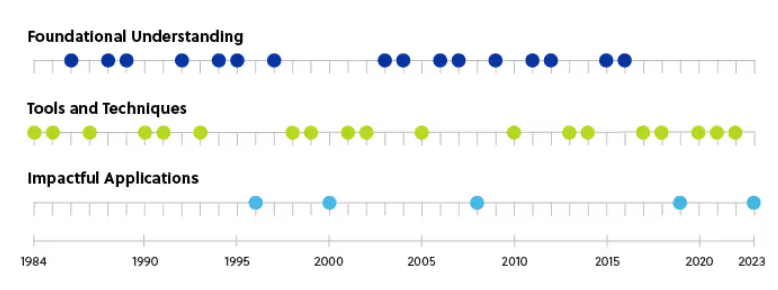
CRISPRの 発明 から量子ドットの開発に至るまで、ノーベル賞を受賞する研究は多くの場合、 3つの軌跡のいずれかをたどります。ある発見は分野全体の基礎を築き、また多くの発見は革新を加速させる変革的なツールをもたらします。そして、ごく一部の発見は、人々の生活を変える実社会への応用を実現します。
この 独自の分析において、CASの科学者たちはノーベル賞を受賞した研究の背後にある出版パターン、共同研究ネットワーク、そしてイノベーションのタイムラインを調査しました。その結果、過去の受賞を説明し、将来の受賞を予測する助けとなり得る、データに基づいた3つのパスのフレームワークが導き出されました。例として以下が挙げられます。
基礎的な理解
- DNA修復の反応機構に関する研究。Tomas Lindahl、Paul Modrich、Aziz Sancar。2015年。
- 大気化学, 特にオゾンの生成と分解に関するもの. ポール・J・クルッツェン、マリオ・J・モリーナ、F・シャーウッド・ローランド。1995年。
- RNAの触媒特性. シドニー・アルトマン、トーマス・R・チェック。1989年。
ツールと技術
- ゲノム編集手法の開発. エマニュエル・シャルパンティエ、ジェニファー・A・ダウドナ。2020年。
- 超解像蛍光顕微鏡の開発. エリック・ベツィグ、ステファン・W・ヘル、ウィリアム・E・モーナー。2014年。
- キラル触媒を用いた水素化反応および酸化反応. William S. Knowles, Ryoji Noyori, K. Barry Sharpless. 2001.
インパクトのある応用
- 導電性高分子の発見と開発. Alan J. Heeger, Alan G. MacDiarmid, Hideki Shirakawa. 2000.
- リチウムイオン電池の開発. John B. Goodenough, Stanley Whittingham, Akira Yoshino. 2019.
- フラーレンの発見. Robert F. Curl Jr., Sir Harold W. Kroto, Richard E. Smalley. 1996.
私たちの分析から得られた重要な発見の一つは、ノーベル賞受賞を目指すには忍耐が必要だということです。最初の発見を明らかにした画期的な論文が発表されてから、その業績がノーベル賞として認められるまでには、平均して25年の歳月を要します。
次のノーベル賞は何になるでしょうか?
科学的なブレイクスルーは、多くの場合、従来の常識を覆し、新たな可能性を切り開き、分野全体を再構築するような大胆なアイデアから始まります。CASの科学者たちは、医学、材料科学、分子設計を変革する可能性を秘めた、新たなイノベーションの領域を追跡しています。
ここでは、ノーベル委員会による検討が待たれると考えるトピックについて、当社の科学者による洞察をいくつか紹介します。
分子編集. 先駆者として Mark Levinらが挙げられる分子編集には、C–H官能基化、骨格編集、後期段階の多様化といった技術が含まれており、化学者が医薬品化合物を設計・最適化する方法を再定義しています。このアプローチは、分子をゼロから構築するのではなく、既存の構造に対して精密な修正を加えることを可能にします。これらの手法により、科学者は薬効、選択性、薬理学的プロファイルが改善されたアナログを迅速に生成できるようになります。
次世代DNAシーケンシング。 開発者: Shankar Balasubramanian、 David Klenerman、および共同研究者らによるシーケンシング・バイ・シンセシス(合成によるシーケンシング)技術は、ゲノム解析をより高速かつ安価にし、広く利用可能なものにしました。この革新は、蛍光標識されたヌクレオチドを1塩基ずつ取り込む可逆的ターミネーター化学に基づいています。その結果、DNA合成のリアルタイム検出が高精度かつ高スループットで実現しました。その影響は、個別化医療、がん治療、病原体同定、そして世界的なゲノミクス研究にまで及んでいます。
太陽電池。ペロブスカイトや有機光起電力素子を中心とした太陽電池化学の進歩は、再生可能エネルギーを一変させました。 Henry Snaith、 宮坂力、そして Alex K.Y. Jen といった研究者らは、シリコンに匹敵する効率を持ちながら、低コストの溶液プロセスによる製造を可能にするハイブリッド材料を開発しました。これらの技術は、印刷可能で世界中に展開できる、柔軟で軽量なソーラーパネルの実現を約束するものです。これらはスケーラブルな化学イノベーションを通じて緊急のエネルギー需要に応えるものであり、持続可能なエネルギーソリューションにおける大きな前進を意味しています。
C-H活性化および官能基化。 John Hartwig John Hartwig、 余金権(Jin-Quan Yu)をはじめとする主要な研究者らによって開拓されたC-H活性化および官能基化は、合成化学におけるブレークスルーです。この手法は、従来は反応性に乏しかったC-H結合を、価値あるC-C、C-N、C-Oなどの結合へと直接変換することを可能にし、化学者が複雑な分子を構築する方法を一変させました。あらかじめ官能基化された出発材料を必要としないため、C-H活性化は合成ルートを合理化し、必要な工程数を削減します。この分野には、特にパラジウム、ロジウム、ルテニウム系を用いた遷移金属触媒における大きな進歩が含まれています。
ノーベル賞を受賞した科学に関する最新情報については、このページにご注目ください。CAS Insightsのアラートに登録して、最新の研究やトレンドをメールで直接受け取りましょう。
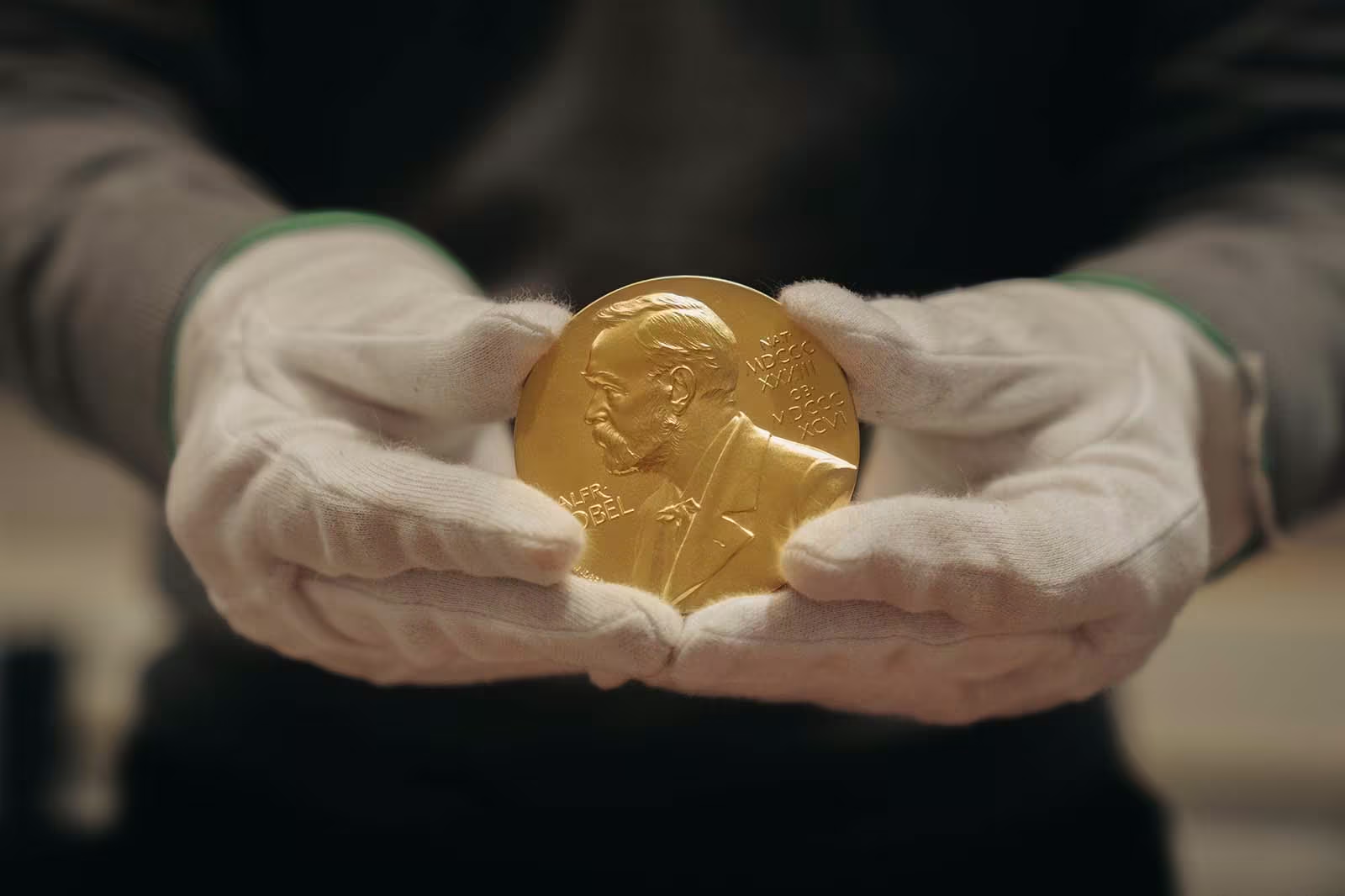
画像提供:© Nobel Prize Outreach. 写真:Clément Morin.
Subscribe to CAS Insights for emerging trends, useful connections, and future opportunities at the intersection of science, technology, and innovation delivered to your inbox.
What could be the next Nobel Prize?
Scientific breakthroughs often begin with bold ideas that challenge convention, open new possibilities, and reshape entire fields. CAS scientists track emerging areas of innovation that have the potential to transform medicine, materials, and molecular design.
Here are some of our scientists’ insights into topics they believe are overdue for consideration by the Nobel committee, updated in advance of the 2026 awards.
Next-generation DNA Sequencing. Developed by Shankar Balasubramanian, David Klenerman, and collaborators, sequencing-by-synthesis technologyhas made genome sequencing faster, more affordable, and widely accessible. Thisinnovation relies on reversible terminator chemistry, where fluorescentlylabeled nucleotides are incorporated one base at a time. The result isreal-time detection of DNA synthesis with high accuracy and throughput. Theimpact spans personalized medicine, cancer treatment, pathogen identification,and global genomics research.
Solar cells.Advances in solar cell chemistry, particularly in perovskite and organicphotovoltaics, have transformed renewable energy. Building on the dye-sensitizedarchitecture that Michael Grätzel introduced in 1991, researchersincluding Grätzel, Tsutomu Miyasaka, Nam-Gyu Park, Henry Snaith, and Alex K.Y. Jen have developed hybrid materialsthat rival silicon in efficiency while offering low-cost, solution-basedmanufacturing. These technologies promise flexible, lightweight solarpanels that can be printed and deployed globally. They address urgent energyneeds through scalable chemical innovation and represent a significant stepforward in sustainable energy solutions.
Carbon–nitrogen cross-coupling. The palladium-catalyzed coupling of amines with aryl halides, developed independently in the mid-1990s by Stephen Buchwald and John Hartwig, and now universally called the Buchwald–Hartwig amination, is among the most heavily used bond-forming reactions in drug discovery. Aryl amines run throughout the pharmacopeia, and successive generations of phosphine ligand design turned a once harsh, low-yielding transformation into a reliable step that works on heteroaromatics and at manufacturing scale. The 2010 prize recognized palladium-catalyzed carbon–carbon cross-coupling; carbon–nitrogen bond formation, arguably the branch of greatest pharmaceutical impact, was not included.
Agentic AI grounded in trusted science. CAS Newton℠ enables conversational scientific discovery. Ask complex, multi-part questions and receive context-based, cited answers sourced from 150+ years of curated and human-verified science found in the CAS Content Collection™, making CAS Newton the best agentic AI for science.
Three paths to a Nobel Prize in Chemistry

From the invention of CRISPR to the development of quantum dots, Nobel-winning research often follows one of three trajectories. Some discoveries lay the groundwork for entire fields. Many introduce transformative tools that accelerate innovation. A certain few deliver real-world applications that change lives.
In this exclusive analysis, CAS scientists examined the publication patterns, collaboration networks, and innovation timelines behind Nobel-winning work. The result? A data-driven three-path framework that explains past awards and may help predict future ones. Examples include:
Foundational understanding
- Mechanistic studies of DNA repair. Tomas Lindahl, Paul Modrich, Aziz Sancar. 2015.
- Atmospheric chemistry, particularly concerning the formation and decomposition of ozone. Paul J. Crutzen, Mario J. Molina, F. Sherwood Rowland. 1995.
- Catalytic properties of RNA. Sidney Altman, Thomas R. Cech. 1989.
Tools and techniques
- The development of a method for genome editing. Emmanuelle Charpentier, Jennifer A. Doudna. 2020.
- The development of super-resolved fluorescence microscopy. Eric Betzig, Stefan W. Hell, William E. Moerner. 2014.
- Chirally catalysed hydrogenation reactions and chirally catalysed oxidation reactions. William S. Knowles, Ryoji Noyori, K. Barry Sharpless. 2001.
Impactful applications
- The discovery and development of conductive polymers. Alan J. Heeger, Alan G. MacDiarmid, Hideki Shirakawa. 2000.
- The development of lithium-ion batteries. John B. Goodenough, Stanley Whittingham, Akira Yoshino. 2019.
- The discovery of fullerenes. Robert F. Curl Jr., Sir Harold W. Kroto, Richard E. Smalley. 1996.
One important finding of our analysis? Aspiring Nobel laureates must be patient. On average, 25 years elapse between publication of the seminal paper disclosing an initial discovery and that work being recognized with a Nobel Prize.
Image credit: © Nobel Prize Outreach. Photo: Clément Morin.
CAS scientists have identified three distinct categories of innovation that have historically been recognized with the award, each representing a unique research path to a Nobel Prize.