
エグゼクティブサマリー
- 共有結合性有機構造体(COF)は、強力な共有結合で結ばれた有機ビルディングブロックから組み立てられる結晶性の多孔質材料です。炭素、水素、窒素、酸素、ホウ素といった軽元素のみで構成されており、一般的に超高比表面積(多くの場合2,000 m²/g以上)、調整可能な細孔径、優れた化学的・熱的安定性を兼ね備えているため、触媒、エネルギー貯蔵、生物医学、環境分野への応用に適しています。
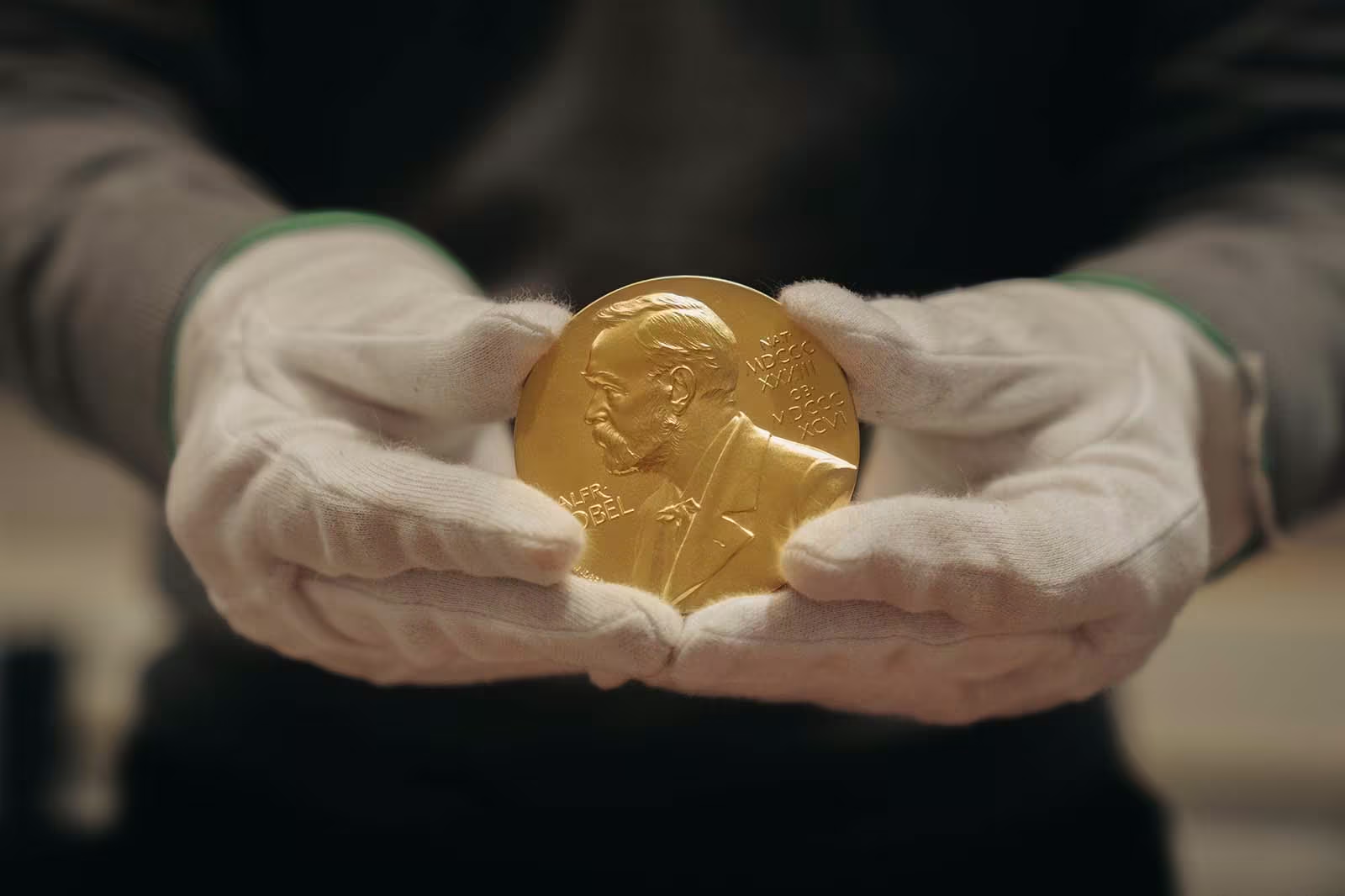
- COFは、2025年のノーベル化学賞の対象となった金属有機構造体(MOF)の、より持続可能な代替材料として位置付けられることがよくあります。MOFとは異なり、COFは金属ノードを含まないため、毒性や環境への懸念を排除できるほか、リサイクル性、耐加水分解性、生体適合性の向上も期待できます。
- 現在最も研究されているCOFはTpPa-1、TAPB-DMTA、TFB-PDAであり、これらが発表された文献の大部分を占めています。主要なCOFの多くは、合成の容易さ、構造の多様性、酸性や湿潤条件下での化学的堅牢性から、イミン結合またはβ-ケトエナミン結合を利用しています。
- COFの応用範囲は、触媒(主要な研究分野)、電池電極、ドラッグデリバリー、光線力学療法、水浄化、ガス分離、オプトエレクトロニクスと多岐にわたります。現在残されている主な課題は、合成のスケールアップ、結晶性の均一化、導電性の向上、そして実環境下での安定性の確保です。AIを活用した設計や、COFとMOF、ポリマー、ナノ材料を組み合わせたハイブリッド材料の研究により、あらゆる面で進歩が加速しています。
共有結合性有機構造体(COF)は、近年注目を集めている魅力的な結晶性多孔質材料の一種です。これらの秩序ある構造は、強力な共有結合で結ばれた有機ビルディングブロックから構築されており、予測可能なトポロジーと優れた構造制御を備えた拡張性のある二次元(2D)または三次元(3D)ネットワークを形成します。
近年、他の多孔質材料も注目を集めており、特に金属有機構造体(MOF)は2025年のノーベル化学賞の対象となりました。MOFはガス分離、触媒、エネルギー貯蔵、センサーなどの生物医学的用途への応用が期待されています。COFも同様の機能を持つため、これらの用途に活用可能です。しかし、MOFやゼオライトなどの他の多孔質材料とは異なり、COFは炭素、水素、窒素、酸素、ホウ素といった軽元素のみで構成されています。
研究者はCAS SciFinderを使用して、専門的な生物学および化学文献を検索し、新規化合物、メカニズム、応用例を特定することができます。
詳細はこちらこの金属を含まない組成により、COF材料は軽量で加水分解を受けにくく、優れた化学的・熱的安定性を備えています。さらに、MOFには毒性や環境への懸念が生じる可能性のある金属ノードが含まれていますが、COFはリサイクル性や毒性の低減といった可能性を秘めた、より持続可能な代替手段を提供します。
また、COFは超高比表面積(多くの場合2000 m²/gを超える)を示し、マイクロ孔からメソ孔スケールまで細孔径を調整可能です。永久多孔性、低密度、容易な表面修飾といった主要な利点に加え、合成前後の修飾が可能な点も特徴です。
結晶性の細孔、調整可能な構造、構造的精密さという独自の組み合わせにより、COFはガス貯蔵・分離、触媒、センシング、オプトエレクトロニクスといった分野の最前線に位置しています。この分野の研究が拡大し続ける中、COFは二酸化炭素回収やクリーンエネルギー貯蔵から、高度なドラッグデリバリーシステムや環境浄化に至るまで、次世代技術においてより重要な役割を果たすことが期待されています。
出版データからも、COFへの関心の高まりが裏付けられています。科学情報の最大の人間によるキュレーションデータベースであるCAS Content Collection™を分析した結果、2005年にYaghiらによってCOFが発見されて以来、この分野が指数関数的に成長していることが確認されました(図1参照)。
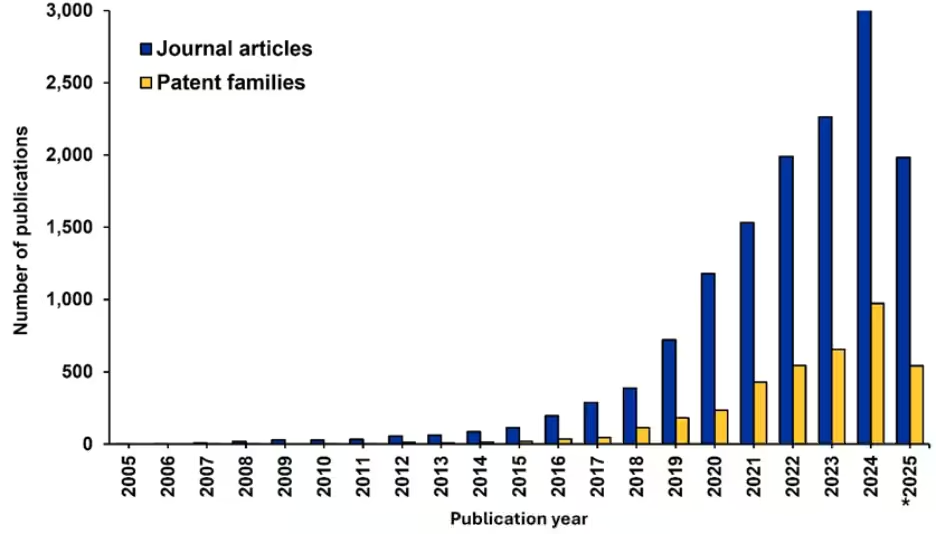
最初の10年間は出版活動は比較的緩やかで、この分野の初期の探索段階を反映していました。2016年頃から学術論文や特許ファミリーの数が急激かつ持続的に増加しており、これは基礎研究からより広範な応用主導型の研究へと移行している兆候です。この成長は、COFに対する科学的関心の拡大と、実社会のイノベーションにおける重要性の高まりを反映しています。
COF構造の仕組み
The exceptional versatility of COFs is attributed to their modular synthesis, wherein carefully selected organic monomers are systematically linked to form extended crystalline networks. These monomers are combined under solvothermal or mechanochemical conditions to form specific linkages, such as imine (C=N), β-ketoenamine, boronate ester, hydrazone, azine, and triazine.
The choice of monomers — their geometry, functionality, and linkage type — directly determines whether the COF adopts a 2D layered structure or a 3D framework. In 2D COFs, planar sheets stack via π–π interactions, while in 3D COFs, tetrahedral or C₃-symmetric building blocks lead to interconnected polyhedral networks. In addition, 2D COFs offer high in-plane conductivity, while 3D COFs provide higher surface areas and interconnected pore networks.
Leveraging tools including CAS SciFinder® and CAS STNext® with the data contained in the CAS Content Collection, we identified the most widely used monomers found in COF structures (see Figure 2a). These monomers included aldehydes such as 1,3,5-Triformylphloroglucinol (Tp), 1,3,5-Benzenetricarboxaldehyde (TFB), 2,5-Dimethoxy-1,4-benzenedicarboxaldehyde (DMTA) and amines such as p-Phenylenediamine (Pa-1 or PDA) , 1,3,5-Tris(4-aminophenyl)benzene (TAPB) and 4,4′,4′′-(1,3,5-Triazine-2,4,6-triyl)tris[benzenamine] (TAPT), each offering distinct reactivity, strong conjugation, and structural influence, which support 2D and 3D architectures.
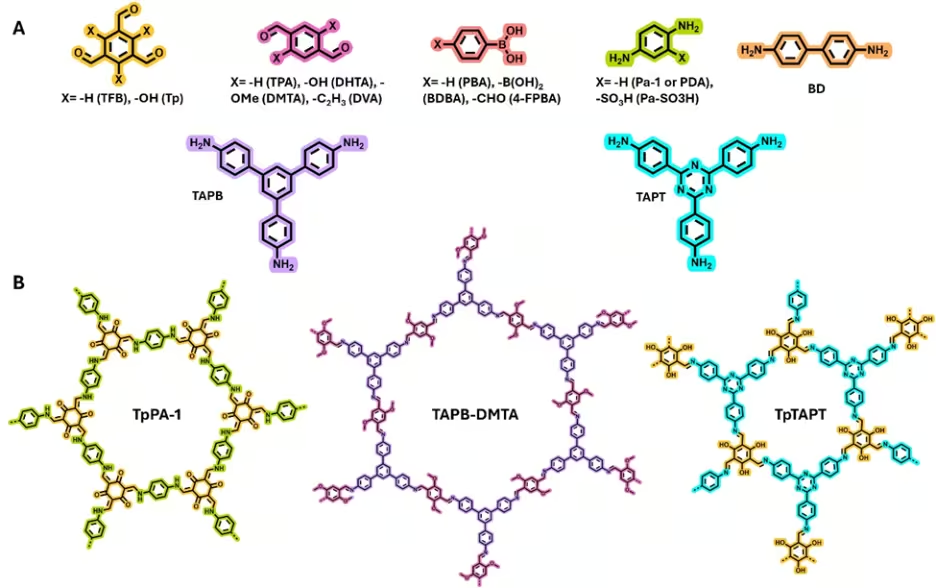
For instance, Tp is valued for forming chemically robust β-ketoenamine linkages when reacting with aromatic amines, leading to COFs that maintain crystallinity even under acidic or humid conditions. This COF structure is therefore ideal for catalysis, sensing, and energy storage.
In addition, more complex, C₃-symmetric amines such as TAPB and TAPT introduce extended π-systems and electron-deficient triazine cores, respectively, which improve crystallinity and chemical resilience. Figure 2b showcases a set of representative COF structures made up of these monomers, like TpPa-1, TpTAPT, and TAPB-DMTA, illustrating the diversity in topology, pore geometry, and dimensionality. These examples demonstrate how variations in monomer geometry (e.g., linear vs. trigonal) and linkage type directly influence material properties such as porosity, crystallinity, and chemical robustness.
We also analyzed the top 10 most frequently utilized COFs in the CAS database (see Figure 3), which revealed TpPa-1 is the most dominant framework, followed by TAPB-DMTA and TFB-PDA. TpPa-1 forms a 2D layered architecture with β-ketoenamine linkages, which confers exceptional stability under harsh chemical and thermal conditions.
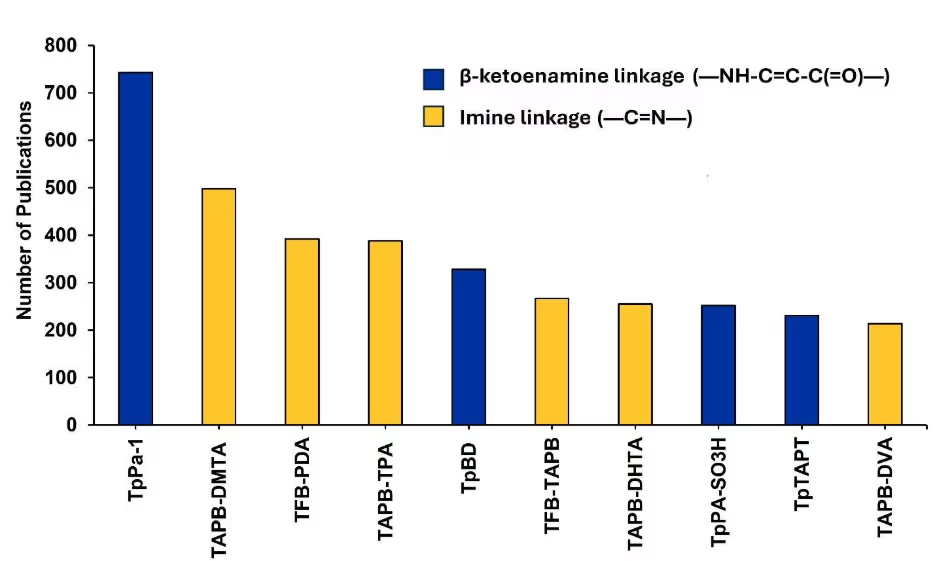
In contrast, TAPB-DMTA and TFB-PDA incorporate imine linkages that facilitate high crystallinity, superior hydrolytic stability, and well-defined pore structures, making them particularly suitable for applications requiring precise molecular organization. Notably, all ten COFs presented in Figure 3 feature either imine or β-ketoenamine linkages, reflecting the widespread use of these linkages in COF design. These linkages offer a unique combination of synthetic accessibility, structural versatility, and chemical robustness. Their ability to form stable, crystalline frameworks with tunable properties makes them the preferred choice for numerous COF research and applications.
COF applications in energy, environmental remediation, and biotechnology
COFs are gaining prominence for their versatility across various scientific and technological domains, including catalysis, biomedicine, sensing, energy and gas storage, and electronics (see Figure 4A). The distribution of relevant publications shows catalysis leading, followed by energy storage and biomedical applications. COFs are also widely employed in environmental remediation due to their non-toxic nature, biocompatibility, and tunable pore sizes tailored to specific pollutants.

Figure 4B focuses on some of the most promising applications of COFs across these domains. For instance, photoactive units (e.g., triazine, porphyrin, benzothiadiazole) and extended π-conjugation in COFs enable visible light absorption, charge separation, and transport. This makes them suitable for photocatalytic and electronic applications such as semiconductors and optoelectronic devices, including light-emitting diodes (LEDs), field-effect transistors (FETs), and photodetectors.
In the energy storage sector, COFs are primarily used in batteries, largely as electrode materials, owing to their ordered porous channels for fast ion diffusion (e.g., Li⁺ or Na⁺) and redox-active sites (e.g., carbonyls, imines, azo units) for reversible charge storage.
In the biomedical field, COFs’ biocompatibility, and modularity support drug delivery and therapeutic uses such as photodynamic therapy, photothermal therapy, and combination therapy. Their high surface area, ordered crystalline porosity, and tunable chemical functionality also enable water purification and desalination; selective sensing of biomolecules, gases, and ions; and efficient adsorption and separation of gases such as CO₂, H₂, and CH₄.
Returning to the top 10 most frequently cited COFs in the literature, we can see how these are used across seven major application domains (see Figure 5). This analysis reveals that nearly all COFs are employed in catalysis, owing to their high surface area, facile functional modification, and excellent recyclability, making them ideal platforms for efficient and selective catalytic processes.
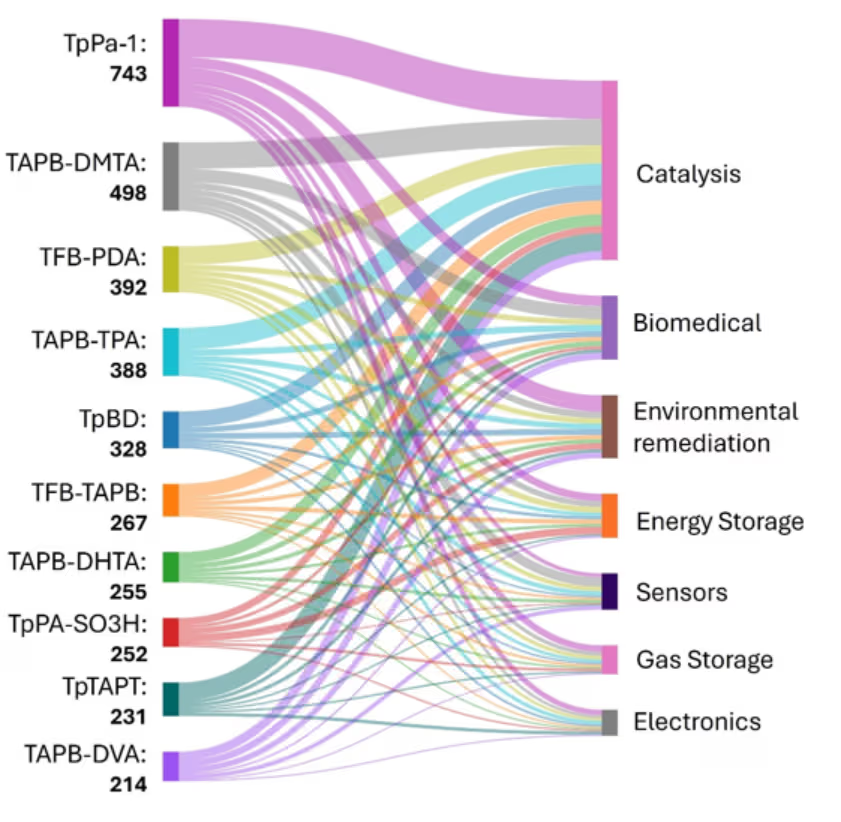
Moreover, while TpPa-1 is also employed for environmental remediation, TAPB-DMTA is widely used for biomedical and sensor applications. Additionally, TpPa-SO3H is prominently used in the energy storage domain. This highlights how the structural and chemical diversity of COFs enables their tailored use across many advanced technologies.
Future outlook for COFs
Despite their promising properties, COFs face several critical challenges that have limited their widespread adoption and commercialization. One of the primary issues is the lack of scalability and reproducibility in synthesis. Many COFs require specific conditions such as solvothermal treatments, long reaction times, or harsh solvents, making large-scale production difficult. Additionally, while COFs are often valued for their crystallinity, achieving high crystallinity and structural uniformity remains a significant challenge, and poor crystallinity can compromise performance.
Limited electrical conductivity in many COFs also restricts their direct use in electronic and energy devices without further modification. Their integration into practical devices remains challenging due to difficulties in processing them into thin films or composites and their susceptibility to degradation in humid, acidic, or oxidative environments.
こうした課題に対処するため、研究者はいくつかの戦略的アプローチを追求しています。メカノケミカル反応、マイクロ波支援反応、室温反応といったスケーラブルで環境負荷の低い合成手法が開発されており、従来のソルボサーマル法に代わる、より効率的で環境に優しい製造プロセスの実現を目指しています。
トポロジー予測やAI支援設計における近年の進歩により、新規COF構造の発見は大幅に加速しました。また、MOF、ポリマー、さらにはナノ材料を組み込むことでハイブリッドCOFを開発する動きもあり、COFと従来の材料の利点を融合させた多機能な可能性が切り拓かれています。こうした進展は、COFが複雑な合成という制約を乗り越え、特定の用途を見据えた設計段階へと移行していることを示唆しています。
モジュール性、結晶性、そして調整可能性を備えたCOFは、エネルギーやガス貯蔵からバイオメディカルに至るまで、幅広い分野を改善する大きな可能性を秘めています。合成手法、機能設計、計算スクリーニングの進歩が続く中、COFは有望な実験室レベルの材料から、持続可能かつ高性能な技術を実現する鍵となる材料へと進化を遂げようとしています。
関連ホワイトペーパー:地政学的リスクが変化する中での半導体化学イノベーションに向けた知的財産戦略の進化
戦略的意思決定の強化---
本稿で使用する略称は以下の通りです。PBA:フェニルボロン酸、4-FPBA:4-ホルミルフェニルボロン酸、Pa-1またはPDA:p-フェニレンジアミン、TpPa-1:1,3,5-トリホルミルフロログルシノールおよびp-フェニレンジアミン、TAPB-DMTA:1,3,5-トリス(4-アミノフェニル)ベンゼンおよび2,5-ジメトキシ-1,4-ベンゼンジカルボキシアルデヒド、TFB-PDA:1,3,5-ベンゼントリカルボキシアルデヒドおよびp-フェニレンジアミン、TAPB-TPA:1,3,5-トリス(4-アミノフェニル)ベンゼンおよび1,4-ベンゼンジカルボキシアルデヒド、TpBD:1,3,5-トリホルミルフロログルシノールおよび4,4'-ジアミノジフェニル、TFB-TAPB:1,3,5-ベンゼントリカルボキシアルデヒドおよび1,3,5-トリス(4-アミノフェニル)ベンゼン、TAPB-DHTA:1,3,5-トリス(4-アミノフェニル)ベンゼンおよび2,5-ジヒドロキシ-1,4-ベンゼンジカルボキシアルデヒド、TpPA-SO3H:1,3,5-トリホルミルフロログルシノールおよび2,5-ジアミノベンゼンスルホン酸、TpTAPT:1,3,5-トリホルミルフロログルシノールおよび4,4',4''-(1,3,5-トリアジン-2,4,6-トリイル)トリス[ベンゼンアミン]、TAPB-DVA:1,3,5-トリス(4-アミノフェニル)ベンゼンおよび2,5-ジエテニル-1,4-ベンゼンジカルボキシアルデヒド、TFB:1,3,5-ベンゼントリカルボキシアルデヒド、Tp:1,3,5-トリホルミルフロログルシノール、TAPB:1,3,5-トリス(4-アミノフェニル)ベンゼン、TAPT:4,4',4''-(1,3,5-トリアジン-2,4,6-トリイル)トリス[ベンゼンアミン]、BDBA:ベンゼン-1,4-ジボロン酸、DHTA:2,5-ジヒドロキシ-1,4-ベンゼンジカルボキシアルデヒド、DMTA:2,5-ジメトキシ-1,4-ベンゼンジカルボキシアルデヒド、DVA:2,5-ジエテニル-1,4-ベンゼンジカルボキシアルデヒド、TPA:1,4-ベンゼンジカルボキシアルデヒド、Pa-SO3H:2,5-ジアミノベンゼンスルホン酸、BD:4,4'-ジアミノジフェニル