.avif)


Resumo executivo
- Os testes no local de atendimento (POCT) estão transformando o diagnóstico ao descentralizar os testes para mais perto dos pacientes, o que permite resultados mais rápidos, decisões de tratamento mais ágeis e melhor acesso à saúde.
- Os dispositivos de POCT estão mais precisos, portáteis e conectados devido aos avanços tecnológicos em microfluídica, IA, smartphones e CRISPR. Esses avanços ajudam os dispositivos de POCT a expandir seu uso em diversas doenças.
- O POCT está se expandindo além das doenças infecciosas e avançando em direção a condições crônicas e complexas, como câncer, distúrbios cardiovasculares, neurológicos e metabólicos, apoiando tanto o diagnóstico precoce quanto o monitoramento contínuo da doença.
- O campo está caminhando para inovações de próxima geração, como biossensores integrados a smartphones, dispositivos de diagnóstico vestíveis, aplicações de oncologia de precisão e diagnósticos moleculares baseados em CRISPR.
O diagnóstico está no centro da saúde moderna, orientando quase 70% das decisões clínicas enquanto representa apenas uma fração do gasto médico total. Informações diagnósticas precisas e oportunas permitem a detecção precoce de doenças, orientam estratégias de tratamento adequadas, evitam intervenções desnecessárias e apoiam o monitoramento eficaz da saúde pública.
No entanto, o diagnóstico tradicionalmente depende de uma infraestrutura laboratorial centralizada, exigindo pessoal qualificado, instrumentos sofisticados, ambientes controlados e tempos de resposta prolongados. Essas restrições podem atrasar a tomada de decisão clínica, limitar o acesso em locais remotos ou com recursos limitados e criar gargalos durante surtos ou picos na demanda por testes. Nesse contexto, o teste no local de atendimento (POCT) surgiu como uma solução transformadora que redefine onde e como as informações diagnósticas podem ser geradas.
Ao contrário dos testes laboratoriais convencionais, o POCT entrega resultados onde os pacientes estão, seja em clínicas, prontos-socorros, farmácias, ambulâncias, locais de trabalho ou até mesmo em casa. Essa mudança elimina atrasos de transporte e reduz a dependência do fluxo de trabalho laboratorial, permitindo que os médicos tomem decisões práticas em tempo real (veja a Figura 1). O impacto do POCT é profundo: diagnóstico mais rápido de infecções, início mais precoce de terapias adequadas, melhor gestão de doenças crônicas e maior acessibilidade para populações carentes.
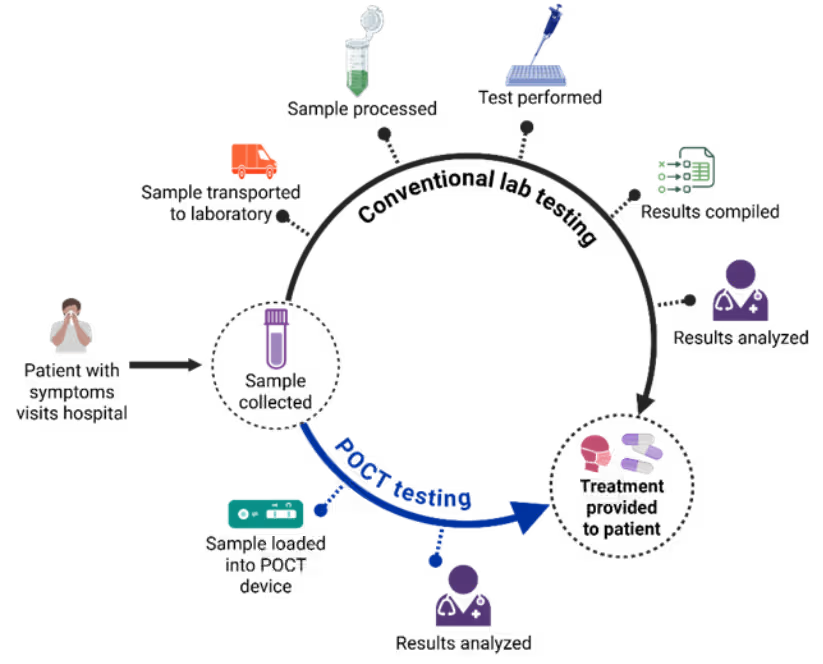
Figura 1: POCT comparado ao teste laboratorial convencional. Ilustração criada com BioRender.com.
Um dispositivo de POCT geralmente integra três componentes funcionais: manuseio de amostras, onde os espécimes dos pacientes são coletados e preparados; um módulo de detecção, que realiza ensaios imunológicos ou moleculares usando sensores como transdutores eletroquímicos ou ópticos; e uma interface de leitura, que exibe os resultados e frequentemente se conecta a plataformas digitais para compartilhamento de dados em tempo real. Esses elementos trabalham juntos para fornecer diagnósticos rápidos e precisos.
Estamos vendo essa transformação no diagnóstico refletida nas tendências de publicação. Analisamos a CAS Content Collection™, a maior base de dados de informações científicas publicadas com curadoria humana, usando o CAS SciFinder® e o CAS IP Finder, com tecnologia STNTM, e descobrimos que o POCT evoluiu de um tópico periférico para uma importante fronteira de pesquisa na última década, com uma aceleração acentuada durante e após a pandemia de COVID-19 (veja a Figura 2).

Figura 2: Tendências de publicação no campo de POCT. Os dados incluem artigos de periódicos e famílias de patentes, definidas como grupos de patentes relacionadas depositadas em múltiplas jurisdições para proteger a mesma invenção. *Os dados de 2025 são parciais até novembro. Fonte: CAS Content Collection.
A produção de publicações, incluindo artigos de periódicos e famílias de patentes, aumentou drasticamente, superando 3.000 anualmente nos últimos anos. Notavelmente, durante os anos de pico da pandemia, 2021 e 2022, aproximadamente um terço dessas publicações estava diretamente relacionado à COVID-19, ressaltando o papel fundamental do POCT na resposta à pandemia e o urgente impulso global por soluções de testes rápidas e descentralizadas.
Pesquisadores que exploram tendências semelhantes podem usar os recursos de pesquisa habilitados por IA no CAS SciFinder para realizar análises como as mostradas na Figura 2 deste artigo.
Inovações tecnológicas em testes no local de atendimento (POCT)
Para garantir qualidade e confiabilidade, as inovações atuais em POCT alinham-se aos critérios atualizados REASSURED da Organização Mundial da Saúde: conectividade em tempo real, facilidade na coleta de amostras, acessibilidade financeira, sensibilidade, especificidade, facilidade de uso, rapidez e robustez, dispensa de equipamentos e facilidade de entrega aos usuários finais. Esses atributos servem como referência para os dispositivos POCT modernos. Vários avanços importantes estão facilitando o crescimento desses dispositivos:
Tecnologias de plataforma e sensores
Nossa análise de tendências de publicações revelou que os ensaios imunológicos dominam a literatura de pesquisa em POCT (64%), com os imunoensaios de fluxo lateral (LFIA) liderando significativamente (44%). Observamos um crescimento acentuado após 2018, impulsionado pelas demandas da pandemia de COVID-19 por testes rápidos escaláveis e autoadministrados (veja a Figura 4A). As inovações em LFIA documentadas na literatura incluem preparo de amostras aprimorado, capacidades de multiplexação e integração com smartphones, reforçando seu papel nos testes descentralizados.
As tecnologias de POCT molecular ganharam força substancial nas publicações de pesquisa, com métodos baseados em PCR e amplificação isotérmica oferecendo alta sensibilidade sem a necessidade de instrumentação complexa, enquanto plataformas habilitadas por CRISPR alcançaram marcos regulatórios com autorizações de uso emergencial da FDA para SHERLOCK e DETECTR em 2022, estimulando formatos híbridos de LFIA-CRISPR.
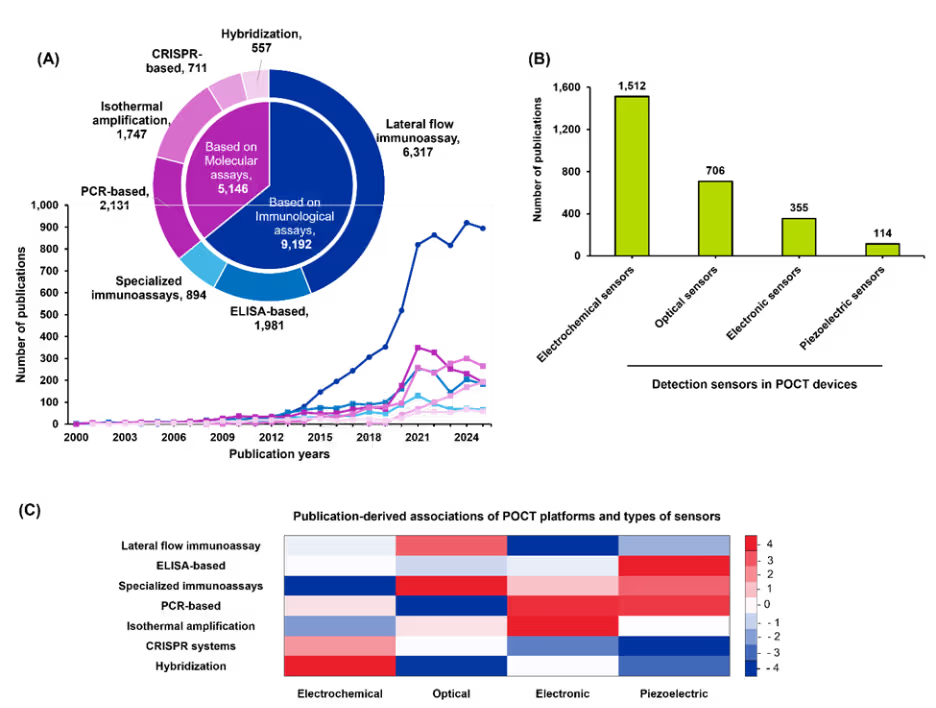
Figura 4: (A) Tendências de publicações (gráfico de linhas) e distribuição de plataformas de POCT (gráfico de pizza) com base nos princípios dos ensaios. (B) Distribuição relativa de publicações sobre sensores de detecção usados em dispositivos POCT. (C) Mapa de calor de resíduos padronizados para associações entre plataformas de POCT e doenças. As células vermelhas indicam super-representação e as células azuis indicam sub-representação em relação à independência; a intensidade reflete a magnitude do desvio (escore z). Células com |z| ≥ 2 foram consideradas desvios notáveis da independência. Dados de 2000 a 2025. Os dados de 2025 são parciais até novembro. Fonte: CAS Content Collection.
As inovações em sensores refletem esses avanços nos ensaios, com sensores eletroquímicos dominando o design de dispositivos POCT devido à sua miniaturização, baixos requisitos de energia e compatibilidade com detecção multiplexada (veja a Figura 4B). Os sensores ópticos representam o segundo método de detecção mais pesquisado, permitindo detecção por fluorescência e colorimétrica com alta sensibilidade para ensaios multiplexados. Os sensores eletrônicos, embora menos prevalentes em publicações, fornecem capacidades críticas de processamento de sinal digital para sistemas de saúde conectados, enquanto os sensores piezoelétricos permanecem como um nicho na pesquisa, mas oferecem vantagens únicas na detecção sem marcador para aplicações ultrassensíveis.
Para avaliar se as plataformas de diagnóstico estão associadas a tipos específicos de sensores, realizamos um teste de independência qui-quadrado com base nas frequências de publicação, e os níveis de associação resultantes estão resumidos na Figura 4C. No geral, a análise indica preferências de emparelhamento claras, porém moderadas, entre plataformas e sensores.
As plataformas eletroquímicas tenderam a ocorrer com mais frequência com sensores baseados em hibridização, e as plataformas ópticas mostraram uma preferência semelhante por imunoensaios especializados. Em contrapartida, as plataformas eletroquímicas foram usadas com menos frequência do que o esperado com imunoensaios especializados. Esses padrões destacam comportamentos sistemáticos de alinhamento e evitação entre as combinações de plataforma e sensor.
Aplicações específicas por doença
O POCT é utilizado em diversas categorias de doenças, com as doenças infecciosas liderando o cenário de P&D (veja a Figura 5A). Os diagnósticos virais e bacterianos dominam devido ao seu papel crítico na preparação para surtos e no uso racional de antimicrobianos, particularmente durante e após a pandemia de COVID-19 (veja a Figura 5B).
Os esforços de POCT viral concentram-se principalmente em patógenos respiratórios, como SARS-CoV-2, influenza e VSR, mas também abrangem condições não respiratórias, incluindo HIV e vírus da hepatite. Para infecções bacterianas, as plataformas de POCT visam patógenos relacionados à sepse, tuberculose e infecções sexualmente transmissíveis, como clamídia e gonorreia, além de painéis de resistência antimicrobiana para testes rápidos de suscetibilidade.
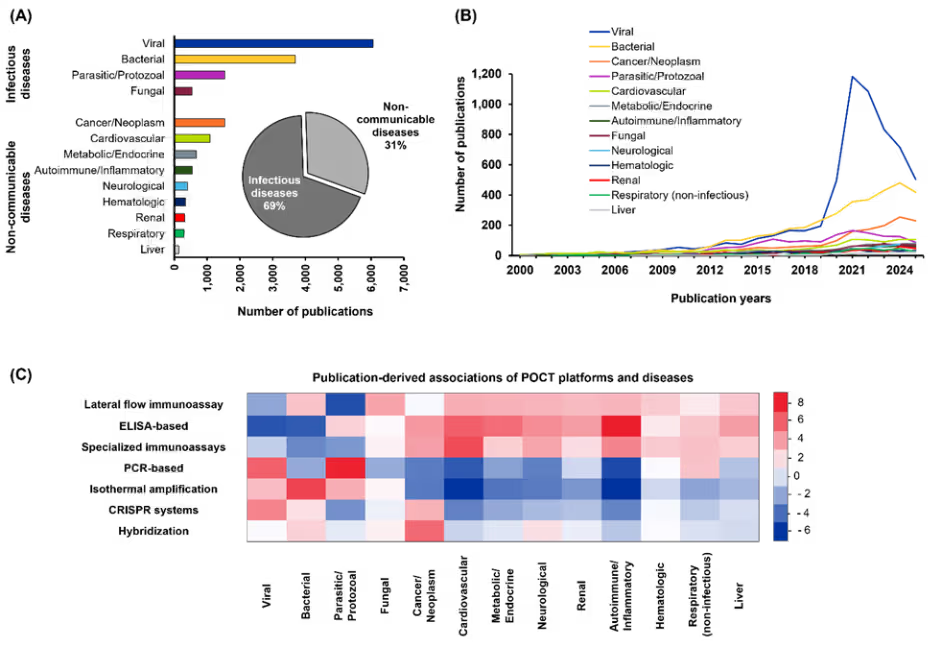
Figura 5: (A) Distribuição relativa de doenças infecciosas e não transmissíveis. (B) Tendências anuais de publicações por categorias de doenças de 2000 a 2025. (C) Mapa de calor de resíduos padronizados para associações entre plataformas de POCT e doenças. As células vermelhas indicam super-representação e as células azuis indicam sub-representação em relação à independência; a intensidade reflete a magnitude do desvio (escore z). Células com |z| ≥ 2 foram consideradas desvios notáveis da independência. Os dados incluem publicações em periódicos e patentes. Os dados de 2025 são parciais até novembro. Fonte: CAS Content Collection.
Os diagnósticos de doenças parasitárias e fúngicas permanecem áreas relativamente subdesenvolvidas devido à menor prevalência dessas condições e aos incentivos comerciais limitados, embora inovações em ensaios de fluxo lateral e moleculares estejam surgindo. O POCT relacionado ao câncer ocupa o terceiro lugar e apresenta crescimento constante, impulsionado por abordagens baseadas em biópsia líquida para DNA tumoral circulante, chips microfluídicos para detecção multiplexada de marcadores tumorais e biossensores eletroquímicos para monitoramento de terapia.
Além da oncologia, o POCT para doenças não transmissíveis está se expandindo rapidamente. As aplicações cardiovasculares aproveitam ensaios de alta sensibilidade para troponina e peptídeo natriurético tipo B (BNP) para cuidados agudos e monitoramento remoto, enquanto os diagnósticos de doenças autoimunes empregam painéis portáteis de proteína C-reativa e citocinas para o perfil de inflamação em tempo real.
O POCT neurológico está surgindo por meio de ensaios para biomarcadores de Alzheimer (amiloide-β, tau) e proteínas relacionadas a acidente vascular cerebral, apoiados por plataformas eletroquímicas e de imunossensores. Distúrbios metabólicos, como o diabetes, continuam a impulsionar a inovação no monitoramento de glicose, detecção de cetonas e POCT de HbA1c usando sistemas microfluídicos e integrados a smartphones. O POCT hematológico inclui ensaios rápidos de hemoglobina e coagulação, bem como plataformas portáteis para triagem de doença falciforme e anemia em locais com recursos limitados. O POCT para doenças genéticas está avançando por meio de PCR portátil, amplificação isotérmica e plataformas baseadas em CRISPR para detecção rápida de mutações.
Para determinar se certas categorias de doenças estão preferencialmente ligadas a plataformas de POCT específicas, aplicamos novamente um teste de independência qui-quadrado com base nas frequências de publicação (veja a Figura 5C). Os resultados indicam padrões de emparelhamento claramente não aleatórios. As plataformas de POCT baseadas em imunoensaio foram usadas com muito mais frequência para doenças autoimunes e inflamatórias, enquanto as plataformas baseadas em PCR foram favorecidas para infecções parasitárias e protozoárias. Os métodos de amplificação isotérmica mostraram uma preferência pronunciada por doenças bacterianas, mas foram usados com menos frequência para condições cardiovasculares e autoimunes.
Essas tendências sugerem preferências de pesquisa distintas, com plataformas de imunoensaio dominando condições crônicas e distúrbios relacionados ao sistema imunológico, enquanto plataformas de amplificação de ácidos nucleicos são mais proeminentes na pesquisa de doenças infecciosas.
Avanços impulsionados por amostras
O progresso tecnológico ampliou a gama de espécimes biológicos compatíveis com o POCT. Nossa análise das tendências de publicação revelou que as amostras derivadas de sangue continuam sendo a escolha predominante devido ao seu alto rendimento diagnóstico e integração com os fluxos de trabalho clínicos.
Espécimes não invasivos, como urina e saliva, ganharam força, impulsionados pela demanda por coletas mais simples para o paciente e pelo crescimento dos diagnósticos domiciliares e de telessaúde. Essas matrizes permitem testes descentralizados sem a necessidade de pessoal treinado, melhorando a acessibilidade e a adesão (veja a Figura 6A). Em contrapartida, espécimes como líquido cefalorraquidiano, suor e lágrimas permanecem sub-representados devido a desafios na coleta e à validação limitada de biomarcadores (veja a Figura 6B).
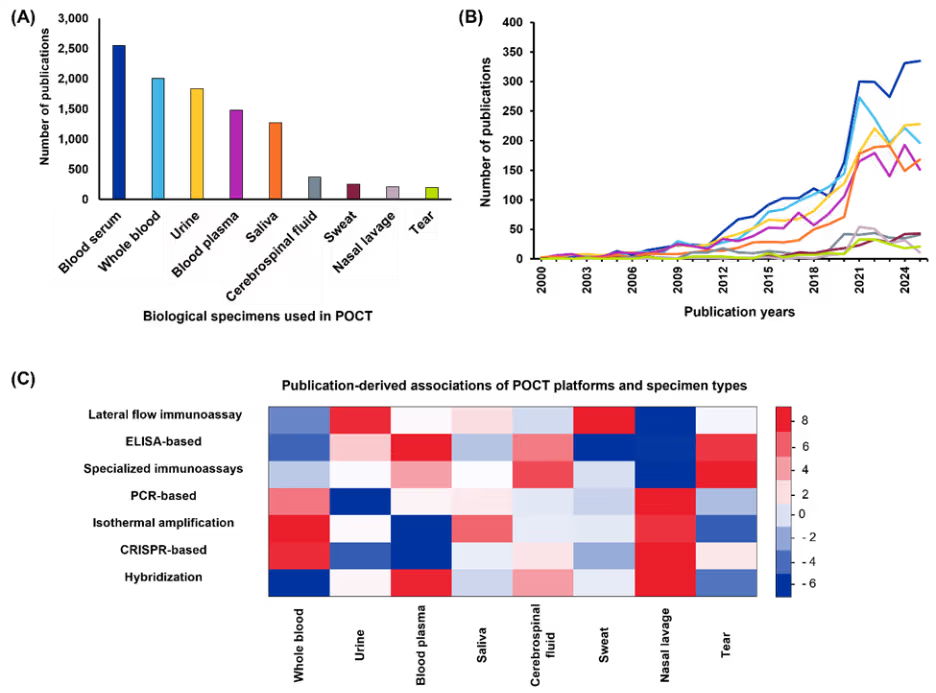
Figura 6: (A) Distribuição relativa de espécimes biológicos em pesquisas de POCT (B) Tendências anuais de publicação para cada tipo de espécime de 2000 a 2025 (C) Mapa de calor de resíduos padronizados para associações entre plataforma de POCT e tipo de espécime. Células vermelhas indicam super-representação e células azuis indicam sub-representação em relação à independência; a intensidade reflete a magnitude do desvio (escore z). Células com |z| ≥ 2 foram consideradas desvios notáveis da independência. Os dados incluem publicações de periódicos e patentes. Os dados de 2025 são parciais até novembro. Fonte: CAS Content Collection.
Examinamos ainda se as publicações sobre plataformas de POCT indicam associações preferenciais com tipos específicos de espécimes (veja a Figura 6C). Semelhante à nossa análise específica por doença, os resultados do teste qui-quadrado indicaram tendências claras de emparelhamento não aleatório. Plataformas baseadas em PCR foram usadas com muito mais frequência com amostras de lavagem nasal e sangue total, enquanto métodos de amplificação isotérmica foram mais comuns para testes de sangue total.
Imunoensaios de fluxo lateral foram aplicados a diversos espécimes, mas demonstraram ênfase distinta em urina e suor, enquanto plataformas baseadas em ELISA foram predominantemente associadas ao soro. Esses padrões refletem considerações práticas sobre a viabilidade da coleta, abundância de biomarcadores e compatibilidade de ensaios relatadas na literatura.
Microfluídica e integração lab-on-a-chip
As tecnologias de microfluídica e lab-on-a-chip desempenharam um papel transformador no avanço das plataformas de POCT ao permitir a manipulação precisa de volumes de microlitros a nanolitros, integrando a preparação da amostra, o manuseio de reagentes, a amplificação e a detecção em dispositivos compactos. Nossa análise de publicações do CAS identificou mais de 3.000 publicações de pesquisa focadas em microfluídica em POCT, com uma tendência de crescimento constante nos últimos anos.
A microfluídica tem sido fundamental para POCT baseado em PCR, onde o ciclo térmico rápido, a redução do risco de contaminação e a diminuição do tempo de resposta são essenciais. Além disso, elementos microfluídicos são cada vez mais incorporados em cartuchos avançados de LFA para permitir o fluxo de fluido controlado, multiplexação e melhor desempenho quantitativo, tornando menos nítida a distinção entre testes tradicionais baseados em tiras e diagnósticos baseados em chips.
A microfluídica centrífuga ("lab-on-disc") e as plataformas de gotículas controladas digitalmente facilitam a análise automatizada, incluindo amplificação de ácidos nucleicos, imunoensaios e testes de resistência antimicrobiana, minimizando o uso de reagentes. Inovações como bombas acionadas magneticamente permitem dispositivos portáteis e autônomos para ambientes com poucos recursos, abordando desafios de custo e integração de fluxo de trabalho.
Tecnologias digitais e integradas
A integração com smartphones, IA e conectividade IoT baseada em nuvem estão convergindo para criar ecossistemas de POCT altamente conectados. Leitores de smartphone equipados com algoritmos de IA transformam resultados qualitativos de fluxo lateral em análises quantitativas, reduzindo falsos negativos e permitindo a transmissão de dados em tempo real para redes de saúde. Algoritmos de IA de borda (edge-AI) incorporados em dispositivos de POCT portáteis também podem melhorar a interpretação de resultados, permitir análises preditivas e reduzir vieses por meio de modelos energeticamente eficientes otimizados para uso local. Esses sistemas suportam a interoperabilidade com registros eletrônicos de saúde (EHRs) e empregam protocolos seguros de manuseio de dados para mitigar riscos de cibersegurança, garantindo a conformidade com as regulamentações de privacidade.
Modelos de aprendizado de máquina incorporados também aumentam a precisão da interpretação, automatizam fluxos de trabalho e apoiam diagnósticos preditivos, como demonstrado pelo ensaio de "coffee-ring" impulsionado por IA da UC Berkeley. Coletivamente, essas tecnologias oferecem sistemas de POCT portáteis, inteligentes e conectados que combinam precisão de nível laboratorial com acessibilidade descentralizada.
Avanços de próxima geração em testes no local de atendimento (point-of-care)
As tecnologias de POCT continuam a avançar, particularmente com o amadurecimento de capacidades impulsionadas por IA e novos tipos de ensaios:
- Diagnósticos moleculares baseados em CRISPR: Sistemas CRISPR/Cas (Cas12, Cas13) integrados com amplificação isotérmica e biossensores multiplexados oferecem detecção ultrassensível para agentes infecciosos, distúrbios genéticos e cânceres.
- Biossensores integrados a smartphones: Os smartphones são cada vez mais utilizados como plataformas integradas para detecção óptica, eletroquímica e colorimétrica, usando câmeras integradas ou acessórios de potenciostato portáteis.
- Farmacogenômica e aplicações em oncologia de precisão: Ensaios farmacogenômicos no local de atendimento (por exemplo, detecção de variantes DPYD, UGT1A1, TPMT) orientam a dosagem de quimioterapia em tempo real, o que pode reduzir a toxicidade dos medicamentos e melhorar a eficácia do tratamento.
- Dispositivos de diagnóstico vestíveis: Dispositivos como adesivos, tecidos inteligentes e lentes de contato realizam testes próximos ao paciente de forma contínua, sem a necessidade de flebotomia clínica, permitindo feedback rápido aos usuários e profissionais de saúde.
Desafios e oportunidades em testes no local de atendimento (point-of-care)
Apesar do progresso notável, o POCT enfrenta vários desafios críticos que precisam ser abordados para um avanço contínuo:
- Harmonização regulatória: A consistência permanece complexa devido às diferentes vias de aprovação em várias regiões.
- Garantia de qualidade e padronização: A natureza descentralizada dos POCT pode comprometer a consistência dos resultados, a menos que seja apoiada por sistemas robustos de treinamento e controle de qualidade.
- Segurança e privacidade de dados: Essas preocupações intensificaram-se com o aumento da conectividade, exigindo estruturas robustas de cibersegurança para proteger as informações dos pacientes em redes de testes distribuídas.
Esses desafios são formidáveis, mas a perspectiva de mercado para as tecnologias de POCT é sólida. Projeta-se que alcance US$ 78,19 bilhões até 2029, com uma taxa de crescimento anual composta (CAGR) de 11,4%, impulsionada em grande parte por avanços em plataformas de testes multiplex, dispositivos de diagnóstico molecular portáteis, ferramentas de diagnóstico baseadas em smartphones, conectividade e integração de dados aprimoradas e o surgimento de soluções de POCT com IA. Embora dispositivos individuais de POCT possam ter custos mais altos por teste, vários estudos de modelagem (por exemplo, NAAT para HIV em bebês, PCR para gripe/VSR) mostram que o POCT frequentemente reduz os custos gerais de saúde por meio da redução de internações hospitalares e do início mais rápido do tratamento.
Como vimos na pandemia de COVID-19, realizar testes e diagnósticos fora de um ambiente clínico tradicional traz benefícios críticos para os pacientes e para os sistemas públicos de saúde. Ao enfrentar os desafios contínuos para o desenvolvimento de POCT por meio de alinhamento regulatório, segurança digital, sinergia de fluxo de trabalho e estruturas de qualidade robustas, podemos oferecer tratamentos mais rápidos e uma medicina mais personalizada em todo o mundo.