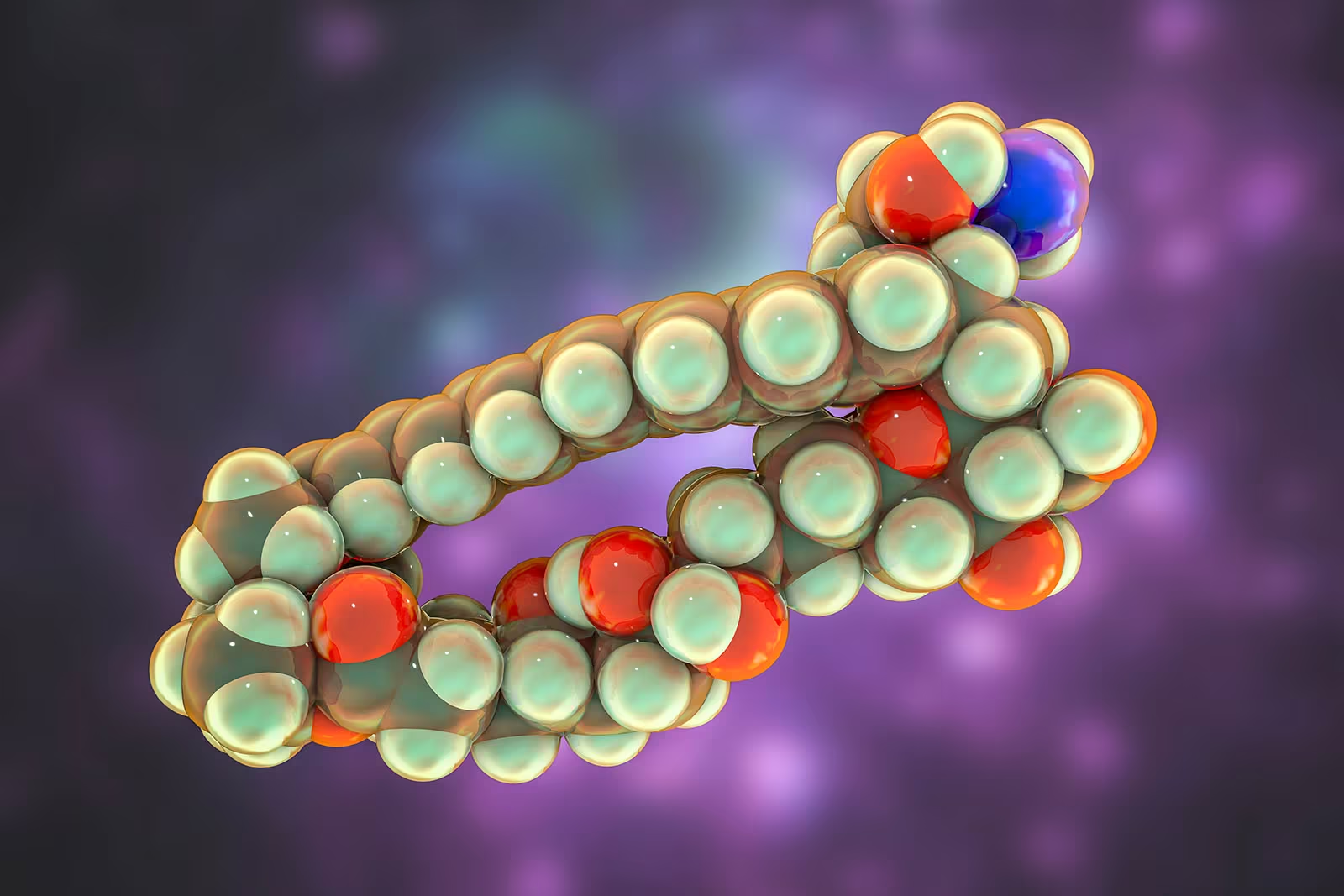

As terapias com peptídeos surgiram como uma modalidade promissora na medicina humana nas últimas décadas, devido à sua alta especificidade, perfis de segurança favoráveis e expansão do espaço de design químico. Vemos isso mais recentemente no crescimento explosivo dos agonistas do receptor de GLP-1, como a semaglutida. Entre todos os fármacos peptídicos aprovados pela FDA, cerca de 25% pertencem à categoria dos peptídeos cíclicos. Os peptídeos cíclicos são uma classe de polipeptídeos nos quais a cadeia de aminoácidos é covalentemente fechada para formar uma estrutura em anel por meio de várias estratégias de cicatrização. Essa topologia os distingue dos peptídeos lineares e confere maior rigidez conformacional, estabilidade proteolítica e melhor afinidade de ligação.
Normalmente, os peptídeos cíclicos ocupam uma faixa de peso molecular intermediária de ~500–3000 Da, situando-os entre pequenas moléculas e grandes produtos biológicos em tamanho e complexidade. Sua arquitetura cíclica confere várias vantagens, incluindo maior resistência à degradação enzimática, melhor ligação ao alvo e, crucialmente, o potencial para biodisponibilidade oral, um obstáculo de longa data nas terapias baseadas em peptídeos. Esses compostos estruturalmente restritos ocupam um espaço químico único, combinando a alta especificidade e afinidade dos grandes produtos biológicos com as propriedades farmacocinéticas favoráveis de moléculas menores.
As equipes de pesquisa podem usar o CAS BioFinder para encontrar novos alvos potenciais para o tratamento de doenças, orientar caminhos de pesquisa com uma compreensão dos mecanismos e vias da doença e identificar sinais precoces de potencial terapêutico em alvos prováveis.
O mercado global de peptídeos cíclicos está experimentando um crescimento constante, impulsionado por suas vantagens estruturais únicas em comparação com os peptídeos lineares. O mercado está projetado para atingir quase US$ 3,6 bilhões em 2026, com uma taxa de crescimento anual composta (CAGR) de 6,5-6,7%, chegando a cerca de US$ 5,3 bilhões até 2032. As aplicações biofarmacêuticas dominam, particularmente em oncologia, doenças autoimunes e doenças infecciosas, apoiadas por avanços na síntese em fase sólida, plataformas de triagem de exibição (como exibição de mRNA e exibição de fagos) e design computacional.
Os principais players no mercado de peptídeos cíclicos incluem Bicycle Therapeutics, Merck, Bachem e Apellis Pharmaceuticals, enquanto usos emergentes em diagnósticos, proteção ambiental e biossensores estão expandindo a presença no mercado. Esse crescimento reflete o papel dos peptídeos cíclicos como uma modalidade fundamental no desenvolvimento de produtos biológicos de próxima geração.
Exploramos dados da CAS Content CollectionTM , a maior coleção de informações científicas publicadas com curadoria humana, para fornecer uma visão abrangente dos peptídeos cíclicos com foco em seu potencial terapêutico. Nossas descobertas indicam que a via de administração oral está ganhando cada vez mais atenção, conforme refletido por um aumento constante nas publicações nos últimos anos.
Veja o artigo relacionado no Journal of Medicinal Chemistry, "Cyclic Peptides in Modern Drug Discovery: Trends and Therapeutic Directions."
Além da administração, também examinamos como propriedades específicas, como tipos de peptídeos, tipos de cicatrização e certas modificações peptídicas, coocorrem com áreas terapêuticas, potenciais alvos moleculares e vias de administração. Juntos, esses insights fornecem uma visão abrangente das tendências emergentes que estão moldando o futuro do desenvolvimento de terapias com peptídeos cíclicos.
Tendências na pesquisa de peptídeos cíclicos a partir de dados do CAS
Para mapear o panorama das publicações, acessamos dados da CAS Content Collection por meio das ferramentas CAS SciFinder® e CAS IP Finder, com tecnologia STNTM e realizamos uma análise quantitativa. Isso revelou uma trajetória de crescimento constante de 2006 a 2025, com publicações em periódicos dominando consistentemente a produção de pesquisa (veja a Figura 1). Os artigos de periódicos representam aproximadamente 66% do total de publicações, enquanto as patentes representam 34%, indicando uma forte ênfase na pesquisa fundamental juntamente com aplicações comerciais.

As tendências anuais mostram uma aceleração notável na atividade de publicação começando por volta de 2015, com o pico de produção observado entre 2021 e 2024. Notavelmente, em 2023 e 2024, as publicações de patentes superaram os artigos de periódicos, sugerindo um foco crescente na comercialização e na pesquisa aplicada nos últimos anos.
Em seguida, examinamos os dados da seção CAS, resultantes de uma indexação robusta pelos analistas do CAS, para entender as principais áreas de inovação relacionadas aos peptídeos cíclicos (veja a Figura 2). No geral, os produtos farmacêuticos dominam consistentemente o cenário, mostrando um aumento acentuado de 2022 até um pico em 2024 (aumento de mais de 2 vezes), refletindo um forte interesse translacional em peptídeos cíclicos para o desenvolvimento terapêutico.
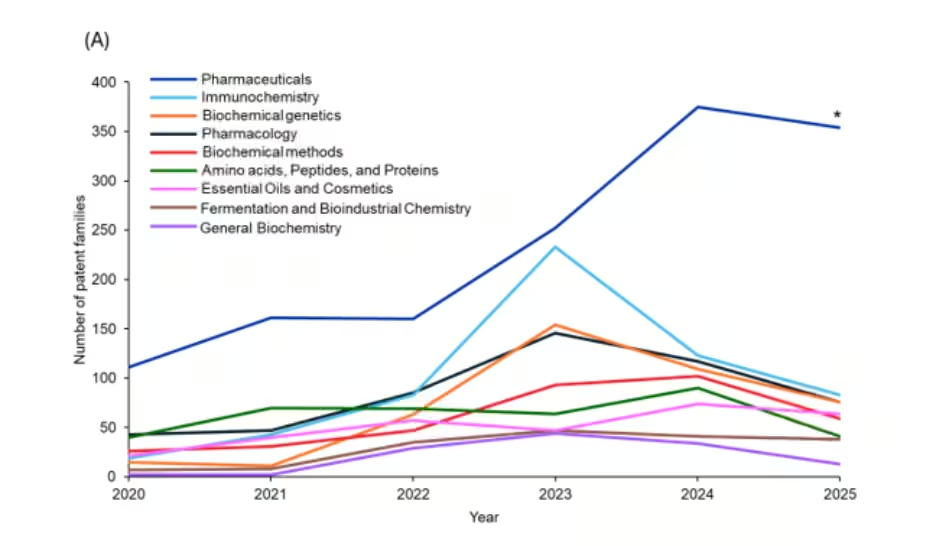
Imunoquímica, genética bioquímica, farmacologia e métodos bioquímicos também apresentam crescimentos notáveis, sugerindo uma atividade crescente em imunomoduladores à base de peptídeos e metodologias de produção. Juntas, essas tendências indicam que o crescimento nas patentes de peptídeos cíclicos é impulsionado não apenas por aplicações terapêuticas, mas também por seu uso crescente em ferramentas bioquímicas, tecnologias de plataforma e biotecnologia industrial.
Peptídeos cíclicos como terapêuticos
Para investigar as tendências emergentes em terapêutica com peptídeos cíclicos, realizamos uma análise detalhada de dados de substâncias de 2020 a 2025 no CAS REGISTRY®. Incluímos em nossa análise substâncias indexadas com as seguintes funções CAS: terapêutica (THU), farmacológica (PAC) ou farmacocinética (PKT). Suas representações SMILES correspondentes foram processadas usando RDKit para avaliação estrutural.
Ao aplicar esse fluxo de trabalho, identificamos 46.574 peptídeos cíclicos. A classificação baseou-se nos seguintes critérios: (1) A molécula contém pelo menos um anel (has_any_ring = True); (2) A molécula possui ≥ 2 ligações amida no total (len(amide_bidx) ≥ 2); (3) Pelo menos um anel incorpora ≥ 2 ligações amida do tipo espinha dorsal, com ambas as extremidades adjacentes a carbonos α. Um peptídeo foi considerado cíclico apenas se todas essas três condições fossem verdadeiras.
Em seguida, analisamos as principais áreas terapêuticas mencionadas em nosso conjunto de dados e observamos a distribuição desses peptídeos cíclicos entre elas. A análise mostra uma clara predominância em oncologia (veja a Figura 3).

Doenças infecciosas e inflamatórias representam os próximos grandes grupos. Doenças autoimunes e cardiovasculares também aparecem com destaque, embora com um número substancialmente menor de publicações em comparação ao câncer. Distúrbios metabólicos e neurodegenerativos representam áreas de exploração menores, porém emergentes. No geral, essas tendências destacam que, embora os peptídeos cíclicos estejam sendo investigados em um amplo cenário terapêutico, o câncer e as doenças infecciosas permanecem como os principais impulsionadores da atividade de pesquisa.
Tendo identificado mais de 46.000 peptídeos cíclicos, nosso próximo passo foi analisar esses peptídeos usando o RDKit para determinar os tipos de peptídeos cíclicos (com base no número de aminoácidos que contêm), o tipo de ciclização presente em um determinado peptídeo e quais modificações, se houver, estavam presentes nesses peptídeos.
Tipos de peptídeos cíclicos
Os peptídeos cíclicos representam uma classe estruturalmente diversa de biomoléculas que podem ser categorizadas de acordo com sua origem, a natureza das ligações que formam o anel e o número de resíduos de aminoácidos envolvidos. Do ponto de vista da origem, eles podem ser naturais, produzidos por microrganismos, plantas ou organismos marinhos, ou gerados sinteticamente por meio de síntese química para aplicações farmacológicas personalizadas.
Com base no tipo de ligação, os peptídeos cíclicos podem ser divididos nas classes homodética, isopeptídica e depsipeptídica. Os peptídeos cíclicos homodéticos, como a ciclosporina A, são caracterizados por anéis compostos exclusivamente por ligações peptídicas padrão entre o grupo α-carboxila de um resíduo e o grupo α-amino de outro.
Os peptídeos cíclicos isopeptídicos, exemplificados pelas microcistinas e bacitracina, contêm pelo menos uma ligação amida não-α, frequentemente envolvendo cadeias laterais, que conferem diversidade estrutural e atividade biológica única.
As depsipeptídeos, incluindo aureobasidina A, kahalalida F e didemnina B, apresentam pelo menos uma ligação éster (lactona) no lugar de uma ligação amida, frequentemente formada entre o grupo carboxila C-terminal e a cadeia lateral hidroxila de resíduos de serina ou treonina, e são notáveis por suas potentes propriedades farmacológicas.
A classificação por tamanho de anel destaca ainda mais a diversidade funcional dos peptídeos cíclicos. Os dipeptídeos cíclicos, ou dicetopiperazinas, são os membros mais simples, tipicamente rígidos e resistentes à proteólise. Os tripeptídeos, ligeiramente maiores e com maior flexibilidade conformacional, apresentam propriedades antioxidantes e anti-inflamatórias. Os tetrapeptídeos, com menor tensão de anel, exibem maior estabilidade e são amplamente estudados para modulação de receptores e atividade farmacológica. Os pentapeptídeos equilibram a diversidade conformacional e a estabilidade, tornando-os estruturas atraentes para o design de fármacos com melhor biodisponibilidade.
Em geral, tetra e pentapeptídeos são considerados o limite para uma estabilização confiável, uma vez que anéis menores, como di e tripeptídeos, podem sofrer com a tensão de anel, enquanto estruturas macrocíclicas maiores ganham estabilidade conformacional e versatilidade funcional. Peptídeos macrocíclicos, bem como arquiteturas bicíclicas e policíclicas, exibem estabilidade excepcional e propriedades de ligação altamente específicas, exemplificadas por moléculas como vancomicina, daptomicina e defensinas.
O termo “peptídeo macrocíclico” tem sido definido de forma vaga na literatura, e não existe um limite rigoroso conhecido para o número de aminoácidos em um peptídeo macrocíclico. Aqui, com base em relatórios publicados anteriormente e opiniões de especialistas na área, consideramos qualquer peptídeo cíclico com seis ou mais aminoácidos como um peptídeo macrocíclico. Peptídeos bicíclicos ou policíclicos possuem estruturas complexas com dois (bi-) ou mais (poli-) anéis cíclicos. Coletivamente, essas classificações ressaltam a riqueza estrutural e funcional dos peptídeos cíclicos, que continuam a servir como modelos valiosos na descoberta de fármacos, biologia química e desenvolvimento terapêutico.
Tipos de ciclização
Os peptídeos cíclicos exibem uma notável diversidade estrutural, e o modo de ciclização influencia fortemente sua estabilidade e propriedades biológicas. A ciclização cabeça-cauda é a mais prevalente, formando um anel fechado entre a amina N-terminal e o grupo carboxila C-terminal (veja a Figura 4). Essa orientação elimina extremidades livres, conferindo resistência à degradação por exopeptidases e, frequentemente, aumentando a permeabilidade da membrana e a entrega intracelular.
As ciclizações cabeça-lado e lado-cauda introduzem fechamentos de anel alternativos ao ligar extremidades a cadeias laterais reativas, o que pode ajustar a rigidez conformacional e a exposição superficial de grupos funcionais. A ciclização lado-lado, como a formação de pontes dissulfeto entre resíduos de cisteína, estabiliza estruturas secundárias e permite o controle redox reversível, tornando-a útil na mimetização de hormônios peptídicos naturais e toxinas.
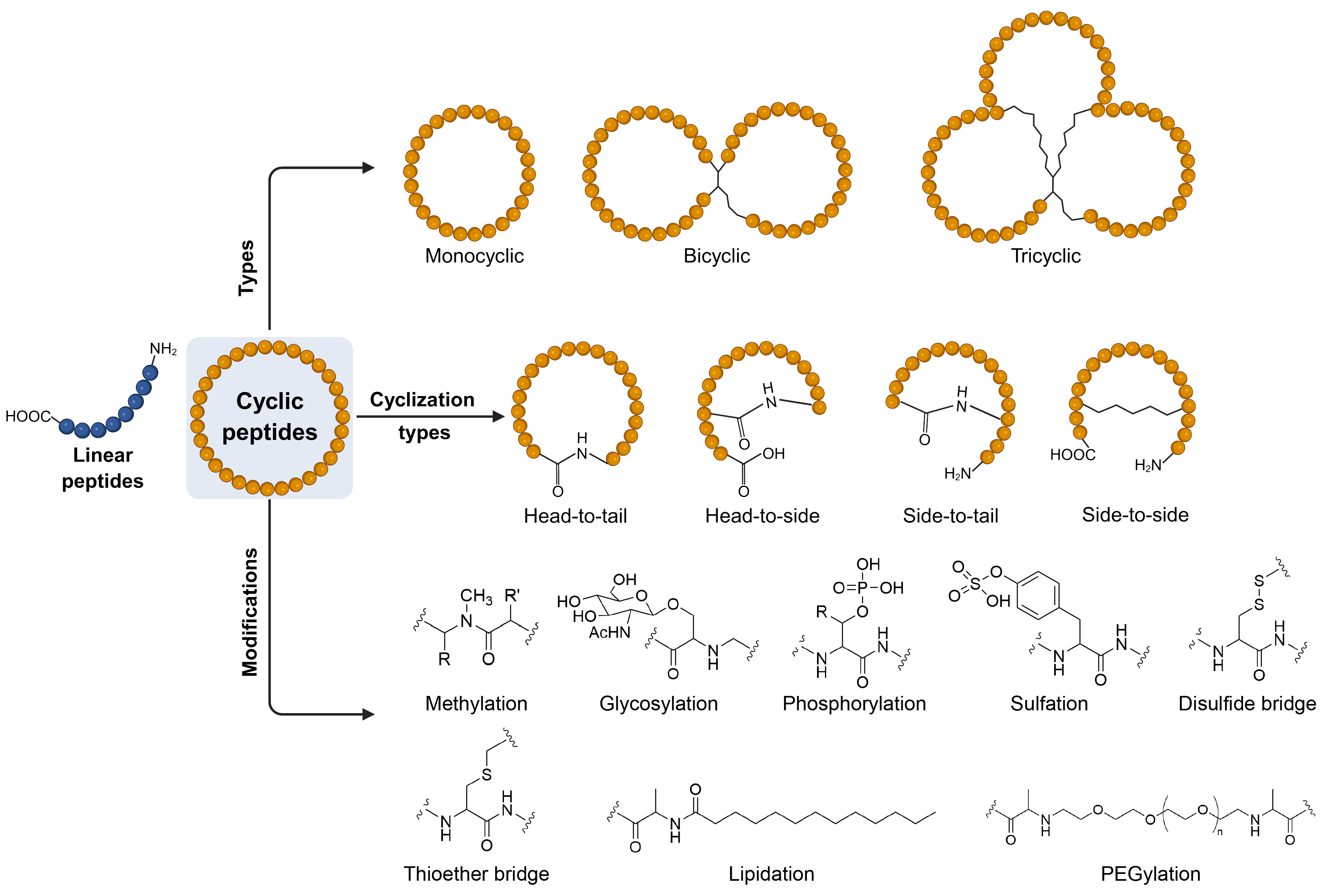
Além dessas estratégias canônicas, a ciclização em modo misto combina múltiplas ligações para criar arquiteturas híbridas com complexidade aprimorada. Tais designs podem travar peptídeos em conformações altamente definidas, melhorando a seletividade do receptor, a biodisponibilidade e a estabilidade térmica. Ao escolher cuidadosamente a orientação da ciclização, os químicos podem modular a solubilidade do peptídeo, a resistência à degradação enzimática e o comportamento farmacocinético geral.
Conforme observado, analisamos peptídeos cíclicos com papéis CAS THU, PAC e PKT da CAS Content Collection usando RDKit para classificá-los com base em seu tipo e tipo de ciclização (veja a Figura 5). Para isso, selecionamos o anel com o maior número de ligações amida (provavelmente o macrociclo principal). Em seguida, contamos todas as ligações amida nesse anel (ignorando o filtro de carbono alfa para nomenclatura de tamanho). Por fim, aplicamos a seguinte classificação: se o peptídeo contém 2 amidas → dipeptídeo cíclico; 3 amidas → tripeptídeo cíclico; 4 amidas → tetrapeptídeo cíclico; 5 amidas → pentapeptídeo cíclico; e ≥ 6 amidas → peptídeo macrocíclico. Se houvesse mais de um anel contendo amida, os peptídeos eram classificados como bicíclicos ou policíclicos.
Para determinar o tipo de ciclização, os átomos de carbono da carbonila e de nitrogênio da amida foram identificados e verificados quanto à adjacência. Se o N da amida estivesse adjacente a um carbono alfa, ele era marcado como cabeça (espinha dorsal). Se o C da carbonila estivesse adjacente a um carbono alfa, ele era marcado como cauda (espinha dorsal). O tipo de ciclização foi determinado com base em se as duas extremidades envolviam ambas como espinha dorsal (cabeça-cauda), uma N espinha dorsal e a outra como C cadeia lateral (cabeça-lateral), uma N cadeia lateral e a outra como C espinha dorsal (lateral-cauda), e ambas as extremidades como cadeias laterais (lateral-lateral).

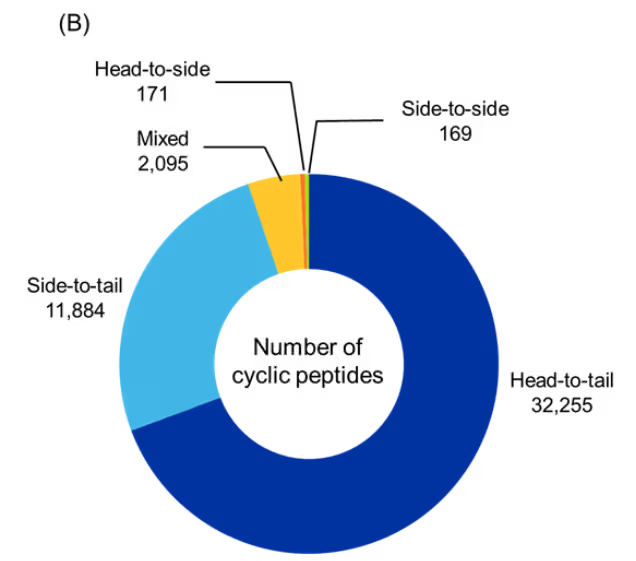
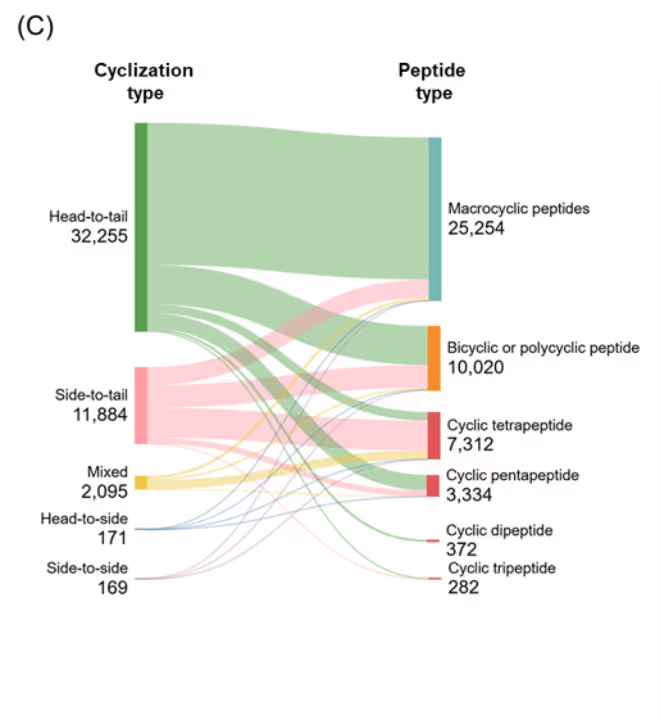
Nossa análise mostrou que os peptídeos macrocíclicos foram os mais prevalentes, representando mais da metade dos peptídeos cíclicos identificados, seguidos por estruturas bicíclicas e policíclicas (veja a Figura 5A). Em contraste, dipeptídeos e tripeptídeos cíclicos foram os menos comuns, sugerindo que peptídeos maiores são geralmente preferidos para aplicações terapêuticas devido à sua estabilidade superior e versatilidade funcional.
Entre as estratégias de ciclização, a ciclização cabeça-cauda foi a mais dominante, representando quase dois terços dos peptídeos cíclicos identificados, seguida por ciclizações lateral-cauda e mistas. Cabeça-lateral e lateral-lateral representam uma pequena fração dos peptídeos cíclicos, indicando que esses tipos de ciclização podem não ser preferidos ou tão explorados (veja a Figura 5B).
A análise de coocorrência entre o tipo de peptídeo e a estratégia de ciclização revelou que a maioria dos peptídeos ciclizados cabeça-cauda forma arquiteturas macrocíclicas, enquanto as ciclizações lateral-cauda e mistas contribuem de forma mais diversificada para estruturas bicíclicas/policíclicas e tamanhos de anel menores, como tetrapeptídeos e pentapeptídeos (veja a Figura 5C). No geral, essas descobertas ressaltam a forte associação entre a estratégia de ciclização e a arquitetura peptídica resultante.
Ligações de ciclização e modificações químicas/bioconjugadas
Peptídeos cíclicos podem ser estabilizados por meio de diversas ligações de ciclização, como dissulfeto, éter, tioéter, éster e tioéster, cada uma conferindo propriedades estruturais e funcionais únicas.
As ligações dissulfeto, formadas entre resíduos de cisteína, estão entre as mais comuns e conferem rigidez conformacional, embora possam ser sensíveis a reações redox. As ligações tioéter e éter proporcionam maior estabilidade química em comparação com os dissulfetos, pois são resistentes à redução e à clivagem proteolítica.
As ligações éster em peptídeos cíclicos aumentam a resistência a proteases, a solubilidade e o controle conformacional, tornando-as úteis para melhorar a estabilidade e as propriedades semelhantes às de fármacos. As ligações tioéster, por sua vez, desempenham um papel fundamental na biossíntese natural e na ciclização sintética ao permitir deslocamentos de acila, facilitando a macrociclização eficiente e mimetizando vias biológicas. Além disso, substituições de amida por éster em peptídeos cíclicos também podem melhorar sua permeabilidade de membrana. Essas ligações de ciclização influenciam diretamente o potencial terapêutico dos peptídeos cíclicos ao modular a estabilidade, a biodisponibilidade e a afinidade pelo alvo.
Modificações químicas ou bioconjugadas em peptídeos constituem uma estratégia fundamental no design racional de novas entidades peptídicas e na expansão de seu repertório funcional. Ao aplicar metodologias químicas bem estabelecidas, é possível modular parâmetros físico-químicos essenciais, incluindo carga líquida, hidrofobicidade, flexibilidade conformacional, anfifilicidade e composição de sequência que, coletivamente, governam a estabilidade e o desempenho biológico do peptídeo.
Tais modificações direcionadas permitem que os pesquisadores superem as limitações intrínsecas dos peptídeos nativos, melhorando assim o comportamento farmacocinético, aumentando a atividade biológica e ampliando a aplicabilidade terapêutica. Os avanços contínuos nas estratégias de modificação estão impulsionando o progresso na ciência dos peptídeos, estabelecendo peptídeos modificados como plataformas versáteis para estudos mecanísticos e aplicações translacionais.
Algumas modificações importantes e seu significado estão resumidos na tabela abaixo:
| Modificação | Significado |
|---|---|
| Metilação |
Melhora a biodisponibilidade oral Melhora a resistência a proteases Aumenta a permeabilidade de membrana |
| Glicosilação |
Melhora a solubilidade e a estabilidade, aumenta a meia-vida Aumenta a ligação ao alvo Reduz a imunogenicidade |
| Lipidação |
Aumenta a permeabilidade da membrana Melhora a seletividade e a potência do receptor Aumenta a estabilidade enzimática |
| Fosforilação | Impacta a conformação do peptídeo e as interações com proteínas-alvo |
| Sulfatação | Melhora a ligação ao receptor e a solubilidade em meio aquoso |
| PEGilação |
Reduz a depuração renal Prolonga a meia-vida circulatória |
Tabela 1: Modificações peptídicas e seu significado. Fonte: CAS Content Collection.
Nossa análise concentrou-se em ligações de cicatrização (dissulfeto e tioéter) e modificações químicas listadas na Tabela 1. As ligações dissulfeto foram as mais comuns, seguidas pelas ligações tioéter. Entre as modificações químicas, a N-metilação foi a mais prevalente, seguida por modificações complexas (envolvendo múltiplas alterações) e lipidação. A glicosilação, a PEGilação, a sulfatação e a fosforilação foram comparativamente raras, provavelmente porque essas modificações são mais especializadas e frequentemente usadas para melhorar a solubilidade, a biodisponibilidade ou o direcionamento, em vez de serem aplicadas de forma ampla em todas as classes de peptídeos (ver Figura 6A).
A análise de coocorrência entre modificações e tipo de peptídeo revelou que peptídeos maiores, macrocíclicos e bicíclicos/policíclicos, exibem modificações diversas e extensas, enquanto peptídeos menores tendem a apresentar menos modificações (ver Figura 6B). Essa tendência sugere que a complexidade estrutural oferece mais oportunidades para ajustes funcionais, o que é fundamental para otimizar o desempenho terapêutico.


Também exploramos as coocorrências entre vários tipos de peptídeos e vias de administração, principais áreas terapêuticas e potenciais alvos moleculares. Como visto na Figura 7, isso revela várias tendências na relação provável entre as características do design de peptídeos e as vias de administração preferenciais.

- As vias de administração oral, retal e intravenosa (I.V.) dominam quase todas as classes de peptídeos, indicando que essas vias permanecem as mais viáveis para diversas estruturas peptídicas. Peptídeos macrocíclicos, bicíclicos e policíclicos estão fortemente representados nas vias oral e I.V., o que é consistente com sua maior estabilidade metabólica e rigidez estrutural.
- As vias subcutânea (S.C.) e transdérmica tiveram poucos peptídeos cíclicos associados a elas em nosso conjunto de dados. Peptídeos macrocíclicos e policíclicos são menos dominantes nas vias intramuscular e nasal. Seu tamanho grande, rigidez, solubilidade aquosa limitada e absorção deficiente os tornam pouco adequados para vias intramusculares e nasais, que dependem da rápida absorção de medicamentos na circulação sistêmica.
- Alguns dos peptídeos cíclicos de tamanho intermediário (como tetra e pentapeptídeos) estão sendo explorados para vias intramusculares e nasais.
- A via tópica parece ter sido explorada principalmente para infecções bacterianas da pele e condições inflamatórias da pele, como dermatite atópica.
- Entre os tipos de cicatrização, os tipos cabeça-cauda, lado-cauda e misto apresentam a maior coocorrência com as vias oral, retal e I.V., provavelmente devido à sua alta estabilidade e resistência a proteases.
Um exame mais detalhado dos padrões de modificação destaca como diferentes estratégias químicas influenciam a compatibilidade com certas vias de administração.
- A N-metilação apresenta uma das maiores coocorrências nas vias oral, retal e intravenosa, reforçando seu papel bem estabelecido no aumento da resistência a proteases e na melhoria da permeabilidade de membrana ao reduzir doadores de ligação de hidrogênio.
- As ligações dissulfeto e tioéter também coocorrem de forma proeminente nas principais vias, refletindo seu uso generalizado na estabilização de estruturas secundárias de peptídeos e na restrição de conformações para aumentar a estabilidade metabólica.
- A glicosilação e a lipidação apresentam uma distribuição distinta, coocorrendo principalmente com a via oral.
- A PEGuilação parece ser uma modificação que coocorre majoritariamente com formulações intravenosas, melhorando sua meia-vida.
- A categoria de modificações complexas, ou seja, mais de uma modificação, apresenta uma coocorrência notável com as principais vias, refletindo como os desenvolvedores de fármacos peptídicos estão empregando estratégias de modificação química combinatória para abordar simultaneamente as barreiras multifatoriais associadas a essas vias.
Em seguida, analisamos as coocorrências de peptídeos cíclicos com diversas doenças e observamos uma forte predominância de peptídeos macrocíclicos em quase todas as áreas terapêuticas. Encontramos uma coocorrência especialmente alta com câncer, doenças infecciosas, inflamatórias e autoimunes (veja a Figura 8).

Essa tendência reforça a vantagem estrutural dos macrociclos — maior estabilidade, área de superfície para interação com o alvo e a capacidade de modular alvos tradicionalmente considerados "indrogáveis" — o que se alinha bem aos desafios mecanísticos nessas doenças.
Além dos peptídeos macrocíclicos, os peptídeos bicíclicos e policíclicos também apresentam uma coocorrência relativamente alta em todas as áreas terapêuticas. Pentapeptídeos e tetrapeptídeos cíclicos mostram coocorrências notáveis, embora em grau muito menor, sugerindo que, embora esses arcabouços sejam valorizados por sua rigidez e seletividade, eles possuem aplicabilidade mais restrita ou enfrentam maiores limitações sintéticas.
Nossa análise destaca alguns pontos específicos, como em doenças autoimunes: pentapeptídeos cíclicos, macrocíclicos e peptídeos bi ou policíclicos parecem ser amplamente explorados. No geral, dipeptídeos e tripeptídeos cíclicos parecem apresentar aplicabilidade limitada na maioria das áreas terapêuticas.
A coocorrência entre padrões de cicatrização e áreas terapêuticas destaca a preferência bem conhecida por peptídeos ciclicados cabeça-cauda, devido à sua confiabilidade em conferir restrição conformacional e resistência a proteases sem a introdução de químicas complexas (veja a Figura 9).
Entre as modificações, as ligações dissulfeto e tioéter, a N-metilação e as modificações complexas apresentam maiores coocorrências em todas as áreas terapêuticas. As coocorrências relativas de outras modificações sugerem que seu uso é seletivo, em vez de ter uma aplicabilidade ampla.
Aproveitamos nossos dados de conceitos CAS, curados por especialistas, para identificar proteínas que frequentemente coocorrem com nossos peptídeos cíclicos identificados, a fim de compreender tendências relacionadas a diferentes tipos de peptídeos, estratégias de cicatrização e modificações químicas. Esses dez potenciais alvos moleculares, mostrados na Figura 9, representam uma coleção diversificada que abrange múltiplos compartimentos e funções celulares, mas que compartilham características comuns que os tornam atraentes para terapias com peptídeos cíclicos.

Os alvos identificados incluem reguladores imunológicos da superfície celular (PD1/PDL1/PDL2), proteínas de sinalização intracelular (Ras, SOS1, STAT3), fatores nucleares (TP53, família MDM), enzimas secretadas (Fator IIa), mediadores inflamatórios (superfamília TNF) e receptores metabólicos (família MCR), sendo que a maioria tem implicações significativas em câncer, doenças autoimunes ou distúrbios metabólicos. Embora a "drogabilidade" tradicional varie amplamente, desde alvos altamente tratáveis como o Fator IIa e a superfamília TNF até proteínas historicamente "indrogáveis" como Ras e TP53, todos representam alvos viáveis para peptídeos cíclicos devido ao seu envolvimento em interações proteína-proteína (PPIs), grandes interfaces de ligação ou reconhecimento natural de ligantes peptídicos.
Sua aparição frequente na literatura sobre peptídeos cíclicos reflete sua alta importância terapêutica e as vantagens únicas que os peptídeos cíclicos oferecem: superfícies de ligação maiores para interfaces de PPI rasas, maior seletividade por meio de restrição conformacional, permeabilidade de membrana ajustável para alvos intracelulares e a capacidade de acessar locais de ligação indisponíveis para pequenas moléculas tradicionais, tornando-os valiosos para abordar alvos terapêuticos anteriormente intratáveis. Deve-se notar que nem todas essas publicações mencionam essas proteínas como alvos diretos de terapias com peptídeos cíclicos, podendo tê-las mencionado em outros contextos.
A Figura 9 mostra padrões claros: peptídeos macrocíclicos parecem coocorrer com vários alvos moleculares, particularmente aqueles associados a PD-1/PD-L1, família Ras e SOS1. Isso indica uma forte preferência por arcabouços macrocíclicos em bibliotecas de peptídeos, provavelmente devido à sua rigidez conformacional e estabilidade.
A cicatrização cabeça-cauda surge como a estratégia dominante. Abordagens de cicatrização lateral-cauda e mista aparecem com mais frequência com proteínas como MDM, p53 e Fator IIa, enquanto modificações químicas como a N-metilação estão frequentemente associadas a proteínas Ras. Pontes dissulfeto e multimodificações ocorrem amplamente, refletindo práticas de design voltadas para melhorar a estabilidade e a permeabilidade.
Desafios e oportunidades com peptídeos cíclicos oralmente biodisponíveis
Os biológicos tradicionais, como anticorpos monoclonais e proteínas recombinantes, revolucionaram o tratamento de doenças que vão desde o câncer até distúrbios autoimunes. Sua capacidade de interagir com PPIs com alta especificidade possibilitou o direcionamento de vias anteriormente consideradas "indrogáveis". No entanto, essas macromoléculas são limitadas pela necessidade de administração parenteral, o que reduz a adesão do paciente, aumenta os custos de saúde e complica a logística do tratamento, especialmente para condições crônicas que exigem doses frequentes.
Por outro lado, pequenas moléculas oferecem biodisponibilidade oral e facilidade de administração, mas frequentemente carecem da área de superfície e da flexibilidade conformacional necessárias para modular efetivamente as PPIs. Essa dicotomia criou um vazio terapêutico: alvos que exigem a precisão dos biológicos, mas a simplicidade de administração dos medicamentos orais, permanecem em grande parte inacessíveis. Os peptídeos cíclicos, com seu tamanho intermediário e propriedades ajustáveis, estão em uma posição única para preencher essa lacuna.
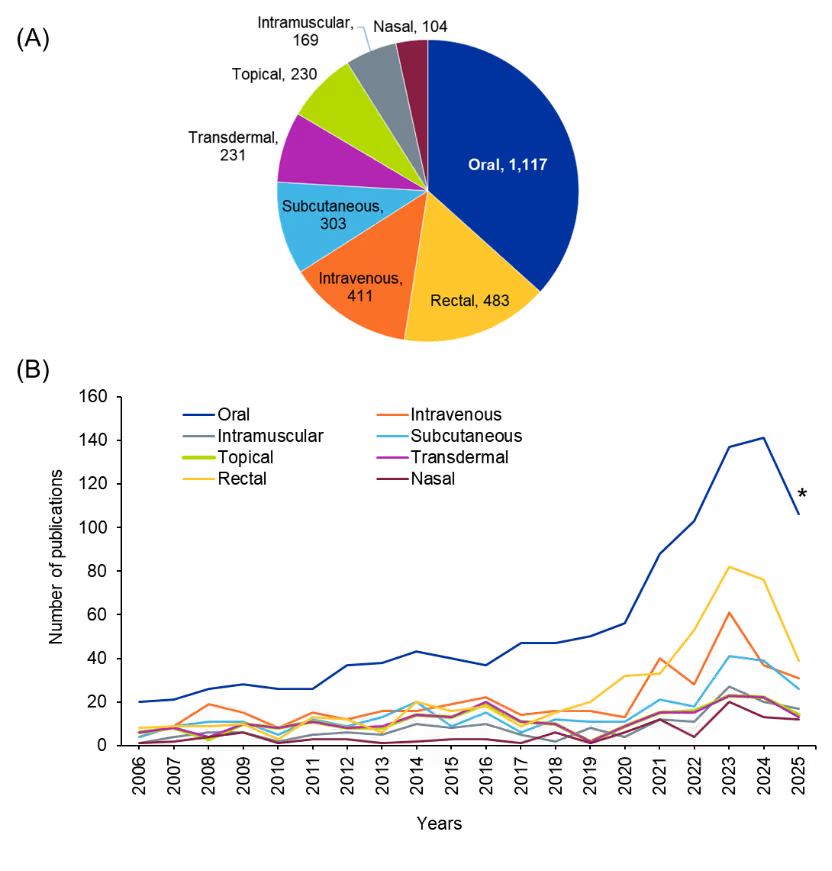
Nossa análise do conjunto de dados de peptídeos cíclicos revelou tendências distintas na exploração de diferentes vias de administração de medicamentos na literatura. No geral, a via oral dominou o campo, representando a maior proporção de publicações (veja a Figura 10) e mostrando um aumento acentuado e sustentado no interesse ao longo da última década. Essa tendência reflete a crescente ênfase na melhoria da biodisponibilidade oral e da estabilidade dos peptídeos cíclicos, uma área historicamente considerada desafiadora devido ao seu tamanho e polaridade. Em comparação, outras vias, incluindo retal, I.V., S.C., transdérmica, tópica, intramuscular e nasal, parecem muito menos representadas, com números de publicações relativamente modestos e estáveis ao longo do tempo.
Principais desafios na administração oral de peptídeos cíclicos
A baixa biodisponibilidade oral dos peptídeos cíclicos decorre de inúmeros fatores interdependentes, incluindo restrições físico-químicas, biologia do trato gastrointestinal (GI), degradação enzimática, efluxo ativo e metabolismo de primeira passagem, que resultam em uma absorção oral baixa e variável:
1. Limitações físico-químicas: A maioria dos peptídeos cíclicos possui alto peso molecular (tipicamente >500 Da), grandes áreas de superfície polar e numerosos doadores e aceitadores de ligação de hidrogênio, que violam as regras convencionais de design de medicamentos orais, como a Regra dos Cinco de Lipinski e os critérios de Veber. Essas propriedades limitam a permeação passiva pela membrana, um requisito fundamental para a absorção oral.
A cicatrização pode reduzir a flexibilidade conformacional e mascarar grupos polares por meio de ligações de hidrogênio intramoleculares, melhorando a estabilidade proteolítica e, às vezes, a permeabilidade. No entanto, a polaridade residual, o tamanho e a rigidez excessiva ainda dificultam a difusão transcelular e a passagem paracelular. Alcançar um equilíbrio entre a solubilidade aquosa (para dissolução nos fluidos GI) e a lipofilicidade (para partição na membrana) continua sendo um grande desafio de formulação. Essas barreiras físico-químicas são os principais impulsionadores da baixa permeabilidade observada em modelos in vitro, como células Caco-2, e estudos in vivo.
2. Degradação enzimática e instabilidade química: O canal alimentar e a borda em escova apresentam um rico complemento de proteases (pepsina, tripsina, quimotripsina, peptidases da borda em escova) e microambientes ácidos/alcalinos que clivam ligações peptídicas ou modificam cadeias laterais lábeis. Embora a cicatrização aumente frequentemente a resistência às proteases em relação aos peptídeos lineares, muitos arcabouços cíclicos ainda apresentam ligações suscetíveis ou resíduos expostos ao solvente que podem ser atacados por enzimas. Além disso, reações químicas dependentes de pH (desamidação, epimerização) podem reduzir ainda mais a fração do medicamento intacto que chega às superfícies absortivas.
3. Barreira de muco e arquitetura epitelial: O gel de muco que recobre o epitélio atua como uma barreira ao prender ou retardar a difusão de moléculas que interagem com a mucina, especialmente peptídeos grandes, carregados ou hidrofóbicos, reduzindo assim sua concentração efetiva na superfície epitelial. Estudos mostram que peptídeos cíclicos como a ciclosporina A podem agregar mucinas formadoras de gel (MUC2, MUC5AC, MUC5B), dificultando ainda mais sua difusão.
Além da camada de muco, as junções estreitas restringem o transporte paracelular a pequenos solutos (tipicamente <500 Da), excluindo efetivamente a maioria dos peptídeos cíclicos. Essas junções formam uma barreira seletivamente permeável que impede a passagem de macromoléculas e peptídeos entre as células epiteliais. Transportadores de captação dedicados para grandes arcabouços cíclicos são raros. Como resultado, os peptídeos cíclicos dependem da difusão passiva transcelular ou da endocitose mediada por receptor/lectina, que geralmente são ineficientes.
4. Efluxo ativo e metabolismo de primeira passagem: Muitos arcabouços peptídicos e macrocíclicos são substratos para bombas de efluxo, como a glicoproteína P (P-gp) e proteínas de resistência a múltiplas drogas (MRPs), que os transportam ativamente de volta para o lúmen intestinal, reduzindo assim a captação líquida e limitando a biodisponibilidade oral. Mesmo quando os peptídeos são absorvidos pelos enterócitos, eles podem sofrer degradação por enzimas intracelulares e hepáticas, resultando em uma perda metabólica substancial de primeira passagem e contribuindo para a variabilidade interindividual na exposição sistêmica.
A ciclosporina A, um exemplo clássico de peptídeo cíclico disponível por via oral, ilustra como estratégias de formulação (por exemplo, microemulsões, lipossomas, complexos de ciclodextrina) e interações com transportadores como a P-gp podem levar a uma ampla gama de biodisponibilidade em diferentes populações de pacientes e tipos de produtos.
5. Variabilidade farmacocinética e implicações clínicas: O efeito combinado da variabilidade da dissolução, trânsito GI, estado alimentado/jejum, interações com o microbioma e expressão de transportadores/enzimas resulta em perfis farmacocinéticos erráticos para muitos peptídeos cíclicos administrados por via oral. A baixa biodisponibilidade absoluta frequentemente exige grandes doses orais ou alternativas parenterais, aumentando o custo e reduzindo a conveniência e a adesão do paciente.
Estratégias para superar os desafios na administração oral
Para transformar peptídeos cíclicos em terapêuticas orais práticas, as estratégias contemporâneas operam em três níveis complementares: (1) engenharia molecular para melhorar a permeabilidade e estabilidade intrínsecas, (2) estratégias de formulação e excipientes para proteger e apresentar os peptídeos aos locais de absorção, e (3) inovações em dispositivos e plataformas que contornam ou atravessam ativamente as barreiras fisiológicas. A integração entre os níveis, "molécula + formulação + dispositivo", define os programas bem-sucedidos.
1. Design molecular e químico:
a. Modificações na estrutura principal e resíduos não canônicos: Modificações químicas, como N-metilação, incorporação de D-aminoácidos, β-aminoácidos e ligantes peptidomiméticos (por exemplo, azapeptídeos, isósteros de amida), reduzem os doadores de ligação de hidrogênio e a suscetibilidade proteolítica, aumentando a permeabilidade da membrana e a estabilidade metabólica. Por exemplo, a incorporação de D-aminoácidos em análogos da somatostatina leva a uma maior estabilidade e meias-vidas prolongadas. A N-metilação tem sido usada para desenvolver medicamentos peptídicos como a D-amino-8-D-arginina vasopressina (DDAVP, uma forma sintética de vasopressina), que apresenta maior estabilidade e atividade antidiurética. A combinação de N-metilação com cicatrização cabeça-cauda produziu peptídeos com perfis de absorção oral aprimorados. Nossa análise na Figura 7 também mostra a importância desses dois fatores na via de administração oral.
b. Lipidação e pró-fármacos: A lipidação, a ligação química de cadeias lipídicas acil ou alquil aos peptídeos, aumenta a anfifilicidade e é amplamente empregada para melhorar as propriedades farmacocinéticas e farmacodinâmicas. Um estudo recente demonstrou o design e a síntese de peptídeos lipidados cíclicos derivados da região C-terminal da Cx43, visando inibir a atividade de hemicanais e atingir o endotélio cardíaco. A estratégia de pró-fármacos envolve a modificação química de peptídeos em formas inativas que são convertidas de volta em medicamentos ativos após a absorção. Essa abordagem melhora propriedades fundamentais, como lipofilicidade, permeabilidade da membrana e estabilidade metabólica. Modificações comuns incluem o mascaramento de grupos polares por meio de esterificação, a alteração de ligações amida para evitar a degradação enzimática e a fixação de pró-porções cliváveis que auxiliam no transporte e são ativadas enzimática ou quimicamente após a captação.
c. Design camaleônico e ligação de H intramolecular: Uma estratégia promissora para aumentar a biodisponibilidade oral de peptídeos cíclicos envolve a engenharia de comportamento camaleônico, que é a capacidade de uma molécula adotar diferentes conformações dependendo do seu ambiente. Em condições aquosas, esses peptídeos expõem grupos polares para manter a solubilidade, enquanto em ambientes de baixa polaridade, como membranas lipídicas, eles se dobram para formar ligações de hidrogênio intramoleculares, mascarando efetivamente as funcionalidades polares e facilitando a difusão passiva através das membranas. Estudos recentes de dinâmica molecular mostraram que os peptídeos cíclicos podem transitar entre conformações abertas (solúveis) e fechadas (permeáveis à membrana) em interfaces polares/apolares, como as encontradas em bicamadas lipídicas. Essa adaptabilidade conformacional é fundamental para atravessar membranas celulares e está sendo cada vez mais incorporada em estruturas de design racional para macrociclos oralmente biodisponíveis.
d. IA e predição computacional: Ferramentas recentes de aprendizado de máquina, treinadas especificamente para prever a permeabilidade de membrana de peptídeos cíclicos e seu comportamento camaleônico (por exemplo, CycPeptMP e outros modelos de IA), aceleram a identificação de sequências com propriedades favoráveis de absorção oral, permitindo a pré-seleção em escala de biblioteca antes da síntese. Esses avanços computacionais estão reduzindo rapidamente os cronogramas de descoberta e concentrando os esforços da química medicinal.
2. Estratégias de formulação e excipientes:
a. Sistemas à base de lipídios: Sistemas de administração de fármacos autoemulsionáveis (SEDDS) são misturas isotrópicas de óleo, surfactante/co-surfactante e solvente/co-solvente que se emulsionam espontaneamente quando diluídos em fluidos aquosos. Seu potencial renovado para peptídeos orais surgiu de uma série de estudos recentes demonstrando que peptídeos poderiam se dissolver na fase oleosa usando o princípio do pareamento iônico hidrofóbico (HIP), por meio do qual a lipofilicidade do peptídeo poderia ser aumentada. Nanopartículas à base de lipídios, incluindo lipossomas, nanopartículas lipídicas sólidas (SLNs) e transportadores lipídicos nanoestruturados (NLCs), oferecem outra abordagem para a administração de peptídeos. Eles melhoram a solubilização, estabilizam peptídeos cíclicos apolares e promovem o transporte linfático, o que foi comprovado na comercialização da ciclosporina (Neoral®) e é continuamente aplicado a macrociclos mais recentes.
b. Nanopartículas poliméricas e mucoadesivos: Nanopartículas poliméricas — comumente feitas de polímeros biodegradáveis e biocompatíveis, como ácido poli(lático-co-glicólico) (PLGA), ácido polilático (PLA), quitosana, polihidroxialcanoatos (PHAs) e sistemas de polímeros tiolados — podem encapsular peptídeos dentro de sua matriz ou adsorvê-los em sua superfície. Essa capacidade os protege de enzimas luminais, permite a liberação controlada e aumenta o tempo de residência por meio da mucoadesão.
Derivados de quitosana também podem modular transitoriamente as junções estreitas para aumentar o fluxo paracelular. A segurança e a reversibilidade da modulação da permeação são preocupações críticas. As nanopartículas de quitosana tiolada pré-ativadas carregadas com octreotida aumentaram a exposição sistêmica e sustentaram o efeito hipoglicêmico em ratos.
c. Revestimentos entéricos e sensíveis ao pH: Polímeros entéricos protegem os peptídeos do ácido gástrico e os liberam no intestino, onde o potencial de absorção é maior. Polímeros inteligentes que liberam cargas em segmentos intestinais específicos refinam ainda mais as janelas de exposição e reduzem a degradação prematura.
d. Coformulação com inibidores de protease e intensificadores de permeação: A coadministração de inibidores enzimáticos é usada para proteger os peptídeos da degradação no trato gastrointestinal, inibindo temporariamente enzimas digestivas como tripsina e quimotripsina. Agentes como aprotinina, inibidor de tripsina de soja e bacitracina demonstraram absorção aprimorada de peptídeos em estudos pré-clínicos. No entanto, preocupações com a segurança, interferência na digestão normal e desafios regulatórios limitam sua aplicação clínica.
Os intensificadores de permeação aumentam temporariamente a permeabilidade epitelial intestinal, permitindo a absorção de peptídeos com baixa permeabilidade de membrana. Eles atuam abrindo junções estreitas (aumentando o transporte paracelular), rompendo membranas celulares (facilitando a captação transcelular) e inibindo transportadores de efluxo para aumentar os níveis intracelulares do fármaco. Um exemplo clínico notável é o MYCAPSSA® (octreotida), aprovado pela FDA em junho de 2020. Ele utiliza a tecnologia Transient Permeation Enhancer (TPE®), uma cápsula com revestimento entérico contendo uma suspensão oleosa de octreotida e caprilato de sódio, que abre transitoriamente as junções estreitas para melhorar a absorção.
3. Inovações em dispositivos e plataformas:
a. Dispositivos ingeríveis com microagulhas/biológicos: Uma nova geração de dispositivos ingeríveis está redefinindo a administração oral ao contornar fisicamente as barreiras tradicionais de absorção e permitir a translocação direta de biológicos através da mucosa gastrointestinal. O aplicador de escala milimétrica auto-orientável (SOMA) demonstrou a prova de conceito para a injeção de macromoléculas na mucosa gástrica, oferecendo uma nova via para a administração sistêmica sem penetrar na parede do estômago.
Da mesma forma, a plataforma RaniPill™ da Rani Therapeutics, uma cápsula ingerível com microagulhas, avançou para a avaliação clínica, apoiada por dados pré-clínicos e iniciais em humanos promissores. O dispositivo LUMI se abre no intestino para liberar microagulhas carregadas com o fármaco, alcançando mais de 10% de biodisponibilidade em porcos sem causar lesões nos tecidos.
Em um estudo recente em um modelo suíno, o SOMA de injeção líquida (L-SOMA) atingiu níveis plasmáticos do fármaco comparáveis às injeções subcutâneas em 30 minutos e até 80% de biodisponibilidade. Um novo dispositivo autoexpansível que permite a proximidade demonstrou uma administração oral aprimorada de macromoléculas como insulina e nisina em ratos e porcos, alcançando aumentos de até 12 vezes e 4 vezes na absorção, respectivamente.
Essas plataformas podem atingir níveis de exposição sistêmica comparáveis à administração parenteral para macromoléculas selecionadas. Sua capacidade de administrar peptídeos impermeáveis, apesar da extensa otimização química e de formulação, marca uma mudança de paradigma na administração oral de biológicos. Embora seja necessária uma validação adicional para um direcionamento consistente e segurança a longo prazo, essas tecnologias representam um passo transformador para superar os desafios de biodisponibilidade dos peptídeos cíclicos.
b. High-velocity and convective delivery capsules: Emerging platforms that employ mechanical or fluidic forces to transiently penetrate or permeate intestinal tissue (e.g., high-velocity jet capsules, expanding structures) are under development and show promise to deliver intact peptide doses to the submucosa, reducing enzymatic exposure.
c. Exploração de transportadores e conjugação biomimética: A conjugação de peptídeos a frações moleculares reconhecidas por transportadores intestinais endógenos (ácidos biliares, motivos de dipeptídeos) pode permitir a captação mediada por receptores ou transportadores. Essa estratégia aproveita a fisiologia do hospedeiro para a captação ativa e está sendo explorada em programas pré-clínicos.
A experiência mostra que nenhuma tática isolada é suficiente para todos os peptídeos cíclicos. Em vez disso, soluções integradas, combinando design racional de sequências (N-metilação, resíduos não canônicos), seleção preditiva por IA, formulações protetoras/direcionadas (lipídios, nanopartículas, revestimentos entéricos) e, quando necessário, administração baseada em dispositivos, produzem a melhor chance de atingir uma biodisponibilidade oral clinicamente significativa.
O cenário clínico dos peptídeos cíclicos
Os peptídeos cíclicos terapêuticos demonstram relevância clínica significativa, com aprovações regulatórias que abrangem mais de sete décadas. As primeiras aprovações (décadas de 1940 a 1970) foram predominantemente agentes antibacterianos, como bacitracina, polimixina B e vancomicina, administrados por via intravenosa ou tópica. Notavelmente, vários compostos dessa era utilizam ligações tioéter como elementos estruturais fundamentais, incluindo bacitracina, ciclosporina e romidepsina, que contribuem para sua estabilidade conformacional e atividade biológica.
Modificações de lipidação e glicosilação têm sido empregadas estrategicamente em antibióticos modernos, como dalbavancina e oritavancina, bem como em imunomoduladores selecionados, para melhorar as propriedades farmacocinéticas, incluindo a extensão da meia-vida e o aumento da penetração tecidual. Outra modificação importante e frequente é a N-metilação, que pode alterar a conformação, o potencial de ligação de hidrogênio e a lipofilicidade dos peptídeos cíclicos, aumentando sua permeabilidade de membrana e biodisponibilidade oral. Vários medicamentos aprovados, como ciclosporina, vancomicina, daptomicina e romidepsina, possuem a metilação como modificação.
A formação de ligações dissulfeto representa uma característica estrutural crítica em várias classes terapêuticas, com 23 dos 52 compostos aprovados contendo pontes dissulfeto intramoleculares que proporcionam restrição conformacional e estabilidade proteolítica. Nossa análise indica que as ligações dissulfeto continuam sendo uma característica importante em peptídeos cíclicos estudados recentemente (ver Figura 5). Os peptídeos cíclicos aprovados que apresentam ligações dissulfeto incluem análogos hormonais como ocitocina, vasopressina e derivados de calcitonina, bem como análogos da somatostatina, como octreotida e lanreotida. Em contraste, as ligações tioéter são menos prevalentes, mas estrategicamente importantes em classes específicas de compostos, encontradas particularmente na romidepsina e na ciclosporina.
As aprovações recentes (2020–2023) incluem terapêuticas inovadoras para obesidade (setmelanotida), miastenia gravis (zilucoplan) e infecções fúngicas invasivas (rezafungina), demonstrando a versatilidade contínua dos peptídeos cíclicos no atendimento a necessidades médicas não atendidas. Os desenvolvimentos contemporâneos testemunharam um aumento de peptídeos altamente projetados que visam a fisiopatologia complexa, incluindo doenças autoimunes, oncologia e síndromes metabólicas. A faixa de peso molecular expandiu-se drasticamente de aproximadamente 540 g/mol (romidepsina) para >43.000 g/mol (pegcetacoplan), refletindo avanços significativos nas tecnologias de bioconjugação e no design de fármacos baseado em estrutura.
O cenário terapêutico dos peptídeos cíclicos continua a apresentar um crescimento notável, e há muitos candidatos promissores avançando atualmente no desenvolvimento clínico:
Indicações oncológicas
- Certepetide (LSTA-1), um peptídeo cíclico (989,09 g/mol), tem como alvo simultâneo as integrinas αv e a neuropilina-1 (NRP-1), ambas mediadoras fundamentais da angiogênese tumoral e da metástase. Desenvolvido pela Certa Therapeutics, encontra-se atualmente em ensaios de Fase II (NCT05042128) para adenocarcinoma ductal pancreático metastático.
- Paluratide (LUNA18), um composto macrocíclico (1.437,68 g/mol) desenvolvido pela Chugai Pharmaceutical, interrompe as interações RAS–SOS1 para atingir tumores sólidos com mutação KRAS, uma via historicamente considerada impossível de tratar. Está sob avaliação de Fase I (NCT05012618) como monoterapia oral e em combinação com cetuximabe, posicionando-se como uma potencial terapia oral de primeira classe direcionada ao RAS.
- VT1021, um peptídeo cíclico (638,76 g/mol) desenvolvido pela Vigeo Therapeutics, tem como alvo o eixo do checkpoint imunológico CD36/CD47 para neutralizar a evasão imune tumoral no glioblastoma. Atualmente em ensaios de Fase III (NCT03970447), atende à necessidade crítica de terapias capazes de atravessar a barreira hematoencefálica que modulam o microambiente imunossupressor do glioblastoma.
- No campo dos conjugados droga-anticorpo, Zelenectide pevedotin (BT8009), um conjugado de peptídeo bicíclico e fármaco (~4.171 g/mol) desenvolvido pela Bicycle Therapeutics, tem como alvo tumores que expressam nectina-4, combinando a seletividade dos peptídeos cíclicos com a potência citotóxica. Está sendo avaliado em um ensaio de Fase III (NCT06225596) para câncer urotelial e em um ensaio de Fase II (NCT04561362) para neoplasias avançadas que expressam nectina-4.
Indicações não oncológicas
- AZP-3813 é um peptídeo cíclico antagonista do receptor do hormônio do crescimento em desenvolvimento de Fase I para acromegalia, oferecendo uma alternativa potencial aos análogos da somatostatina via administração subcutânea, com maior seletividade e redução de efeitos colaterais.
- Icotrokinra, um peptídeo cíclico oral (~1.900 g/mol) desenvolvido pela Johnson & Johnson e pela Protagonist Therapeutics, tem como alvo o receptor de IL-23 para tratar doenças imunomediadas, incluindo psoríase e colite ulcerativa. Encontra-se em ensaios de Fase III sob o programa ICONIC para artrite psoriática moderada a grave (NCT06878404) e colite ulcerativa (NCT07196748), oferecendo uma alternativa oral conveniente aos biológicos injetáveis.
- MK-0616, um peptídeo cíclico inibidor de PCSK9 (1.722,09 g/mol) desenvolvido pela Merck, atingiu ensaios de Fase III (NCT06492291) como tratamento oral para hipercolesterolemia. Representa um avanço significativo na administração oral de peptídeos, potencialmente igualando a eficácia dos inibidores de PCSK9 injetáveis com a conveniência da dosagem oral.
- PL8177, um peptídeo cíclico oral de ação restrita ao intestino (996,13 g/mol) desenvolvido pela Palatin Technologies, tem como alvo o receptor de melanocortina-1 para colite ulcerativa ativa e encontra-se atualmente em ensaios de Fase II (NCT05466890).
- PL9643, também da Palatin Technologies, é um peptídeo cíclico que tem como alvo múltiplos receptores de melanocortina (MC1R/3R/4R/5R) para a síndrome do olho seco via administração oftálmica, atualmente em ensaios de Fase II (NCT05201170).
- Rusfertide (PTG-300), um peptídeo cíclico (2.441,96 g/mol) desenvolvido pela Protagonist Therapeutics, tem como alvo a via da hepcidina para o tratamento da policitemia vera via administração subcutânea. Avançou para ensaios de Fase III (NCT05210790) como uma alternativa mecanisticamente inovadora aos tratamentos tradicionais baseados em flebotomia.
- Solnatide (AP301), um peptídeo cíclico (1.923,10 g/mol) desenvolvido pela APEPTICO, tem como alvo os canais epiteliais de sódio (ENaC) via inalação para promover a depuração do fluido alveolar na síndrome do desconforto respiratório agudo (SDRA). Encontra-se atualmente em ensaios de Fase II (NCT03567577), abordando uma indicação de cuidados intensivos com poucos tratamentos eficazes existentes.
Estes onze peptídeos cíclicos demonstram o amadurecimento das terapias peptídicas como uma classe de medicamentos, com aplicações bem-sucedidas em oncologia, condições inflamatórias, hematologia, cuidados intensivos, endocrinologia e medicina cardiovascular. A diversidade de alvos, sistemas de administração e aplicações terapêuticas destaca a versatilidade dos arcabouços de peptídeos cíclicos no enfrentamento de desafios médicos complexos.
Direções futuras para peptídeos cíclicos
Os peptídeos cíclicos surgiram como uma modalidade transformadora no desenvolvimento de fármacos, preenchendo a lacuna entre pequenas moléculas e biológicos. Suas características estruturais únicas, rigidez conformacional, estabilidade proteolítica aprimorada e alta especificidade de alvo os tornam candidatos ideais para abordar alvos anteriormente considerados "impossíveis de tratar". No entanto, apesar de sucessos notáveis, muitos desafios permanecem e, com eles, muitas oportunidades empolgantes para pesquisas futuras:
1. Melhorando a biodisponibilidade oral e a permeabilidade celular: Um dos desafios mais críticos para as terapias com peptídeos cíclicos continua sendo alcançar a biodisponibilidade oral e a absorção celular, particularmente para alvos intracelulares. Modificações estruturais estão na vanguarda do aumento da permeabilidade. A N-metilação de amidas da cadeia principal provou ser eficaz na redução da área de superfície polar, mantendo a afinidade pelo alvo, como demonstrado por peptídeos cíclicos orais bem-sucedidos, como a ciclosporina. A incorporação de aminoácidos não canônicos, incluindo D-aminoácidos e β-aminoácidos, não apenas aumenta a permeabilidade, mas também confere resistência proteolítica. Estratégias de lipidação, exemplificadas pela modificação de ácido graxo da semaglutida, mostraram-se promissoras na melhoria tanto da permeabilidade da membrana quanto dos perfis farmacocinéticos.
Abordagens de formulação são igualmente importantes. Potencializadores de permeação intestinal, como o caprato de sódio e o SNAC (N-[8-(2-hidroxibenzoil)amino]caprilato de sódio), permitiram a administração oral de peptídeos anteriormente limitados à administração parenteral. Sistemas de encapsulamento em nanopartículas, incluindo nanopartículas lipídicas sólidas e micelas poliméricas, protegem os peptídeos cíclicos da degradação enzimática enquanto facilitam o transporte transcelular. Adesivos de microagulhas representam uma via alternativa de administração transdérmica que contorna completamente as barreiras gastrointestinais. Além disso, projetar peptídeos cíclicos para transporte ativo via transportadores de peptídeos (PepT1, PepT2) ou explorar vias de transcitose pode melhorar significativamente a biodisponibilidade oral. Essas inovações prometem, coletivamente, a transição dos peptídeos cíclicos de formulações injetáveis para terapias orais amigáveis ao paciente na próxima década.
2. Design de novo e descoberta impulsionada por IA: O cenário da descoberta de peptídeos cíclicos está evoluindo rapidamente da modificação de produtos naturais para o design computacional de novo impulsionado por IA. Como Heinis e colegas enfatizaram, “novas técnicas poderosas baseadas em design racional e evolução in vitro permitiram o desenvolvimento de novo de ligantes de peptídeos cíclicos para alvos para os quais a natureza não oferece soluções”. Modelos de IA generativa, como autoencoders variacionais (VAEs) e redes adversárias generativas (GANs), permitiram o design de sequências de peptídeos cíclicos com propriedades otimizadas. Mais recentemente, modelos de difusão como CycleDesigner e RFpeptides mostraram-se promissores na geração de novos arcabouços macrocíclicos ao aprender com estruturas peptídicas bem-sucedidas.
Estruturas de aprendizado por reforço (RL), incluindo CCPep e PepThink-R1, otimizam múltiplas propriedades simultaneamente, como equilibrar afinidade, seletividade, estabilidade e permeabilidade. Plataformas especializadas como PepFlow (modelo generativo de fluxo), CycPeptMPNN (rede neural baseada em grafos para peptídeos cíclicos), MultiCycPermea (previsão multimodal de permeabilidade) e CyclicChamp (design heurístico baseado em energia) abordam desafios únicos como compatibilidade de fechamento de anel, preferências conformacionais e permeabilidade de membrana.
Ferramentas de previsão de estrutura também avançaram: AlphaFold3 e suas adaptações (por exemplo, AfCycDesign) agora modelam peptídeos cíclicos com aminoácidos não canônicos e pontes dissulfeto com precisão em nível atômico. Rosetta, Des3PI e o pacote Python cyclicpeptide integram modelagem estrutural com análise preditiva para análise de propriedades em estágio inicial. Suítes de modelagem integrada e ferramentas guiadas por aprendizado de máquina, como NCPepFold, preveem estratégias ideais de cicatrização e conformações de anel, acelerando o pipeline de design à validação.
Ao combinar essas plataformas impulsionadas por IA com síntese e triagem automatizadas, o campo está pronto para reduzir drasticamente os cronogramas de descoberta, transformando o desenvolvimento de peptídeos cíclicos de anos para meses, especialmente para alvos anteriormente considerados intratáveis.
3. Expandindo o proteoma tratável:Os peptídeos cíclicos estão permitindo o acesso a alvos proteicos anteriormente considerados impossíveis de tratar, como fatores de transcrição, proteínas de suporte e proteínas intrinsecamente desordenadas. Essas moléculas podem interagir com superfícies rasas ou dinâmicas, induzir mudanças conformacionais e romper interações proteína-proteína (PPIs) críticas para as vias das doenças. Sucessos notáveis incluem peptídeos cíclicos que inibem a interação MDM2-p53, modulam proteínas da família BCL-2 e visam complexos efetores de RAS, antes considerados intratáveis.
Avanços no design baseado em fragmentos e guiado por estrutura, combinados com tecnologias de exibição como mRNA e fagos, facilitam a descoberta de ligantes cíclicos potentes. Além disso, a integração de cabeças de guerra covalentes em estruturas cíclicas aumenta a especificidade e expande as capacidades de direcionamento, posicionando os peptídeos cíclicos como ferramentas versáteis na descoberta de medicamentos de próxima geração.
4. Novas técnicas de cicatrização e estabilização: Avanços na química sintética estão permitindo um controle preciso sobre a arquitetura e a estabilidade dos peptídeos cíclicos, impulsionando a inovação no design de medicamentos. Estratégias de cicatrização ortogonal, incluindo cabeça-cauda, cadeia lateral para cadeia lateral (por exemplo, pontes dissulfeto, ligações lactâmicas, grampos de hidrocarbonetos) e cicatrização da estrutura principal, aumentam a rigidez conformacional e a resistência proteolítica.
Métodos enzimáticos, como macrociclases de cianobactina, sistemas de inteína dividida e ligação mediada por sortase, oferecem cicatrização específica de local e sem vestígios sob condições brandas. Abordagens de química de clique como CuAAC, SPAAC e cicloadições de tetrazina-alceno fornecem formação bioortogonal e rápida de macrociclos. Técnicas mediadas por metais, incluindo metátese de fechamento de anel catalisada por rutênio e acoplamento cruzado catalisado por paládio, introduzem rigidez estrutural e permitem a incorporação de ligantes aromáticos.
5. Conjugação e plataformas multifuncionais: Os peptídeos cíclicos surgiram como estruturas versáteis para plataformas terapêuticas multifuncionais, indo além das modalidades tradicionais de agente único. Os conjugados peptídeo-fármaco (PDCs) combinam especificidade de direcionamento com cargas citotóxicas, usando ligantes cliváveis (por exemplo, hidrazona, dissulfeto, sensíveis à catepsina) ou ligantes não cliváveis para aumentar os índices terapêuticos.
Formatos biespecíficos, incluindo anticorpos biespecíficos peptídicos, permitem o engajamento simultâneo de múltiplos alvos, mostrando promessa na imunoterapia e na mitigação de resistência. Estratégias de conjugação de nanopartículas utilizam peptídeos cíclicos como RGD para entrega direcionada a integrinas, melhorando a biodistribuição e reduzindo efeitos fora do alvo. Em aplicações de PROTAC, os peptídeos cíclicos têm sido usados para melhorar o direcionamento de PROTACs, facilitando a degradação direcionada de proteínas e expandindo o escopo terapêutico.
Plataformas teranósticas integram peptídeos cíclicos com agentes de imagem (por exemplo, traçadores PET, fluoróforos, agentes de contraste de ressonância magnética), permitindo o monitoramento em tempo real da distribuição e da resposta ao medicamento. Essas estratégias multifuncionais posicionam os peptídeos cíclicos como componentes centrais nas terapias de precisão de próxima geração.
6. Áreas terapêuticas emergentes: Os peptídeos cíclicos estão prontos para se expandir para novos domínios, incluindo doenças neurológicas, onde podem atingir PPIs intracelulares implicadas na neurodegeneração. Seu potencial em distúrbios metabólicos também está crescendo, com peptídeos macrocíclicos oralmente biodisponíveis sendo explorados para condições como diabetes e obesidade. No campo de doenças raras e regulação gênica, os peptídeos cíclicos estão surgindo como moduladores de proteínas de ligação ao RNA e reguladores epigenéticos. Além disso, sua versatilidade estrutural os torna candidatos promissores na luta contra a resistência antimicrobiana, oferecendo novas estruturas capazes de romper vias de virulência bacteriana sem induzir mecanismos de resistência.
Os peptídeos cíclicos tornaram-se um foco importante na descoberta atual de medicamentos porque oferecem um equilíbrio entre a seletividade dos biológicos e a estabilidade das moléculas pequenas. Avanços recentes em síntese, tecnologias de triagem e estratégias de design facilitaram a geração de estruturas de peptídeos cíclicos diversas e mais semelhantes a medicamentos. Esse progresso é claramente refletido no número crescente de publicações e patentes nos últimos anos, indicando um interesse cada vez maior da academia e da indústria.
Seguindo em frente, o campo provavelmente se expandirá ainda mais à medida que novas ferramentas ajudem a resolver os desafios restantes relacionados à biodisponibilidade, fabricação e tradução clínica. No geral, os peptídeos cíclicos estão surgindo como uma modalidade terapêutica prática e versátil, com claro potencial de crescimento contínuo à medida que as tecnologias amadurecem.
- - -
Para mais informações, consulte o preprint do nosso artigo no ChemRxiv, "Peptídeos cíclicos na descoberta moderna de medicamentos: tendências e direções terapêuticas."