
Resumo executivo
- A computação quântica aproveita a mecânica quântica para processar informações de maneiras que computadores clássicos e até supercomputadores não conseguem, com vantagens específicas para a simulação de sistemas físicos e químicos.
- As publicações acadêmicas superam significativamente as patentes em pesquisa de computação quântica, embora um aumento recente no número de patentes sugira uma aceleração da atividade comercial, particularmente em tecnologias de qubits supercondutores e de spin.
- O cenário de materiais para qubits abrange silício elementar, semicondutores III-V, diamante, alumínio e metais de terras raras.
- O hardware quântico está em transição de protótipos de laboratório para plataformas comerciais iniciais e acessíveis via nuvem, com a previsão de que o mercado global de computação quântica atinja US$ 4 bilhões até 2030.
A computação quântica aplica princípios da mecânica quântica, sendo muito mais poderosa que a computação clássica e, portanto, capaz de resolver problemas mais complexos. Essa forma de computação é particularmente eficaz na modelagem de sistemas físicos, tornando-a valiosa para a química e a ciência dos materiais.
Os computadores quânticos poderiam revolucionar a descoberta de medicamentos ao simular bilhões de candidatos potenciais para ajudar a curar doenças. Eles podem rastrear novos materiais candidatos a propriedades específicas, como a supercondutividade em temperatura ambiente. Eles poderiam até calcular todos os modelos climáticos globais instantaneamente, tornando as previsões atuais obsoletas. Como a computação quântica pode fazer tudo isso? A resposta reside em como ela difere da forma comum de computação, chamada de computação clássica.
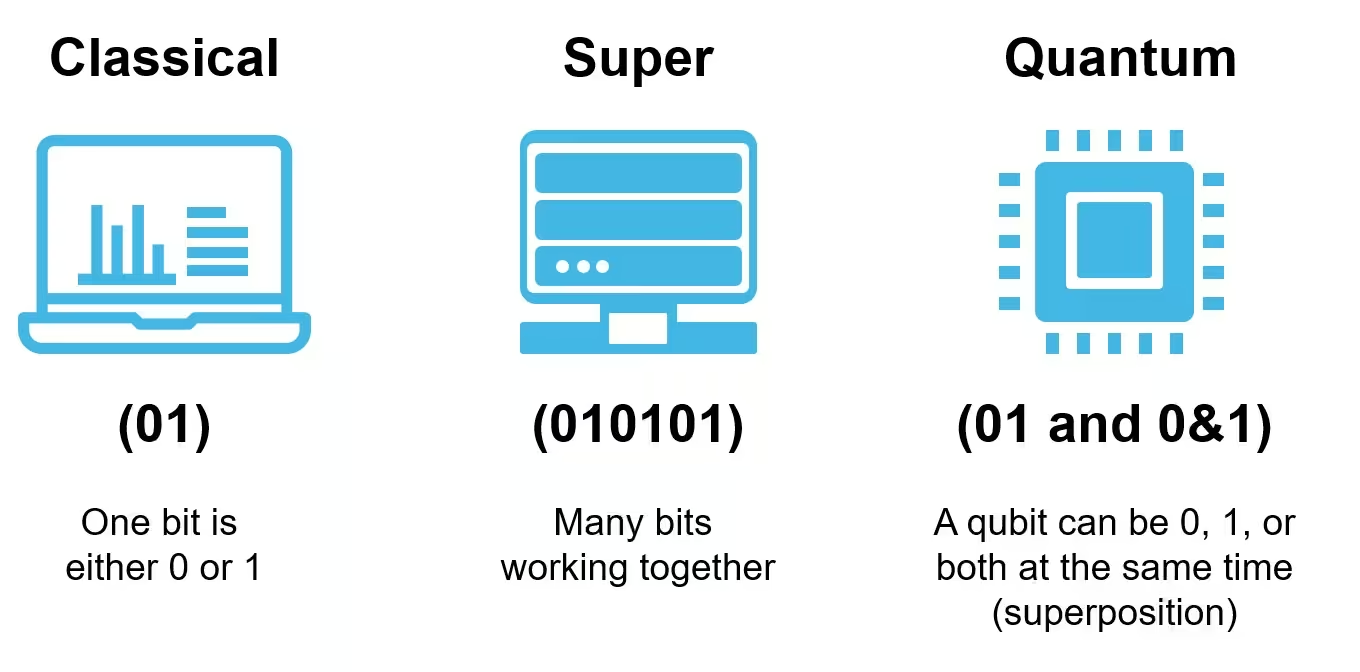
Esse tipo de computação que conhecemos de nossos laptops e telefones usa chips com bits que existem em estados binários definidos de 0 ou 1. Um supercomputador é o empilhamento paralelo desses estados para processar grandes quantidades de dados e é usado em data centers.
Com a computação quântica, os bits quânticos, conhecidos como qubits, podem existir em 0, 1 ou ambos os estados (superposição) (veja a Figura 1). Eles operam em chips chamados unidades de processamento quântico (QPUs). Isso permite a exploração de muitas soluções possíveis simultaneamente. Diferente da computação clássica, a computação quântica é um campo desafiador e complexo de tecnologias e conceitos em evolução, sem um "vencedor" claro ainda quanto ao melhor tipo de qubit.
A computação quântica tem sido discutida e teorizada há muitos anos. Embora o campo ainda esteja em sua infância, a tecnologia está se expandindo por instituições de pesquisa e empresas comerciais. Analisamos a CAS Content CollectionTM, o maior repositório de informações científicas curado por especialistas, para entender melhor os desenvolvimentos na computação quântica nos últimos 25 anos (veja a Figura 2).
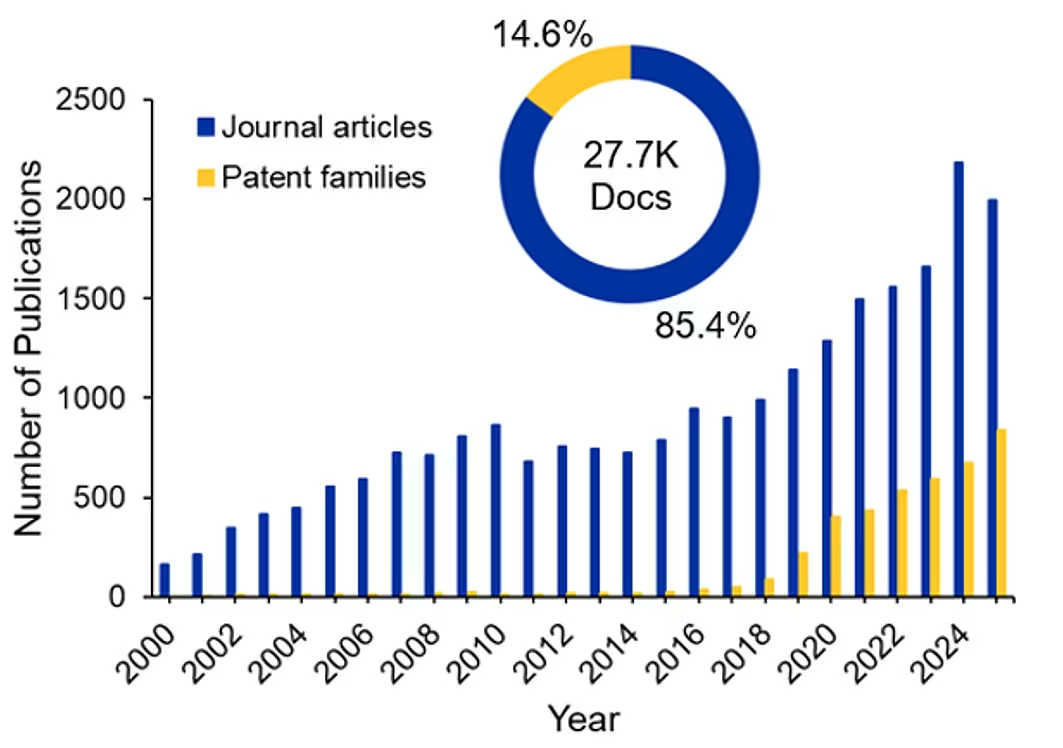
Descobrimos que as publicações acadêmicas predominam sobre as patentes. No entanto, as patentes começaram a aumentar recentemente, sugerindo um potencial crescimento nos próximos anos. Vamos explorar como a computação quântica funciona e quais materiais estão tornando esses avanços possíveis:
Métodos de computação quântica
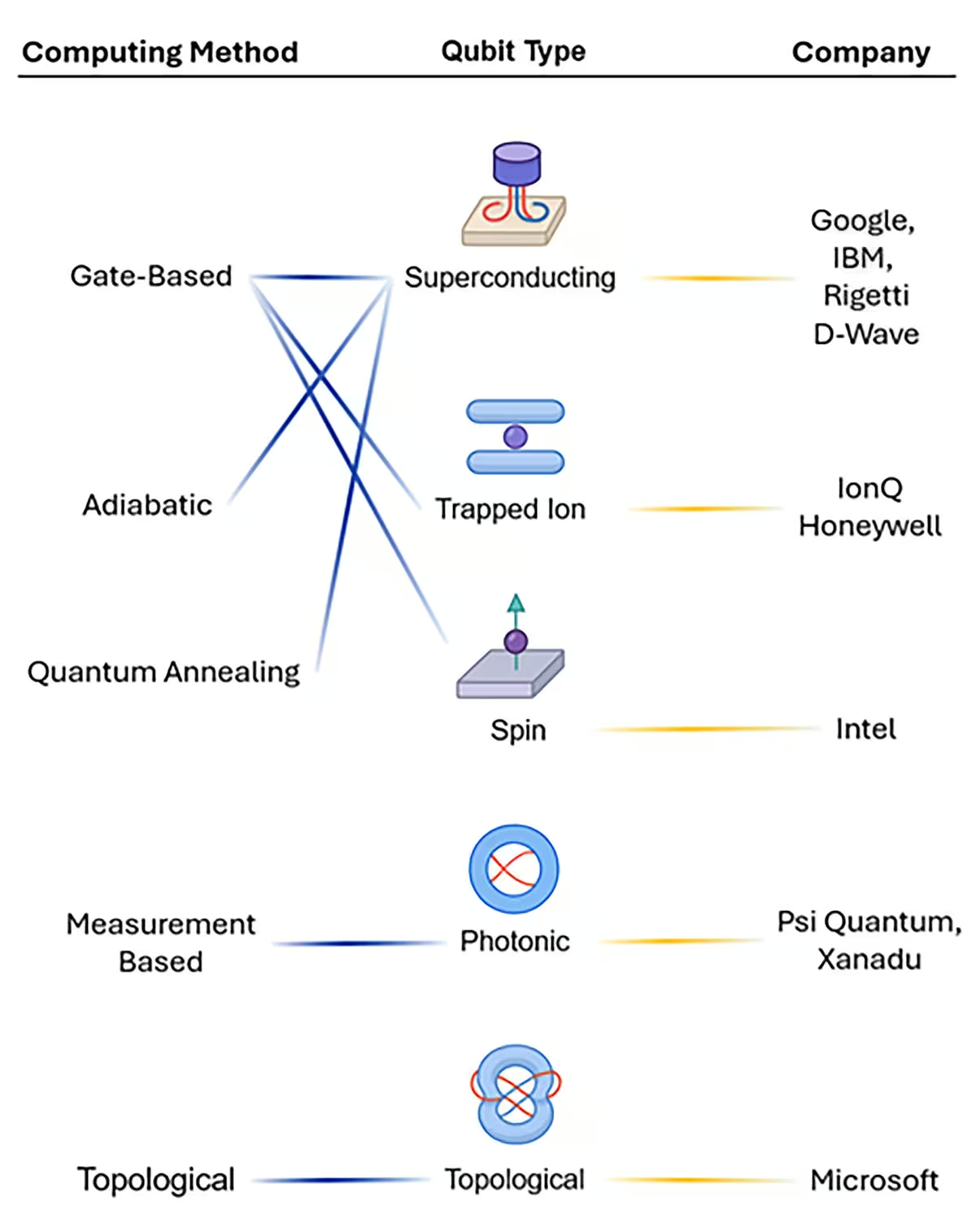
A computação quântica abrange diversas abordagens distintas, cada uma com métodos e aplicações únicos. Esses métodos desempenham um papel fundamental na determinação do tipo de qubit utilizado:
- A computação quântica baseada em portas, também chamada de computação quântica universal, representa o método mais amplamente buscado. Em essência, trata-se de um conjunto de instruções ou uma receita fornecida a um qubit. Na prática, as portas são operações unitárias que transformam estados de qubits por meio de sinais físicos controlados com precisão. Qubits de spin em semicondutores são controlados usando pulsos eletromagnéticos de micro-ondas, enquanto qubits de íons aprisionados são tipicamente controlados usando feixes de laser precisamente ajustados. Esses sinais de controle implementam portas quânticas que permitem a computação. As portas ou sinais manipulam os qubits para realizar a computação capaz de resolver o problema.
- A computação quântica adiabática segue um processo mais controlado, no qual o sistema permanece apenas em seu estado fundamental durante toda a computação. Isso oferece vantagens para problemas de otimização e para manter a coerência quântica durante cálculos longos.
- Em contraste, o recozimento quântico adota uma abordagem diferente, iniciando os qubits em um estado de superposição de alta energia e permitindo gradualmente que o sistema "role" para baixo em direção a um estado fundamental de menor energia, que representa as soluções ideais. Essa abordagem é eficaz para problemas combinatórios, agendamento e tarefas de aprendizado de máquina, embora seja menos versátil do que as operações lógicas baseadas em portas. A vantagem de iniciar o sistema em um estado de superposição é o efeito da aplicação de outro fenômeno chamado tunelamento quântico, no qual o sistema pode acessar outros estados que seriam inacessíveis classicamente. Isso permite que o sistema tenha acesso a uma ampla superposição de estados, proporcionando uma chance maior de encontrar um verdadeiro mínimo de energia.
- A computação quântica baseada em medição inicia o sistema com todos os qubits em um estado de recurso altamente emaranhado (por exemplo, um estado de cluster), mas, em seguida, um qubit é medido. Essa medição inicial faz com que todos os outros qubits reajam e ajuda a determinar qual será o próximo a ser medido. As medições dos qubits continuam sequencialmente até que todos tenham sido medidos. O propósito parece estranho à primeira vista, mas é ideal para vários tipos de cálculos, particularmente problemas estatísticos e de propriedades quânticas:
- Cálculos probabilísticos precisam de um conjunto total de qubits em operação no início e, em seguida, um resultado final.
- Cálculos complexos de interferência quântica podem ter muitas interferências ocorrendo ao mesmo tempo em um determinado sistema, e todas elas interagem entre si. É impossível computá-los sequencialmente, pois todos reagem juntos; portanto, uma abordagem baseada em medição é ideal para tais problemas.
- Finalmente, a computação quântica topológica representa uma fronteira emergente que aproveita partículas exóticas chamadas anyons e propriedades topológicas (propriedades de superfície e estruturais) para criar estados quânticos inerentemente resistentes a erros. Os anyons são um tipo de quase-partícula que existe apenas em sistemas bidimensionais, tornando-os a partícula ideal para manipular em uma superfície. O anyon mais favorável para um dispositivo do mundo real é chamado de modos zero de Majorana (MZMs). Ao contrário de outras formas de computação quântica, esses estados de anyons topológicos são intrinsecamente mais resistentes ao ruído local e à decoerência, proporcionando supressão de erros integrada.
Tipos de qubits
Qubits supercondutores são os mais versáteis, suportando vários métodos de computação quântica. Eles conduzem eletricidade com resistência zero a baixas temperaturas usando junções Josephson, que são um tipo de circuito que fornece não linearidade, permitindo que o circuito tenha estados quânticos discretos e controláveis.
Eles se destacam na computação quântica baseada em portas devido às suas operações de porta rápidas e forte acoplamento. Duas subclasses específicas de qubits supercondutores incluem qubits transmon, uma junção Josephson com um capacitor de derivação que é comumente usado pela IBM, Google e Rigetti, e qubits de fluxo, uma junção Josephson controlada por fluxo magnético. Os qubits transmon são utilizados pelos recozedores quânticos da D-Wave porque podem ser facilmente acoplados para criar as paisagens energéticas necessárias para problemas de otimização.
Ambos os tipos de qubits supercondutores têm vantagens diferentes. Por exemplo, os transmons têm sensibilidade reduzida ao ruído e fabricação escalável, enquanto os qubits de fluxo têm forte sintonização e níveis de energia bem separados. Sistemas supercondutores também funcionam bem para computação quântica adiabática.
Qubits de íons aprisionados são bem adequados para a computação quântica baseada em portas porque oferecem tempos de coerência excepcionais e operações de alta fidelidade. Esses qubits são íons suspensos no espaço usando campos eletromagnéticos, o que permite que seus estados quânticos sejam controlados e manipulados. Empresas como IonQ e Honeywell aproveitam íons aprisionados para computação quântica universal, e eles são excelentes para simulação quântica, especialmente de sistemas atômicos e moleculares, já que usam átomos como qubits.
Qubits fotônicos estão posicionados de forma única para a computação quântica baseada em medição porque usam informações codificadas em fótons individuais que mantêm a coerência à temperatura ambiente e podem ser facilmente medidos. Empresas como Xanadu e PsiQuantum focam em abordagens fotônicas.
Qubits de spin em pontos quânticos ou outros sistemas de estado sólido são cada vez mais importantes para a computação quântica baseada em portas, com empresas como a Intel investindo pesadamente em qubits de spin de silício. Esses sistemas são atraentes para aplicações em ciência dos materiais, já que os próprios qubits são spins. Sua compatibilidade com a fabricação convencional os torna promissores para processadores quânticos escaláveis, embora atualmente enfrentem desafios com controle e coerência.
Qubits topológicos representam uma abordagem altamente especializada projetada principalmente para tolerância a falhas com computação quântica baseada em portas. A abordagem da Microsoft com seu chip Majorana 1 é um método de contagem complexo que conta o número de elétrons com precisão de até uma diferença de 1, e essa diferença é sua versão de 0 ou 1 no sentido clássico da computação. Ele faz isso acoplando os estados quânticos gerados a partir de nanofios supercondutores com os estados de pontos quânticos que estão incorporados nos chips e, em seguida, lê esses estados com micro-ondas. Essa onda carrega a marca do estado quântico do nanofio. Apenas a Microsoft alcançou um chip topológico até o momento, mas levou quase 40 anos para ser alcançado.
Os métodos de computação quântica e os tipos de qubits estão intimamente ligados, e podemos ver quais empresas estão usando várias abordagens para criar sua versão de um computador quântico funcional (veja a Figura 3).
Também examinamos a pesquisa de qubits na CAS Content Collection relacionada aos cinco principais tipos de qubits. Usando o CAS SciFinder®, que agrega dados químicos e científicos relacionados de fontes globais, encontramos um crescimento notável nas publicações sobre qubits supercondutores e de spin (veja a Figura 4).

Os três tipos de qubits restantes (fotônicos, íons aprisionados, topológicos) representam áreas de pesquisa de nicho com atividade de publicação relativamente baixa. As tendências gerais sugerem que, embora os qubits supercondutores e de spin tenham dominado o cenário de pesquisa em computação quântica até o momento, os desenvolvimentos mais recentes da Microsoft podem mudar a tendência topológica nos próximos anos.
As tendências de publicação mostradas na Figura 4 foram analisadas usando o CAS SciFinder, que agrega dados de química e ciências relacionadas de fontes globais. Pesquisadores que exploram tendências semelhantes podem acessar recursos de busca habilitados por IA para identificar padrões em suas áreas específicas de pesquisa.
De quais materiais são feitos os qubits?
Analisamos de quais materiais os qubits são feitos e agrupamos as substâncias mais proeminentes em classes (veja a Figura 5A). O silício elementar (Si) e as ligas de silício (Ge,Si) são os principais materiais em suas respectivas classes por contagem de documentos, devido à sua utilidade como substratos, camadas de heteroestrutura, interconexões semicondutoras e pontos quânticos à base de silício.
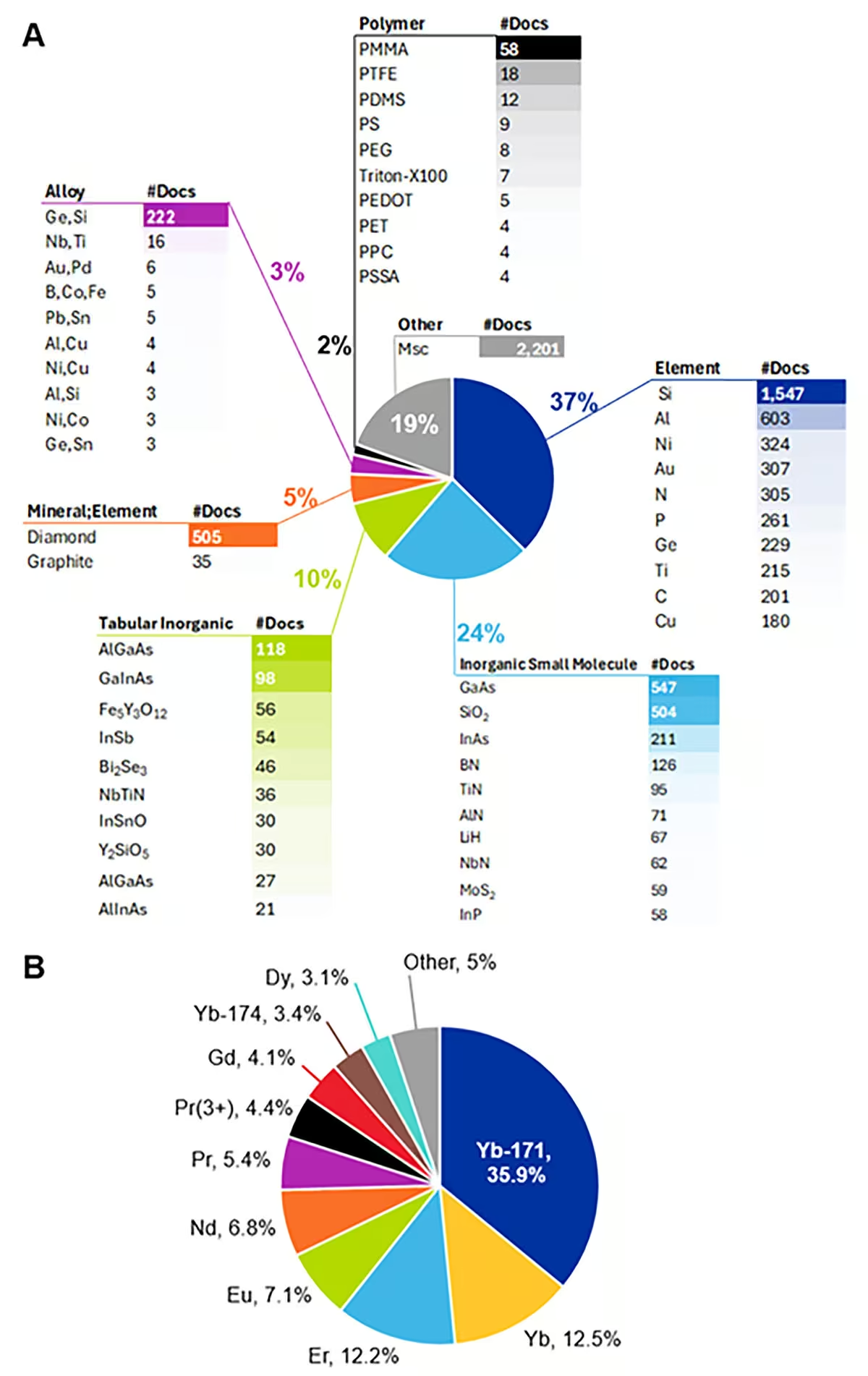
O alumínio também é predominante devido ao crescimento na pesquisa de qubits supercondutores; por exemplo, ele é usado como supercondutor no chip quântico Sycamore anterior do Google e no chip Majorana 1 da Microsoft.
Muitos outros materiais inorgânicos também estão presentes, particularmente os tipos de semicondutores III-V, que se relacionam aos grupos 13 e 15 da tabela periódica, incluindo arseneto de gálio, arseneto de alumínio e gálio, arseneto de índio e arseneto de gálio e índio. Esses materiais de arseneto são excelentes na produção de fótons com energias específicas e em quantidades únicas, também chamados de emissores de fóton único. Isso os torna úteis em qubits fotônicos, especialmente qubits fotônicos baseados em pontos quânticos. Em avanços recentes, eles também encontraram uso em qubits de pontos quânticos de spin.
O diamante é um alótropo do carbono que é predominante na literatura devido à sua estrutura única. De uma perspectiva nuclear, os átomos de carbono estão situados em uma rede sólida indeformável e, com a substituição do carbono por certos metais e isótopos, o diamante se comporta como um substrato modelo para a pesquisa de qubits.
A presença de polímeros na literatura pode parecer surpreendente, mas eles não são para componentes de qubits, e sim para alojamento. Polímeros têm muitas impurezas e defeitos de estado sólido para serem usados como qubits em QPUs comerciais. No entanto, o poli(metacrilato de metila) (PMMA) é amplamente utilizado em plástico transparente à prova de estilhaçamento, e o poli(tetrafluoretileno) (PTFE) é usado por sua resistência química e mecânica.
Nossa análise também revelou a presença de metais de terras raras (REM), que são metais de baixa abundância altamente caros. Eles são críticos para muitas tecnologias microeletrônicas, incluindo componentes de memória em chips de computador tradicionais e ímãs em diversas aplicações, desde microfones até instrumentos de imagem avançados.
Os REMs e suas quantidades relativas são apresentados na Figura 5B, calculados em relação ao número total de documentos de patentes e periódicos. Os cinco principais REMs em ordem decrescente são um isótopo de itérbio, Yb-171 (35,9%), itérbio elementar, Yb (12,5%), érbio, Er (12,2%), európio, Eu (7,1%) e neodímio, Nd (6,8%). REMs menos prevalentes incluem praseodímio, gadolínio, itérbio-174 e disprósio com <5,4% ou menos. Outros (5%) representam vários isótopos e íons com contagens baixas.
O Yb-171 é amplamente utilizado como espécie de qubit devido aos longos tempos de coerência, transições ópticas estreitas e propriedades estáveis de spin nuclear. Por exemplo, é usado pela eleQtron e pela IonQ em computadores quânticos de íons aprisionados. O itérbio elementar (Yb) também fornece qubits de alta coerência devido aos elétrons da camada 4f profundamente blindados que reduzem o ruído ambiental. A Atom Computing patenteou o uso de Yb em computadores quânticos de átomos neutros. A Huawei Technologies projetou um sistema de computação quântica com nanofibras para legibilidade óptica, e o Instituto Max Planck patenteou o uso de Yb em estados avançados aprisionados opticamente.
O érbio (Er) tem sido usado por várias instituições, incluindo a Universidade de Chicago, para qubits moleculares que operam diretamente em comprimentos de onda de telecomunicações (1,5 μm), conectando o spin e a interface de fótons. Isso permite a integração direta com a infraestrutura de fibra óptica existente para uma futura internet baseada em quântica. A Henan University patenteou seu uso como uma fonte de luz baseada em quântica. A empresa Quantum Source Labs patenteou esses materiais como parte de seus qubits fotônicos.
Tanto o Eu quanto o Nd exibem propriedades magnéticas notáveis que são ideais para componentes de memória quântica. Avanços recentes na Universidade de Illinois Urbana-Champaign sobre o prazo de armazenamento, agora de até 800 nanossegundos, e pela Universidade de Warwick, que incorpora Eu em substratos de diamante como componentes de cristal laser dopados com terras raras. A Marinha dos EUA patenteou o uso de Nd em qubits fotônicos emaranhados quânticos.
Computadores quânticos hoje e no futuro
A computação quântica está agora no estágio em que a pesquisa acadêmica está sendo traduzida em produtos comerciais reais. A Tabela 1 detalha os tipos e o número de qubits, bem como a disponibilidade pública de seus computadores e serviços de nuvem quântica das principais empresas.
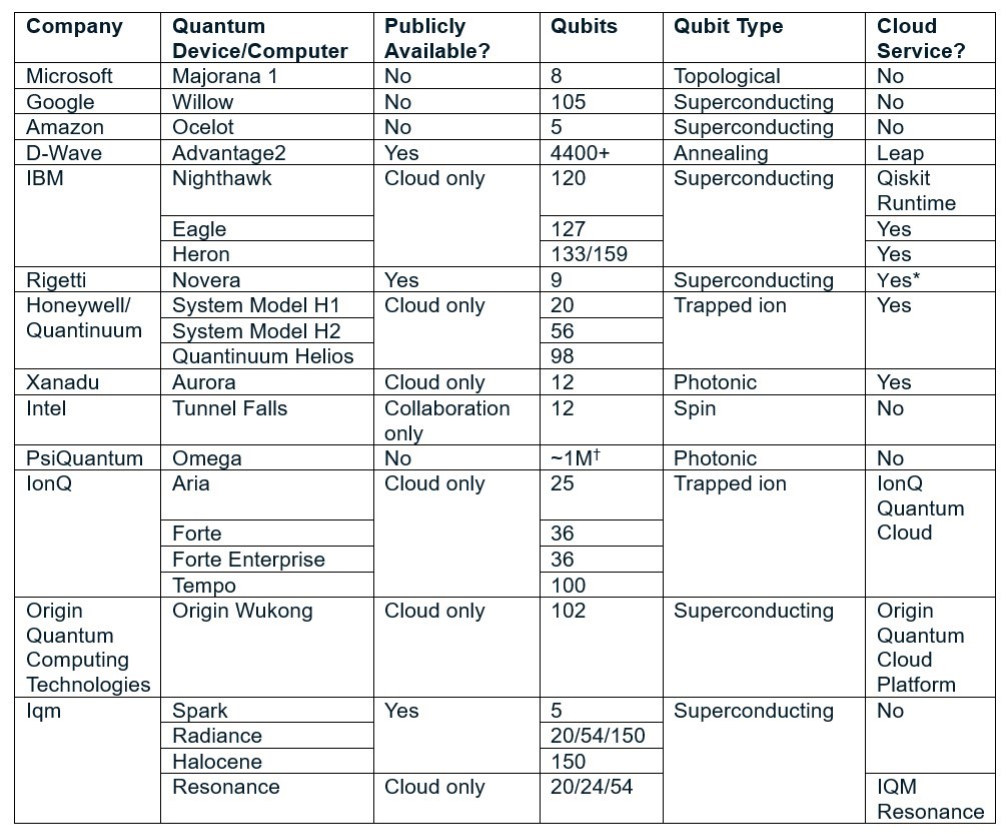
Microsoft (Majorana 1), Google (Sycamore, Willow) e Amazon (Ocelot) desenvolveram seus próprios tipos exclusivos de QPU, mas nenhum está disponível para uso público além de parcerias colaborativas. Em contraste, IBM, D-Wave, Rigetti, Quantinuum e IonQ permitem acesso em nuvem aos seus computadores quânticos. A Origin Quantum possui sua própria QPU baseada em nuvem que tem opções de integração com IA. A Xanadu desenvolveu uma QPU apenas em nuvem, enquanto a Intel e a PsiQuantum oferecem atualmente QPUs independentes.
Em termos de qubits, a PsiQuantum está construindo instalações em três países: Austrália, EUA e Reino Unido para colocar cerca de 1 milhão de qubits online, e a D-Wave afirma atualmente oferecer QPUs de sistemas com mais de 4400 qubits por máquina. O qubit Ocelot da Amazon (especificamente Amazon Web Service, AWS) tem apenas cinco qubits por chip, mas foi projetado para ser escalável graças ao foco na fase do qubit e nas forças do oscilador.
Esses sistemas de qubits do mundo real mostram que a ciência não está apenas sendo pesquisada, mas desenvolvida além de testes e parcerias privadas. Algumas empresas até oferecem assinaturas e planos de preços que tornam alguns desses computadores quânticos disponíveis ao público em tempo real.
Podemos ver o quanto esta tecnologia avançou nos últimos anos com o número de computadores quânticos disponíveis publicamente. Mesmo com um volume de patentes relativamente baixo, o mercado global de computação quântica está projetado para crescer para US$ 4 bilhões até 2030, demonstrando o valor deste campo, independentemente do tipo de qubit ou abordagem quântica.
Os diversos materiais utilizados, sejam eles terras raras dispendiosas ou alumínio mais abundante, desempenharão um papel na acessibilidade e no crescimento de qubits específicos. No entanto, o futuro geral da computação quântica permanece promissor, e as oportunidades para descobertas mais rápidas de medicamentos e avanços na ciência dos materiais estão crescendo junto com ele. Esse crescimento já se reflete em mudanças de infraestrutura de curto prazo, com esquemas criptográficos pós-quânticos sendo avaliados e implantados em protocolos de segurança de rede como TLS, integrados a kernels de sistemas operacionais e incorporados a hardware seguro e módulos criptográficos para mitigar futuras ameaças quânticas à cibersegurança.