


执行摘要
- 超临界二氧化碳已从一种小众的萃取溶剂演变为一种多功能的、可持续的加工介质,涵盖了材料制造、制药和能源生产等领域。
- CAS 分析显示,各行业正积极实现多元化发展,材料加工和环境应用已成为继成熟的天然产物萃取之后增长最快的领域。
- 超临界二氧化碳是一种可扩展的加工平台,无需传统溶剂,这使其成为先进材料、医药和食用材料以及碳封存应用中更环保的替代方案。
- 专利占出版物总数的 37%,表明超临界二氧化碳具有强劲的商业发展势头。
什么是超临界二氧化碳?
超临界二氧化碳(supercritical CO₂)是指在特定条件下表现出介于气体和液体之间独特属性的二氧化碳。当二氧化碳处于临界温度和压力(31.1 °C 和 7.38 MPa)以上时,便会达到这种状态。在超临界状态下,二氧化碳具有低粘度(表现出气体易于流动的特性)和高扩散性,这增强了它与其它材料相互作用的能力,类似于液体。
此外,超临界二氧化碳的溶剂强度可以通过调节压力和温度来改变,从而促进传质效率并实现对特定分子物质的定向溶解。由于二氧化碳来源广泛、不可燃且在此状态下对环境无害,超临界二氧化碳作为一种替代介质在许多科学和工业领域引起了广泛关注(虽然大气中的二氧化碳是温室气体,但二氧化碳在食品和萃取中的应用是无毒的,且不会造成重大排放)。
虽然超临界二氧化碳因其在脱咖啡因和天然产物加工中的历史应用而常与萃取应用联系在一起,但该流体的独特特性使其能够扩展到材料加工、分析化学、药物制造和纺织工程等众多其他单元操作中。此外,其在超临界状态下的可调属性使其适用于多种工艺,并支持更可持续技术的发展。
本文分析基于 CAS Content Collection™,这是全球最大的经人工标引的科学数据存储库。了解 CAS 数据如何助力研究,正如您在此处看到的见解一样。
核心洞察
在超临界状态下,二氧化碳具有低粘度(表现出气体易于流动的特性)和高扩散性,这增强了它与其它材料相互作用的能力,类似于液体。
涉及超临界二氧化碳的出版趋势和工艺
为了了解超临界二氧化碳研究的演变,我们分析了通过 STN™ 支持的 CAS IP Finder 访问的 CAS Content Collection™。该分析显示,2001 年至 2025 年间,超临界二氧化碳研究稳步增长,出版物总数在 25 年间增加了近三倍(见图 1)。
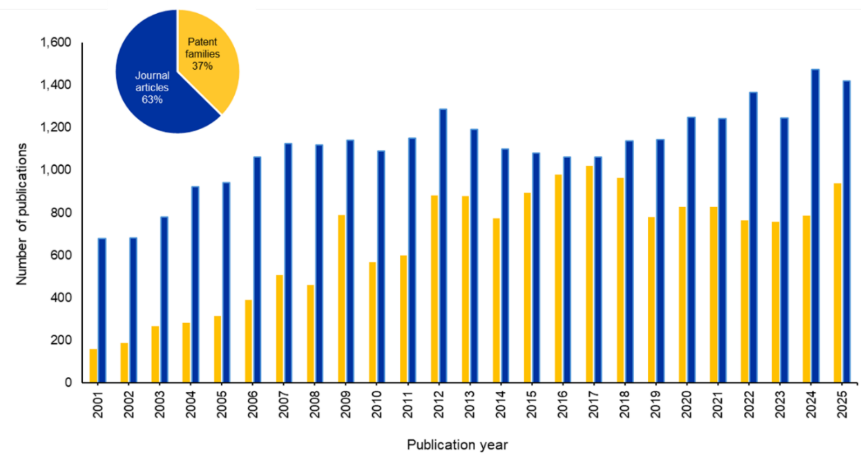
值得注意的是,专利占出版物总数的 37%,这表明商业兴趣浓厚,并凸显了基于超临界二氧化碳的技术在从基础研究向实际应用转化过程中,其工业相关性日益增强。环境效益、经济优势和广泛适用性的结合,使得超临界二氧化碳技术在专利保护和商业开发方面极具吸引力。
我们还研究了涉及超临界二氧化碳的各类工艺的文献发表数量。该材料的广泛应用证明了其在工业和科学流程中的多功能性,每一项应用都利用了超临界状态下独特的物理化学属性(见图 2)。
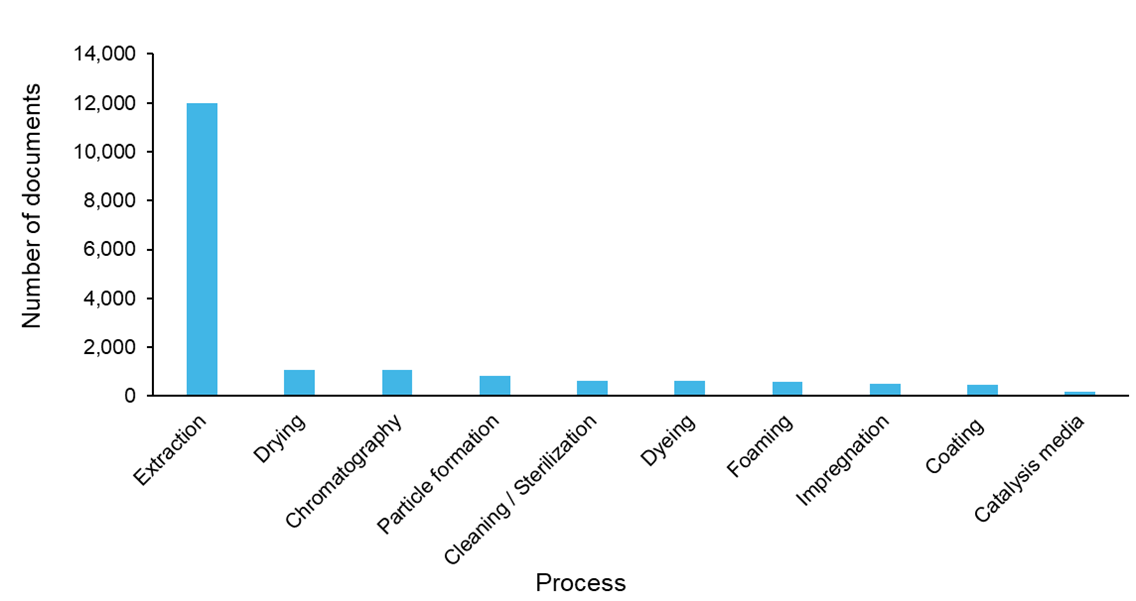
萃取依然是目前最主要且最成熟的应用领域,这得益于其可调的溶剂强度、快速的传质能力、优异的基质渗透性以及简便的溶剂回收过程。然而,超临界二氧化碳的应用已扩展至众多其他单元操作,包括干燥、色谱分析、颗粒形成(微粉化和粉碎)以及各种材料加工应用。
干燥工艺利用了其无表面张力的特性来保护精细的微纳结构;而颗粒形成和浸渍工艺则利用了其反溶剂行为和深层基质渗透能力,从而实现受控的材料架构。色谱应用受益于其类似气体的传输特性和可调节的溶剂化能力,而催化和反应介导工艺则利用了其增强的传质效率和简化的产物分离过程。
这些应用表明,超临界二氧化碳不仅是一种萃取溶剂,更是一种适应性强的加工介质,在先进材料、化学制造和可持续技术领域的重要性日益凸显。
专利文献占该主题文献总量的 37%。您可以使用由 STN™ 提供支持的 CAS IP Finder,探索与您相关的重要主题的专利布局。
核心洞察
专利文献占此处所研究文献总量的 37%,这表明了强烈的商业兴趣,并凸显了基于超临界二氧化碳的技术在从基础研究向实际部署转化过程中,其工业相关性正日益增强。
在先进材料和过程工程中的应用
与图 2 中的发表数量类似,对更广泛应用领域的分析表明,萃取是超临界二氧化碳的主要用途,但并非唯一用途。如图 3 所示,天然产物萃取在相关文献中占比最大,其中以医药、营养保健品以及其他食用和天然衍生材料的萃取为首。
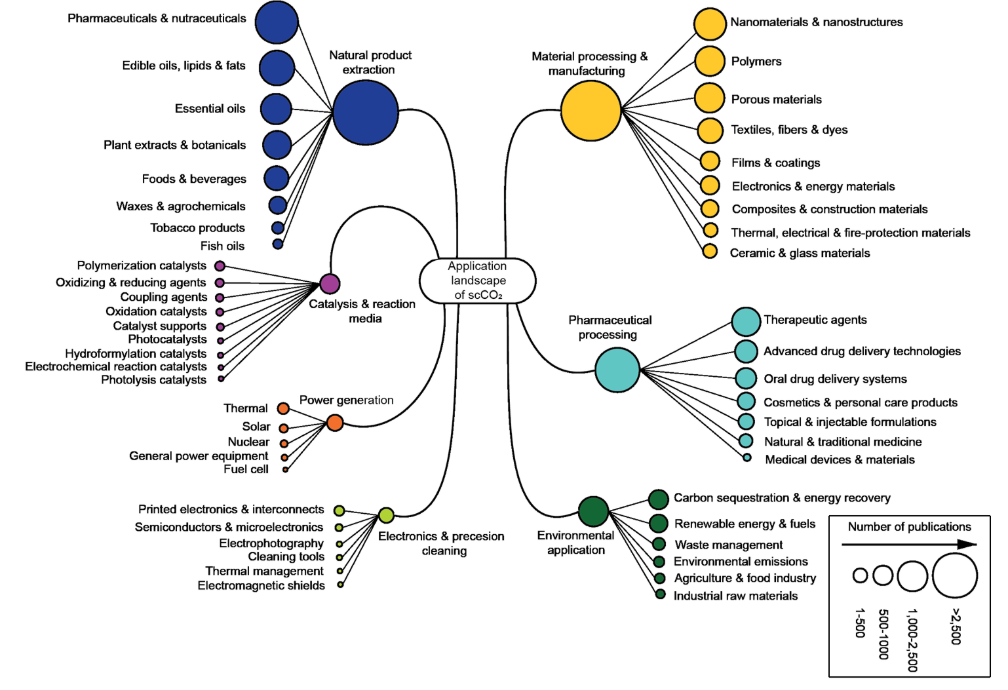
萃取
基于萃取的应用占据主导地位,反映了超临界二氧化碳作为绿色溶剂的技术成熟度和广泛的工业认可度。传统上,此类萃取(特别是在油脂工业中)一直依赖己烷。然而,随着 1990 年美国《清洁空气法案》出台后的监管压力增大,行业致力于减少己烷排放和损耗,这使得超临界二氧化碳成为一种极具吸引力的替代方案。
其可调的溶剂化能力、高扩散性和低粘度,使其能够在相对较低的温度下高效萃取非极性和弱极性化合物,从而保持产品质量。二氧化碳无毒、不可燃的特性以及最终产品中无溶剂残留的优势,使其在食品、医药和营养保健品领域极具吸引力。因此,天然产物萃取依然是最普遍且最成熟的应用。
先进材料
材料制造与加工是继萃取之后的第二大应用领域,重点在于纳米材料和纳米结构。通过超临界反溶剂沉淀、超临界溶液快速膨胀以及溶液增强分散系统等技术,超临界二氧化碳被用于纳米材料的合成与加工。
在这些方法中,超临界二氧化碳作为溶剂、反溶剂或分散介质,能够实现受控的成核、均匀的颗粒形成以及对纳米结构架构的保护。它还被用于纳米颗粒干燥、表面功能化和浸渍,在材料纯度、形态控制和环境可持续性方面具有显著优势。
其他几种先进材料工艺也利用了超临界二氧化碳的独特性能:
• 聚合物应用 得益于超临界二氧化碳的高聚合物溶解度、增塑效应以及无需化学发泡剂即可精确控制泡沫形态的能力,基于超临界二氧化碳的发泡技术得到了广泛应用。
• 多孔材料(包括气凝胶)具有相当显著的地位,这主要得益于超临界二氧化碳辅助干燥技术,该技术消除了毛细管应力,并保留了高比表面积和纳米级孔隙结构。
• 纺织品、纤维和染料受益于聚合物纤维的超临界二氧化碳辅助染色技术,其高扩散性和可调的溶剂特性实现了无需用水的均匀染料渗透。
• 薄膜与涂层在聚合物沉积、浸渍和无溶剂涂层工艺中应用了超临界二氧化碳。
• 电子与能源材料主要涉及电池电极的超临界二氧化碳辅助制备及表面改性,从而实现材料的均匀分布并改善界面性能。
• 复合材料与建筑材料,以及隔热防火材料和陶瓷,正越来越多地利用超临界二氧化碳进行浸渍和微观结构控制。
药物加工
药物加工是下一个主要的研究领域,重点在于治疗药物的制备与处理。得益于其可调的溶剂和反溶剂特性,超临界二氧化碳被广泛应用于药物递送系统和药物制剂中。这些特性实现了微粉化、包封和多晶型控制,能够精确调节药物颗粒的尺寸、形态和纯度,同时最大限度地减少热降解和残留溶剂。
除制药外,超临界二氧化碳还在化妆品、个人护理产品以及假体植入物等医疗材料中发挥作用,在这些领域中,受控的材料性能、洁净度和生物相容性至关重要。
碳封存与环境应用
超临界二氧化碳最重要的贡献之一在于碳封存和提高石油采收率(EOR),通过将其注入地质构造中,既能提高碳氢化合物的开采效率,又能实现二氧化碳的长期封存。
超临界二氧化碳还通过生物质增值支持可再生能源的生产,作为反应介质或加工剂将生物质转化为生物燃料。此外,凭借其强大的溶剂化能力、可回收性以及去除有害污染物的能力,它还被应用于废物管理和环境修复,包括污染物提取、废物增值和减排。综上所述,这些应用使超临界二氧化碳成为清洁能源技术和可持续环境管理的关键推动力。
催化与反应介质
作为催化和化学转化中的反应介质,超临界二氧化碳被用于聚合、氧化催化、光催化、氢甲酰化和光解反应,既可直接作为介质,也可间接用于催化剂及其载体的合成、分散和加工。
使用超临界二氧化碳作为反应介质,能够增强传质特性,并提高反应物与催化活性位点之间的相互作用效率。其可调的密度和溶剂强度能够控制反应物的溶解度和反应动力学,而其化学惰性和热稳定性使其能够与多种催化体系兼容。
它还通过简单的降压过程实现产品与催化剂的轻松分离,最大限度地减少溶剂残留并实现催化剂回收,这些特性使其在绿色和可持续催化工艺中极具吸引力。
发电与电子工业
超临界二氧化碳在发电、电子工业和精密清洗领域也得到了探索,尽管相关文献相对较少,这反映了这些领域尚处于新兴或专业化阶段,且在高压环境下运行存在工程挑战。
• 在发电领域,超临界二氧化碳被用作热能、太阳能、核能和废热电厂闭式布雷顿循环系统中的工质,以替代水。其在临界点附近的高密度降低了压缩功,而其热物理性质使得系统比传统蒸汽循环具有更高的热效率和更紧凑的涡轮机械。
• 在电子工业中,超临界二氧化碳凭借低粘度、高扩散性和对受限几何结构的优异渗透性,被用于冷却、加工和清洗,从而在不损坏精细微纳米结构的前提下实现高效的传热和污染物去除。
• 在精密清洗电子元件和光学器件时,超临界二氧化碳提供了一种无溶剂的替代方案,能够溶解加工残留物和颗粒,且在降压后不会在表面留下任何残留。
这些特性凸显了超临界二氧化碳在先进高性能应用中的多功能性,尽管系统复杂性和成本仍限制了其广泛应用。为了了解各应用领域的市场变化,我们分析了其年度增长情况(见图 4)。
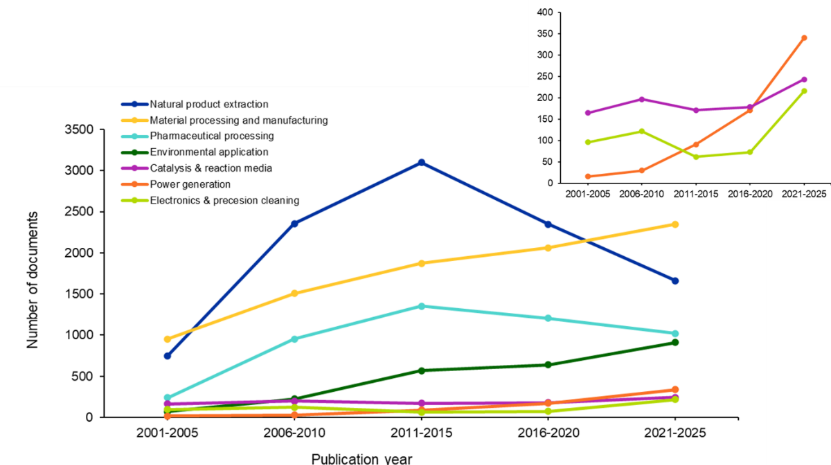
分析表明,材料加工与制造领域持续增长,反映出在高性能、环境友好型材料需求的推动下,基于超临界二氧化碳的先进材料合成、改性及干燥技术正得到日益广泛的应用。
从微小的金属离子和聚合物纤维,到大型太阳能电池板和电池,先进材料正在改变各类商业和工业产品。这些创新处于传统材料科学、人工智能驱动技术和绿色化学的交汇点。
核心洞察
在高性能、环境友好型材料需求的推动下,基于超临界二氧化碳的先进材料合成、改性及干燥技术正得到日益广泛的应用。
超临界二氧化碳关键应用中的主要物质
正如我们在应用领域讨论中所述,材料制造和环境应用领域的文献数量和技术发展呈上升趋势,这与超临界二氧化碳作为溶剂或反溶剂的能力及其相较于其他方案更低的环境影响密切相关。我们分析了这两个领域的物质数据,以了解哪些特定物质对实际应用产生了最大影响。
先进材料应用中的主导物质
有机和无机小分子是材料制造与加工领域的主导产品,其次是聚合物(见图 5)。
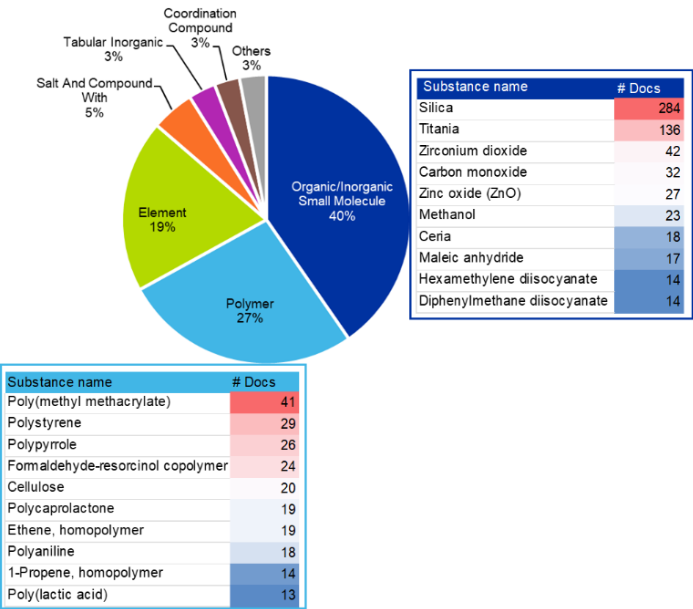
在小分子中,二氧化硅最为突出,这得益于对超临界二氧化碳干燥法合成二氧化硅气凝胶的广泛研发。这些气凝胶因其超低密度、高孔隙率和大比表面积而备受重视,在药物递送系统、控释基质及敏感制剂的绝缘保护方面具有重要价值。
二氧化钛位居第二,反映了其在催化、光催化、能源和生物医学应用中的重要性。超临界二氧化碳被广泛用于二氧化钛的合成、干燥、表面功能化和纳米结构化,从而能够精确控制其粒径、孔隙率、结晶度和表面化学性质,以应用于光催化、染料敏化太阳能电池、自清洁涂层和生物医学植入物。
在聚合物类别中,聚甲基丙烯酸甲酯位居前列,体现了超临界二氧化碳在聚合、发泡、溶胀和浸渍过程中的作用。聚苯乙烯作为研究超临界二氧化碳诱导过程的模型系统,以及轻质结构和绝缘材料,也具有重要地位。聚吡咯作为一种导电聚合物表现突出,超临界二氧化碳为其在传感器、储能和生物医学涂层方面的受控聚合、掺杂、浸渍和纳米结构化提供了支持。
推动碳封存与环境应用的物质
超临界二氧化碳在新兴能源和碳管理技术中的整合激发了持续的研究兴趣。物质类别分类显示,有机和无机小分子是最普遍的产品类别,其次是元素(见图 6)。
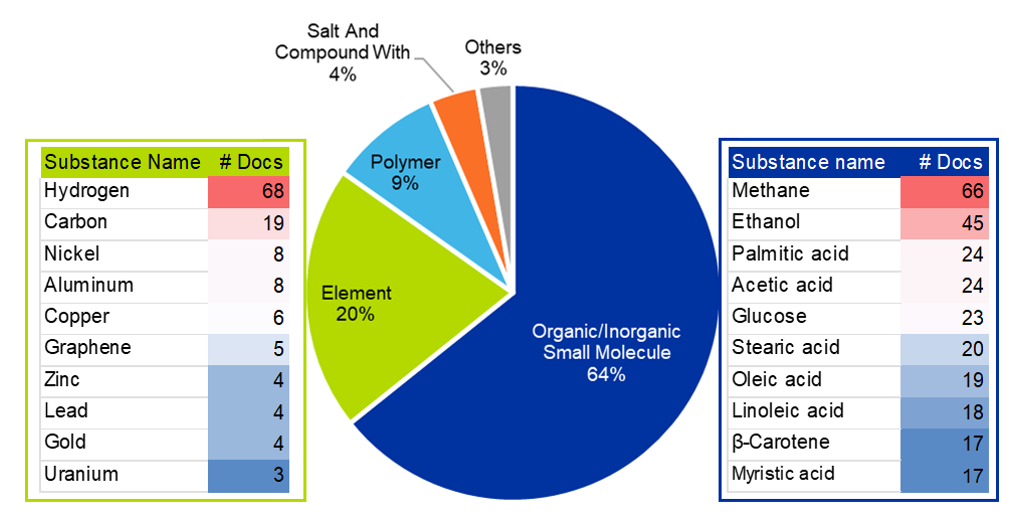
甲烷排名最高,这归功于超临界二氧化碳辅助的生物质增值和有机废物转化制甲烷技术的广泛研究;乙醇表现突出,源于对超临界二氧化碳辅助生物乙醇生产的持续研究。棕榈酸的出现是因为它通常通过超临界二氧化碳从富含脂质的生物质和天然油中提取,是生物柴油生产和生物燃料原料分析中的关键脂肪酸成分。
在元素类别中,氢排名最靠前,反映了人们对可持续氢能生产及其作为清洁能源载体作用的日益关注。在超临界二氧化碳辅助活性炭合成方面的显著进展,使碳成为另一种关键物质。
超临界二氧化碳发电研究呈现出近乎指数级的增长,这得益于其相比传统蒸汽循环具有更高的热效率和更紧凑的系统优势。涡轮机械、高温材料和系统集成领域的持续进步,使其成为一个快速扩张的领域。由美国能源部资助、GTI Energy 牵头的 STEP(超临界变革性电力)示范项目,展示了利用超临界二氧化碳替代传统蒸汽循环的可行性,从而实现了更小巧、更高效且耗水量更低的电厂设计。
气凝胶受益于超临界二氧化碳辅助干燥技术,该技术消除了毛细管应力,并保留了高比表面积和纳米级孔隙结构。了解更多关于气凝胶在绝热以外的应用。
核心洞察
高压设备、涡轮机械、材料兼容性和工艺集成方面的持续进步,将加速二氧化碳技术从实验室和中试规模向商业化部署的迈进。
绿色技术的发展为超临界二氧化碳提供了支持
超临界二氧化碳已从一种小众的萃取溶剂,演变为涵盖材料科学、制药加工、环境技术、分析方法、催化和能源系统的多功能加工介质。其可调的物理化学性质,结合无毒和易于分离的特点,使其成为实现无溶剂、低温加工并精确控制结构与功能的关键工具。
材料科学和环境应用领域的持续增长,凸显了其长久的生命力和适应性。随着技术的不断进步以及监管和可持续发展要求的日益提高,超临界二氧化碳作为一种可扩展、面向未来的绿色加工和材料工程平台,其地位得到了进一步巩固。
最值得注意的是,基于超临界二氧化碳的发电技术呈现出近乎指数级的增长。市场对布雷顿循环系统的兴趣反映了其相比传统蒸汽循环所具备的优势:更高的热效率、更小的占地面积以及更优的水资源管理,这对于下一代核反应堆、聚光太阳能、余热回收和混合化石燃料系统极具吸引力。
前景广阔。高压设备、涡轮机械、材料兼容性和工艺集成方面的持续进步,将加速其从实验室和中试规模向商业化部署的迈进。针对资本成本、系统复杂性以及极性化合物在反应和催化系统中的溶解度限制等挑战,仍需开展针对性研究。总体而言,超临界二氧化碳有望成为未来可持续制造和能源系统的关键推动力,其影响力最有可能在绿色化学、先进材料和高效发电的交叉领域得到体现。