.avif)

Las nuevas tecnologías de baterías proliferan a medida que aumenta la demanda de soluciones de almacenamiento de energía seguras y eficientes. Las baterías de estado sólido (SSB, por sus siglas en inglés) representan un avance importante en la tecnología de almacenamiento de energía con el potencial de superar varias limitaciones de las baterías de iones de litio (LIB) tradicionales. Al sustituir los electrolitos líquidos o en gel inflamables por materiales sólidos como cerámicas, polímeros o sulfuros, las baterías de estado sólido ofrecen una mayor seguridad, una estabilidad térmica superior y densidades energéticas significativamente más altas, alcanzando hasta 500 Wh/kg frente a los 250 Wh/kg de los sistemas convencionales. La presencia de un electrolito sólido no solo permite el uso de ánodos de metal de litio y cátodos de alta capacidad, sino que también mitiga los riesgos de alta inflamabilidad, la formación de dendritas, la descomposición electrolítica a voltajes elevados y las fugas que afectan a las baterías basadas en electrolitos líquidos.
Con la capacidad de durar más de 1000 ciclos —frente a los 500 ciclos de las LIB típicas—, las baterías de estado sólido también prometen una vida útil más larga. Su menor tamaño y su potencial para un diseño más compacto que las LIB las hacen ideales para su uso en vehículos eléctricos (VE), dispositivos electrónicos vestibles, dispositivos médicos como marcapasos y aplicaciones aeroespaciales.
Hemos analizado la CAS Content CollectionTM, el mayor repositorio de información científica curado por expertos, para comprender mejor el panorama de la investigación sobre baterías de estado sólido, y hemos observado un claro cambio desde la investigación en fase inicial hacia un interés científico y comercial generalizado (véase la Figura 1).
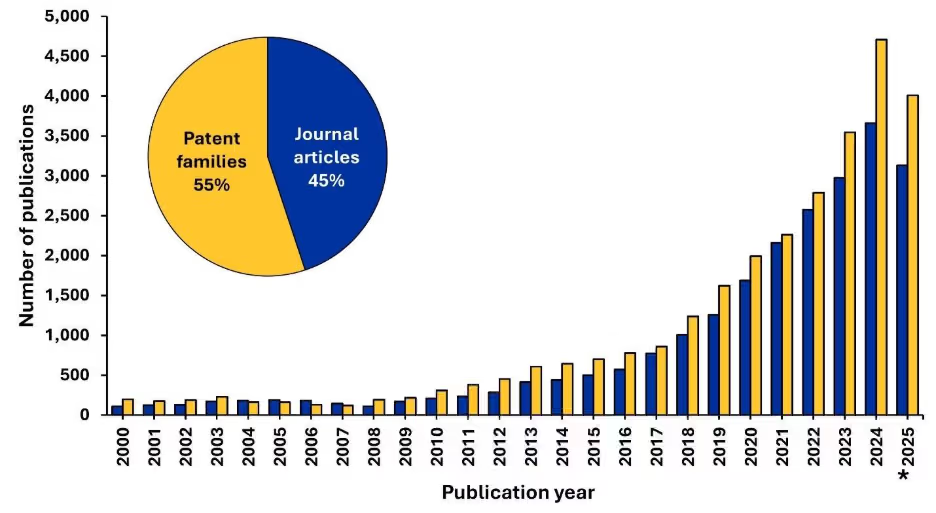
Figura 1: Tendencias de publicación en el campo de las baterías de estado sólido. Los datos de 2025 corresponden hasta el mes de julio. Fuente: CAS Content Collection.
A principios de la década de 2000, la actividad era mínima, lo que indica que las baterías de estado sólido se limitaban a la investigación fundamental. Sin embargo, alrededor de 2017, el número de artículos académicos y patentes aumentó drásticamente, lo que refleja la creciente madurez tecnológica, la demanda del mercado y el reconocimiento de esta tecnología como una solución a las limitaciones clave de las baterías de iones de litio convencionales.
Actualmente, el número ligeramente superior de patentes sugiere que el campo está superando la investigación académica hacia la preparación comercial, con empresas que aseguran su propiedad intelectual. El rápido crecimiento de las patentes en los últimos años refleja una demanda urgente impulsada por el aumento de los vehículos eléctricos, el almacenamiento de energía renovable a nivel de red y la necesidad de soluciones energéticas más seguras y de alto rendimiento. El impulso actual indica que las baterías de estado sólido han alcanzado un punto crítico de investigación e inversión, algo que suele observarse justo antes de grandes avances y una adopción generalizada.
Los investigadores que realicen búsquedas similares en bases de datos de materiales y literatura científica pueden utilizar CAS SciFinder para acceder a consultas basadas en estructuras y capacidades de filtrado de propiedades que facilitan la identificación rápida de materiales candidatos, al tiempo que realizan un seguimiento de las innovaciones emergentes en la tecnología de baterías.
Más informaciónAsia lidera la innovación mundial en baterías
Para evaluar los esfuerzos de comercialización dentro del sector de las SSB, identificamos las 15 principales empresas en función de su actividad de patentado (Figura 2a). Las empresas japonesas como Toyota y Panasonic lideran con amplias carteras de patentes, lo que refleja la inversión estratégica temprana de Japón en la tecnología SSB y su fuerte alineación con la industria automotriz. La presencia de otras grandes empresas asiáticas como LG Chem, Samsung SDI y CATL refuerza aún más el liderazgo de Asia en la innovación mundial de baterías (véase la Figura 2a).
Las tendencias de la actividad comercial de patentes en los distintos países revelan una dinámica de innovación cambiante en el campo de las SSB (Figura 2b). Si bien Japón ha mantenido un liderazgo constante mediante inversiones coherentes e investigación a largo plazo, el rápido ascenso de China en los últimos años marca un cambio significativo. Este aumento no solo está impulsado por empresas consolidadas, sino también por una oleada de nuevos participantes que presentan patentes activamente.
Por el contrario, la actividad de patentes relativamente menor de Estados Unidos y Alemania, a pesar de sus sólidas industrias automotrices y tecnológicas, sugiere diferentes prioridades estratégicas o enfoques alternativos para la protección de la propiedad intelectual en el ámbito de las SSB.
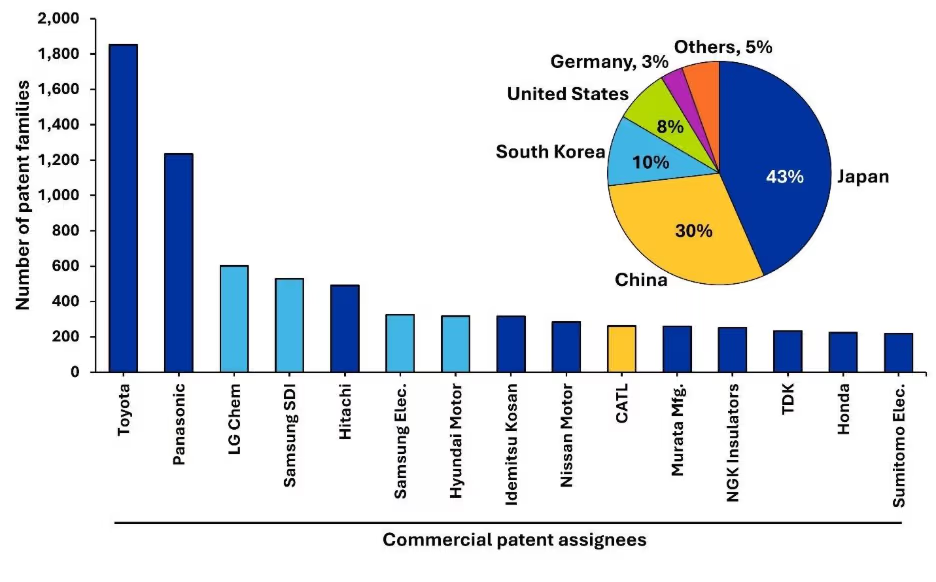
Figura 2a: Principales entidades comerciales identificadas por su número de publicaciones de patentes relacionadas con baterías de estado sólido. El gráfico circular insertado muestra el volumen de patentes comerciales publicadas por países/regiones.
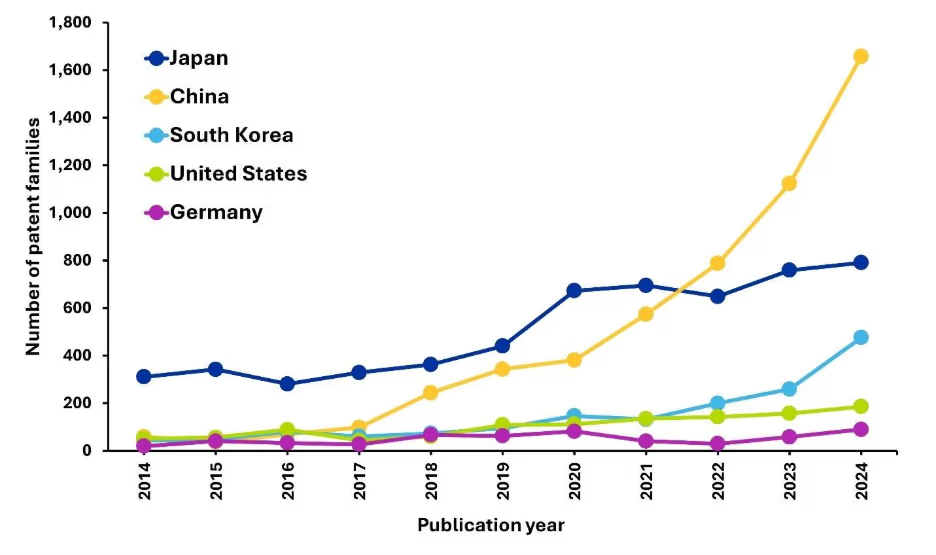
Figura 2b: Tendencias anuales de las publicaciones de patentes comerciales para los principales países/regiones.
Ventajas de los electrolitos de estado sólido
Los electrolitos de estado sólido (SSE, por sus siglas en inglés) son el componente central de las baterías de estado sólido (SSB), y funcionan como sólidos conductores de iones que sustituyen a los electrolitos líquidos tradicionales. Permiten el transporte de iones de litio u otros iones metálicos entre los electrodos de la batería mientras los separan físicamente, garantizando tanto la conductividad iónica como el aislamiento eléctrico.
Una característica destacable de los electrolitos de estado sólido es su capacidad para facilitar el transporte iónico a través de sitios cristalográficos, donde los iones móviles pueden comportarse como fases fluidas dentro de una matriz sólida. Esta característica estructural sustenta su alta movilidad iónica, esencial para un rendimiento eficiente de la batería. Los electrolitos de estado sólido también ofrecen ventajas significativas frente a los sistemas líquidos, como la no inflamabilidad, la no volatilidad, una resistencia mecánica superior y resiliencia ante temperaturas extremas. Estas características no solo mejoran la seguridad y la estabilidad, sino que también permiten el uso de ánodos de litio metálico, lo que puede aumentar drásticamente la densidad energética y la vida útil de la batería.
Los electrolitos de estado sólido pueden clasificarse a grandes rasgos en cinco tipos principales según su composición química: óxidos, sulfuros, polímeros, nitruros y haluros. Cada tipo presenta características estructurales y electroquímicas distintas que influyen en su rendimiento. Tanto los electrolitos de estado sólido orgánicos como los inorgánicos han sido objeto de un estudio exhaustivo en los últimos años, lo que ha dado lugar a mejoras significativas en la conductividad iónica, la estabilidad y la compatibilidad con los electrodos.
Nuestro análisis de la CAS Content Collection con herramientas como CAS SciFinder® ilustra los 20 principales electrolitos de estado sólido clasificados por tipo (Figura 3a) y año (Figura 3b). Entre ellos, los electrolitos inorgánicos, principalmente óxidos y sulfuros, lideran el panorama de publicaciones debido a su conductividad iónica superior, mayor seguridad, larga vida útil y excelente estabilidad térmica.
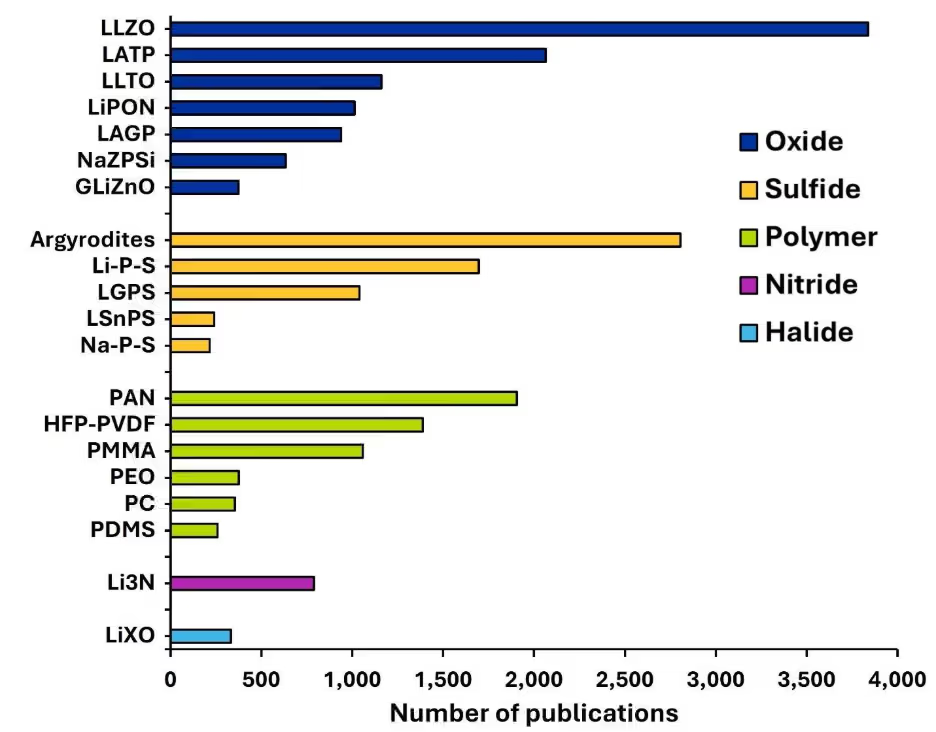
Figura 3a: Los 20 principales electrolitos de estado sólido clasificados por tipo según el volumen de publicaciones. Fuente: CAS Content Collection. Véase la nota al pie para las abreviaturas.
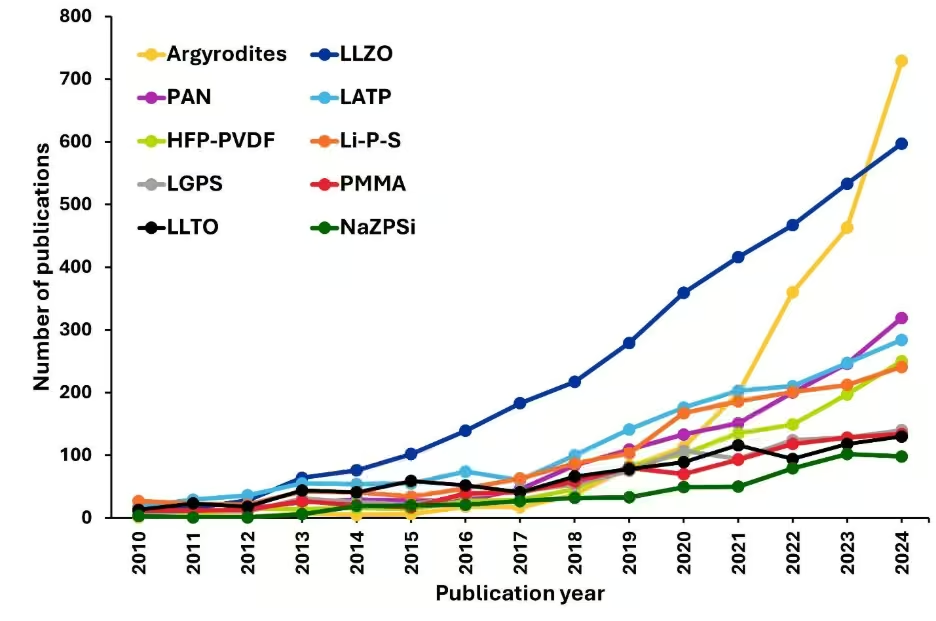
Figura 3b: Los 10 principales electrolitos de estado sólido clasificados por año según el volumen de publicaciones. Fuente: CAS Content Collection. Véase la nota al pie para las abreviaturas.
Electrolitos de estado sólido basados en óxidos
Los electrolitos de estado sólido (SSE) basados en óxidos son ampliamente estudiados para la próxima generación de baterías de estado sólido debido a su excelente estabilidad química, térmica y electroquímica. Estos electrolitos son estables frente al aire y la humedad, lo que facilita su manipulación y procesamiento. También pueden soportar voltajes y temperaturas de funcionamiento elevados sin descomponerse.
Como se muestra en la Figura 3, los principales tipos de electrolitos de estado sólido de óxido incluyen el óxido de litio, lantano y circonio de tipo granate (LLZO), el fosfato de litio, aluminio y titanio de tipo NASICON (LATP) y el óxido de litio, lantano y titanio de tipo perovskita (LLTO), todos los cuales ofrecen una alta conductividad iónica (típicamente de 10⁻⁴ a >10⁻³ S/cm) y propiedades mecánicas robustas. El LLZO proporciona una amplia ventana de estabilidad electroquímica y una buena compatibilidad con el litio metálico, mientras que el LATP es no tóxico, rentable y adecuado para sistemas híbridos. El LLTO ofrece una alta conductividad y una gran resistencia mecánica, aunque su rendimiento depende de la microestructura cerámica.
A pesar de su potencial, los electrolitos basados en óxidos presentan varias limitaciones. Su estructura rígida y quebradiza dificulta el procesamiento y la consecución de un contacto íntimo con los electrodos, lo que a menudo conduce a una alta resistencia interfacial y a una transferencia iónica deficiente. Esta fragilidad también los hace vulnerables a la formación de grietas bajo estrés mecánico o cambios de volumen durante los ciclos. Además, su conductividad a temperatura ambiente es generalmente inferior a la de los electrolitos basados en sulfuros.
La tecnología LLZO puede sufrir sensibilidad a la humedad y formación de dendritas de litio, mientras que el LATP y el LLTO son inestables en contacto directo con el litio metálico debido a la reducción de Ti⁴⁺. Estos problemas pueden provocar cortocircuitos, aunque pueden mitigarse mediante la ingeniería de interfaces y recubrimientos protectores. En general, los electrolitos de óxido son valorados por su excelente estabilidad, seguridad y compatibilidad con cátodos de alto voltaje, lo que los convierte en firmes candidatos para sistemas de baterías de litio de estado sólido duraderos y térmicamente estables.
Electrolitos de estado sólido basados en sulfuros
Los electrolitos basados en sulfuros se encuentran entre los materiales más prometedores para la próxima generación de baterías de estado sólido debido a su excepcionalmente alta conductividad iónica, que puede alcanzar hasta 10⁻² S/cm, comparable o incluso superior a la de los electrolitos líquidos. Sus estructuras, que suelen contener aniones basados en azufre como PS₄³⁻, crean una red altamente polarizable y flexible que permite una rápida migración de los iones de litio.
Otra ventaja importante de los electrolitos de sulfuro es su naturaleza blanda y deformable, que les permite formar un excelente contacto interfacial con cátodos y ánodos bajo una presión moderada: algo difícil de lograr con los frágiles electrolitos de óxido. También pueden procesarse a bajas temperaturas, lo que hace viable su fabricación a gran escala.
Como se observa en la Figura 3a, entre los electrolitos basados en sulfuros, las argiroditas, los sistemas de litio-fósforo-azufre (Li-P-S) y el sulfuro de litio, germanio y fósforo (LGPS) son los principales candidatos para las baterías de estado sólido. Las argiroditas (Li₆PS₅X, X = Cl, Br, I) y los sistemas Li–P–S (por ejemplo, Li₃PS₄, Li₇P₃S₁₁) ofrecen conductividades que oscilan entre 10⁻⁴ y >10⁻³ S/cm, mientras que el LGPS (por ejemplo, Li₁₀GeP₂S₁₂), un material de tipo tio-LISICON, alcanza hasta 10⁻² S/cm, rivalizando con los electrolitos líquidos.
A pesar de estos beneficios, los electrolitos basados en sulfuros también se enfrentan a desafíos críticos. Son altamente sensibles al aire y a la humedad, descomponiéndose para liberar gas sulfuro de hidrógeno (H₂S), que es tóxico, lo que complica su manipulación y procesamiento. Su ventana de estabilidad electroquímica es estrecha, lo que provoca reacciones indeseables en cátodos de alto voltaje y ánodos de litio metálico, que forman interfases resistivas y degradan el rendimiento con el tiempo. No obstante, gracias a las continuas mejoras mediante dopaje, recubrimientos superficiales e ingeniería de compuestos, los electrolitos de estado sólido basados en sulfuros siguen estando a la vanguardia de la investigación para lograr baterías de litio de estado sólido de alto rendimiento, seguras y con alta densidad energética.
Electrolitos de estado sólido basados en polímeros
Los electrolitos basados en polímeros se utilizan en baterías de estado sólido porque ofrecen una combinación única de flexibilidad, procesabilidad y seguridad que a menudo falta en los electrolitos inorgánicos. A diferencia de los frágiles electrolitos de óxido, los electrolitos poliméricos son blandos y deformables, lo que les permite formar un contacto íntimo con los electrodos. También permiten diseños de baterías delgados, ligeros y flexibles, ideales para dispositivos electrónicos portátiles y vestibles.
Entre los electrolitos de estado sólido basados en polímeros, el poliacrilonitrilo (PAN), el fluoruro de polivinilideno-hexafluoropropileno (PVDF-HFP) y el polimetacrilato de metilo (PMMA) son los materiales líderes. Sin embargo, su conductividad iónica es generalmente inferior a la de los electrolitos inorgánicos, especialmente a temperatura ambiente, y pueden sufrir una estabilidad electroquímica limitada a alto voltaje. Su excelente flexibilidad, compatibilidad interfacial y escalabilidad siguen haciendo de los electrolitos basados en polímeros una opción atractiva y práctica para aplicaciones de baterías de litio flexibles y de estado sólido.
Electrolitos de estado sólido basados en nitruros y haluros
Los electrolitos basados en nitruros y haluros son clases emergentes de materiales que se están explorando para baterías de iones de litio (LIB) de estado sólido de alto rendimiento, debido a su elevada conductividad iónica y su favorable estabilidad electroquímica. Como se observa en la Figura 3b, el nitruro de litio (Li₃N) y los LiXO (X= Cl, Br, I) son los únicos nitruros y haluros, respectivamente, que figuran entre los 20 principales electrolitos de estado sólido según las tendencias de publicación.
El Li₃N ofrece un transporte de iones de litio excepcionalmente rápido, con conductividades de hasta 10⁻³ S/cm a temperatura ambiente, gracias a sus estructuras cristalinas abiertas que proporcionan vías continuas para la migración de Li⁺. Además, son térmicamente estables y compatibles con ánodos de litio metálico. El LiXO generalmente se combina con otros electrolitos sólidos o polímeros para mejorar el contacto interfacial y la flexibilidad mecánica.
Estos materiales también presentan inconvenientes notables. Los electrolitos de estado sólido basados en nitruros y haluros son altamente reactivos con la humedad y el aire, produciendo subproductos tóxicos y corrosivos como amoníaco y HCl, lo que complica su manipulación y procesamiento. A pesar de estas limitaciones, los electrolitos de nitruro y haluro siguen siendo vías prometedoras para el desarrollo de baterías de litio de estado sólido con alta densidad energética y robustez térmica, especialmente cuando se incorporan en sistemas de electrolitos compuestos.
Las argiroditas emergen como la tecnología líder en electrolitos de estado sólido
Analizamos además las tendencias de publicación de los 10 principales materiales de electrolitos de estado sólido, lo que reveló un cambio fascinante en el enfoque de la investigación en los últimos años (véase la Figura 3b). Los electrolitos de tipo granate LLZO dominaron el campo hasta hace poco, atrayendo una atención sostenida de la comunidad investigadora debido a su excelente estabilidad frente al litio metálico y su amplia ventana electroquímica. Sin embargo, en 2021 se produjo una transformación drástica, con las argiroditas basadas en sulfuros experimentando un aumento explosivo en el interés investigador que las ha impulsado por encima del LLZO para convertirse en el sistema de electrolito sólido más estudiado en 2024.
Este notable ascenso de las argiroditas refleja varias ventajas fundamentales que se han hecho evidentes para los investigadores. Mientras que el LLZO requiere temperaturas de sinterización extremadamente altas y presenta dificultades con los problemas de contacto interfacial debido a su naturaleza cerámica, las argiroditas ofrecen una ductilidad mecánica que permite un contacto íntimo con los materiales de los electrodos mediante un simple prensado en frío. La estructura de sulfuro proporciona conductividades iónicas que superan significativamente a las de los sistemas basados en óxidos a temperatura ambiente, abordando uno de los cuellos de botella críticos para la comercialización de baterías de estado sólido.
Además, la compatibilidad de procesamiento de las argiroditas con la infraestructura de fabricación de baterías existente las ha hecho atractivas para su uso a escala industrial; pueden procesarse a temperaturas moderadas e incluso mediante métodos basados en soluciones. Mientras tanto, otros sistemas de electrolitos sólidos como el LATP y los electrolitos basados en polímeros siguen atrayendo una atención investigadora constante pero más modesta, lo que sugiere que, aunque estos materiales siguen siendo relevantes, el sector ha identificado a las argiroditas como la vía más prometedora a corto plazo hacia baterías de estado sólido prácticas.
Principales combinaciones de materiales de estado sólido
Nuestro análisis del panorama de publicaciones también exploró diferentes tipos de baterías de estado sólido (SSB) y los principales electrolitos de estado sólido (SSE) asociados a ellas (véase la Figura 4). Las LIB dominan el panorama con el mayor volumen de documentos, representando aproximadamente el 80% de toda la actividad investigadora en baterías de estado sólido. La división casi equitativa entre publicaciones en revistas y familias de patentes indica un campo maduro que está pasando de la investigación fundamental a la comercialización.
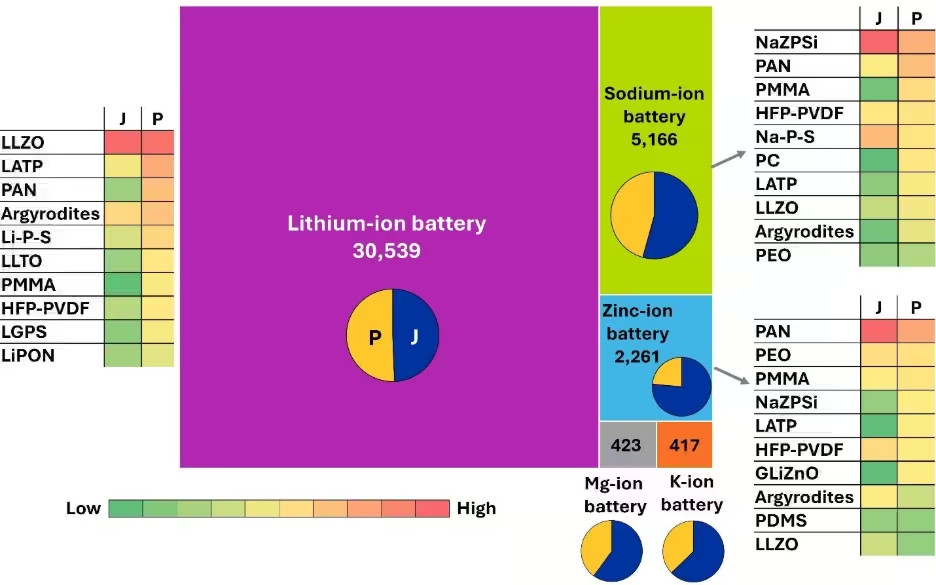
Figura 4: Distribución de la investigación en baterías de estado sólido según las diferentes químicas de batería y los electrolitos de estado sólido asociados. Los gráficos circulares individuales indican la proporción de publicaciones en revistas (J) y patentes (P) para las respectivas baterías. Las tablas de mapas de calor muestran los electrolitos de estado sólido más frecuentes asociados a sus respectivas baterías de estado sólido. Fuente: CAS Content Collection. Véanse las notas a pie de página para las abreviaturas.
Los principales electrolitos de estado sólido para sistemas de litio muestran una diversidad interesante. Los electrolitos basados en óxidos, LLZO y LATP, reciben la mayor atención, seguidos de electrolitos poliméricos como el PAN, las argiroditas basadas en sulfuros y los sistemas Li-P-S. Esta variedad sugiere que el campo no ha convergido en una única tecnología ganadora, explorándose diferentes electrolitos de estado sólido para diversos requisitos de aplicación.
Las baterías de estado sólido de iones de sodio ocupan el segundo lugar en volumen de documentos, aunque siguen estando significativamente por detrás de los sistemas de litio. La relación entre patentes y publicaciones favorece ligeramente a estas últimas, lo que indica que este campo sigue estando más centrado en la investigación que en la comercialización. Las preferencias de electrolitos para los sistemas de sodio muestran diferencias notables respecto al litio: el NaZPSi (conductor superiónico de sodio) lidera el grupo, mientras que los electrolitos poliméricos (PAN, PMMA) ocupan un lugar destacado. Algunos electrolitos centrados en el litio, como el LATP y el LLZO, también están presentes, lo que sugiere que los investigadores están explorando la compatibilidad cruzada entre sistemas.
Las baterías de iones de zinc representan el tercer actor importante, mostrando una proporción mucho mayor de publicaciones en revistas en comparación con las patentes. Esta distribución, centrada en las publicaciones, sugiere que las baterías de estado sólido de zinc se encuentran todavía en la fase de investigación fundamental, con investigadores trabajando para comprender y optimizar estos sistemas antes de su desarrollo comercial. El panorama de los electrolitos de estado sólido para baterías de zinc está dominado por electrolitos poliméricos (PAN, PEO, PMMA), lo cual tiene sentido dada la compatibilidad del zinc con sistemas acuosos y cuasisólidos.
Las químicas de batería emergentes, como el magnesio y el potasio, muestran una actividad equilibrada entre investigación y patentes a pesar de sus cifras globales más bajas, lo que indica un desarrollo en fase inicial pero prometedor. Estos sistemas podrían representar alternativas futuras a medida que los investigadores busquen diversificarse más allá del litio, especialmente para aplicaciones específicas donde sus propiedades únicas ofrecen ventajas.
Las intensidades de los mapas de calor entre los diferentes electrolitos, mostradas en la Figura 4, revelan que, si bien ciertos electrolitos muestran versatilidad en múltiples tipos de baterías, otros siguen siendo específicos de cada química. Esto subraya la importancia de desarrollar electrolitos de estado sólido a medida para los requisitos únicos de cada sistema de batería.
Las tendencias en patentes muestran aplicaciones prometedoras para las baterías de estado sólido
Nuestro análisis de los volúmenes de publicación en los sectores de aplicación de las baterías de estado sólido (SSB) revela patrones distintos en el enfoque de la investigación y la madurez de la comercialización (véase la Figura 5).
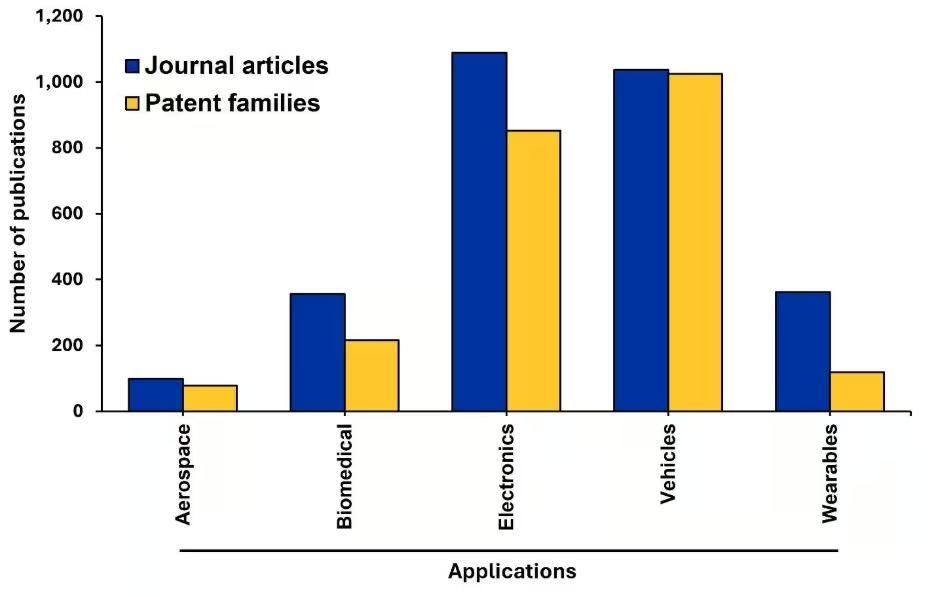
Figura 5: Número de publicaciones en revistas y patentes para aplicaciones de baterías de estado sólido. Fuente: CAS Content Collection.
La electrónica y los vehículos dominan claramente el campo, representando aproximadamente el 75% de toda la investigación de aplicaciones. Sin embargo, sus trayectorias de desarrollo difieren significativamente. La electrónica muestra una brecha notable entre las publicaciones en revistas y las patentes, lo que sugiere desafíos continuos de investigación fundamental en la adaptación de estas baterías para la electrónica de consumo. Esto podría estar relacionado con la miniaturización, el coste o la complejidad de fabricación. Por el contrario, el sector de la automoción muestra una paridad notable entre publicaciones y patentes. Estos hallazgos indican un campo maduro que está pasando del laboratorio al mercado, impulsado por el crecimiento de los vehículos eléctricos y la urgente necesidad de baterías más seguras y con mayor densidad energética.
Los sectores de aplicación emergentes son prometedores, pero siguen centrados principalmente en la investigación. Las aplicaciones biomédicas despiertan un gran interés académico, pero presentan una actividad de patentes limitada, lo que sugiere que los investigadores aún exploran la viabilidad fundamental en lugar de buscar la comercialización. Esto podría reflejar los estrictos requisitos normativos y los desafíos de biocompatibilidad propios de los dispositivos médicos.
Los dispositivos vestibles muestran una brecha aún más pronunciada entre la investigación y las patentes, lo que indica que, si bien el concepto de baterías de estado sólido flexibles y seguras para tecnología vestible es académicamente interesante, aún quedan importantes obstáculos técnicos antes de alcanzar la viabilidad comercial.
El sector aeroespacial presenta una distribución casi equitativa de artículos científicos y patentes. Esta proporción equilibrada, a pesar de un volumen total de documentos menor, refleja el patrón observado en el sector automotriz. Sugiere una participación comercial activa impulsada por varias ventajas técnicas convincentes de las baterías de estado sólido en aplicaciones aeroespaciales, como la ininflamabilidad y un mejor rendimiento a gran altitud.
Desafíos y oportunidades de las baterías de estado sólido
Aunque las baterías de estado sólido (SSB) son muy prometedoras, varios desafíos impiden su comercialización a gran escala. Una limitación técnica importante es la conductividad iónica relativamente baja de muchos electrolitos sólidos a temperatura ambiente en comparación con los líquidos. Los electrolitos basados en óxidos, como el LLZO, requieren altas temperaturas de sinterización para obtener microestructuras densas, lo que hace que el procesamiento sea complejo y costoso. Los electrolitos de sulfuro ofrecen una alta conductividad, pero son sensibles al aire y a la humedad, lo que requiere condiciones inertes.
Otro desafío es la inestabilidad en las interfaces electrodo-electrolito. A diferencia de los electrolitos líquidos, el contacto sólido-sólido suele provocar un contacto interfacial deficiente y una alta resistencia. Las reacciones químicas en estas interfaces pueden formar capas resistivas, especialmente con el litio metálico, que empeoran con los ciclos y degradan el rendimiento. La rigidez mecánica de los electrolitos sólidos contribuye además a generar tensiones, huecos y delaminación durante los cambios de volumen, lo que aumenta la impedancia y el deterioro del rendimiento.
La formación de dendritas de litio sigue siendo una preocupación, ya que los filamentos de litio pueden propagarse a través de defectos microestructurales en los electrolitos de estado sólido bajo altas densidades de corriente, provocando cortocircuitos. Además, la producción a gran escala es costosa: el procesamiento de estos materiales requiere altas temperaturas, alta presión, ingeniería precisa y condiciones secas (especialmente para los sulfuros). Estos desafíos de material e integración, junto con los problemas de reciclabilidad y las cadenas de suministro inmaduras, dificultan la transición de los prototipos de laboratorio a las baterías de estado sólido a escala industrial.
A pesar de estos obstáculos, las baterías de estado sólido evolucionan hacia un futuro en el que el diseño de materiales, la ingeniería de interfaces y el procesamiento escalable convergen para ofrecer un almacenamiento de energía más seguro, denso y duradero. La próxima generación de estas baterías contará con electrolitos híbridos y compuestos que combinan la alta conductividad de las cerámicas con la flexibilidad de los polímeros, garantizando interfaces estables e integridad mecánica durante los ciclos. Los avances en la fabricación a baja temperatura, como la sinterización en frío y el procesamiento asistido por líquidos transitorios, harán que la fabricación sea más eficiente y compatible con la producción a gran escala.
Los prototipos recientes reflejan este impulso: Chery ha presentado un módulo de batería de estado sólido con una densidad energética de 600 Wh/kg que apunta a una autonomía de 1300 km, más del doble que las baterías de iones de litio convencionales. Del mismo modo, Sunwoda introdujo una batería de polímero totalmente de estado sólido con 400 Wh/kg y una vida útil de 1200 ciclos bajo una presión ultrabaja. Esto podría dotar a los vehículos eléctricos de autonomías superiores a los 1000 km y 1200 ciclos, permitiendo más de una década de uso, suponiendo un recorrido anual de 20 000 km.
Mientras tanto, los enfoques basados en datos y el descubrimiento de materiales asistido por IA acelerarán la optimización y el control de calidad en este campo. Más allá del litio, los conceptos de estado sólido se extienden a otros iones metálicos como los sistemas de sodio, zinc, magnesio y potasio, ampliando la sostenibilidad y la accesibilidad a los recursos. Estos avances continuos y enfoques híbridos están cerrando constantemente la brecha de rendimiento entre la tecnología de baterías tradicional y las nuevas opciones de estado sólido.
Aunque el despliegue a gran escala aún puede tardar años, la convergencia de los avances científicos e industriales indica que las baterías de estado sólido están en camino de transformar el almacenamiento de energía en todos los sectores durante la próxima década.
Conjuntos de datos de entrenamiento seleccionados perfeccionan la IA para acelerar el descubrimiento en I+D: descubra cómo los conjuntos de entrenamiento seleccionados de CAS mejoran la precisión de predicción de los modelos de IA en el desarrollo de materiales.
Leer el caso prácticoAbreviaturas utilizadas: LLZO, óxido de litio, lantano y circonio; LATP, fosfato de litio, aluminio y titanio; LLTO, óxido de litio, lantano y titanio; LiPON, oxinitruro de litio y fósforo; LAGP, fosfato de litio, aluminio y germanio; NaZPSi, silicato de fosfato de sodio y circonio; GLiZnO, óxido de germanio, litio y zinc; Li-P-S, litio-fósforo-azufre; LGPS, sulfuro de litio, germanio y fósforo; LSnPS, sulfuro de litio, estaño y fósforo; Na-P-S, sodio-fósforo-azufre; PAN, poliacrilonitrilo; PVDF-HFP, hexafluoropropileno-poli(fluoruro de vinilideno); PMMA, polimetilmetacrilato; PEO, óxido de polietileno; PC, policarbonato; PDMS, polidimetilsiloxano