
Resumen ejecutivo
- La ciencia de los polímeros ha alcanzado una escala y complejidad que las búsquedas superficiales ya no pueden abarcar, con millones de secuencias posibles y cientos de miles de millones de dólares en valor de mercado en juego.
- Un nuevo informe conjunto del Instituto de Investigación de Materiales Avanzados (SAMRI) de PetroChina (Shanghái) y CAS traza el panorama de la innovación emergente en polímeros mediante búsquedas basadas en estructuras, bibliometría, inteligencia de patentes y procesamiento de lenguaje natural en casi un millón de publicaciones.
- El informe proporciona a investigadores, inversores y profesionales de la propiedad intelectual la amplitud necesaria para visualizar el panorama completo y la profundidad para actuar en consecuencia.
Desde dispositivos electrónicos y sanitarios hasta ropa y bienes de consumo, los polímeros son algunos de los materiales más trascendentales jamás desarrollados. A medida que el campo ha crecido en escala, también se ha vuelto más complejo, con millones de secuencias posibles para crear nuevos polímeros y cientos de miles de millones de dólares en valor de mercado.
Identificar innovaciones prometedoras y priorizar inversiones es, por consiguiente, más difícil, especialmente cuando las organizaciones deben navegar por las expectativas de sostenibilidad, las aplicaciones intersectoriales y la reconfiguración geográfica del panorama competitivo. Para comprender mejor el estado de la innovación global en polímeros, CAS y el Instituto de Investigación de Materiales Avanzados (SAMRI) de PetroChina (Shanghái) desarrollaron Fronteras de los polímeros: un análisis exhaustivo basado en datos de las tendencias emergentes.
El análisis resultante en el informe demuestra por qué CAS está en una posición ideal para llevar a cabo una investigación tan exhaustiva. Los datos indexados de CAS, en particular las sustancias químicas, impulsaron la recuperación de documentos, una estrategia de búsqueda más sólida que el uso exclusivo de palabras clave. Otros datos indexados por CAS, incluidos los conceptos, permitieron un análisis de datos exhaustivo. Asimismo, los investigadores de SAMRI combinan su experiencia en ciencia fundamental con conocimientos de aplicaciones industriales a gran escala para ofrecer una perspectiva global rigurosa sobre el impacto real de la ciencia de los materiales poliméricos.
El informe analiza casi un millón de publicaciones relacionadas con polímeros de la última década (2015-2025) e identifica más de 200 temas emergentes en diversos campos, incluidos tipos de polímeros y materiales, aplicaciones, química y síntesis, cargas y aditivos, propiedades y rendimiento, procesamiento y fabricación, compuestos y sostenibilidad.
En un espacio de investigación tan vasto y complejo como el de los polímeros, es vital comprender la amplitud de la innovación y cómo se traduce en oportunidades comerciales. Los expertos en la materia de CAS elaboraron una estrategia de búsqueda integral basada en estructuras para descubrir publicaciones relevantes que muestren hacia dónde se dirige el campo (véase la Figura 2).
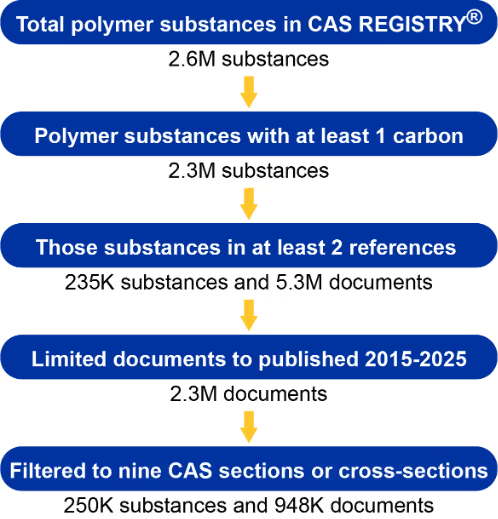
Comenzando con las sustancias poliméricas en el CAS REGISTRY®, accedimos a más de cinco millones de publicaciones en la CAS Content CollectionTM, la base de datos científica curada más grande del mundo. La aplicación de parámetros de búsqueda adicionales redujo los resultados a casi 950.000 documentos, a los que aplicamos un marco metodológico multidimensional que combina análisis bibliométrico, inteligencia de patentes y técnicas avanzadas de procesamiento de lenguaje natural (PLN).
Los métodos basados en PLN revelan innovaciones emergentes
La cantidad de publicaciones relevantes sobre polímeros requería técnicas basadas en IA para categorizarlas de manera eficiente y dar sentido al panorama general. Nuestra metodología consistió en extraer frases candidatas de resúmenes, títulos y reivindicaciones de patentes, y utilizar una clasificación basada en IA seguida de una validación por parte de expertos para refinar la categorización. El resultado son extensos mapas CAS TrendScape que representan numerosos temas emergentes en el campo de los polímeros (véase la Figura 3).
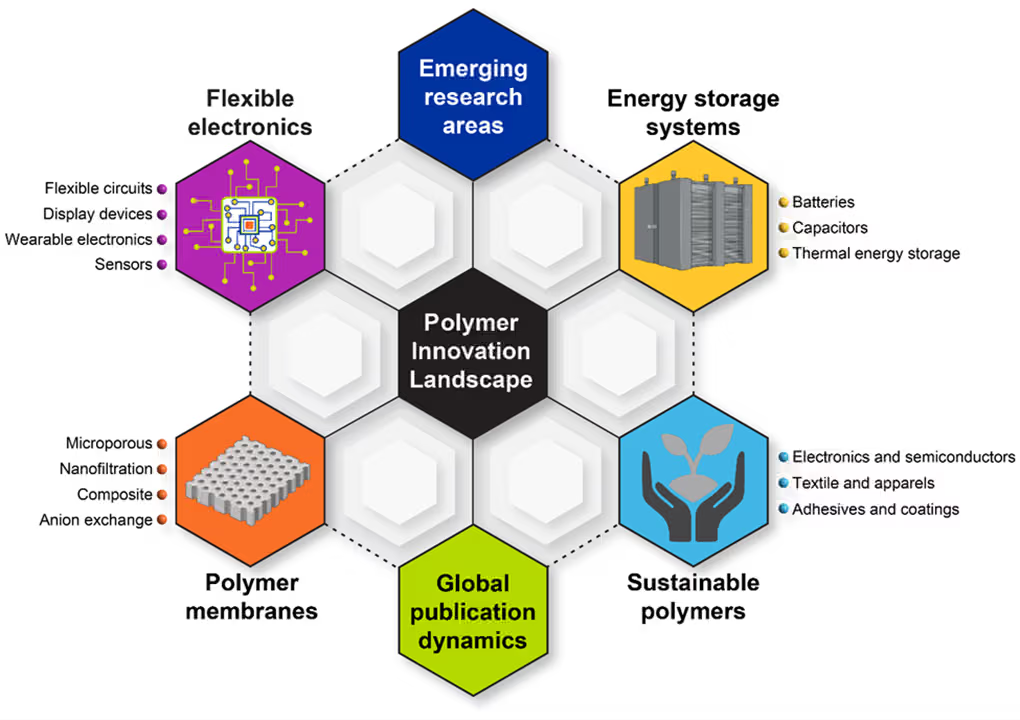
Este análisis basado en PLN guio la selección de temas como sistemas de almacenamiento de energía, electrónica, membranas y separación, y polímeros sostenibles, todos los cuales mostraron crecimiento y un número considerable de documentos asociados para un análisis más profundo.
Comprender el próximo avance en polímeros
Polymer Frontiers ofrece un análisis profundo y exhaustivo gracias a su examen integral de fuentes de datos robustas combinadas con información de mercado. Además de las tendencias globales, profundiza en:
- Polímeros en sistemas de almacenamiento de energía.
- Polímeros sostenibles.
- Materiales poliméricos en electrónica flexible.
- Avances en membranas poliméricas.
Gracias a la identificación de temas emergentes mediante procesamiento de lenguaje natural y respaldado por la experiencia humana en curación, este informe completo proporciona a los investigadores información sobre nuevas innovaciones, junto con el contexto que solo ofrecen décadas de experiencia de científicos expertos en la materia.
Descargue el informe completo en inglés o chino.