

Resumen ejecutivo
- Los MXenos son materiales bidimensionales con propiedades únicas y la capacidad de ajustar su composición para adaptarse a múltiples aplicaciones.
- Los MXenos se utilizan en baterías, supercondensadores y otros componentes de almacenamiento de energía, así como en electrónica, sensores y aplicaciones de remediación ambiental.
- El carburo de titanio es la sustancia más común en las composiciones de MXeno.
- Mediante el uso del léxico CAS y otras soluciones avanzadas de CAS, es más sencillo identificar las tendencias en patentes y las prioridades de investigación en este campo en rápida evolución.
Los MXenos, una familia de carburos, nitruros y carbonitruros de metales de transición bidimensionales, han surgido como materiales transformadores desde su descubrimiento en 2011. Los MXenos poseen una combinación poco común de propiedades que los distingue de otros materiales 2D: conductividad metálica junto con hidrofilia, procesabilidad en solución a temperatura ambiente y química superficial ajustable. Ofrecen conductividad eléctrica similar a la de los metales, flexibilidad mecánica similar a la de los polímeros y superficies hidrofílicas que pueden ajustarse químicamente. Pocos materiales proporcionan este nivel de multifuncionalidad, razón por la cual los MXenos han atraído tanto interés investigador en poco más de una década.
Los MXenos se caracterizan por la fórmula general Mn+1XnTx, donde M representa metales de transición, X denota carbono o nitrógeno, n = 1-3, y Tx indica terminaciones superficiales como -O, -OH, -F o -Cl. Ya existen más de 30 composiciones de MXeno conocidas, y las predicciones computacionales sugieren que son posibles miles más. Los investigadores pueden modificar sus terminaciones superficiales para ajustar la conductividad, la estabilidad, la actividad catalítica y las propiedades de transporte iónico. Esta capacidad de ajuste confiere a los MXenos una enorme ventaja de diseño sobre otros materiales 2D, como el grafeno o los dicalcogenuros de metales de transición, y los posiciona como candidatos potentes para tecnologías personalizadas y específicas.
Los investigadores de materiales pueden utilizar CAS SciFinder para realizar búsquedas en la literatura de ciencia de materiales, identificando relaciones estructura-propiedad y métodos de síntesis que fomenten la innovación.
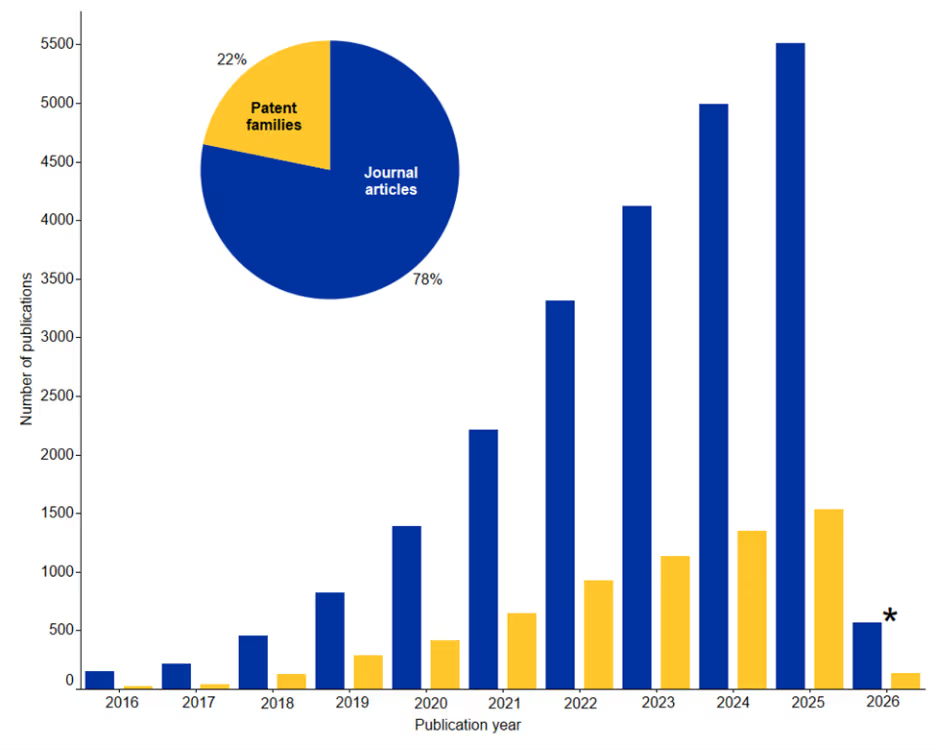
Por ejemplo, los MXenos pueden dispersarse en agua, modificarse con diversos grupos superficiales e integrarse en compuestos mediante una simple mezcla, lo que los hace excepcionalmente accesibles para aplicaciones multifuncionales que abarcan el almacenamiento de energía, la catálisis, la electrónica y la remediación ambiental. Analizamos la CAS Content CollectionTM, el mayor repositorio de información científica curado por expertos, para comprender mejor cómo se utilizan estos materiales en diversas industrias y aplicaciones. Descubrimos que las publicaciones en revistas y patentes mostraron un crecimiento significativo en la última década (2015-2026), representando las patentes el 22% de las publicaciones (véase la Figura 1):
Las aplicaciones de los MXenos abarcan la transición energética, los dispositivos biomédicos y más
¿Cómo están pasando los MXenos del laboratorio al uso común? Para responder a esa pregunta, analizamos la aparición de MXenos en el léxico CAS, una función de búsqueda especializada dentro de CAS SciFinder®, para identificar conceptos en las publicaciones. Estos conceptos pueden incluir aplicaciones, propiedades, clases de sustancias y métodos de síntesis. Comenzamos identificando conceptos de aplicación para los MXenos y agrupándolos en áreas de aplicación más amplias (véase la Figura 2).
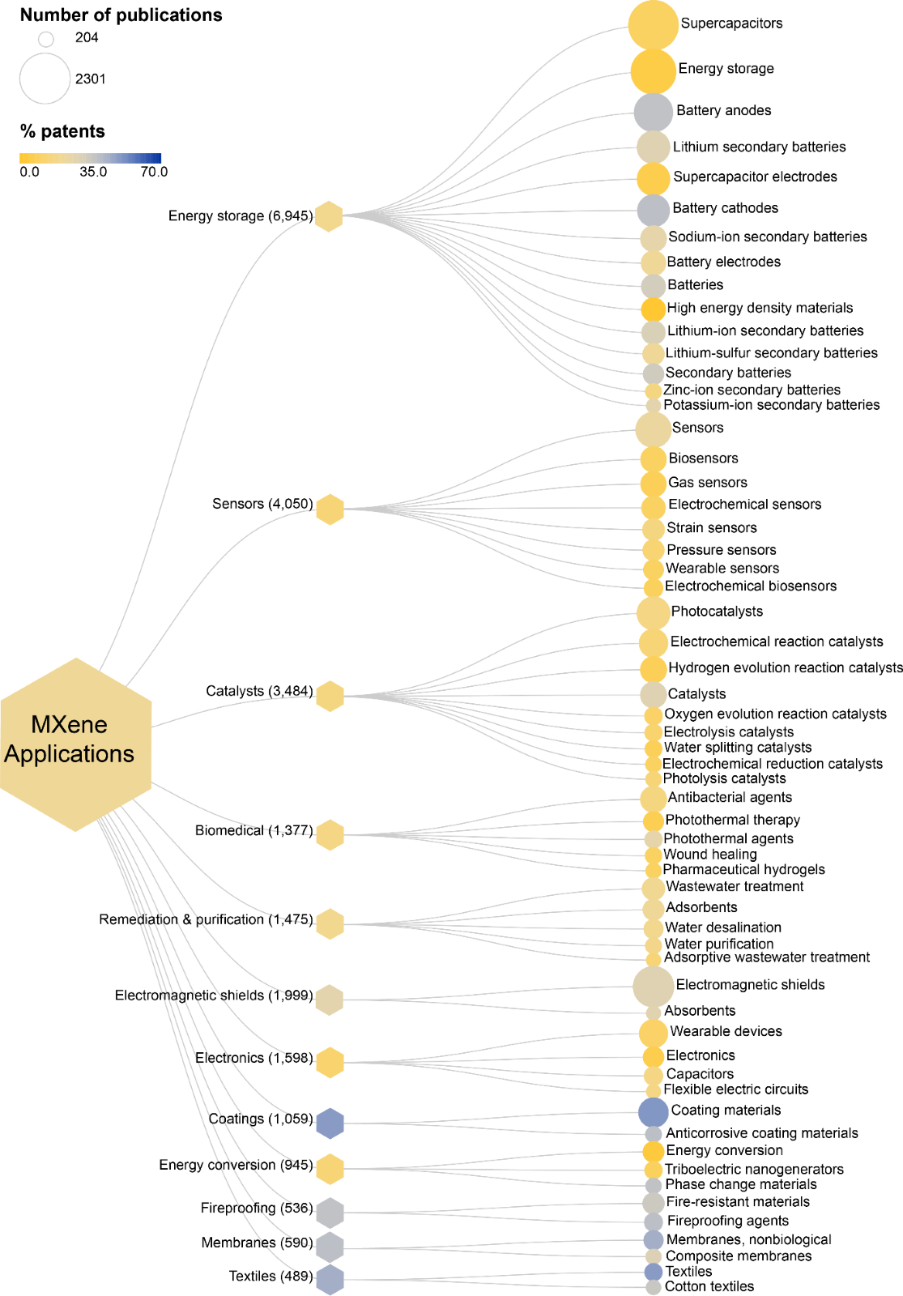
El almacenamiento de energía es la aplicación más investigada debido al papel de los MXenos en los ánodos de baterías y supercondensadores, lo que refleja su excepcional capacitancia volumétrica y sus excelentes capacidades de tasa. Cabe destacar que la tecnología ha evolucionado más allá de los sistemas tradicionales de iones de litio para incluir baterías de iones de sodio, litio-azufre y las emergentes de iones de zinc.
La combinación única de conductividad metálica y procesabilidad de los MXenos los hace ideales para el blindaje electromagnético de próxima generación en electrónica, telecomunicaciones y aplicaciones aeroespaciales. Las aplicaciones de catálisis abarcan catalizadores electroquímicos, fotocatalizadores y catalizadores especializados para la reacción de evolución de hidrógeno. Esta diversidad subraya la química superficial ajustable de los MXenos y su eficacia como catalizadores independientes y soportes conductores para especies activas.
Varias aplicaciones presentan ratios de patentes frente a revistas excepcionalmente altos. Los recubrimientos lideran con un 48% de cobertura de patentes, particularmente los recubrimientos anticorrosivos y los materiales de recubrimiento generales. Las propiedades de barrera, la flexibilidad mecánica y la multifuncionalidad de los MXenos impulsan su aplicación en recubrimientos. Los textiles mejorados con MXeno (43% de patentes) ofrecen detección integrada, calefacción y propiedades antibacterianas, mientras que las membranas basadas en MXeno (39% de patentes) destacan en aplicaciones de desalinización y purificación de agua. Las aplicaciones ignífugas (37% de patentes) se benefician de la estabilidad térmica y los efectos de barrera de los MXenos.
Los sensores representan un campo en rápido crecimiento con diversas implementaciones, incluidos los biosensores, los sensores de gas y los sensores vestibles. La intensidad moderada de las patentes sugiere un mercado en fase inicial, aunque los sensores de presión y deformación muestran una mayor actividad comercial. Las aplicaciones biomédicas abarcan agentes antibacterianos, terapia fototérmica y cicatrización de heridas. La alta cobertura de patentes para agentes fototérmicos (26%) indica un fuerte interés comercial en aplicaciones para el tratamiento del cáncer.
El papel de los MXenos en el panorama de la investigación
A las sustancias individuales y a las «clases de sustancias» indexadas en la CAS Content Collection se les asignan «roles» en función de la naturaleza de los estudios que involucran a la sustancia indexada. Hemos utilizado estos roles indexados por CAS para comprender el tipo exacto de estudios que involucran a los MXenos (véase la Figura 3).
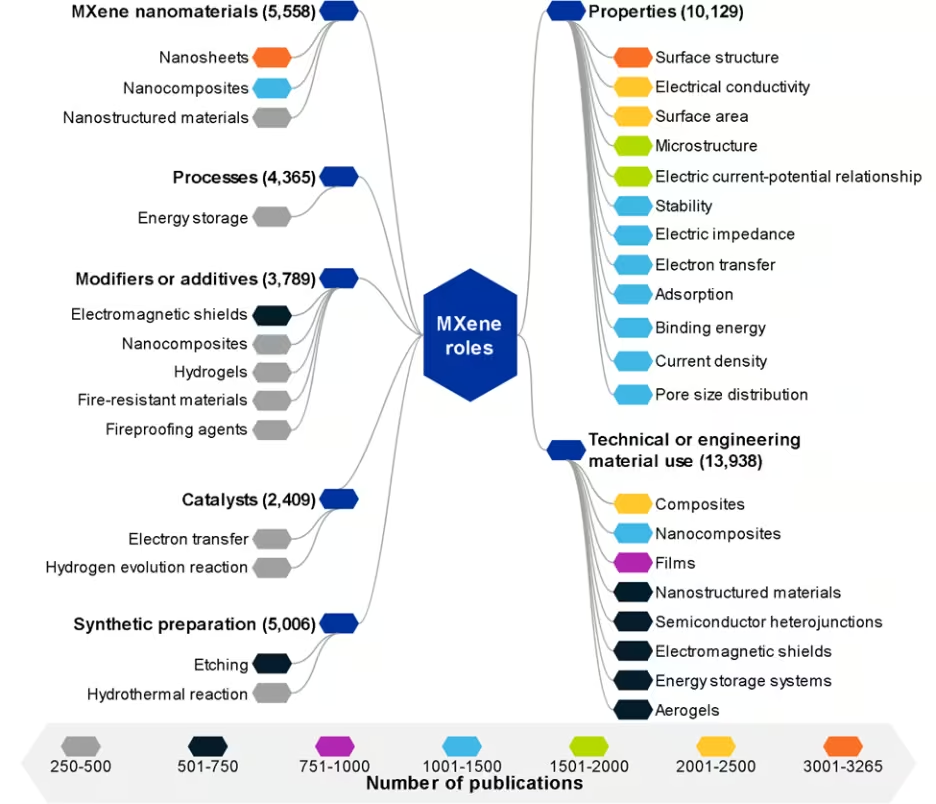
Este análisis revela las múltiples facetas de los roles que desempeñan los MXenos, que abarcan desde la caracterización de propiedades fundamentales hasta aplicaciones técnicas avanzadas. Al aprovechar aún más los «conceptos» del léxico CAS, identificamos detalles más específicos de los «roles» más destacados asociados con los MXenos:
- Materiales técnicos y de ingeniería: Los MXenos sirven predominantemente como materiales activos, siendo los compuestos la mayor categoría de aplicación. Los investigadores incorporan ampliamente los MXenos en nanocompuestos y películas, aprovechando su estructura bidimensional para crear materiales multifuncionales. El importante enfoque en materiales nanoestructurados y heterouniones semiconductoras destaca el papel de los MXenos en la electrónica y optoelectrónica de próxima generación. Cabe destacar que los blindajes electromagnéticos y los sistemas de almacenamiento de energía representan las principales aplicaciones técnicas, mientras que la investigación sobre aerogeles demuestra el interés en arquitecturas de MXeno tridimensionales para aplicaciones ligeras de alto rendimiento.
- Propiedades: Comprender las propiedades de los MXenos sigue siendo una prioridad de investigación, ya que las terminaciones superficiales y la morfología son fundamentales para determinar su rendimiento. La conductividad eléctrica y el área superficial representan características fundamentales que permiten el éxito de los MXenos en el almacenamiento de energía y la catálisis. El énfasis en la microestructura, las propiedades electroquímicas y la impedancia refleja la importancia del material en aplicaciones electroquímicas. Los estudios sobre transferencia de electrones, adsorción y energía de enlace proporcionan conocimientos mecanísticos cruciales para el diseño racional de materiales. El enfoque en la densidad de corriente y la distribución del tamaño de los poros se relaciona con la optimización del rendimiento en baterías, supercondensadores y sistemas catalíticos.
- Nanomateriales: Los MXenos existen predominantemente como nanocapas, lo que refleja su naturaleza bidimensional inherente tras la delaminación de las fases MAX. La importante investigación sobre nanocompuestos basados en MXenos demuestra estrategias para combinar los MXenos con materiales complementarios para mejorar su funcionalidad. Los estudios sobre materiales nanoestructurados indican esfuerzos para crear arquitecturas jerárquicas más allá de las simples nanocapas.
- Preparación sintética: El grabado sigue siendo el enfoque de síntesis dominante. Esto implica principalmente la eliminación selectiva de capas A de las fases MAX utilizando HF o métodos de HF in-situ. La presencia de la reacción hidrotérmica como método de síntesis refleja los esfuerzos continuos por desarrollar rutas de síntesis alternativas, potencialmente más seguras y respetuosas con el medio ambiente, aunque esto representa una fracción menor en comparación con las técnicas de grabado convencionales.
- Procesos físicos y de ingeniería: Los MXenos se someten a diversos procesos con almacenamiento de energía, lo que destaca su papel en los mecanismos de almacenamiento de carga dentro de baterías y supercondensadores a través de la intercalación de iones y reacciones redox superficiales.
- Modificador y aditivo: Más allá de servir como materiales activos primarios, los MXenos funcionan eficazmente como modificadores, particularmente en blindajes electromagnéticos y nanocompuestos. Su incorporación en hidrogeles amplía las aplicaciones a los dominios biomédicos y de materiales blandos. La importante investigación sobre materiales ignífugos y agentes ignífugos demuestra las capacidades protectoras de los MXenos, aprovechando su estabilidad térmica y sus propiedades de barrera.
- Catalizador: La reacción de evolución de hidrógeno representa una importante aplicación catalítica, posicionando a los MXenos como materiales prometedores para tecnologías sostenibles de producción de hidrógeno y división del agua.
La prevalencia de materiales compuestos como nanocompuestos, hidrogeles, aerogeles, películas y materiales nanoestructurados destaca los méritos y las limitaciones de los MXenos. Los MXenos destacan como potenciadores multifuncionales, pero requieren arquitecturas compuestas para un rendimiento óptimo. Su conductividad metálica, hidrofilia y procesabilidad en solución permiten una integración perfecta en diversas matrices (polímeros, óxidos, carbonos) que abordan las limitaciones comunes de los MXenos, como la fragilidad mecánica y la susceptibilidad a la oxidación. Incluir MXenos en estas matrices aprovecha sus propiedades únicas, no disponibles en materiales convencionales, mediante combinaciones sinérgicas.
Las sustancias de MXeno más prevalentes
Como se ha señalado, existen actualmente más de 30 composiciones de MXeno conocidas, con la posibilidad de cientos más. Examinamos el porcentaje de patentes de las 30 más comunes y descubrimos que el carburo de titanio (Ti₃C₂) domina abrumadoramente la investigación sobre MXenos (véase la Figura 4).
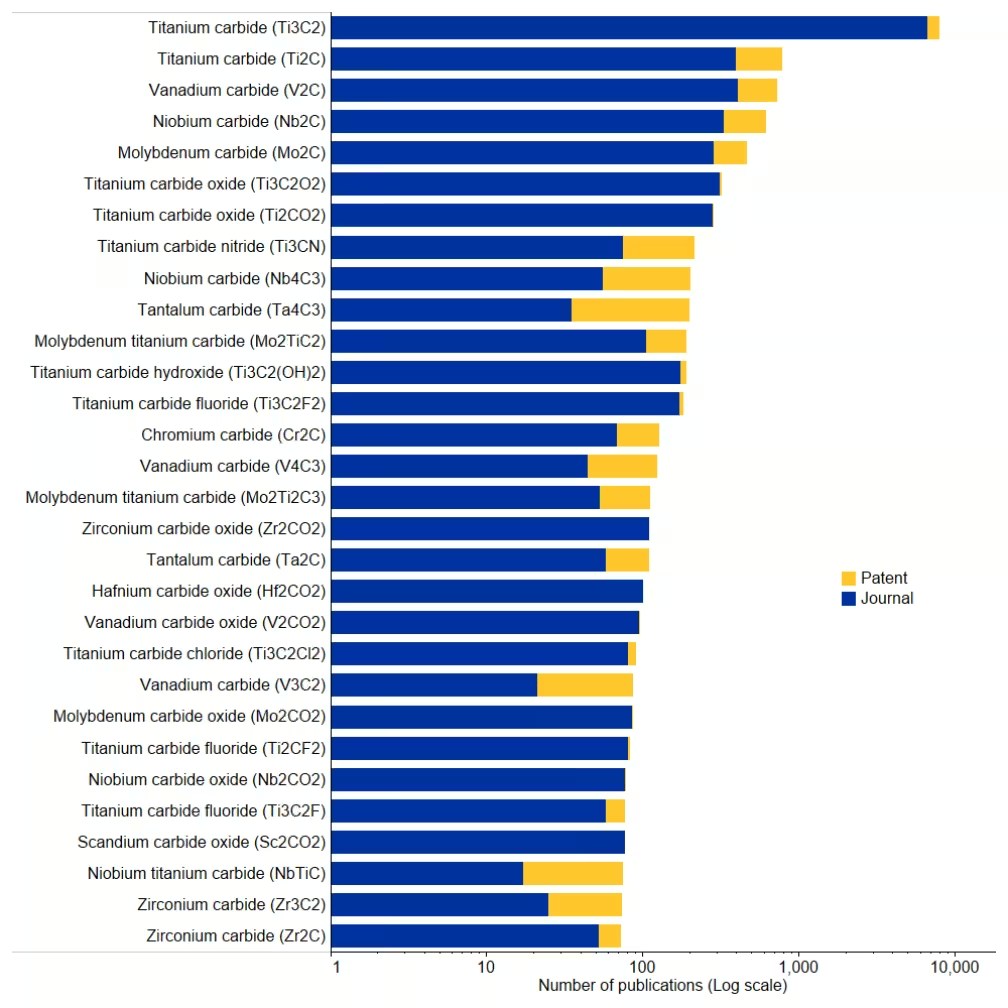
La concentración de publicaciones con carburo de titanio refleja la síntesis accesible del Ti₃C₂ a partir de Ti₃AlC₂, su excelente conductividad y sus aplicaciones versátiles. Más allá del Ti₃C₂, la investigación se diversifica hacia carburos de metales de transición tempranos con intensidades de patente drásticamente mayores: el Ti₂C, el V₂C y el Nb₂C muestran un fuerte interés comercial a pesar de los menores volúmenes de publicación.
Los MXenos de orden superior como el Ta₄C₃ y el carburo de niobio y titanio (NbTiC) exhiben relaciones excepcionales entre patentes y publicaciones, lo que indica innovaciones en fase inicial pero de alto valor. Cabe destacar que las variantes de Ti₃C₂ con terminación superficial (incluidas las formas de óxido, hidróxido, fluoruro y cloruro) representan colectivamente una investigación sustancial con una cobertura de patentes variable. Los MXenos con terminación de óxido muestran sistemáticamente una actividad de patentes mínima (0-2%), lo que posiblemente indique un enfoque en la investigación fundamental, mientras que los MXenos de carbonitruro y multimetálicos demuestran un mayor interés comercial, destacando su potencial para el ajuste de propiedades mediante la ingeniería de composición.
Comprensión de tipos específicos de MXenos
Las sustancias de MXeno individuales están indexadas en el CAS REGISTRY® e incluyen información detallada como nombres de sustancias, números CAS, fórmula molecular y «roles», como se ha comentado anteriormente. Identificamos tipos específicos de MXenos en el CAS REGISTRY y los clasificamos según parámetros clave para obtener una mejor comprensión de los diversos tipos:
MXenes clasificados por estequiometría
La estequiometría de los MXenes influye significativamente en el enfoque de sus aplicaciones, como demuestra la distribución de las publicaciones (véase la Figura 5). Los M₃X₂(n=2) predominan en la literatura, lo que refleja su estabilidad superior y facilidad de síntesis en comparación con los M₂X(n=1) y M₄X₃(n=3), y han experimentado el mayor crecimiento en los últimos tres años.
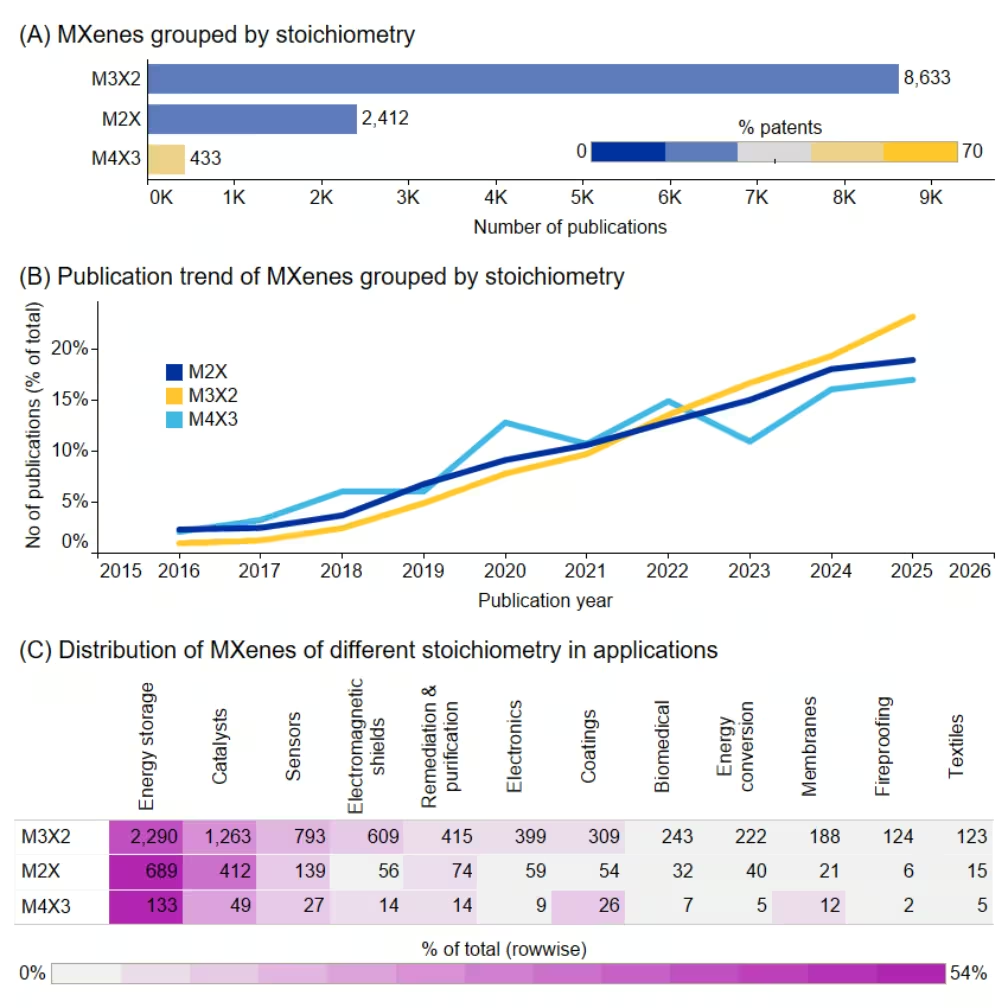
El almacenamiento de energía lidera todas las estequiometrías, pero muestra una preferencia variable según el grosor de las capas individuales de MXene: M₂X, M₄X₃ y M₃X₂. Los MXenes más gruesos (M₄X₃) proporcionan más galerías interlaminares para la intercalación de iones, lo que mejora la capacidad de las baterías. Por el contrario, el mayor enfoque de los M₂X en el almacenamiento de energía refleja una menor cantidad de aplicaciones competidoras.
La catálisis favorece a los M₂X frente a los M₃X₂ y M₄X₃, ya que las estructuras más delgadas ofrecen mayores relaciones superficie-volumen y más sitios activos expuestos en los bordes para las reacciones catalíticas. La mayor superficie de los M₂X facilita la transferencia de electrones y la accesibilidad de los reactivos. El blindaje electromagnético favorece claramente a los M₃X₂ (11%) debido al equilibrio óptimo entre conductividad y procesabilidad. La menor representación de los M₂X sugiere una eficacia de blindaje insuficiente en estructuras de una sola capa.
La fortaleza distintiva de los M₄X₃ en recubrimientos proviene de sus propiedades mecánicas superiores y su grosor, que proporcionan una mejor protección de barrera. La escasez de publicaciones sobre M₄X₃ refleja la dificultad de su síntesis, que requiere un control preciso del grabado de la fase MAX. El alto porcentaje de patentes en M4X3 puede atribuirse a su uso en aplicaciones con gran volumen de patentes, como el almacenamiento de energía, los recubrimientos y las membranas.
MXenes clasificados por metales de transición
Los MXenes basados en titanio dominan abrumadoramente el campo, principalmente debido a la síntesis accesible del Ti₃C₂Tₓ a partir de fases MAX de Ti₃AlC₂ disponibles comercialmente, su excelente estabilidad y sus propiedades bien caracterizadas. Los MXenes de Ti muestran una distribución equilibrada de aplicaciones, sirviendo como el "caballo de batalla" versátil en todos los campos (véase la Figura 6).
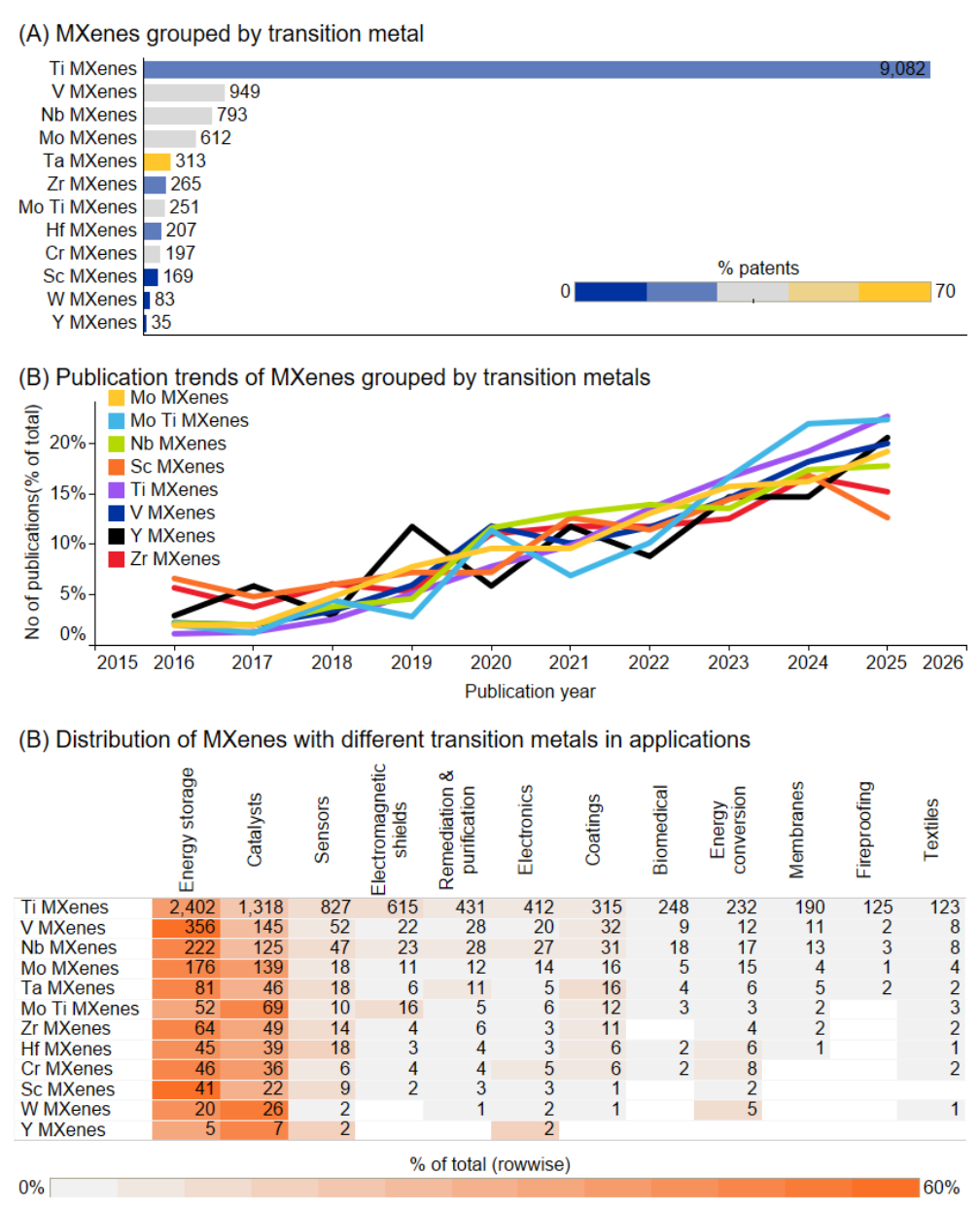
La actividad catalítica se correlaciona fuertemente con la identidad del metal. Los MXenes de Mo y W exhiben un enfoque catalítico excepcional, atribuido a sus energías de enlace de hidrógeno óptimas y a sus múltiples estados de oxidación que favorecen las reacciones de evolución de hidrógeno. Los MXenes de metal doble Mo-Ti logran la mayor representación catalítica, demostrando efectos sinérgicos al combinar metales con diferentes estructuras electrónicas.
Las preferencias de almacenamiento de energía varían sistemáticamente: los MXenes de V (60%) y Sc (57%) muestran el mayor enfoque, lo que refleja sus múltiples estados de oxidación accesibles que permiten el almacenamiento de carga pseudocapacitiva. Los metales del grupo V (V, Nb, Ta) muestran sistemáticamente un enfoque del 49-60% en el almacenamiento de energía debido a su favorable actividad redox y sus propiedades de intercalación iónica.
Los metales de transición tempranos (Sc, Y, Zr, Hf) reciben menos atención debido a la dificultad de la síntesis de la fase MAX y a su mayor reactividad. Sin embargo, los MXenes de Hf y Zr muestran aplicaciones catalíticas sólidas que se benefician de sus altas funciones de trabajo y estructuras electrónicas únicas. La escasez de publicaciones sobre W y Y refleja la dificultad de síntesis y la limitada disponibilidad de precursores de fase MAX, a pesar de su prometedor rendimiento catalítico.
MXenes clasificados por aniones
La investigación sobre MXenes está dominada abrumadoramente por composiciones basadas en carburos (97% de las publicaciones), mientras que los nitruros y carbonitruros siguen estando relativamente poco explorados. Esta disparidad refleja la accesibilidad sintética de los MXenes de carburo, particularmente el Ti₃C₂Tₓ, que se forma fácilmente mediante el grabado selectivo de fases MAX. Los carburos y nitruros muestran un alto crecimiento en los últimos tres años (véase la Figura 7).
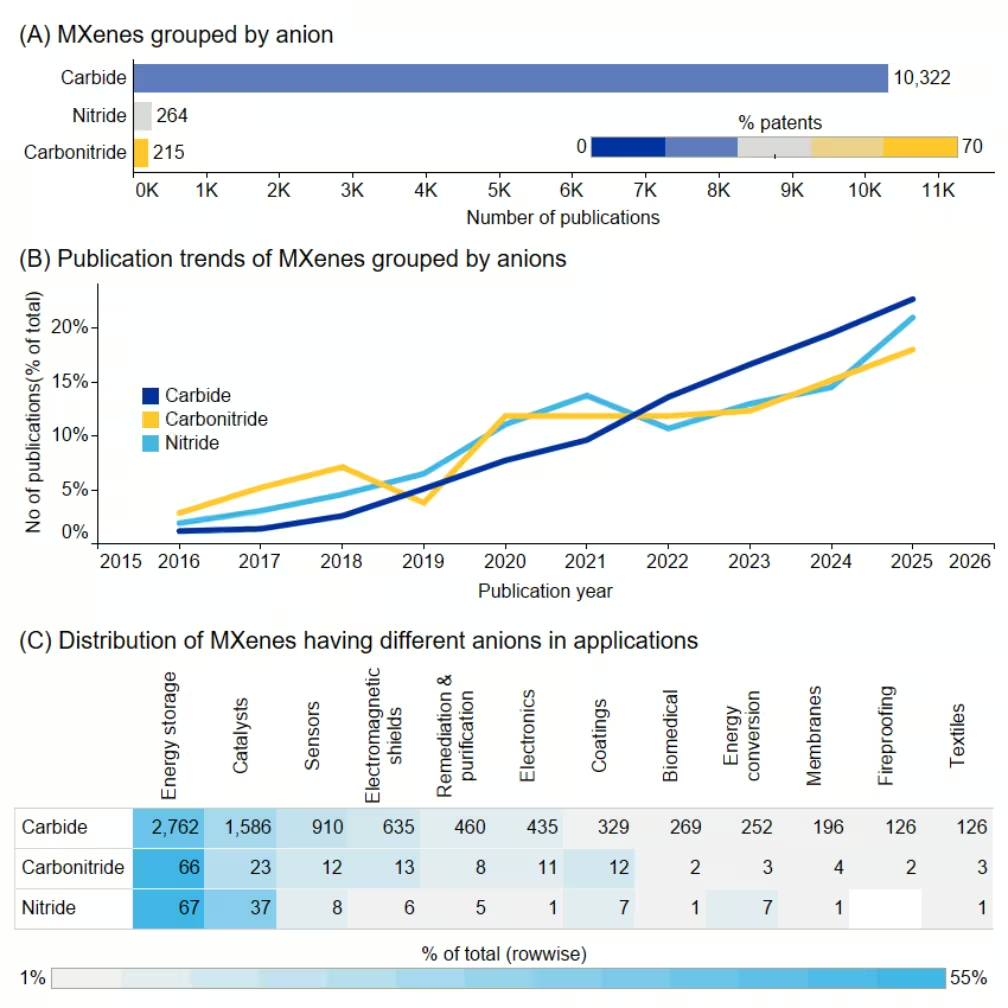
Los patrones de aplicación revelan preferencias distintas según el anión. El almacenamiento de energía domina en todos los tipos, siendo los nitruros los que muestran el mayor enfoque, probablemente debido a su conductividad electrónica superior y a una cinética de difusión de iones de litio mejorada en comparación con los carburos. Los MXenes de nitruro también demuestran una actividad catalítica excepcional, atribuida a su posicionamiento óptimo del centro de la banda d y a las modificaciones electrónicas inducidas por el nitrógeno que mejoran la reactividad superficial.
Los carbonitruros ocupan un punto intermedio único, mostrando un rendimiento equilibrado en el almacenamiento de energía y el blindaje electromagnético. Los MXenes de carburo exhiben la mayor diversidad de aplicaciones, incluyendo una representación significativa en sensores, blindaje electromagnético y aplicaciones biomédicas, lo que refleja su versátil química superficial, hidrofilia y protocolos de funcionalización establecidos. La limitada investigación sobre nitruros sugiere un potencial considerable aún sin explotar en aplicaciones emergentes.
MXenes clasificados por terminaciones superficiales
Las terminaciones superficiales en los MXenes son grupos funcionales que se unen a la superficie del metal de transición durante el grabado de las fases MAX. Estos influyen de forma crítica en las propiedades de los MXenes y en su idoneidad para las aplicaciones, como lo demuestran los distintos patrones de investigación (véase la Figura 8).
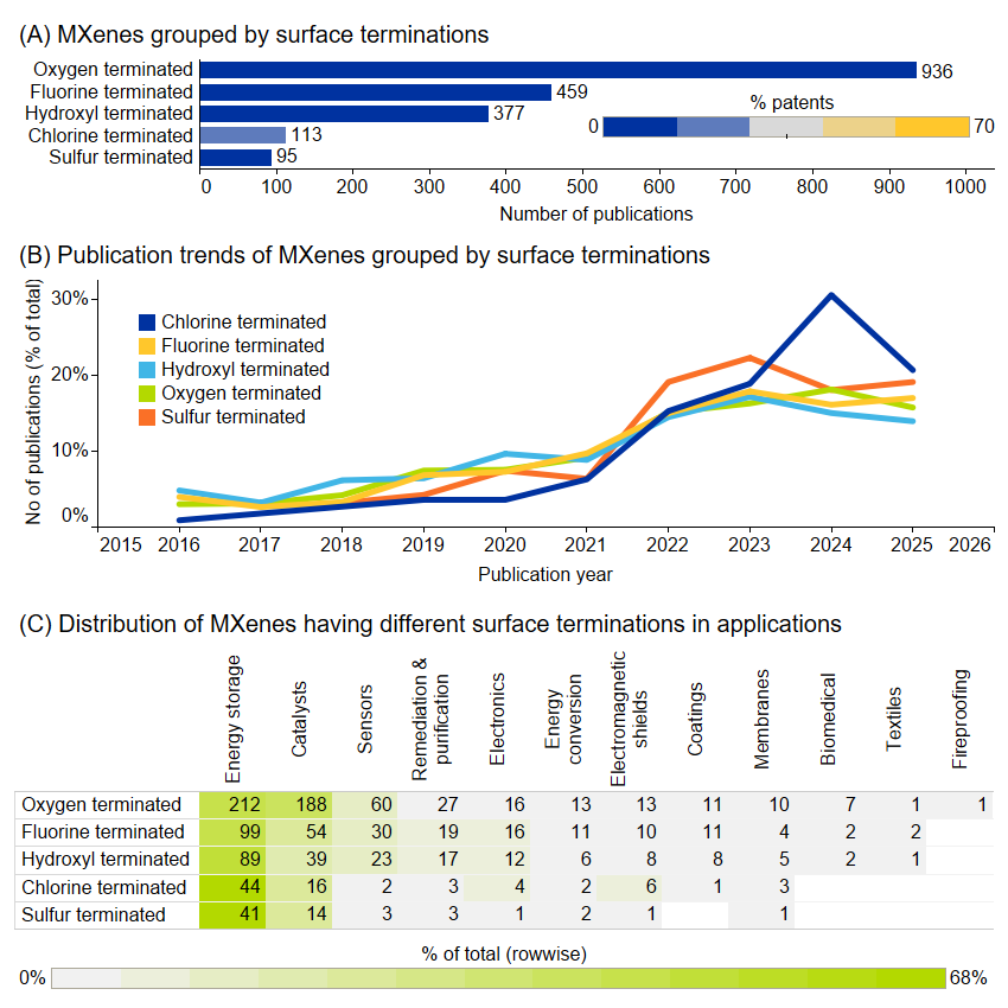
Los MXenes terminados en oxígeno predominan en la literatura y demuestran la mayor actividad catalítica entre todas las terminaciones. Esto refleja la capacidad del oxígeno para crear sitios redox activos y energías de enlace óptimas para los intermedios de reacción, lo cual resulta especialmente beneficioso para la electrocatálisis y la fotocatálisis.
Las terminaciones de flúor muestran una mayor estabilidad electroquímica y características hidrofóbicas, lo que las hace preferibles para el almacenamiento de energía, donde la estabilidad del ciclo es crucial. Los fuertes enlaces C-F resisten la oxidación y prolongan la vida útil operativa. Los grupos hidroxilo confieren una hidrofilia y procesabilidad en solución superiores, permitiendo diversas aplicaciones en sensores y remediación. Su capacidad de enlace de hidrógeno facilita el control del espaciado interlaminar y el anclaje de moléculas funcionales.
Cabe destacar que las terminaciones de cloro y azufre se centran principalmente en el almacenamiento de energía, debido a su menor electronegatividad en comparación con el oxígeno/flúor, lo que mejora la cinética de intercalación iónica y el comportamiento pseudocapacitivo. Sin embargo, sus desafíos sintéticos y su menor estabilidad limitan una exploración más amplia y representan oportunidades significativas para la investigación emergente en sistemas de almacenamiento de energía de alto rendimiento.
¿Qué sigue en la innovación de los MXenes?
Gracias a sus propiedades de alto rendimiento y su capacidad de ajuste única, los MXenes ofrecen un nivel de versatilidad que pocas familias de materiales pueden igualar. Son conductores, flexibles y pueden dispersarse en agua, y los investigadores los están utilizando en aplicaciones que van desde componentes para vehículos eléctricos y baterías hasta tintas conductoras y membranas especializadas.
La investigación sobre MXenes muestra que las sustancias se están diversificando más allá del predominio del Ti₃C₂. Las composiciones emergentes, particularmente los MXenes de doble metal de transición, M4X3(n=3), carbonitruros y terminaciones alternativas, son cada vez más frecuentes en aplicaciones con gran cantidad de patentes a pesar del limitado número de publicaciones. Este patrón señala posibles avances comerciales en aplicaciones especializadas, como el blindaje electromagnético, recubrimientos avanzados, textiles y almacenamiento de energía de próxima generación.
El crecimiento futuro probablemente enfatizará los métodos de síntesis escalables, las soluciones de estabilidad a largo plazo y la ingeniería de composición específica para cada aplicación, con el fin de trasladar la promesa de laboratorio de los MXenes a la realidad industrial.
Para los investigadores que se inician en la búsqueda conceptual o aquellos que deseen perfeccionar sus estrategias de búsqueda, CAS ofrece vídeos de formación que cubren flujos de trabajo básicos, incluyendo consultas basadas en estructuras, búsqueda de reacciones y refinamiento de resultados mediante datos de propiedades.