

Resumo executivo
- As doenças transmitidas por vetores, como mosquitos, carrapatos e outros artrópodes, representam mais de 17% de todas as doenças infecciosas e causam mais de 700.000 mortes a cada ano. Os casos de dengue aumentaram dez vezes nas últimas duas décadas, e estima-se que as doenças transmitidas pelo Aedes custem à economia global cerca de US$ 1,2 bilhão anualmente.
- As mudanças climáticas são um dos principais impulsionadores das doenças transmitidas por vetores. O aumento das temperaturas encurta os períodos de incubação de patógenos dentro dos vetores e expande seus habitats para novas regiões. As projeções mostram que centenas de milhões de pessoas a mais poderão estar em risco até meados do século sob cenários de altas emissões.
- As opções de tratamento e prevenção continuam limitadas. Não existem antivirais específicos amplamente aprovados para dengue, Zika ou chikungunya, e a resistência emergente ameaça a eficácia das estratégias de controle e tratamento da malária. A prevenção oferece o maior impacto, com sistemas de alerta precoce e estratégias de controle de vetores adaptadas ao clima superando as respostas reativas.
As doenças transmitidas por vetores representam um grande desafio para a saúde global, sendo responsáveis por mais de 17% de todas as doenças infecciosas e causando mais de 700.000 mortes anualmente. Essas doenças, como malária, dengue, chikungunya e doença de Lyme, são transmitidas por vetores artrópodes, incluindo mosquitos, carrapatos, moscas e pulgas (veja a Figura 1). Como esses vetores são ectotérmicos (dependem de fontes ambientais externas para a regulação da temperatura corporal), seus ciclos de vida estão estritamente ligados às condições ambientais, tornando a transmissão de doenças transmitidas por vetores altamente sensível às mudanças climáticas.
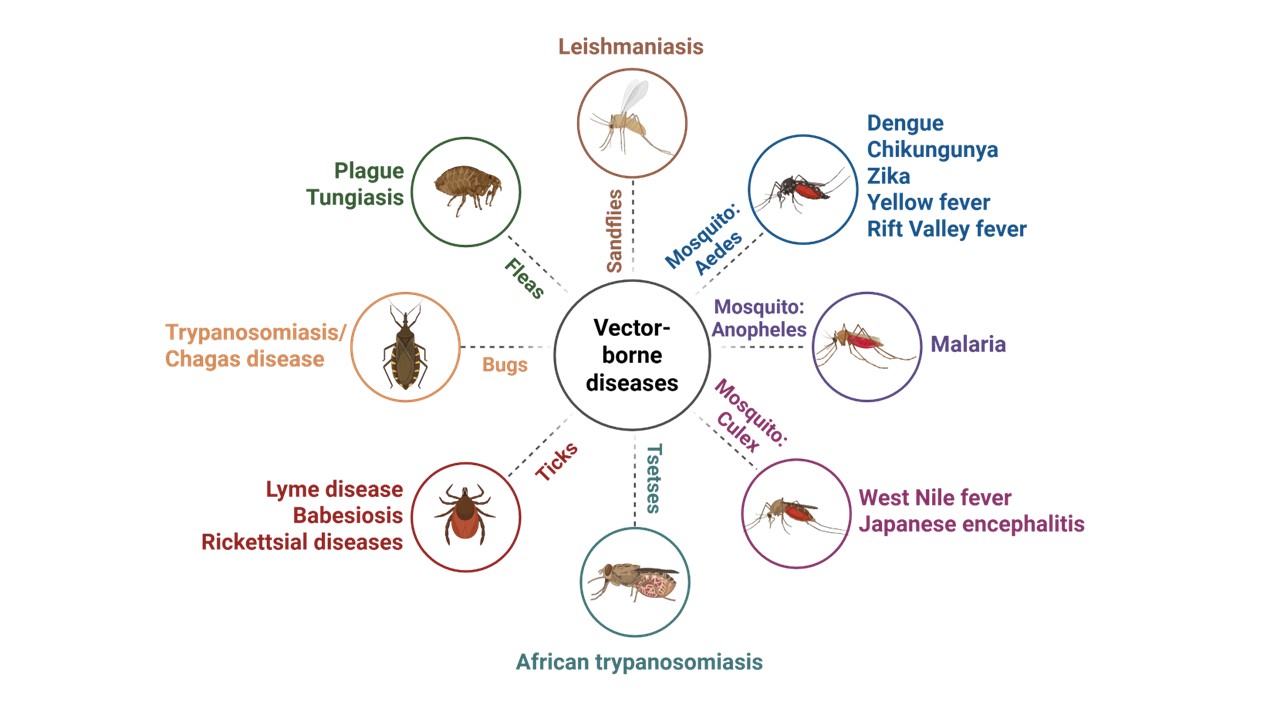
Figura 1: Visão geral das principais doenças transmitidas por vetores e seus respectivos vetores. Ilustração criada usando www.BioRender.com
O Painel Intergovernamental sobre Mudanças Climáticas (IPCC) projeta aumentos na temperatura global entre 1,5 e 4,5°C até 2100, com implicações profundas para a dinâmica das doenças em todo o mundo. O aumento das temperaturas globais, a alteração nos padrões de precipitação e eventos climáticos extremos mais frequentes devido às mudanças climáticas estão remodelando o cenário ecológico que rege a sobrevivência, a reprodução e a disseminação geográfica dos vetores.
As evidências já são visíveis: a incidência de dengue aumentou dez vezes nas últimas duas décadas, a chikungunya se espalhou para mais de 119 países até 2024, e um estudo de 2021 estimou que, a cada ano, aproximadamente 476.000 americanos são diagnosticados e tratados para a doença de Lyme. O custo econômico é igualmente alarmante: apenas as doenças transmitidas pelo mosquito Aedes têm um custo anual médio de aproximadamente US$ 1,2 bilhão globalmente.
Além dos custos diretos com saúde, essas doenças também prejudicam o desenvolvimento econômico. Um relatório da Organização Mundial da Saúde (OMS) observa que as doenças transmitidas por vetores restringem o desenvolvimento rural e urbano em regiões tropicais e subtropicais. Elas também afetam o turismo — a eliminação de doenças como malária e dengue poderia potencialmente aumentar os gastos globais com turismo em US$ 12 bilhões.
À medida que as zonas climáticas mudam e os padrões de precipitação se alteram, torna-se cada vez mais importante entender para onde os vetores de doenças estão se movendo e como proteger as populações em risco. A saúde de milhões de pessoas e a estabilidade econômica de regiões inteiras estão em jogo.
O cenário de pesquisa sobre doenças transmitidas por vetores
O interesse em pesquisas sobre doenças transmitidas por vetores aumentou drasticamente nos últimos anos, refletindo o crescente reconhecimento dos riscos à saúde impulsionados pelo clima. Aproveitamos a CAS Content Collection™, o maior repositório de informações científicas com curadoria humana, para mapear a atividade global de pesquisa sobre mudanças climáticas e doenças transmitidas por vetores. Constatamos um aumento notável na atenção científica à relação entre mudanças climáticas e doenças transmitidas por vetores nas últimas duas décadas.
As buscas foram realizadas por meio do CAS IP Finder com tecnologia STNTM, que oferece acesso avançado à CAS Content Collection, juntamente com poderosas ferramentas de indexação semântica e análise. Usando uma terminologia ampla sobre doenças transmitidas por vetores cruzada com conceitos relacionados ao clima e ao meio ambiente, e limitando os resultados ao período de 2000 a 2025, recuperamos mais de 1.600 documentos com curadoria para análise.
Nossa análise revelou um aumento de mais de 40 vezes nas publicações nos últimos 25 anos (veja a Figura 2). Os artigos de periódicos dominam esse espaço, enquanto a atividade de patentes permanece mínima, com apenas 27 famílias de patentes (grupos de patentes relacionadas depositadas em várias jurisdições para proteger a mesma invenção) identificadas. Esse aumento na pesquisa reflete a crescente preocupação global com a malária, Zika e outras doenças transmitidas por vetores, mas também ressalta a dificuldade em desenvolver tratamentos eficazes, uma vez que poucos estão prontos para comercialização.
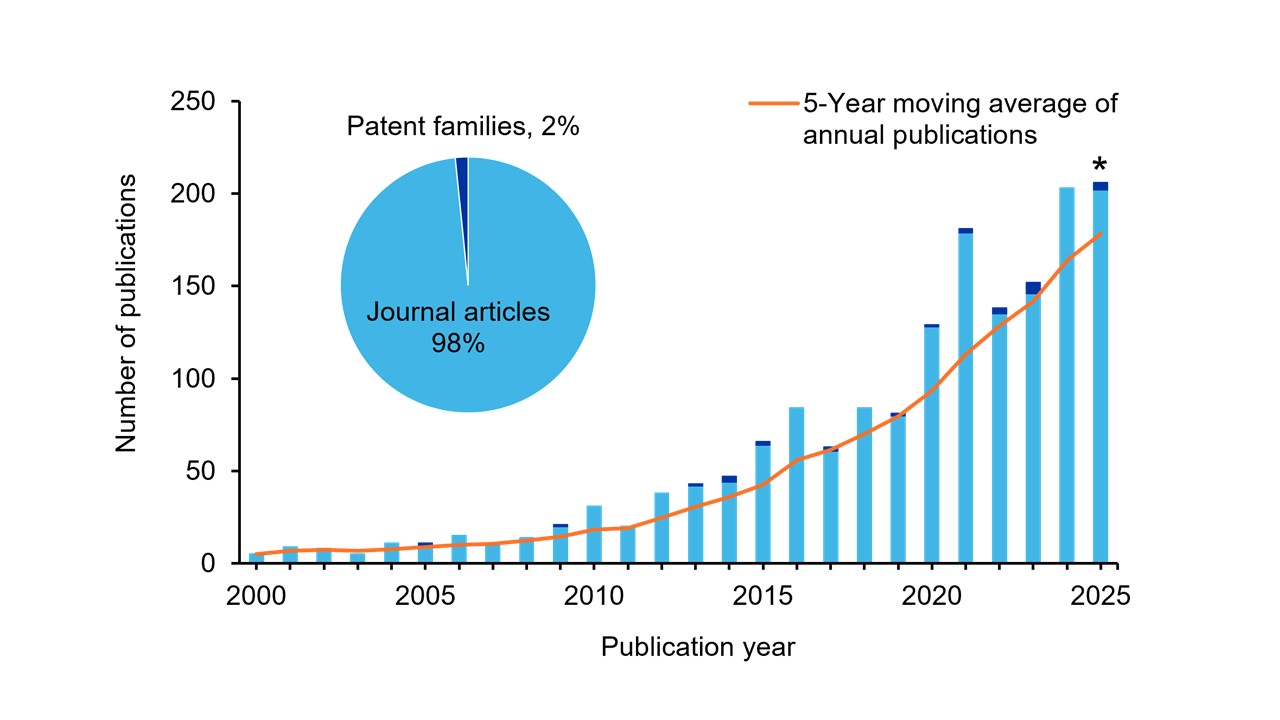
Figura 2: Tendências anuais de publicações sobre mudanças climáticas e doenças transmitidas por vetores. As barras coloridas representam o número de publicações anuais, e a linha laranja mostra a média móvel de cinco anos do número de publicações anuais. O gráfico de pizza inserido ilustra a distribuição dos tipos de documentos. *Os dados de 2025 são parciais até novembro. Fonte: CAS Content Collection
Pesquisadores podem usar o CAS IP Finder para identificar padrões de depósito de patentes em diferentes jurisdições, monitorar atividades da concorrência, rastrear novos depósitos e identificar oportunidades de mercado inexploradas usando estratégias de busca semelhantes às deste artigo.
Utilizando conceitos indexados da CAS Content Collection, resultantes da análise completa de documentos por especialistas da CAS, o conjunto de dados revela padrões distintos nas doenças, fatores climáticos e vetores enfatizados na literatura (veja a Figura 3). Nossa análise mostra que a malária e a dengue parecem ser as doenças mais estudadas, seguidas pela leishmaniose e chikungunya. Entre os fatores climáticos, a temperatura surge como o fator investigado com maior frequência, enquanto a umidade e a precipitação também recebem atenção notável.
Em termos de grupos de vetores, Aedes e Anopheles parecem atrair o maior interesse científico, refletindo seu papel na transmissão de doenças de alta carga, como dengue, chikungunya e malária. Essa categorização demonstra como os esforços de pesquisa são distribuídos na interface clima-vetor-doença, ajudando a identificar tanto áreas bem estudadas quanto lacunas que justificam investigações adicionais.
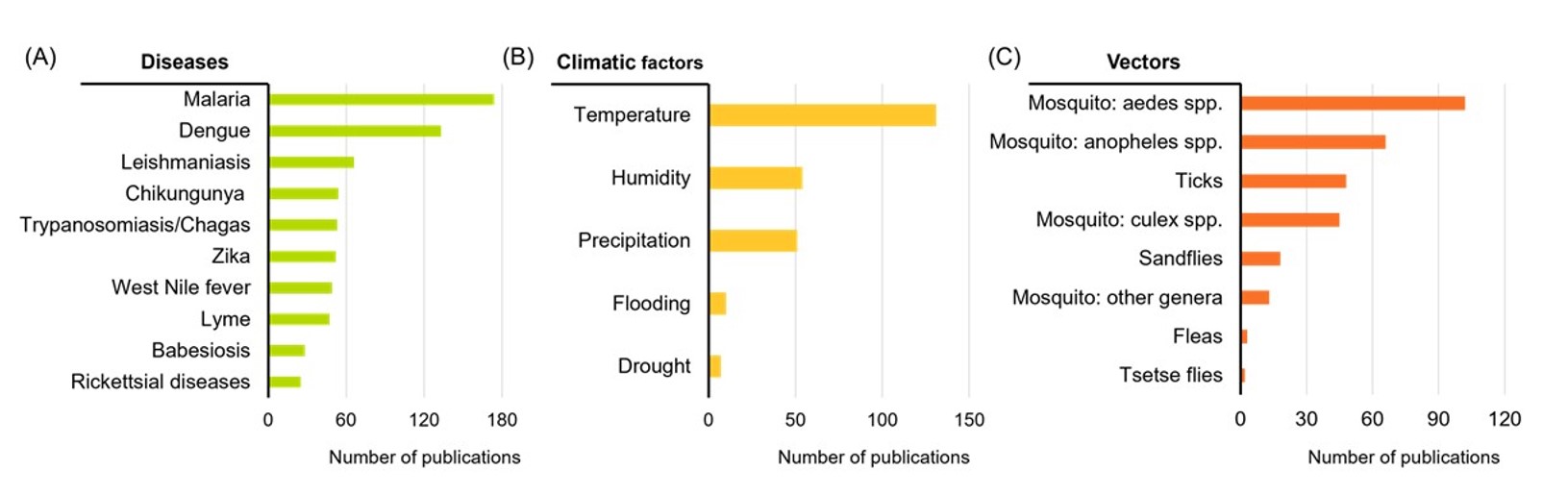
Figura 3: Distribuição relativa de publicações sobre (A) principais doenças, (B) fatores climáticos e (C) vetores no conjunto de dados sobre mudanças climáticas e doenças transmitidas por vetores. Os dados incluem artigos de periódicos e famílias de patentes publicados entre 2000 e 2025. Os dados de 2025 são parciais até novembro. Fonte: CAS Content Collection.
Um panorama global da atividade de pesquisa relacionada às mudanças climáticas e doenças transmitidas por vetores é mostrado na Figura 4. Entre os vários locais, malária, dengue e doença de Lyme aparecem com destaque, enquanto variações regionais, como um foco maior no vírus do Nilo Ocidental nos Estados Unidos ou na leishmaniose no Brasil e na Índia, destacam prioridades de pesquisa localizadas. Esta visualização mostra a natureza global das doenças transmitidas por vetores e como as condições de saúde impulsionadas pelo clima estão impactando todas as áreas do mundo.
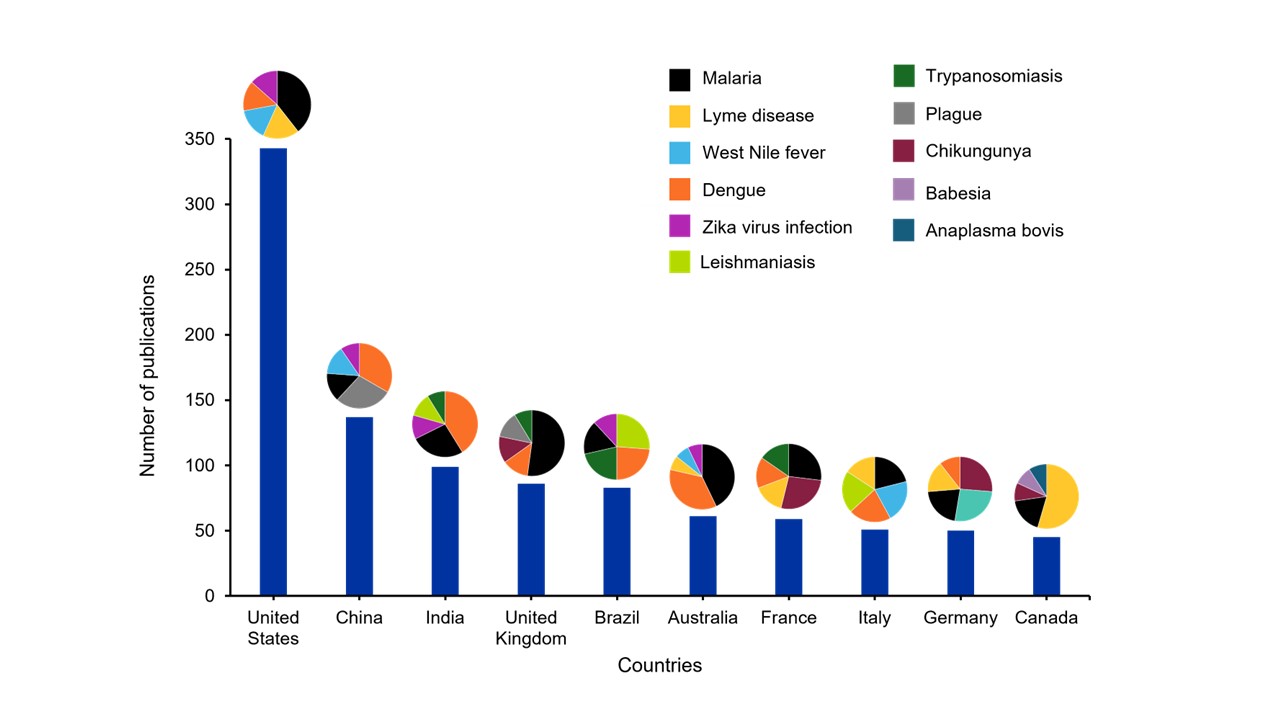
Figura 4: Produção de publicações sobre mudanças climáticas e doenças transmitidas por vetores nos 10 principais países. As barras indicam o número de publicações, e os gráficos de pizza ilustram a distribuição relativa entre as principais doenças dentro do portfólio de pesquisa de cada país. Os dados incluem artigos de periódicos e famílias de patentes publicados entre 2000 e 2025. Os dados de 2025 são parciais até novembro. Fonte: CAS Content Collection.
Por que as mudanças climáticas aceleram as doenças transmitidas por vetores
As mudanças climáticas influenciam a dinâmica das doenças transmitidas por vetores por meio de mecanismos ambientais e biológicos interconectados. Esses fatores climáticos afetam os ecossistemas, os vetores e o comportamento humano, criando condições propícias para a transmissão de doenças (veja a Figura 5).
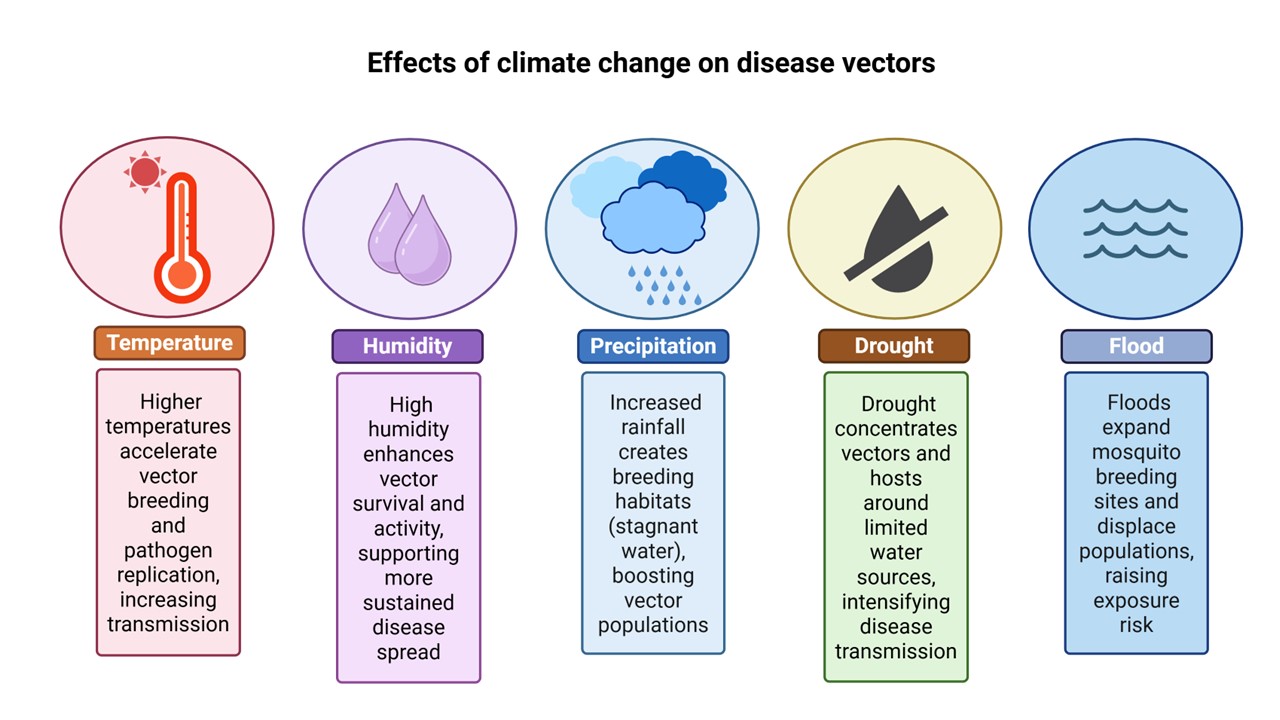
Figura 5: Fatores climáticos e seu impacto nas doenças transmitidas por vetores. Criado usando www.BioRender.com.
Efeitos da temperatura
A temperatura é o principal fator climático da biologia dos vetores, moldando o desenvolvimento, a sobrevivência, a reprodução e o comportamento dos insetos por meio de relações térmicas não lineares. Para os mosquitos, a temperatura influencia o desenvolvimento larval, a longevidade dos adultos, a frequência de alimentação sanguínea e a atividade de voo, com o crescimento acelerando até os níveis térmicos ideais de cada espécie e diminuindo além deles.
O desenvolvimento de patógenos dentro dos vetores, conhecido como período de incubação extrínseco (PIE), é altamente sensível à temperatura. Dados de modelagem sugerem que condições mais quentes encurtam substancialmente o PIE e aumentam o potencial de transmissão. Por exemplo, um modelo mecanístico ajustado a conjuntos de dados experimentais estima que o aumento da temperatura de 21 °C para 34 °C reduz o PIE₅₀ do parasita da malária de 16,1 para 8,8 dias. Da mesma forma, o desenvolvimento do vírus da dengue em Aedes aegypti acelera de 15 dias a 25 °C para cerca de 6,5 dias a 30-32 °C (onde 15 e 6,5 são médias), conforme modelos de PIE dependentes da temperatura.
É importante ressaltar que a eficiência da transmissão segue uma "zona ideal", onde o aquecimento moderado aumenta o risco, mas o calor excessivo torna-se limitante. O vírus da dengue atinge o pico entre 28–32 °C, caindo drasticamente acima de 35 °C, o vírus Zika transmite-se melhor entre 22,7°C e 34,7°C, e o vírus do Nilo Ocidental tem previsão de transmissão ideal entre 23,5°C e 25,6°C. Esses limites mostram como as mudanças de temperatura impulsionadas pelo clima podem expandir ou contrair as janelas de transmissão das principais doenças transmitidas por vetores, e destacam a variabilidade e a incerteza em torno do aquecimento global e seus efeitos exatos nos vetores de doenças.
Precipitação e umidade
A pluviosidade e a umidade influenciam fortemente os habitats e a sobrevivência dos vetores, criando efeitos complexos e não lineares na transmissão. Muitas espécies de mosquitos dependem de água parada para o desenvolvimento larval, portanto, chuvas moderadas expandem os locais de reprodução, enquanto precipitações extremas podem eliminar larvas e reduzir populações. Por outro lado, a seca pode eliminar habitats completamente ou concentrar vetores e hospedeiros em torno de fontes de água limitadas e intensificar a transmissão, como visto durante o surto de vírus do Nilo Ocidental em 2012 no Texas, onde a seca amplificou a propagação viral. A umidade afeta ainda mais a longevidade e a atividade dos mosquitos adultos; a baixa umidade reduz a sobrevivência e o voo, enquanto a umidade excessiva pode promover infecções fúngicas, adicionando outra camada de complexidade à abundância de vetores.
Eventos climáticos extremos
As mudanças climáticas estão intensificando furacões, inundações e ondas de calor, criando padrões imprevisíveis na transmissão de doenças transmitidas por vetores. As inundações podem gerar extensos habitats temporários de reprodução, alimentando surtos populacionais de mosquitos e epidemias de dengue, chikungunya e Zika, como as observadas após os furacões Irma e Maria em 2017 no Caribe. Chuvas e calor impulsionados pelo El Niño precederam grandes surtos de dengue no Peru em 2023-2024, com casos aumentando em mais de 130%. As inundações catastróficas que ocorreram durante a estação das monções no Paquistão em 2025 desencadearam surtos arbovirais explosivos ao interromper os sistemas de água, saneamento e higiene e concentrar as interações vetor-hospedeiro em comunidades deslocadas. Essa imprevisibilidade significa que os sistemas de saúde locais em todo o mundo devem reagir rapidamente quando as condições climáticas extremas forem propícias à sobrevivência dos vetores e à transmissão de doenças.
A propagação de doenças transmitidas por vetores e potenciais tratamentos
A incidência global de dengue aumentou drasticamente nas últimas duas décadas, com surtos recordes em 2023–2024 ligados ao aquecimento climático, eventos de El Niño e mudanças na distribuição de mosquitos vetores. Modelos mecanísticos e de distribuição projetam consistentemente a expansão em direção aos polos e a adequação sazonal emergente em regiões temperadas, com a Europa destacada como um importante ponto crítico futuro. Modelos globais parametrizados pela temperatura prevêem que, até meados do século, o aquecimento climático criará novas regiões adequadas para a transmissão da dengue, expondo potencialmente centenas de milhões de pessoas adicionais. Essa expansão é impulsionada pela capacidade do Aedes aegypti e do Aedes albopictus de prosperar em diferentes faixas de temperatura, permitindo que ambas as espécies se espalhem para áreas recém-aquecidas. Tendências semelhantes sensíveis ao clima são projetadas para o vírus Zika, com um estudo estimando que, sob cenários de altas emissões, mais de 1,3 bilhão de pessoas adicionais poderiam estar em risco de transmissão do vírus Zika até 2050, particularmente na América do Norte e na Europa, onde as populações permanecem vulneráveis. Clinicamente, a dengue pode progredir para dengue grave com extravasamento de plasma, hemorragia ou comprometimento de órgãos, sobrecarregando significativamente os sistemas de saúde durante os surtos. O tratamento permanece de suporte, uma vez que não há terapia antiviral amplamente eficaz disponível atualmente, e as vacinas existentes têm limitações com base no sorotipo e na faixa etária. As arboviroses mais amplas transmitidas pelo Aedes, como chikungunya e Zika, também carecem de antivirais específicos, sendo que a chikungunya causa poliartralgia incapacitante de longo prazo e o Zika está associado a anormalidades congênitas. A descoberta de medicamentos para a dengue e arboviroses relacionadas tem sido decepcionantemente lenta, com poucos novos candidatos entrando em ensaios de estágio avançado. As estratégias atuais incluem antivirais de amplo espectro, terapias direcionadas ao hospedeiro, anticorpos monoclonais, vacinas baseadas em RNA e plataformas emergentes de vacinas de mRNA.
As trajetórias globais da malária na última década mostram uma combinação de ganhos iniciais no controle e uma estagnação mais recente, refletida na estimativa do Relatório Mundial da Malária de 2024 da OMS de 263 milhões de casos e 597.000 mortes em 2023, com o progresso estagnado devido à resistência vetorial, interrupções nos sistemas de saúde e pressões climáticas emergentes. Cada vez mais, as mudanças climáticas estão alterando a adequação ambiental para a transmissão, especialmente em ecótonos de transição, como regiões de planalto e áreas periféricas. Revisões sistemáticas documentam como o aumento da temperatura e a variabilidade das chuvas influenciam a abundância de vetores e o desenvolvimento de parasitas, com projeções indicando expansões altitudinais e populações crescentes em risco, incluindo regiões de planalto como Papua-Nova Guiné. Uma revisão de escopo da África destaca ainda a sensibilidade das taxas de desenvolvimento de Anopheles e Plasmodium a aumentos de temperatura, mesmo que pequenos, enquanto as flutuações nas chuvas moldam a disponibilidade de locais de reprodução e os padrões sazonais de transmissão. À medida que os padrões de transmissão mudam sob pressões ambientais, os desafios clínicos e terapêuticos da malária tornam-se cada vez mais pronunciados. Os tratamentos atuais dependem fortemente de terapias combinadas à base de artemisinina, contudo, a disseminação da resistência parcial à artemisinina representa uma grande ameaça. As ferramentas preventivas incluem mosquiteiros tratados com inseticida, quimioprevenção sazonal e as vacinas introduzidas recentemente (por exemplo, RTS,S e R21), embora nenhuma ofereça proteção completa ou de longo prazo. Os pipelines de descoberta de medicamentos enfrentam restrições persistentes, incluindo diversidade química limitada, resistência crescente e o avanço lento de novas classes terapêuticas. Em resposta, as estratégias emergentes incluem antimaláricos de próxima geração, medicamentos para a fase hepática, agentes bloqueadores de transmissão e plataformas experimentais, como vacinas contra a malária baseadas em mRNA.
As doenças transmitidas por carrapatos estão apresentando algumas das respostas mais pronunciadas às mudanças climáticas, com expansão das áreas geográficas e aumento da incidência em muitas regiões. A doença de Lyme, causada por Borrelia burgdorferi e transmitida por carrapatos Ixodes, espalhou-se significativamente pela América do Norte e Europa, à medida que o aquecimento permite a sobrevivência dos carrapatos em áreas anteriormente inadequadas. O ciclo de vida complexo do Ixodes, envolvendo múltiplos hospedeiros e desenvolvimento plurianual, cria vínculos intrincados com variáveis climáticas. Temperaturas mais altas aceleram o desenvolvimento dos carrapatos e melhoram sua sobrevivência, enquanto a umidade impulsionada pela precipitação influencia fortemente a atividade desses vetores. A encefalite transmitida por carrapatos (TBE) também está se expandindo na Europa e na Ásia, com novos focos endêmicos em latitudes e altitudes mais elevadas. O vírus apresenta replicação dependente da temperatura nos carrapatos, sugerindo que o aquecimento pode aumentar ainda mais a eficiência da transmissão. Clinicamente, a doença de Lyme apresenta um amplo espectro, desde o eritema migratório inicial (a erupção cutânea característica em forma de anel) até complicações neurológicas e cardíacas graves, se não tratada. No entanto, o tratamento continua dependendo exclusivamente de antibióticos, já que não há vacina licenciada para humanos. Para a TBE, existem vacinas eficazes em várias regiões endêmicas, mas a cobertura permanece variável e insuficiente para conter totalmente a transmissão.
Essas lacunas na prevenção e na clínica refletem desafios de inovação mais amplos no manejo de doenças transmitidas por carrapatos, onde os pipelines terapêuticos permanecem escassos e os avanços em diagnósticos guiados por biomarcadores ou intervenções curativas continuam limitados. Consequentemente, a pesquisa está mudando para novas abordagens além dos antibióticos tradicionais direcionados aos patógenos. Estratégias promissoras em exploração incluem vacinas contra carrapatos projetadas para interromper a alimentação do vetor, abordagens biológicas de controle vetorial visando populações de carrapatos, terapias direcionadas ao hospedeiro para mitigar a gravidade da doença e plataformas de vacinas emergentes, como tecnologias de mRNA. Além disso, oligonucleotídeos antissenso (ASOs) estão sendo investigados como ferramentas moleculares de precisão para suprimir a expressão gênica de patógenos, embora essas abordagens ainda estejam em estágio inicial de desenvolvimento.
Dimensões econômicas: Do ônus à oportunidade de investimento
As doenças transmitidas por vetores impõem custos diretos significativos aos sistemas de saúde, e as mudanças climáticas amplificam essas pressões ao levar surtos para regiões com preparação limitada. Por exemplo, os custos de tratamento da dengue por episódio variam de US$ 15 para pacientes ambulatoriais a mais de US$ 9.300 para pacientes em unidades de terapia intensiva. À medida que a dengue se espalha para regiões temperadas de alta renda, o ônus econômico por caso aumenta drasticamente devido aos custos de saúde mais elevados e internações hospitalares mais longas. Por outro lado, em regiões em desenvolvimento, as doenças transmitidas por vetores consomem uma parcela significativa dos orçamentos de saúde pública que, de outra forma, poderiam ser direcionados a outros serviços de saúde essenciais.
O impacto vai além dos sistemas de saúde. Economias dependentes do turismo são altamente vulneráveis à perda de receita devido à maior incidência de doenças. Como visto durante a epidemia de Zika de 2015–2016, a América Latina e o Caribe perderam cerca de US$ 7 a 18 bilhões em receita de turismo, segundo um relatório do Programa das Nações Unidas para o Desenvolvimento.
Estudos em comunidades agrícolas africanas relatam perdas substanciais de produtividade; as famílias podem perder quase 28% de sua renda sazonal devido à malária, e o rendimento das colheitas é consistentemente menor quando a incidência da doença é alta.
Esses dados destacam a importância da prevenção ao enfrentar doenças transmitidas por vetores. Análises econômicas mostram consistentemente que sistemas preventivos geram retornos muito maiores do que a resposta reativa a surtos. Sistemas de alerta precoce informados pelo clima para doenças transmitidas por vetores aumentaram substancialmente a pontualidade e a eficácia das intervenções de saúde pública, reduzindo a escala, a gravidade e os custos associados aos surtos ao permitir uma ação mais rápida. Da mesma forma, estruturas de avaliação econômica indicam que as respostas desencadeadas por inteligência de alerta precoce proporcionam benefícios líquidos positivos para os sistemas de saúde, reiterando seu valor como ferramentas de custo-benefício para a preparação contra surtos.
O investimento em sistemas preventivos poderia, portanto, impulsionar um amplo crescimento econômico nas regiões mais afetadas por doenças transmitidas por vetores hoje, e poderia evitar choques econômicos em áreas para onde esses insetos e as doenças que carregam se deslocarão à medida que as mudanças climáticas continuam.
Direções futuras: Estratégias adaptativas e prioridades de pesquisa
Os riscos de doenças transmitidas por vetores impulsionados pelo clima exigem estratégias integradas e voltadas para o futuro que combinem vigilância, prevenção e sistemas de saúde resilientes. Preparar-se para múltiplos cenários climáticos é fundamental, pois o aquecimento moderado (+2 °C) pode expandir os vetores para zonas temperadas, enquanto o aquecimento extremo (+4 °C) pode remodelar completamente a dinâmica das doenças.
As principais prioridades para os sistemas de saúde pública incluem sistemas de alerta precoce baseados em IA que integrem dados climáticos e de saúde; controle vetorial adaptado ao clima por meio de manejo integrado de vetores; novas ferramentas como mosquitos com gene drive; aceleração do desenvolvimento e implantação de vacinas, terapias e diagnósticos; e a construção de sistemas de saúde resilientes ao clima com cadeias de suprimentos robustas e suporte digital à decisão. O suporte digital à decisão inclui painéis, plataformas de análise preditiva e alertas automatizados que ajudam as autoridades de saúde a interpretar informações de vigilância e clima em tempo real e orientar respostas de saúde pública oportunas e baseadas em evidências.
As estruturas políticas devem incorporar o planejamento de saúde impulsionado pelo clima nas estratégias nacionais de adaptação e fortalecer a cooperação global. A pesquisa deve focar nas interações entre vetor, patógeno e clima, modelagem preditiva sob diversos cenários, avaliação de tecnologias genéticas e de biocontrole com segurança e ética robustas, e dimensões sociais, como engajamento comunitário e implementação equitativa.
A imprevisibilidade dos impactos climáticos nos insetos, em seus ciclos de vida e nos patógenos que carregam torna esses desenvolvimentos desafiadores, mas a gravidade das doenças transmitidas por vetores e seus impactos econômicos exigem ação.