Preview of CAS SciFinder Release

October 2026

‍

CAS SciFinder

Search Enhancement: Reaction Advanced Search

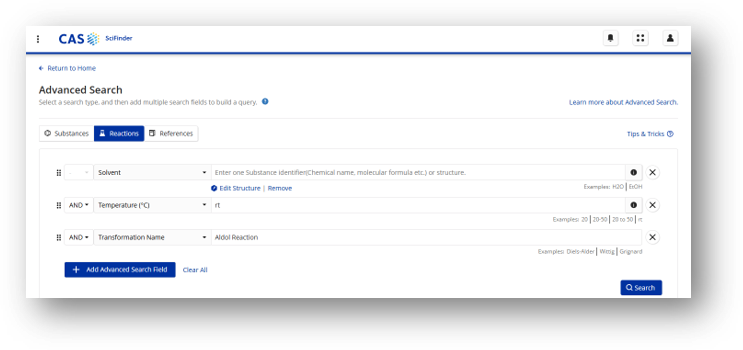
Advanced search query support has been expanded with the introduction of reaction advanced search. This will give users new controls for discovering reaction information, with fielded search options and support for combined text and structure searches.

CAS SciFinder Advanced Search interface showing the Reactions tab with three search fields: Solvent with empty input, Temperature set to 'rt', and Transformation Name set to 'Aldol Reaction', plus buttons for adding search fields, clearing, and searching.

Search Enhancement: Search Patent Claims

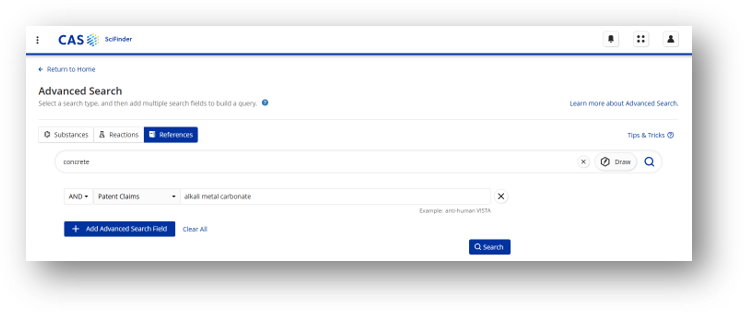
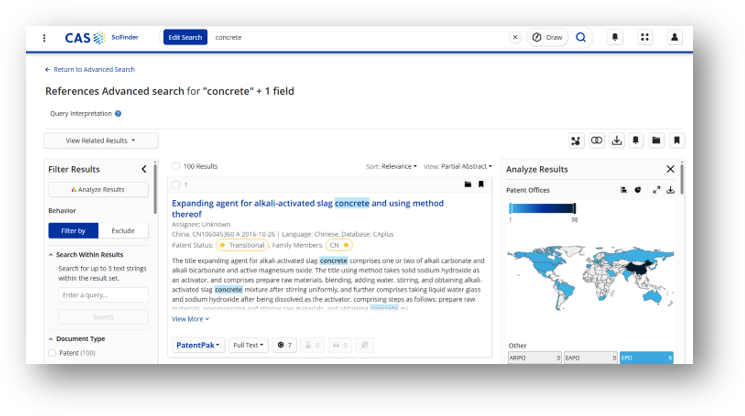
Reference advanced searching has been expanded with search patent claims. Users can now narrow their searches to only those with text present in the claims of patents matching the query.

CAS SciFinder advanced search interface showing search fields with 'concrete' and 'alkali metal carbonate' under Patent Claims combined with AND operator, plus buttons for Substances, Reactions, References, Add Advanced Search Field, Clear All, and Search.
Screenshot of CAS SciFinder advanced search results for 'concrete' with filter options on the left, detailed abstract text in the center, and a world map of patent offices on the right.

‍

Search Enhancement: Search Substance Notes

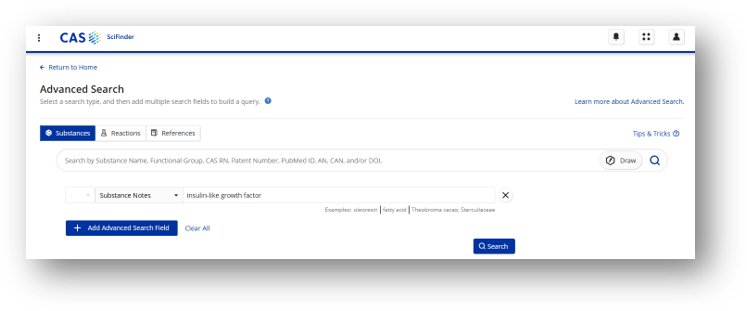
Substance advanced search now supports searching against substance notes, providing a more targeted search for substances with modifications that are described as text.

CAS SciFinder advanced search interface with 'Substances' tab selected and a search query for 'insulin-like growth factor' entered in the Substance Notes field and options to add advanced search fields or clear all, and a Search button visible.

Search Enhancement: Recognize Bibliographic Queries

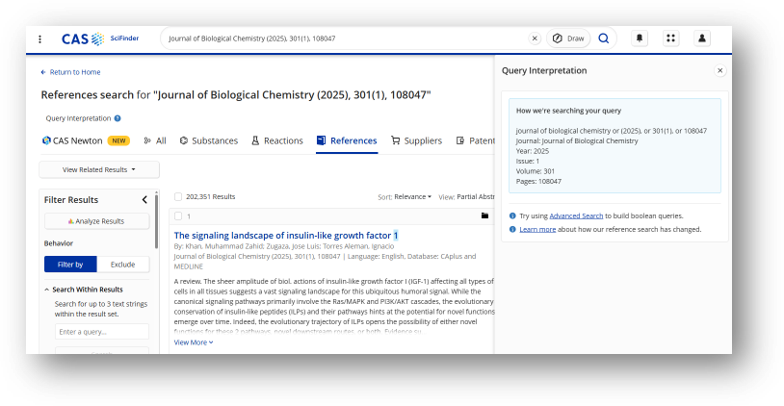
SearchSense has been improved to recognize queries containing bibliographic details. The query interpretation panel now displays how bibliographic queries are parsed and searched.

CAS SciFinder interface showing a references search result for 'Journal of Biological Chemistry (2025), 301(1), 108047' with filters on the left, a highlighted article title in the center, and query interpretation details on the right.

Search Enhancement: Query Interpretation Improvement

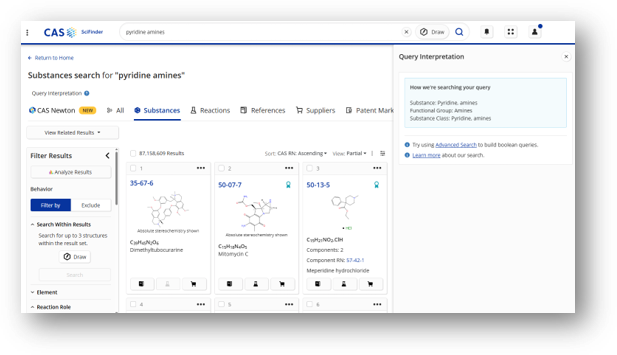
SearchSense has been improved with greater transparency on recognizing various types of substance information. When substance classes or functional groups are recognized in the query, the Query Interpretation presents recognition to the user.

Screenshot of a CAS SciFinder search results page for "pyridine amines" showing three chemical structures with CAS numbers 35-67-6, 50-07-7, and 50-13-5, along with their respective molecular details and options to save or export. The left sidebar contains filter options including behavior and search within results, and the right panel explains query interpretation and tips for using advanced search.

Alert Enhancement: Include Optimized Query

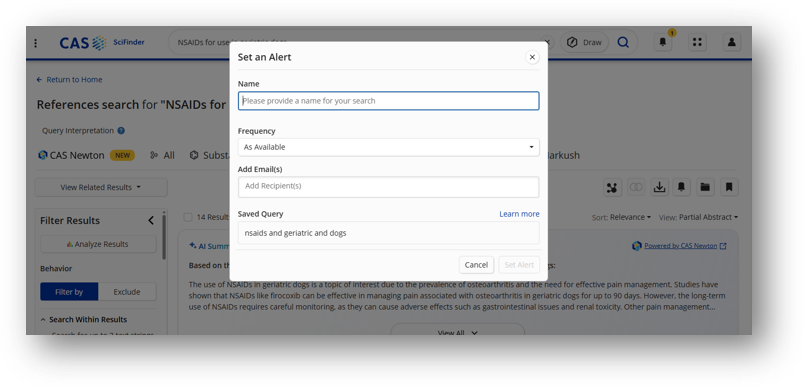
If a user chooses to set an alert on a query optimized by SearchSense, information is presented about the optimized query that will be utilized for alerting. This provides greater transparency to the user about modifications made to the query on their behalf.

Set an Alert dialog box from CAS SciFinder with fields for Name, Frequency dropdown set to As Available, Add Email(s), and a Saved Query section showing 'nsaids and geriatric and dogs', with Cancel and Set Alert buttons.

Alert Enhancement: UI Improvements

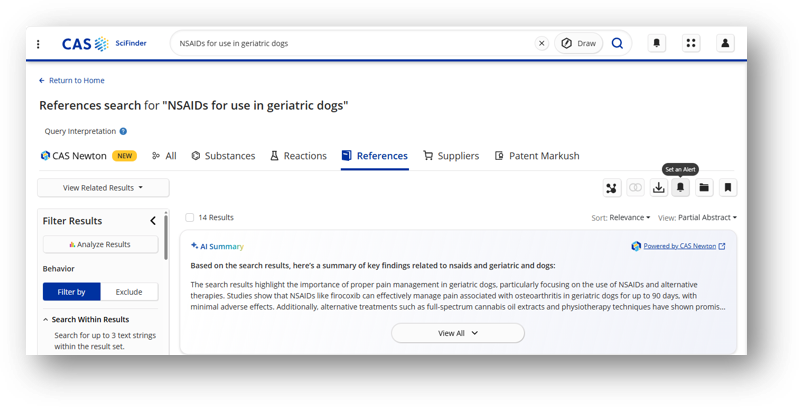
The process of setting an alert and reviewing notifications has been improved with UI updates. On the result page, the option to set an alert has moved out of the “save” menu:

Screenshot of CAS SciFinder search results for 'NSAIDs for use in geriatric dogs' under References tab showing summary of key findings related to NSAIDs and geriatric dogs’ pain management and therapies, mentioning effectiveness of firocoxib and alternative treatments like cannabis extracts and physiotherapy.

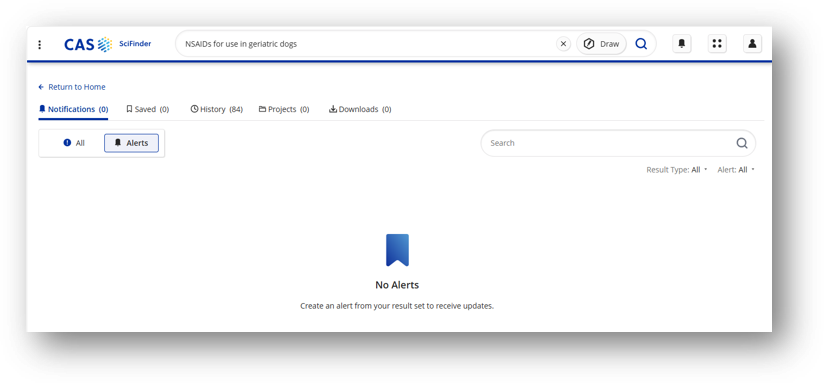
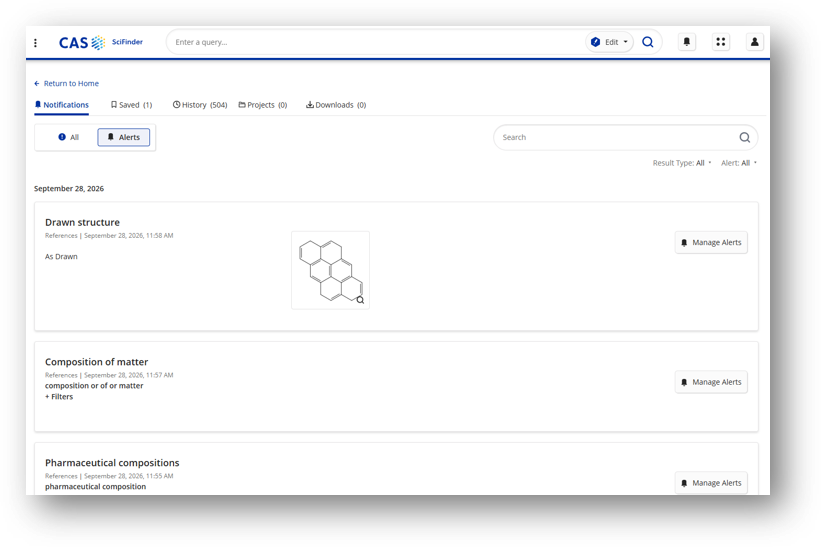
The notifications page has been updated to toggle between all updates and alert notifications only.

CAS SciFinder search page with query 'NSAIDs for use in geriatric dogs', showing no alerts and options for Notifications, Saved, History, Projects, and Downloads.
Screenshot of CAS SciFinder Notifications page showing three alerts dated September 28, 2026: a drawn chemical structure with hexagonal rings, composition of matter, and pharmaceutical compositions, each with references and manage alerts buttons, plus navigation and search bars at the top.

Supplier Results Enhancement: UI Improvement

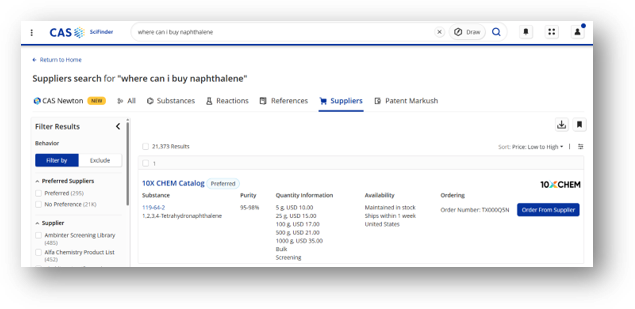
The “order from supplier” option in Supplier results has been made clearer and more prominent, enabling users to easily take advantage of convenient direct links.

Web page screenshot of the CAS SciFinder search results for suppliers of naphthalene, showing filters, supplier listing for 10X CHEM Catalog with substance details, purity, quantity, availability, and an order button.

Retrosynthesis: Improved Filtering for Alternative Steps

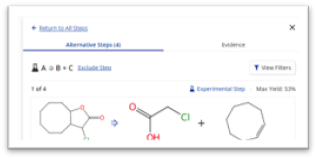
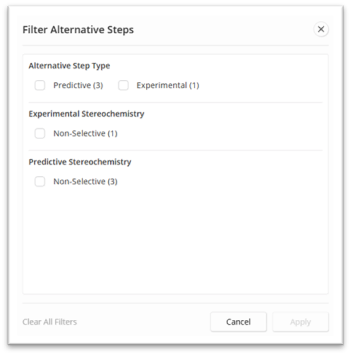
The filter experience for Alternative Steps in Retrosynthesis has been redesigned for clarity and ease of use.

Chemical reaction scheme showing the transformation of a cyclooctane with attached groups into a chlorinated product and a cycloheptane byproduct with an experimental yield of 53%.
Dialog box titled 'Filter Alternative Steps' showing filter options with checkboxes for Alternative Step Type including Predictive (3) and Experimental (1); Experimental Stereochemistry with Non-Selective (1); Predictive Stereochemistry with Non-Selective (3). Buttons at the bottom labeled 'Clear All Filters', 'Cancel', and 'Apply'.

CAS Newton

Formulations content

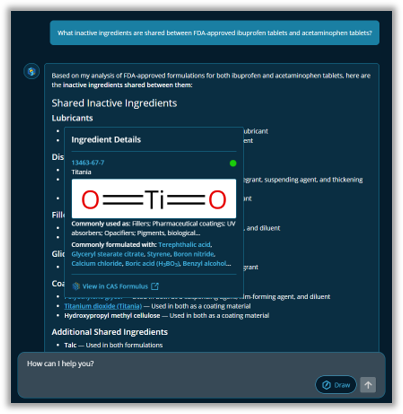
CAS Newton now includes the Formulations content domain, helping users find the information they need to develop safe, effective products and bring them to market faster. Formulations content is integrated with the existing CAS content that CAS Newton accesses, so a single question can return answers drawn from both.

Screenshot of a detailed digital card discussing shared inactive ingredients between FDA-approved ibuprofen and acetaminophen tablets, focusing on titanium dioxide (TiO2). The card includes the chemical structure of titanium dioxide, its common uses such as a UV absorber and pigment, and common formulation ingredients like terephthalic acid and boric acid. The background text lists various inactive ingredients shared, including lubricants and coating materials.

Natural language-to-structure conversion

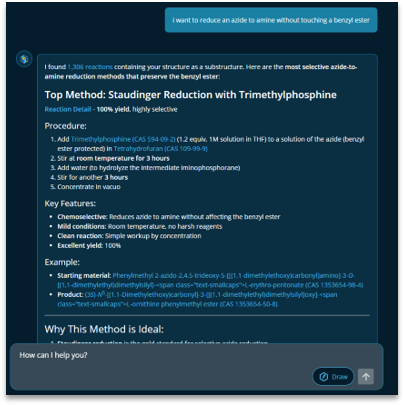
CAS Newton now converts natural language queries into chemical structure representations, making scientific conversation easier and returning more precise, accurate, and complete results. When a user enters a query such as "I want to reduce an azide to amine without touching a benzyl ester," CAS Newton translates the description into a CXF structure representation that it uses in its reasoning and search.

The feature takes a description that spans multiple substance classes and renders it as a single structure representation, so searches run on chemical structure instead of simple text lookups. It also draws complex reaction structures with the full range of CASDraw capabilities,including variable point attachment, atom mapping and locking, among others.

Screenshot of a chat interface showing a chemistry-related query about reducing an azide to amine without touching a benzyl ester. The response explains the top method as Staudinger Reduction with Trimethylphosphine, listing reaction details, procedure steps (adding trimethylphosphine, stirring at room temperature, adding water, stirring 3 hours, concentrating), key features (chemoselective, mild conditions, clean reaction, excellent yield), and example starting material and product chemical formulas.
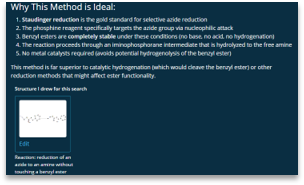
Presentation slide titled 'Why This Method is Ideal' listing five points about a method in selective azide reduction, mentioning Staudinger reduction, phosphine reagent targeting azide group, benzyl esters stability, reaction conditions, and lack of metal catalysts; includes a small chemical reaction diagram showing azide reduction to amine with a benzyl ester intact.

‍

View previous releases