

Executive Summary
- Composting has shifted from an empirical waste practice into a precision-engineered bioprocess, with industrial facilities now controlling aeration, temperature, and microbial activity at a level of rigor once reserved for chemical reactors.
- Modern composting performance hinges on four tightly coupled technical domains: environmental parameter control, biological process engineering, materials engineering, and emission control technologies.
- Materials innovation, ranging from biochar matrices to porous PDMS loaded with iron-based metal-organic frameworks, has moved from passive bulking toward actively designed substrates that steer microbial networks and suppress NH₃ and N₂O emissions.
- Machine learning, sensor integration, and pilot-scale digital twins are pushing composting from reactive operation toward predictive and prescriptive control, positioning it as a foundational technology for circular bioeconomy and resource recovery strategies.
Composting has quietly moved from backyard piles of leaves to industrial-scale, engineered bioprocesses. Modern facilities now monitor aeration, temperature, and microbial activity with the rigor once reserved for chemical reactors, turning an empirical practice into a controlled biological system. This shift to precision-engineered composting is occurring across four technical domains: environmental parameter control, biological process engineering, materials engineering, and emission control.
Not just for home gardens
Composting is a biologically driven process in which organic waste is transformed into stabilized, nutrient‑rich material through controlled aerobic degradation. Backyard composting is a simple, small-scale process in which household organic waste is biologically decomposed under natural conditions. Typically, it involves layering nitrogen-rich “green” materials (such as kitchen scraps, grass clippings, and fresh leaves) with carbon-rich “brown” materials (such as dry leaves, paper, or wood chips) in a compost bin or pile. The materials are periodically turned to improve aeration, while moisture is maintained at a damp but not waterlogged level to support microbial activity. Over time, naturally occurring microorganisms break down the waste, generating heat and transforming it into a stable, nutrient-rich compost that can be used to improve soil health.
At larger scales, these same principles are translated into industrial operations, where large volumes of organic waste are processed in engineered systems such as windrows, aerated static piles, or invessel reactors. These systems are designed to handle continuous feedstock inputs while maintaining controlled conditions, scaling simple composting practices into structured, high-throughput processes.
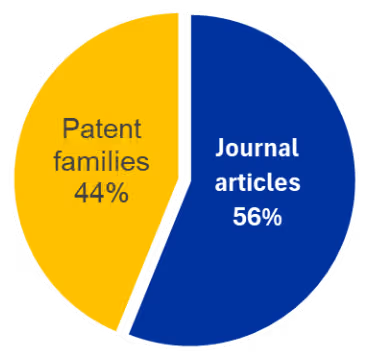
To explore how this transformation is reflected in research and innovation, CAS researchers used a search strategy built from CAS‑controlled terms and analyzed data from the CAS Content Collection™ via CAS IP Finder powered by STN™. This analysis identified over 41,970 journal articles and patent families published between 2016 and 2026, providing a strong data foundation to examine how composting practices are being translated into industrial engineering frameworks, as discussed in the following sections.

This data-driven perspective highlights the evolving research landscape, where approximately 56% of journal publications focus on fundamental biological mechanisms, while 44% of patents emphasize applied innovation, showing composting’s progression into a technologically driven field.
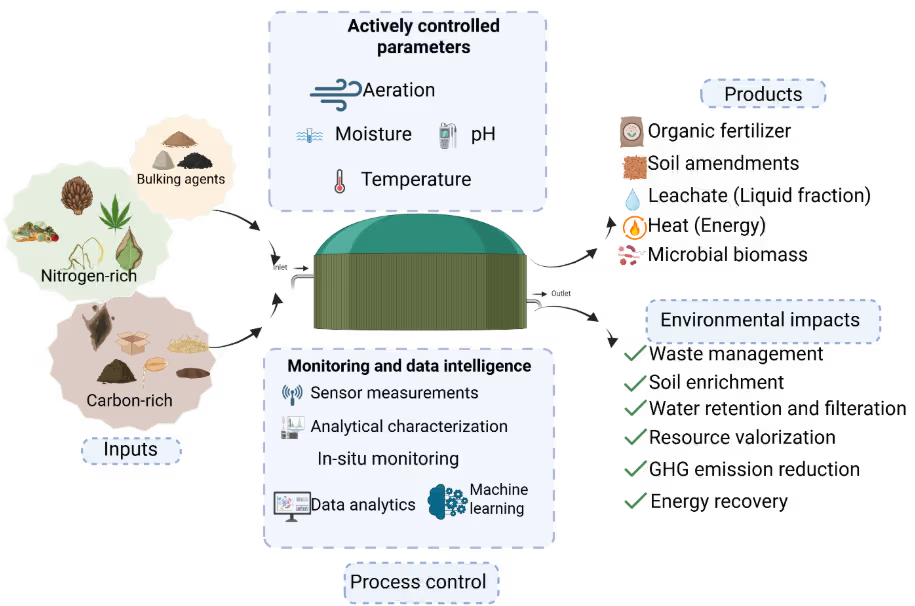
The framework presented in Figure 2 builds on insights derived from this CAS dataset, illustrating how composting has evolved into a structured, controllable bioprocess. In this framework, nitrogen-rich and carbon-rich materials, moisture, and bulking agents are treated as defined input substrates, moving beyond simple waste categorization toward detailed characterization of composition and physicochemical properties.
The composting process is then regulated through controlled parameters, including aeration, moisture, pH, and temperature, which influence microbial activity and degradation kinetics. These controls are supported by a layer of monitoring and data intelligence, where sensor measurements, analytical characterization, in-situ monitoring, and machine learning enable real-time tracking and predictive optimization of process conditions.

This integrated system produces multiple outputs beyond stabilized compost. The primary product is nutrient-rich compost suitable for soil amendment, while secondary outputs include gaseous emissions (such as CO₂, NH₃, and N₂O), liquid leachates containing dissolved nutrients, and, in some cases, thermal energy (heat) generated during microbial metabolism.
Beyond material outputs, composting delivers significant environmental and resource-management benefits. It plays a critical role in waste management by diverting organic residues from landfills, while the resulting compost supports soil enrichment, improving nutrient availability, structure, and microbial health.
Compost application also enhances water retention and filtration capacity, contributing to better soil moisture dynamics and reduced runoff. From a circular economy perspective, composting enables resource valorization by converting waste into valuable products. At the same time, optimized composting systems can contribute to greenhouse gas (GHG) emission reduction compared to uncontrolled decomposition, while the heat generated during microbial activity offers opportunities for energy recovery.
The emergence of data analytics, machine learning, and AI is poised to shift composting from reactive management to predictive and prescriptive control, enabling maturity forecasting, quality prediction, anomaly detection, and multi-objective optimization across energy use, emissions, and product quality. Early deployments of AI-assisted control, pilot-scale digital twins, and molecular diagnostics signal a transition from automation toward increasing autonomy.
The framework demonstrates how modern composting operates as a closed-loop, data-enabled system in which inputs, process control, monitoring, and outputs are tightly interconnected, enabling optimization across performance, sustainability, and environmental impact objectives.
To further understand the mechanisms underlying this transformation, the key components of modern composting systems can be examined across four technical domains: environmental parameter control, biological process engineering, materials engineering, and emission control technologies.
Environmental parameter control
Environmental conditions establish the operational boundaries within which composting occurs. Recent studies demonstrate the following factors that fundamentally govern composting trajectories.
- Temperature management, including hyperthermophilic regimes (~70–110 °C) and cold‑adapted strategies (−5 to 30 °C), alters microbial functional potential, decomposition rates, and nitrogen pathways.
- Aeration rate repeatedly emerges as a critical control knob, affecting microbial succession, oxygen availability, greenhouse gas emissions, humification, and leachate quality. Moderate aeration often achieves the best trade‑off between maturity, emissions mitigation, and nutrient conservation.
- Initial mixture design (C/N ratio, free air space, moisture) strongly influences downstream outcomes; mathematical optimization models and pilot‑scale validation show that an optimized start reduces process iteration and regulatory risk.
Composting performance is sensitive to early‑stage parameter calibration, which motivates predictive modeling and continuous monitoring.
Biological process engineering
Biological activity is the central driver of composting, transforming complex organic substrates into stable humic matter through coordinated microbial and enzymatic processes. Contemporary biological process engineering prioritizes active optimization of this activity rather than passive accommodation.
Modern studies analyze compost microbiomes using metagenomics sequencing, transcriptomics, and proteomics to characterize microbial succession, functional gene expression, and metabolic pathways. Fungal and bacterial groups play complementary roles in degrading cellulose, hemicellulose, lignin, and bio‑based polymers. This is not merely descriptive; enzyme kinetics modeling quantifies reaction rates, substrate affinity, and inhibition effects, enabling targeted interventions such as optimized microbial consortium inoculation or tailored feedstock design. Similarly, growing patent activity around engineered microbial formulations signals a clear transition from passive biological processes toward actively designed biological systems.
Materials engineering
Materials engineering has introduced improved control over composting dynamics. Recent patents illustrate how composting and organic fertilizer systems are increasingly engineered through materials chemistry to control biological activity, nutrient dynamics, and emissions. Carbon-based biochar matrices derived from agricultural residues function as multifunctional additives. Their high surface area and redox-active functional groups serve simultaneously as microbial carriers, adsorption surfaces, and porosity modifiers. More advanced functional composites, such as porous PDMS (polydimethylsiloxane) loaded with iron-based metal–organic frameworks (Fe‑BTC), reduce ammonia emissions by adsorbing NH₃ and altering gas–surface interactions, while maintaining structural integrity under composting conditions. These materials do not simply improve existing processes; they introduce new design variables for steering microbial networks and emission pathways. In addition to these advanced materials, conventional bulking agents and amendments play a dual role: structural regulation and microbial modulation.
- Different bulking agents (garden waste, straw, spent mushroom substrate, leaves) reshape pore structure, aeration, and microbial networks, leading to distinct trade‑offs between biodegradation efficiency and gas emissions.
- Biochar and ceramsite improve free air space, thermal stability, and moisture regulation while influencing microbial succession and nitrogen pathways.
- Process-integrated materials, such as functional membranes and rotary drum systems, enhance heat retention, gas management, and energy efficiency.
Emission control technologies
As composting systems scale, emission management has become a central engineering challenge, increasingly treated as an integrated design problem linking material properties, microbial activity, and environmental conditions. Emissions, including odorous compounds, greenhouse gases, leachates, and particulates, are influenced by process inefficiencies such as poor oxygenation or moisture imbalance, which drive the formation of volatile organic compounds, ammonia, and sulfur species. Metrics such as COD (chemical oxygen demand: the amount of oxygen required to chemically oxidize both organic and inorganic substances present in water), BOD (biochemical oxygen demand: the amount of oxygen required by microorganisms to biologically decompose organic matter in water), turbidity, and gas permeability are used to assess emission risks, while mitigation strategies now emphasize prevention alongside treatment. Technologies such as biofilters, advanced aeration, photocatalysis, UV degradation, and microwave-assisted stabilization are being deployed to control emissions through improved process design.
Nitrogen dynamics remain critical, with NH₃ and N₂O emissions governed by microbial pathways. Additives like biochar, calcium superphosphate, functional membranes, and bulking agents reduce nitrogen loss by influencing nitrification–denitrification processes and enriching N₂O-reducing microbial communities. Studies consistently show that parameters such as C/N ratio, pH, and inorganic nitrogen species regulate nitrogen cycling genes and emission profiles, highlighting that effective emission control depends on aligning physicochemical conditions with microbial metabolism rather than relying solely on chemical interventions.
What can AI do in composting?
Artificial intelligence (AI) is enabling composting systems to transition from empirical operation to predictive, data-driven control. Machine learning models use process parameters such as temperature, moisture, and C/N ratio to accurately predict compost maturity and optimize degradation pathways. For example, neural network–based prediction of compost stability and composting kinetics have been developed using machine learning. On the monitoring side, studies have highlighted the integration of sensor-based datasets (temperature, gas emissions, moisture) with machine learning algorithms to optimize composting conditions and improve degradation efficiency. AI-enabled composting is already being implemented in industrial systems, where companies are employing 传感器与物联网集成监控 与 数据驱动的控制 以优化工艺条件、提高效率并减少排放。人工智能助力实现自适应的传感器集成堆肥系统,从而提高效率、减少排放并确保产品质量的一致性。
堆肥的未来
对于家庭园艺而言,您对堆肥最大的顾虑可能在于您所在的地区是否提供路边回收服务。然而,在更大规模的层面上,堆肥正从传统的废物管理实践转变为一种精密工程化的数据驱动型生物过程。工艺控制、材料设计和实时监控方面的进步,正在推动堆肥生产实现更高的效率、可扩展性和一致性。结合了传感器技术、计算建模和人工智能的集成系统,现在能够更好地控制微生物活性、排放和养分动态。因此,堆肥正成为循环经济框架中的一项关键技术,不仅支持废物增值,还助力资源回收、能源整合和可持续发展目标的实现。
家庭堆肥与工业堆肥有何不同?
堆肥的工作方式因规模而异,其背后的科学原理也随之改变。我们的研究表明,关于工业规模堆肥的研究数量大约是家庭和园艺堆肥研究的四倍,这反映了市政废物处理已变得多么复杂。以下是这两种方法的比较。
这两种方法都很重要,因为它们各自解决了同一问题的不同部分。工业系统将海量的食物和庭院垃圾从垃圾填埋场中分流出来。家庭和社区堆肥则从源头上减少了进入废物处理系统的垃圾量,并将成品堆肥直接回馈给当地土壤。两者结合,实现了单靠任何一方都无法完成的目标。
走进 CAS 员工堆肥计划
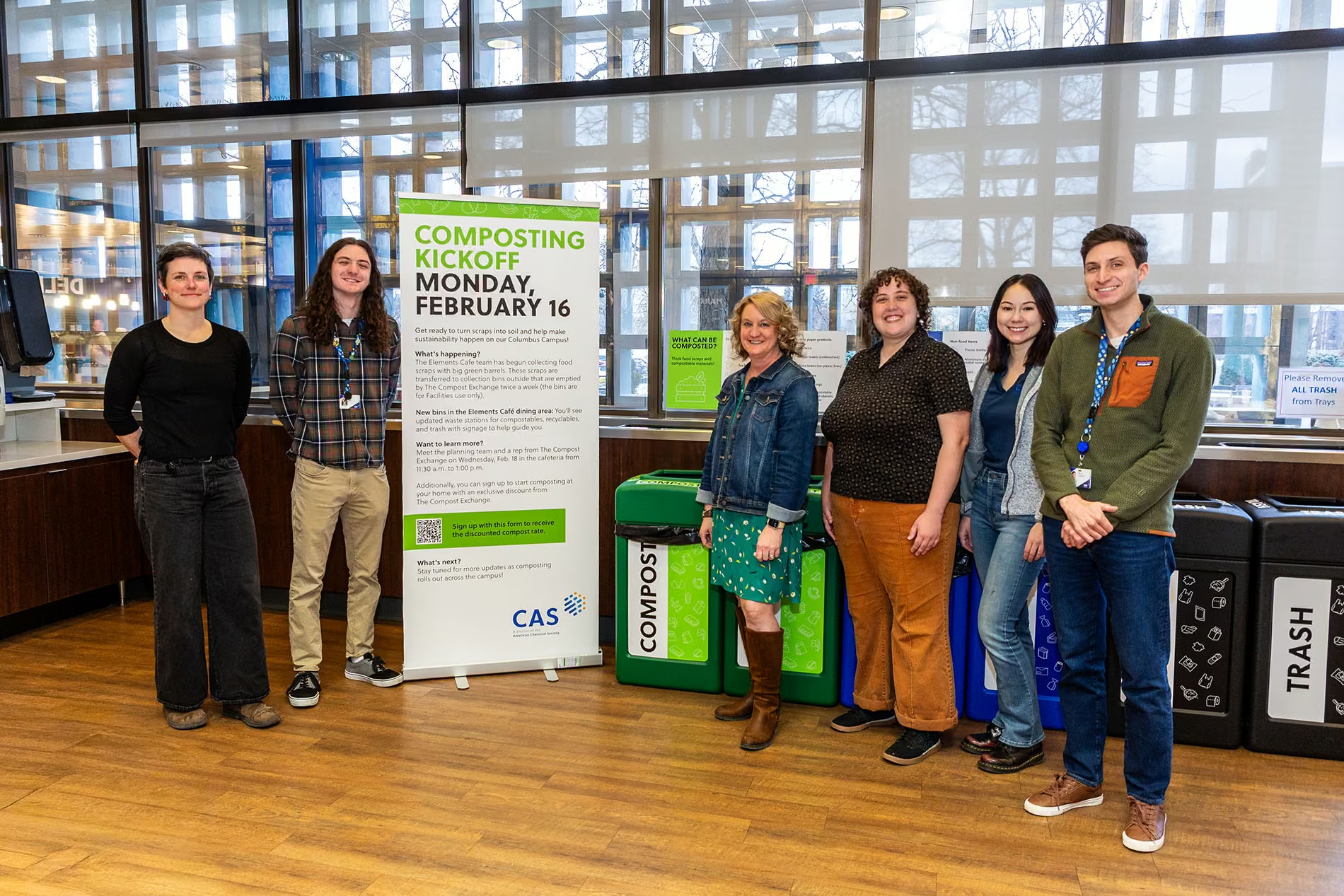
对于位于俄亥俄州哥伦布市园区的 CAS 员工来说,堆肥已成为日常生活的一部分。通过与 The Compost Exchange合作,员工可以在咖啡厅、食堂和会议室中带有清晰标识的废物站对食物残渣、可堆肥物和可回收物进行分类。此外,The Compost Exchange 还为哥伦布市的同事提供住宅路边回收服务的折扣,帮助他们将堆肥习惯带回家中。该计划每月可减少约 5,000 磅的垃圾填埋量。
Questions and answers
工业堆肥与后院堆肥有何区别?
庭院堆肥依靠自然界中存在的微生物,在不受控的条件下分解分层堆放的废弃物,通常由园丁手动翻堆并检查湿度。工业堆肥在工程化系统(如条垛式、强制通风静态堆垛和容器内反应器)中应用相同的原理,对通风、温度、湿度和微生物活性进行监测与控制。其结果是一个连续、高吞吐量的过程,旨在实现稳定的产出质量、符合监管要求,并与传感器网络、预测模型和排放控制技术相结合。
堆肥在绿色循环经济中处于什么位置?
堆肥实现了有机废弃物循环的闭环,避免了这些废弃物在垃圾填埋场中产生甲烷,将其转化为富含养分的土壤改良剂,从而将碳和养分归还给农业系统。在优化后的设施中,还可以获取额外的价值流,包括微生物代谢产生的热能以及支持资源增值的富含营养的渗滤液。随着循环生物经济战略的成熟,堆肥被视为一种基础性基础设施,将废物管理、土壤健康、保水、温室气体减排以及在某些情况下的能源回收,整合在一个单一的生物驱动过程中。
工业堆肥有什么缺点吗?
规模化带来了小型庭院堆肥堆所不具备的工程挑战。当供氧或湿度失衡时,工业系统可能会释放氨气、一氧化二氮、挥发性有机化合物和有气味的硫化物,且渗滤液需要收集和处理以防止养分流失。容器内反应器、传感器网络和排放控制技术的资本成本巨大,且在连续作业中难以保证原料质量的一致性。性能对早期参数校准也非常敏感,这意味着原料配比设计或通风策略不当可能会影响产品质量并增加监管风险。