
Ten years after the Paris Agreement to limit global warming to 1.5℃, the world is still struggling to meet emission reduction targets. Greenhouse gas (GHG) emissions are projected to increase 1.1% in 2025, reaching a record high and further impacting climate-related disruptions. Reaching net zero emissions by 2050 is more urgent than ever, and it will require a comprehensive strategy — transitioning to renewable energy sources, enhancing energy efficiency, promoting sustainable land-use practices, and capturing carbon dioxide (CO2).
Capturing CO2 emissions is a critical tactic for industries that rely on fossil fuels. Sectors such as cement and steel manufacturing require extremely high process temperatures, and while emission-free alternatives like green hydrogen exist, these technologies are still scaling up and cannot yet meet industrial power requirements.
Carbon capture, utilization, and storage (CCUS) are emerging as vital tools for mitigating emissions from existing infrastructure, and direct air capture (DAC) can reduce current atmospheric CO2 levels. Carbon capture technologies are an important component of global emissions mitigation, and as we found in a recent analysis of the CAS Content CollectionTM, the largest human-curated repository of scientific information, they’re now closer to widespread commercialization.
Latest publication trends in carbon capture
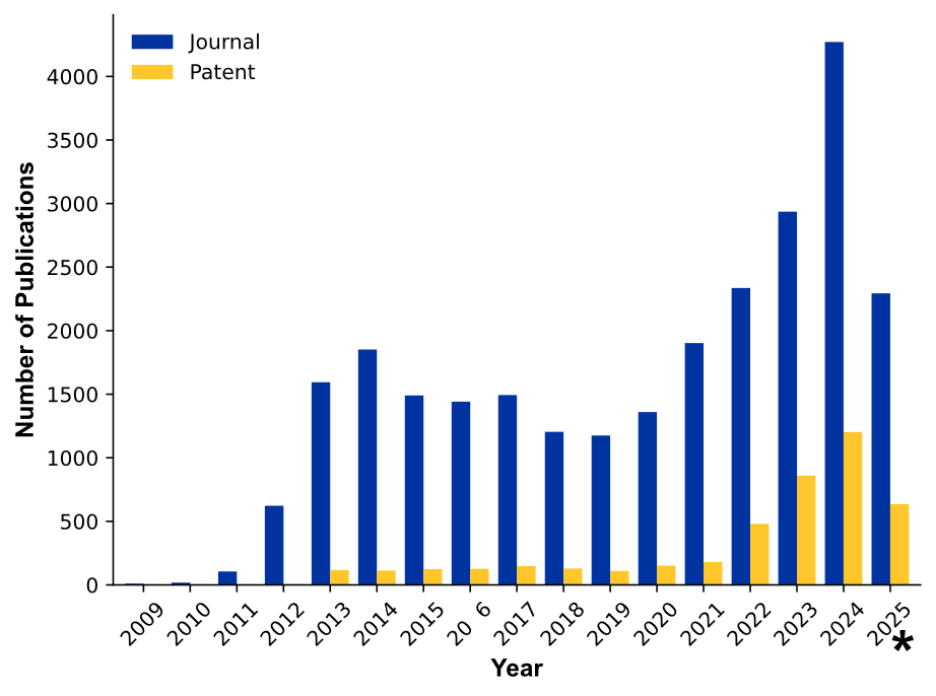
Carbon capture methods have existed for decades, and as we explored in an earlier CAS Insights article, there are numerous approaches to capturing carbon, including biological, chemical, and geological methods. A significant development since our previous publication is the dramatic growth in the number of patents related to CO2 capture, which signifies high commercial interest in recent years (see Figure 1).

Figure 1: Number of patent and journal publications related to CO2 capture for the period 2009-2025. Data for 2025 collected through May. Source: CAS Content Collection.
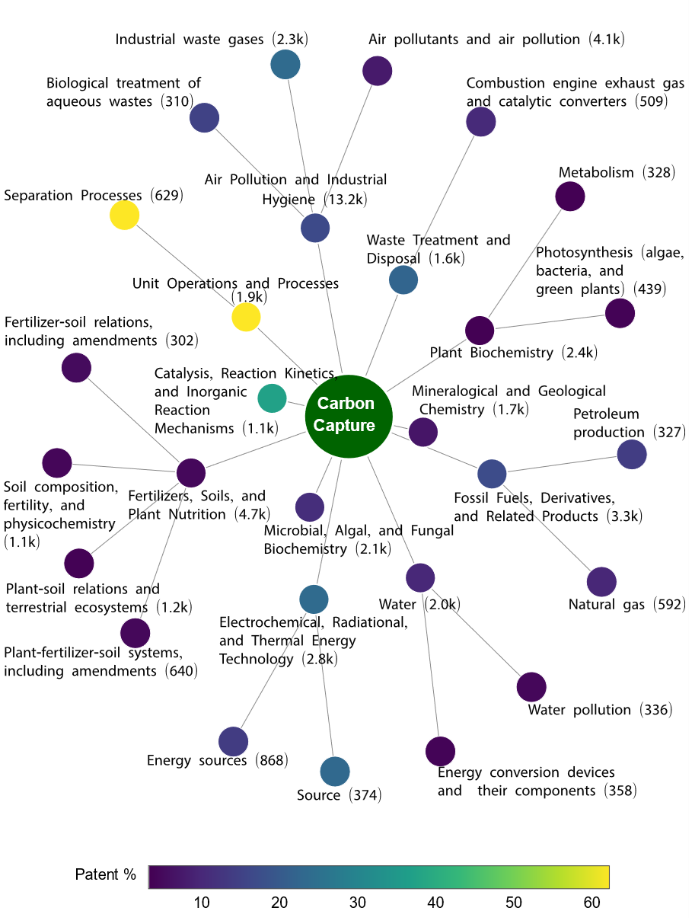
We mapped carbon capture-related publications using CAS indexing data that assigns publications to sections based on their content area. This mapping reveals which topics are receiving the most research attention and the highest patent activity (see Figure 2). Overall, engineering and chemical conversion approaches are leading commercialization efforts in this field.

Figure 2: Map of CO2 capture-related publications based on CAS sections along with the number of publications in each branch. Various nodes of the map are color coded based on the percentage of patents in the branches. Source: CAS Content Collection.
The section “Air Pollution and Industrial Hygiene" has the highest number of publications, with over 13,000. Despite that volume, however, its moderate patent percentage (17%) suggests that many studies are still in the fundamental research phase.
Conversely, the sections "Unit Operations and Processes" and “Catalysts, Reaction Kinetics, and Inorganic Reaction Mechanisms” have lower publication volumes than “Air Pollution and Industrial Hygiene,” but they exhibit high percentages of patent activity. "Unit Operations and Processes" has 62% of patents, indicating a strong commercial focus on topics such as absorption columns, membrane separations, and pressure swing adsorption systems. “Catalysts, Reaction Kinetics, and Inorganic Reaction Mechanisms” (37% of patents) likely covers novel catalysts for converting CO2 to chemicals and fuels in which companies have significant interest.
Our analysis found that "Electrochemical, Radiational, and Thermal Energy Technology" has 24% of patents, encompassing technologies like electrochemical reduction of CO2 and solid oxide electrolysis cells.
Interestingly, the three sections related to plants and bio-based carbon sequestration — “Fertilizers, Soils, and Plant Nutrition” (5%); “Plant Biochemistry” (3%); and “Microbial, Algal, and Fungal Biochemistry” (11%) — showed considerably low patent percentages (noted in parentheses). This looks like a missed commercial opportunity because of the potential for bio-based carbon fixation through photosynthesis and engineered microorganisms.
New drivers of carbon capture commercialization
Why is patent activity increasing? The commercialization of carbon capture technologies is being driven by multiple factors ranging from escalating climate concerns to market incentives to technological advancements:
- Stringent environmental regulations: Governments worldwide are implementing more stringent regulations and policies aimed at reducing greenhouse gas emissions. These include carbon taxes, emission trading schemes, and mandates for adopting carbon capture solutions.
- Corporate commitments to sustainability: Businesses are facing growing pressure from stakeholders, investors, and consumers to reduce their environmental impact and achieve carbon neutrality. Many companies are setting ambitious targets and investing in CCUS to align with environmental, social, and governance initiatives.
- Economic incentives: Governments and international organizations are providing substantial funding, grants, tax credits, and subsidies for supporting the research, development, and deployment of CCUS technologies.
- Enhanced oil recovery (EOR) applications: The use of captured CO2 in EOR is providing a significant market and economic driver for CCUS. Injecting CO2 into oil wells is helping extract more oil, providing a revenue stream that can offset some costs associated with capture and storage.
- Technological advancements: Continuous research and development is leading to more efficient, cost-effective, and scalable capture methods. This includes advancements in novel materials (i.e., solvents, sorbents, membranes), process optimization, and integration of carbon capture with other clean energy technologies.
- Market demand for low-carbon products: The growing demand for sustainable and environment-friendly products and processes in various industries is spurring the adoption of CO2 capture technologies.
The cost for capturing a ton of CO2 is crucial in determining the adoption and commercial viability of carbon capture technologies. Current cost estimates vary depending on the source, technology, and scale of operation. For industrial processes with high CO2 concentrations, such as ethanol production or natural gas processing, the cost can range from $15-$25 per ton of CO2. However, for diluted gas streams like those found in cement production and power generation, costs can be higher, ranging from $40-$120 per ton of CO2. DAC currently costs $600-$1,000 per ton, but experts believe these costs could drop to below $200 per ton by 2050 with sufficient investments in R&D and infrastructure development.
Carbon credits are another factor in the economic viability of CO2 capture. Carbon credits are traceable permits or certificates representing the reduction or removal of one ton of carbon dioxide equivalent (tCO2e) from the atmosphere. Prices for these credits also vary depending on the industry, project type, and project quality. Despite recent declines in average prices (down to $4.8/ton in 2024), there is strong demand for high-quality, verified credits, leading to premium prices for projects with greater durability and positive impacts.
If these prices rise, the economic viability of capturing and storing CO2 becomes more attractive compared to emitting it. Achieving widespread deployment of carbon capture will require significant investment, technological advancements, and regulations. There are indications of a promising future for these critical technologies in the coming years as the world is striving to meet ambitious climate goals and mitigate severe impacts of climate change.
Patent concepts showing the highest growth
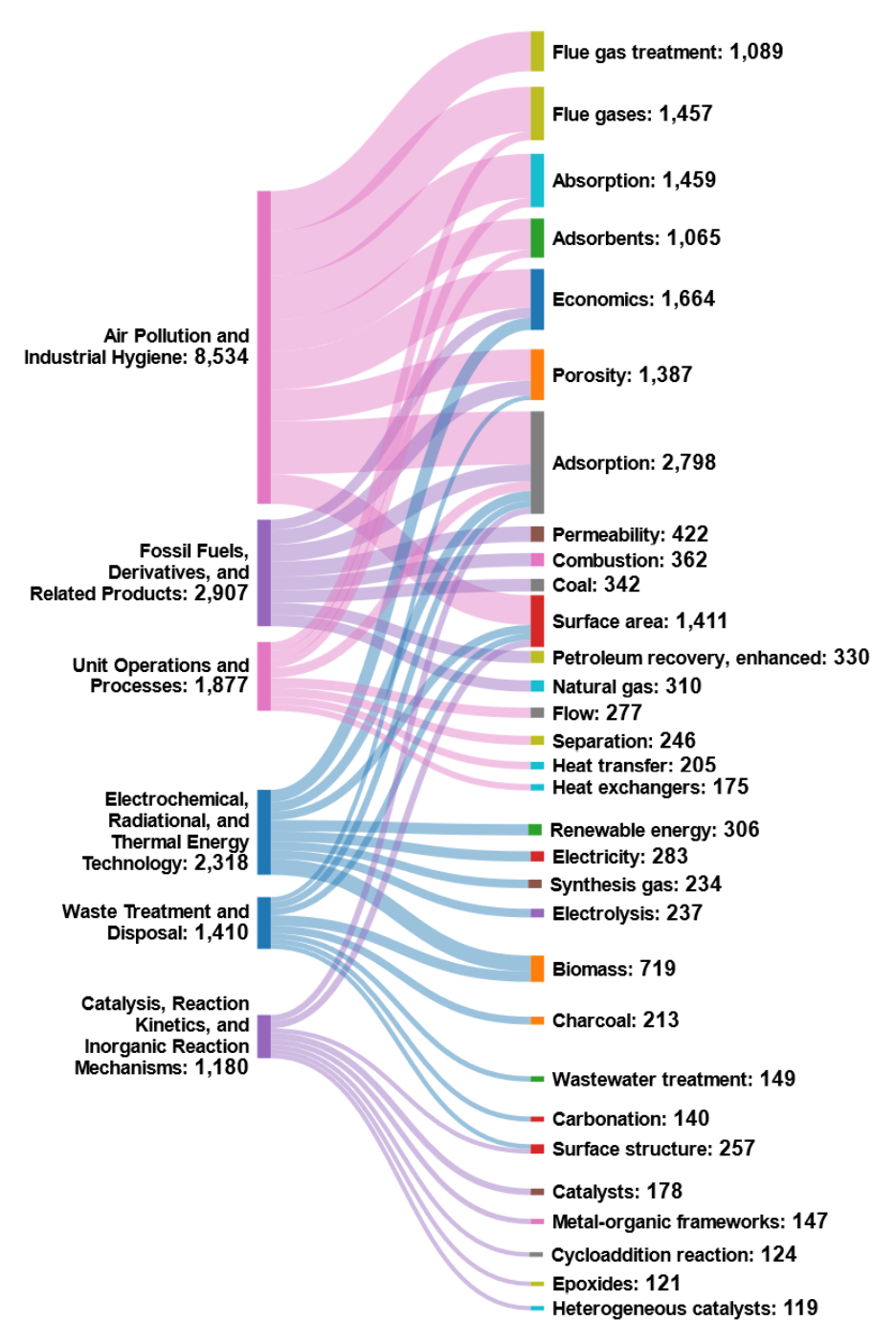
To further understand how the commercialization of carbon capture is developing, we analyzed the six high-patent CAS sections seen in Figure 2 and identified the most common research concepts within them (see Figure 3).

Figure 3: Indexed concepts within the CAS sections with a high percentage of patents. Source: CAS Content Collection.
In "Air Pollution and Industrial Hygiene," adsorption and absorption are dominating, with flue gas treatment being the central focus. Researchers are working on optimizing adsorbents with high porosity and surface area for capturing CO2 from industrial emissions. The presence of economics as a concept reiterates that cost considerations are crucial for commercialization.
The "Fossil Fuels, Derivatives, and Related Products" section shows an interesting combination of capture and utilization approaches. While adsorption remains important, enhanced petroleum recovery is appearing prominently, suggesting that studies are ongoing to use the captured CO2 for extracting more oil. This creates an economic incentive for capture and an increased need for additional sequestration.
"Electrochemical, Radiational, and Thermal Energy Technology" reveals a shift towards sustainable solutions since biomass and renewable energy are top concepts. The presence of electrolysis suggests electrochemical CO2 reduction research. Synthesis gas production indicates studies involving the conversion of CO2 to useful chemicals.
The "Unit Operations and Processes" section, which has the highest patent percentage, focuses on engineering aspects such as flow, separation, and heat transfer optimization. The presence of heat exchangers indicates the importance of energy recovery to make processes economically viable.
"Waste Treatment and Disposal" is combining biomass/charcoal with wastewater treatment, suggesting integrated approaches. The "Catalysis, Kinetics, and Inorganic Reaction Mechanisms" section contains metal-organic frameworks and cycloaddition reactions for converting CO2 into cyclic carbonates and valuable chemical products. This finding is consistent with our earlier analysis (see Figure 2), noting a growing emphasis on chemical conversion.
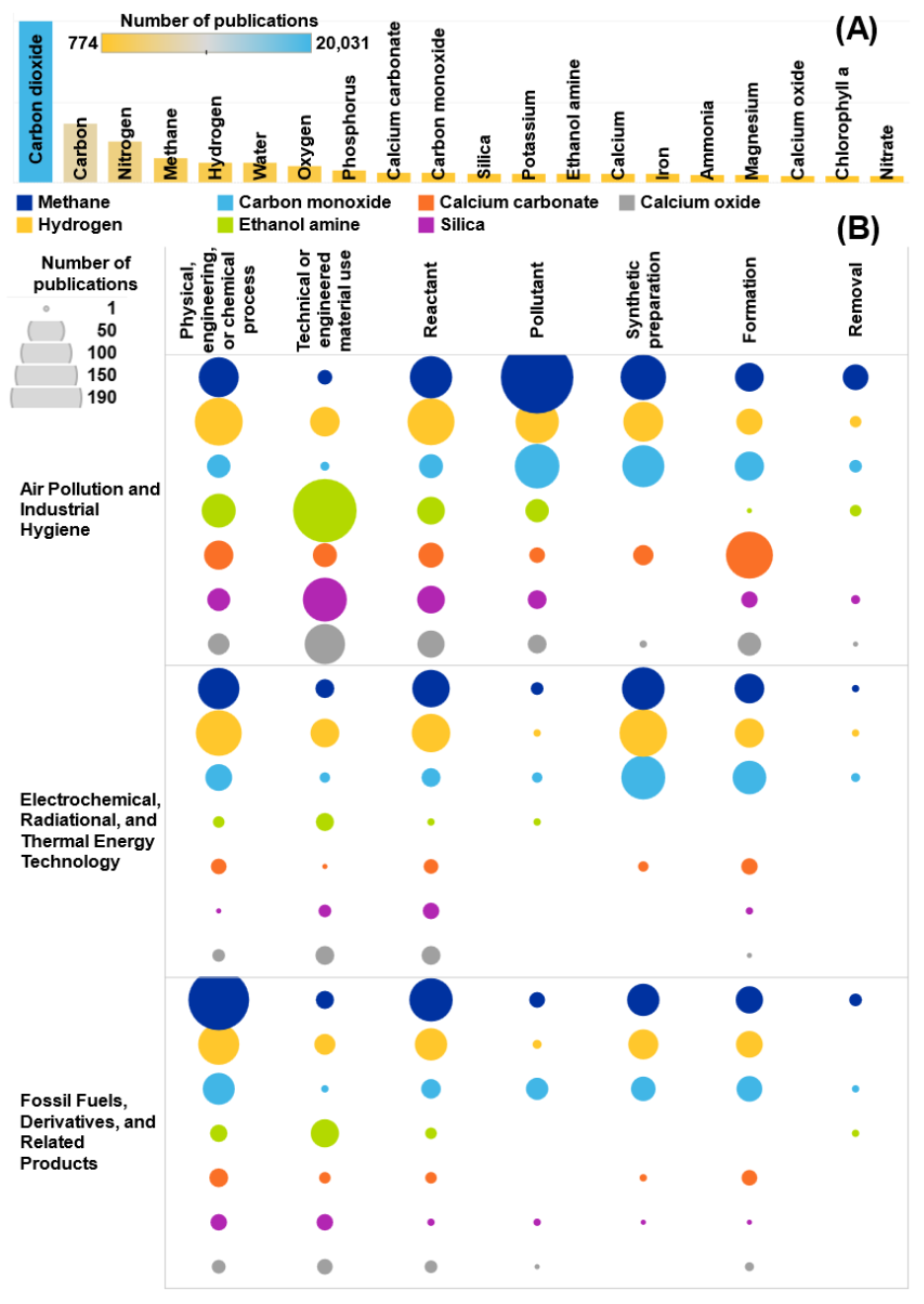
When we look at the substances present in carbon capture literature, CO2 is understandably the most cited, being both the target for capture and a potential feedstock for utilization (see Figure 4).

Figure 4: (A) 15 most prevalent substances in CO2 capture-related publications; (B) The number of publications containing the select substances and the roles played by these substances within the three CAS sections with high patent percentages and high number of publications. Source: CAS Content Collection.
Other key substances include carbon materials — activated carbon, for example, is a favored adsorbent due to its high surface area and ability to be modified. Other commonly cited substances include nitrogen, which is used as an inert gas during the synthesis and regeneration of adsorbents. Hydrogen is widely mentioned as it is generated along with CO2 during the steam-reforming of methane. Methane itself is a reactant in steam reforming, which generates considerable amounts of CO2, and is the product of CO2 reduction through the Sabatier reaction. It is also crucial to separate CO2 from natural gas, which is primarily methane, for certain applications.
Figure 4B reveals the roles of top substances in CO2 capture research across three CAS sections with high patent percentages and high publication volumes.
In the “Air Pollution and Industrial Hygiene” section, ethanolamine serves as the primary engineered material for post-combustion CO2 absorption systems, while calcium-based compounds (carbonate and oxide) enable mineral carbonation processes for permanent CO2 storage. Methane appears predominantly as a pollutant in flue gas streams, requiring separation from captured CO2.
The “Electrochemical, Radiational, and Thermal Energy Technology” section emphasizes CO2 conversion to valuable products , with hydrogen and carbon monoxide being key reactants in synthetic fuel production through electrochemical reduction. This approach transforms captured CO2 into methane via power-to-gas technologies, creating renewable energy storage solutions. This section also features methane, hydrogen, and carbon monoxide as reactants, focusing on processes like electrochemical conversion.
Methane, hydrogen, and carbon monoxide are primarily investigated in "Fossil Fuels, Derivatives, and Related Products" for CO2 utilization pathways, including their role as reactants in converting captured CO2 into fuels or other chemicals. Methane plays a dual role in this section — as a process material in steam methane reforming for hydrogen production and as a target for separation. The lower presence of ethanolamine in this section suggests alternative capture methods like pressure swing adsorption are preferred for high-pressure gas streams.
Silica consistently appears as an engineered material across all sections, likely representing solid sorbent development for CO2 adsorption. The varying substance roles highlight how carbon capture strategies adapt to different industrial contexts — from treating atmospheric emissions to converting CO2 into valuable chemicals and managing fossil fuel processing streams.
Real-world applications of carbon capture technology
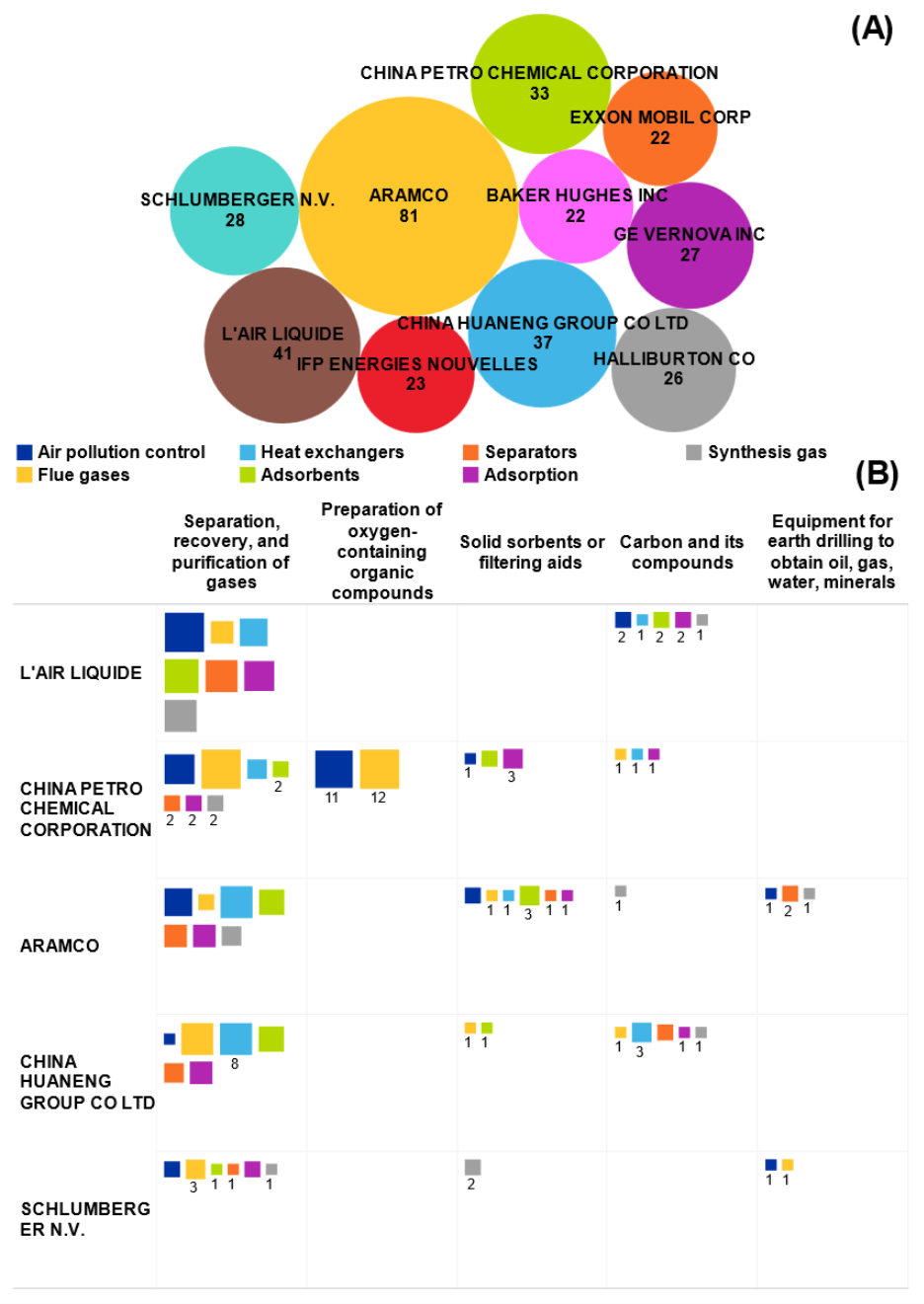
We can see how related concepts and IPC codes take shape in current industrial uses through patent assignees (see Figure 5):

Figure 5: (A) Patent assignees with the highest number of patents; (B) The most prevalent International Patent Classification (IPC) groups and CAS indexed concepts in the patent publications from the top patent assignees. Columns present the IPC groups, and the squares represent the concepts where the size of squares is proportional to the number of publications. Source: CAS Content Collection.
- L'Air Liquide, a global industrial gas company, focuses heavily on gas separation and purification technologies based on adsorption-based systems. Its synthesis gas-related patents suggest integration with hydrogen production facilities.
- China Petrochemical Corporation and China Huaneng demonstrate a strong emphasis on flue gas treatment, reflecting China's urgent need to decarbonize coal-fired power plants and other industries. Their focus on oxygen-containing organic compounds indicates the development of CO2 utilization pathways for chemical production, transforming waste CO2 into valuable feedstocks using microalgae.
- ARAMCO and Schlumberger are oil service companies with patents combining earth drilling equipment with carbon capture technologies. This suggests the development of EOR systems where captured CO2 is injected into depleted oil fields, simultaneously storing carbon and extracting additional petroleum resources.
The prevalence of solid sorbents and adsorption technologies across all companies indicates a shift toward next-generation capture materials that offer lower energy penalties compared to traditional liquid amine systems. Heat exchange innovations suggest a focus on thermal integration and energy recovery, which are critical for reducing operational costs. This patent distribution demonstrates how different industrial sectors are adapting carbon capture technologies to their specific operational contexts and business models.
Next steps for carbon capture technology
As our analysis of the CAS Content Collection shows, carbon capture technology is diversifying and maturing, and we expect continual adoption in the coming years. The need to limit GHG emissions, including CO2 emissions, is becoming more urgent every year, and these critical technologies will be important to those efforts, particularly for hard-to-abate industrial sectors.
As the UN Secretary General noted, the world needs to adopt an “everything, everywhere, all at once” approach to mitigating the effects of climate change. The commercialization of CO2 capture technologies is another important strategy to achieve that goal.