
Resumen ejecutivo
- Los disolventes eutécticos profundos (DES, por sus siglas en inglés) son un grupo de disolventes respetuosos con el medio ambiente compuestos por materiales biodegradables y fácilmente disponibles, como las sales de amonio, y pueden prepararse con un calor relativamente bajo y procedimientos de mezcla sencillos.
- Los disolventes eutécticos profundos se utilizan en aplicaciones biomédicas y en la extracción de nutrientes de los alimentos, y pueden desempeñar un papel importante en los electrolitos de las baterías, la limpieza medioambiental y los recubrimientos más ecológicos para metales.
- Existen cinco tipos de disolventes eutécticos profundos, siendo el Tipo III el más estudiado gracias a su sencillez, rentabilidad y biodegradabilidad.
- El cloruro de colina es la sustancia más común en los pares de sustancias que conforman los disolventes eutécticos profundos.
Los disolventes eutécticos profundos son una clase de disolventes de diseño en rápida expansión que han transformado la química verde, la síntesis de materiales y los sistemas electroquímicos. Formalizados conceptualmente a principios de la década de 2000, estos disolventes se forman mezclando dos o más componentes, normalmente un donante de enlaces de hidrógeno (HBD) y un aceptor de enlaces de hidrógeno (HBA), en proporciones molares específicas para generar una mezcla eutéctica cuyo punto de fusión es drásticamente inferior al de cualquiera de sus componentes individuales.
Esta disminución del punto de fusión se produce porque las fuertes interacciones de los enlaces de hidrógeno alteran la estructura cristalina de las sustancias puras, lo que da lugar a una fase líquida a temperaturas relativamente bajas. Como resultado, los disolventes eutécticos profundos a menudo pueden prepararse mediante un simple calentamiento y agitación, sin necesidad de complejos pasos de purificación o secado.
Un factor crítico en el crecimiento de la investigación sobre disolventes eutécticos profundos es su sostenibilidad. A diferencia de los disolventes orgánicos convencionales o algunos líquidos iónicos, pueden sintetizarse a partir de componentes económicos, fácilmente disponibles y, a menudo, biodegradables. Los ejemplos comunes de HBA incluyen sales de amonio cuaternario como el cloruro de colina (ChCl), mientras que los HBD suelen incluir compuestos como urea, glicerol o ácidos carboxílicos, ácidos orgánicos y metabolitos naturales.
Su baja presión de vapor reduce los problemas de inflamabilidad y limita las emisiones nocivas, mientras que su polaridad, viscosidad, acidez y capacidad de solvatación ajustables ofrecen a los investigadores una enorme flexibilidad para adaptar los disolventes a aplicaciones específicas. Dado que los disolventes eutécticos profundos pueden incorporar moléculas biocompatibles, también conocidos como disolventes eutécticos profundos naturales (NADES), son especialmente adecuados para aplicaciones relacionadas con sistemas biológicos, extracción de productos naturales y formulación farmacéutica.
Por qué los disolventes eutécticos profundos están atrayendo la atención de la investigación
Hemos aprovechado la CAS Content CollectionTM, el mayor repositorio de información científica curado por expertos, para extraer información práctica sobre los disolventes eutécticos profundos a partir del vasto conjunto de información publicada sobre este tema. Hemos formulado una consulta específica en CAS IP Finder, con tecnología de STN™, para analizar más de 20.000 publicaciones relevantes de revistas y patentes (véase la Figura 1).
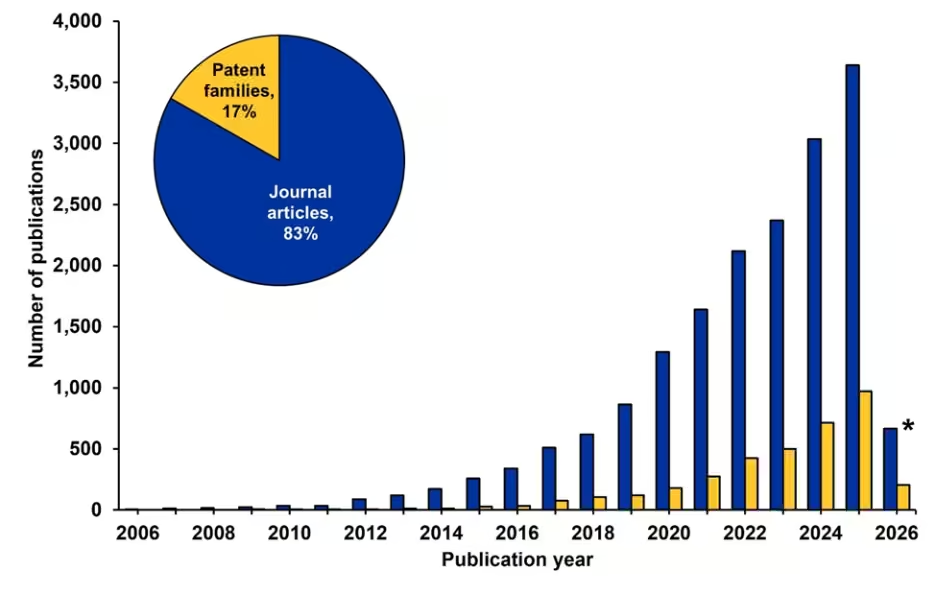
La Figura 1 presenta las tendencias temporales de los documentos relacionados con los disolventes eutécticos profundos, obtenidos mediante la función "Analizar" que ofrece CAS IP Finder™. Los investigadores que exploren tendencias similares también pueden acceder a las capacidades de búsqueda basadas en IA en CAS SciFinder® para identificar patrones en sus áreas de investigación específicas.
Las tendencias de publicación sobre disolventes eutécticos profundos demuestran el fuerte crecimiento característico de un campo emergente que avanza hacia la madurez. Este patrón de latencia seguido de una aceleración drástica indica que el tema ha evolucionado de ser un área de nicho a convertirse en un foco de investigación principal dentro de la comunidad científica.
Una observación crítica, sin embargo, es la pronunciada disparidad entre los tipos de publicación, donde los artículos de revistas dominan el panorama, mientras que las familias de patentes representan una fracción sustancialmente menor. Este desequilibrio sugiere que el campo permanece predominantemente en la fase de investigación fundamental, con una traslación limitada a aplicaciones comerciales. La brecha entre el interés académico y el desarrollo de la propiedad intelectual indica que existen barreras para la comercialización o que el conocimiento fundamental aún se está estableciendo antes de que pueda acelerarse la implementación práctica.
¿Por qué los disolventes eutécticos profundos son tan prometedores, a pesar de no haber alcanzado aún su comercialización? Estos disolventes comparten varias similitudes con los líquidos iónicos, ya que ambos se consideran disolventes de baja volatilidad, ajustables y con carácter iónico. Sin embargo, existen diferencias notables entre ambos. Mientras que los líquidos iónicos están compuestos totalmente por iones y exhiben un carácter iónico completo, los disolventes eutécticos profundos son solo parcialmente iónicos porque consisten en especies moleculares que interactúan mediante enlaces de hidrógeno.
Los disolventes eutécticos profundos son también significativamente más económicos, ya que se sintetizan a partir de componentes fácilmente disponibles y, a menudo, de origen biológico, mientras que los líquidos iónicos requieren una síntesis de múltiples pasos y sales costosas. Además, los disolventes eutécticos profundos son más fáciles de sintetizar, lo que contrasta notablemente con los complejos procesos de preparación y purificación asociados a los líquidos iónicos.
Desde una perspectiva funcional, los disolventes eutécticos profundos presentan entornos de solvatación únicos que difieren significativamente de los disolventes acuosos u orgánicos tradicionales. Pueden disolver numerosas sales inorgánicas, óxidos metálicos, polímeros y biomoléculas, lo que a menudo permite realizar reacciones o procesos que resultan difíciles en otros medios. Sus amplias ventanas electroquímicas, su alta conductividad iónica (en algunas formulaciones) y su estabilidad los convierten en candidatos atractivos para baterías de nueva generación, electrodeposición de metales y supercondensadores.
En la química de materiales, estos disolventes han surgido como medios potentes para la síntesis de nanomateriales, redes metal-orgánicas (MOF) y redes orgánicas covalentes (COF), carbonos porosos y catalizadores, ofreciendo un control preciso sobre la nucleación y el crecimiento, al tiempo que se evitan condiciones agresivas. Se emplean cada vez más en procesos que favorecen la recuperación y el reciclaje de recursos, como la extracción de metales de residuos electrónicos, el procesamiento de biomasa y la captura de dióxido de carbono. Estas aplicaciones contribuyen a la economía circular al permitir la recuperación y reutilización sostenible de materiales.
En conjunto, los disolventes eutécticos profundos representan una alternativa prometedora a los disolventes orgánicos convencionales y a los costosos líquidos iónicos, ofreciendo una solución versátil, rentable y respetuosa con el medio ambiente para aplicaciones en catálisis, electroquímica, farmacéutica y ciencia de materiales.
Tipos de disolventes eutécticos profundos
Los disolventes eutécticos profundos se clasifican en varios tipos según la naturaleza de los componentes HBD (donador de enlaces de hidrógeno) y HBA (aceptor de enlaces de hidrógeno). Abbott et al. propusieron originalmente un sistema de clasificación que comprende los tipos I a IV, que posteriormente se amplió para incluir el tipo V con el fin de abarcar sistemas más allá de las sales de amonio cuaternario convencionales. Esta clasificación proporciona un marco sistemático para comprender la formación, el comportamiento fisicoquímico y las posibles aplicaciones de los disolventes eutécticos profundos.
- Tipo I: Se forman combinando una sal de amonio cuaternario, típicamente un haluro como el cloruro de colina (ChCl), con una sal metálica que contiene un cloruro metálico como ZnCl₂ o SnCl₂. La sal metálica actúa como un ácido de Lewis y su interacción con el anión haluro provoca una reducción significativa del punto de fusión.
- Tipo II: Estos disolventes también dependen de una sal de haluro de amonio cuaternario, pero el componente metálico está presente en su forma hidratada. La presencia de moléculas de agua coordinadas a los iones metálicos influye en los enlaces de hidrógeno y las interacciones iónicas, reduciendo aún más el punto de fusión y aumentando la conductividad iónica.
- Tipo III: Son los más estudiados debido a su simplicidad, rentabilidad y biodegradabilidad. En estos sistemas, una sal de amonio cuaternario actúa como HBA, mientras que un compuesto molecular —comúnmente urea, glicerol, etilenglicol (EG) o ácidos orgánicos— actúa como HBD. El fuerte enlace de hidrógeno entre los componentes da lugar a una profunda reducción del punto de fusión, formando líquidos a temperatura ambiente o cercana a ella. Su polaridad ajustable y su baja toxicidad los hacen atractivos para procesos de extracción, conversión de biomasa y aplicaciones farmacéuticas.
- Tipo IV: Estos disolventes eutécticos profundos difieren de las categorías anteriores en que la sal metálica actúa como HBA, mientras que el HBD es un compuesto molecular como la urea o el EG. Estos sistemas pueden incorporar altas concentraciones de iones metálicos, y la coordinación entre los centros metálicos y los donadores moleculares contribuye a sus propiedades estructurales y electroquímicas únicas.
- Tipo V: El tipo V representa una categoría más amplia y reciente que no depende de sales de amonio cuaternario ni de haluros metálicos. En su lugar, ambos componentes son especies moleculares capaces de formar fuertes enlaces de hidrógeno, como ácidos orgánicos, amidas, polioles, azúcares y otras moléculas neutras. Esta categoría se solapa con el concepto de NADES, que utiliza componentes de origen natural y biocompatibles. Los disolventes de tipo V ofrecen una flexibilidad excepcional en el diseño de disolventes inocuos para el medio ambiente, adaptados a aplicaciones alimentarias, farmacéuticas y biológicas.
Los documentos que analizamos incluían sustancias indexadas asociadas. A partir de estos registros, identificamos los quince pares de sustancias principales conocidos por formar disolventes eutécticos profundos (véase la Figura 2).

La distribución de la atención investigadora revela un panorama altamente concentrado y dominado por sistemas basados en ChCl. La presencia abrumadora del cloruro de colina en la mayoría de los pares mejor clasificados indica que se ha convertido en el HBA predominante en el campo. Esto se debe principalmente a su accesibilidad, su sencilla preparación y su amplia caracterización, lo que facilita su reutilización en diversos métodos y aplicaciones.
Es importante destacar que el análisis muestra que los 15 pares principales constituyen únicamente sistemas de tipo III y tipo V. El predominio de los disolventes de tipo III indica que los sistemas basados en componentes iónicos han recibido el mayor énfasis investigador debido a su simplicidad y rentabilidad.
Por el contrario, la representación comparativamente limitada de los disolventes de tipo V sugiere que estos sistemas totalmente moleculares se valoran por su biocompatibilidad y sus ventajas medioambientales. Este patrón demuestra un claro cambio en la investigación hacia formulaciones libres de metales, coherente con la tendencia general hacia el diseño de disolventes más seguros y sostenibles.
Cloruro de colina y nuevos pares de sustancias
Examinamos además los pares de sustancias para identificar aquellos que están emergiendo o mostrando un crecimiento interanual (YoY) elevado durante el periodo 2021-2025 (véase la Figura 3).

El panorama de los pares de disolventes eutécticos profundos emergentes muestra una marcada relación inversa entre la presencia investigadora consolidada y el impulso de crecimiento, donde los sistemas con un menor número de publicaciones acumuladas demuestran tasas de crecimiento sustancialmente superiores. Este patrón sugiere que el campo se está diversificando más allá de las formulaciones históricamente dominantes, con los sistemas de referencia tradicionales ocupando el cuadrante de bajo crecimiento y alto volumen, lo que indica una saturación en la caracterización fundamental, mientras que las nuevas combinaciones muestran trayectorias de alto crecimiento típicas de un interés investigador en expansión y del potencial descubrimiento de aplicaciones previamente inexploradas.
Una observación destacable es la evidente predominancia de las formulaciones basadas en betaína dentro del régimen de alto crecimiento. La agrupación de la betaína con diversos donadores de enlaces de hidrógeno a tasas de crecimiento elevadas señala un cambio de paradigma que se aleja del cloruro de colina como aceptor universal de enlaces de hidrógeno, impulsado posiblemente por la naturaleza zwitteriónica de la betaína, su mayor biocompatibilidad, su origen natural o su perfil normativo favorable.
Esta diversificación compositiva representa una segunda generación de investigación sobre disolventes eutécticos profundos. Apunta a una maduración metodológica y a una exploración sistemática de marcos iónicos alternativos que pueden abordar las limitaciones de los sistemas tradicionales basados en colina.
El porcentaje de datos de patentes pone de relieve una divergencia entre la madurez de las publicaciones y la traslación comercial. Las formulaciones emergentes basadas en betaína están atrayendo un interés académico y de propiedad intelectual simultáneo, lo que indica un fuerte potencial comercial percibido. Por el contrario, los pares establecidos de cloruro de colina, a pesar de su amplia cobertura investigadora, muestran una menor actividad en patentes, lo que sugiere una novedad limitada para su protección o la persistencia de barreras para su adopción en el mercado.
En general, el patrón implica un cambio en la innovación hacia sistemas alternativos centrados en la betaína que prometen un rendimiento diferenciado, ventajas normativas o soluciones a necesidades industriales no cubiertas más allá de los disolventes eutécticos profundos convencionales basados en colina.
Aplicaciones desde la fabricación farmacéutica hasta el tratamiento de aguas residuales y más allá
Identificamos las principales aplicaciones de los disolventes eutécticos profundos y analizamos la actividad en revistas y patentes en estos ámbitos (véase la Figura 4). La distribución de la actividad investigadora en las distintas áreas de aplicación refleja la versatilidad de estos disolventes para facilitar avances tecnológicos concretos.
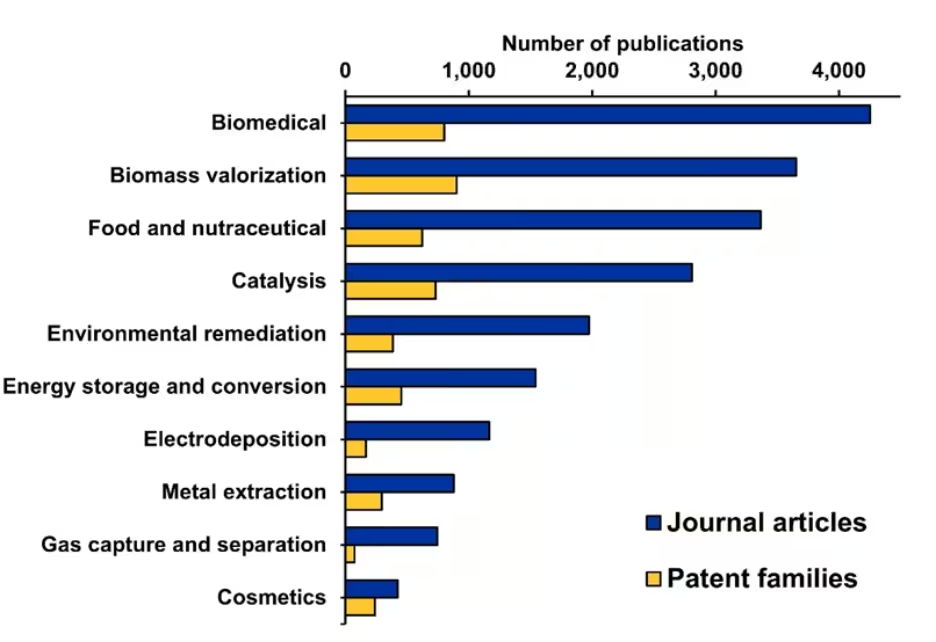
En ciencias biomédicas, los disolventes eutécticos profundos, en particular los NADES, favorecen la administración de fármacos mediante una mayor solubilización de productos farmacéuticos hidrofóbicos, la estabilización de macromoléculas como proteínas y enzimas, y la facilitación del transporte transdérmico y mucoso. Su capacidad para mantener la compatibilidad biológica al tiempo que mejoran la estabilidad molecular también los ha convertido en medios atractivos para formulaciones antimicrobianas y estrategias de criopreservación.
La valorización de la biomasa representa otra área de enfoque importante, donde estos disolventes se utilizan para la deslignificación selectiva, la disolución de hemicelulosa y el pretratamiento de materias primas lignocelulósicas para aumentar el rendimiento de azúcar para la bioconversión. Su capacidad para extraer productos químicos de plataforma como el furfural o el 5-(hidroximetil)furfural en condiciones relativamente suaves subraya aún más su relevancia para las operaciones de biorrefinería sostenible.
En el ámbito de la alimentación y los nutracéuticos, los disolventes eutécticos profundos se utilizan ampliamente para extraer polifenoles, flavonoides, carotenoides y otros compuestos bioactivos de matrices vegetales, ofreciendo alternativas más limpias a los disolventes orgánicos y preservando al mismo tiempo la funcionalidad antioxidante.
La investigación en catálisis aprovecha estas sustancias como medios de reacción para la catálisis ácido-base, las transformaciones catalizadas por metales y los procesos biocatalíticos. Sus redes estructuradas de enlaces de hidrógeno a menudo mejoran la estabilidad del catalizador, facilitan la activación del sustrato y favorecen una mayor selectividad del producto.
La remediación medioambiental, por su parte, utiliza disolventes eutécticos profundos para tareas como la eliminación de tintes, el secuestro de metales pesados y la extracción de contaminantes orgánicos persistentes de las aguas residuales. Algunos también actúan como medios auxiliares para la degradación enzimática o fotocatalítica, apoyando vías de tratamiento de agua más ecológicas y energéticamente eficientes.
Las aplicaciones energéticas de los disolventes eutécticos profundos son igualmente diversas, abarcando su papel como electrolitos en baterías de iones de litio y de iones de sodio, medios conductores de protones en pilas de combustible y entornos iónicos para supercondensadores de alto rendimiento. Su estabilidad térmica, su baja inflamabilidad y sus amplias ventanas electroquímicas los convierten en alternativas convincentes a los electrolitos convencionales.
La investigación sobre electrodeposición implica el uso de disolventes eutécticos profundos para formar recubrimientos uniformes de metales como níquel, cobre, cobalto y sus aleaciones, lo que permite una deposición controlada sin los aditivos corrosivos necesarios en los baños de galvanoplastia acuosos. En las aplicaciones de extracción de metales, se utilizan para la lixiviación selectiva y la recuperación de metales valiosos de minerales, catalizadores usados y residuos electrónicos. Por ejemplo, los disolventes eutécticos profundos basados en colina pueden disolver metales preciosos mediante complejación asistida por ligandos, proporcionando una alternativa significativamente más segura y respetuosa con el medio ambiente que los ácidos minerales fuertes convencionales.
Los estudios de captura y separación de gases exploran el uso de estos disolventes para la absorción de CO₂, la eliminación de SO₂ y la purificación de biogás, aprovechando su afinidad ajustable de enlace de hidrógeno para gases específicos.
Por último, en cosmética, los disolventes eutécticos profundos funcionan como solubilizantes naturales, humectantes y vehículos para extractos botánicos, lo que permite el desarrollo de formulaciones más suaves y derivadas de plantas que se alinean con las tendencias de consumo de etiqueta limpia.
La investigación mostrada en la Figura 4 subraya que los disolventes eutécticos profundos no son meros disolventes ecológicos teóricos, sino facilitadores prácticos de soluciones tecnológicas específicas en biomedicina, química sostenible, sistemas energéticos, gestión medioambiental y productos de consumo.
Pares de sustancias y aplicaciones en la fabricación ecológica
Exploramos además los pares de sustancias de disolventes eutécticos profundos más utilizados en estas aplicaciones (véase la Figura 5). Este análisis reveló relaciones complejas entre las formulaciones de disolventes eutécticos profundos y los ámbitos de aplicación.

Los sistemas tradicionales de tipo III basados en cloruros (combinados con polioles, urea y ácidos orgánicos) demostraron una versatilidad notable mediante una distribución de flujo sustancial en todas las categorías de aplicación. Esta amplia aplicabilidad indica que estas formulaciones establecidas funcionan como plataformas de uso general capaces de satisfacer diversos requisitos funcionales, lo que refleja su importancia histórica y sus capacidades multifuncionales potencialmente genuinas.
Paralelamente, algunas formulaciones de tipo V aparecen como flujos más específicos, vinculándose preferentemente a contextos biocéntricos y orientados a la remediación, donde atributos como la biocompatibilidad, la acidez ajustable y el control de la viscosidad resultan ventajosos.
En general, esto indica que la selección de la aplicación depende menos de una mezcla óptima única que de familias composicionales (por ejemplo, polioles, ácidos carboxílicos, carbohidratos) que permiten un ajuste sistemático de la polaridad, la acidez, la capacidad de enlace de hidrógeno y el carácter iónico. Esto subraya cómo la diversidad estructural y química de los disolventes eutécticos profundos permite su despliegue a medida en tecnologías avanzadas. Esta diversidad también motiva marcos de selección basados en propiedades y una presentación de informes estandarizada para minimizar la dependencia excesiva de sistemas heredados y descubrir formulaciones de alto potencial poco exploradas.
Perspectivas de futuro: La consistencia impulsará la adopción de disolventes eutécticos profundos
A pesar de su creciente importancia como alternativas versátiles y sostenibles a los disolventes convencionales, los disolventes eutécticos profundos siguen enfrentándose a varios retos científicos y tecnológicos que dificultan una adopción industrial más amplia. La principal barrera es su aguda sensibilidad a la composición, particularmente el contenido de agua, que reorganiza las redes de enlaces de hidrógeno y altera la viscosidad, la polaridad y el comportamiento electroquímico. Estos cambios en la composición subrayan la necesidad de una preparación, cualificación y cuantificación de agua in situ rutinaria estandarizadas para garantizar la reproducibilidad.
Igualmente importante es la alta viscosidad, una de las limitaciones prácticas más reconocidas. Las viscosidades elevadas perjudican la transferencia de masa y calor, limitan la eficiencia de separación y restringen las aplicaciones electroquímicas o catalíticas. Paralelamente, los perfiles toxicológicos y ambientales de los disolventes eutécticos profundos siguen sin estar completamente caracterizados. Aunque a menudo se etiquetan como "verdes", especialmente los NADES, estudios recientes han reportado resultados toxicológicos contradictorios, lo que enfatiza la necesidad de protocolos de prueba estandarizados y evaluaciones más amplias a nivel de organismo.
De cara al futuro, el avance de la investigación sobre DES dependerá del establecimiento de normas rigurosas para la notificación de la composición, el control de la pureza y la gestión del agua, respaldadas por herramientas de control de calidad rápidas capaces de garantizar la consistencia desde la preparación en laboratorio hasta el despliegue industrial. Los avances continuos en modelado molecular, espectroscopia y cribado de alto rendimiento están empezando a cerrar las brechas de conocimiento existentes, permitiendo un diseño más racional y predictivo de sistemas de disolventes específicos para cada aplicación.
En conjunto, estos desarrollos posicionarán a los disolventes eutécticos profundos como una plataforma en continua evolución cuyo pleno potencial solo se alcanzará mediante avances coordinados en diseño, caracterización e implementación sostenible.