항균제 내성은 세계보건기구(WHO)가 지정한 10대 글로벌 보건 위협 중 하나이며, 2050년에는 내성 감염으로 인한 사망자가 연간 최대 1,000만 명에 이를 것으로 예상됩니다.
내성은 세포벽 투과성 변화, 유출 펌프(efflux pump) 작동부터 유전자 돌연변이 및 약물 효소 분해에 이르기까지 다양한 고유 및 획득 기전을 통해 발생합니다.
새로운 항생제 개발은 바이오필름, 그람 음성균의 방어 기제, 낮은 투자 수익성, 10~15년에 달하는 긴 개발 기간 등으로 인해 내성 확산 속도를 따라잡지 못하고 있습니다.
박테리아 백신, 항균 펩타이드, 박테리오파지, 엄격 반응(stringent response) 억제제와 같은 대안들은 기존의 저분자 항생제를 넘어선 유망한 치료 경로를 제시합니다.
첨단 소재 솔루션과 AI 기반의 신약 개발 방식은 개발 기간을 단축하고 기존 항생제에 대한 의존도를 낮출 잠재력을 가지고 있습니다. 2205년 8월, MIT 연구진은 생성형 AI를 활용해 약물 내성 임질균 및 황색포도상구균에 대응하는 항생제를 개발했다고 발표했습니다.
2026년 5월 업데이트: FDA는 박테리아의 단일 단백질이 아닌 세 가지 단백질을 동시에 공격하여 박테리아의 적응을 차단하는 항생제 '자이닉(Zaynich)'을 승인했습니다. 이는 기존에 치료 옵션이 거의 없던 약물 내성 감염 환자들에게 새로운 희망이 되고 있습니다.
세계보건기구(WHO)는 적절한 치료 과정을 거친 후에도 사멸하거나 비활성화되지 않는 미생물을 '내성균'으로 정의하며, 이러한 내성균의 증가는 복합적인 요인에 기인합니다. 미국 질병통제예방센터(CDC)에 따르면 매년 280만 건 이상의 항생제 내성 박테리아 감염이 발생하여 35,000명 이상이 사망하고 있습니다. 우려스러운 점은 세계은행의 예측에 따르면 이 수치가 2050년에는 연간 1,000만 명까지 증가할 수 있다는 것입니다.
이에 따라 WHO는 항균제 내성을 10대 주요 보건 문제 중 하나로 선포했으며, 시급한 새로운 해결책 마련이 요구되고 있습니다.
항생제 내성은 복합적인 요인에 의해 발생합니다
항생제 내성은 고유 요인과 획득 요인 모두에서 비롯될 수 있습니다. 고유 요인에는 세포벽 투과성, 약물 표적 변형, 유출 펌프 활성화, 항생제의 효소 분해 등이 포함됩니다. 획득 내성은 새로운 유전 물질을 획득하거나 박테리아 게놈의 돌연변이를 통해 생존 능력을 갖추게 되면서 발생합니다.
그림 1. 돌연변이나 내성 플라스미드에서 기인할 수 있는 박테리아의 4가지 주요 항균제 내성 기전. A. 세포벽 투과성 변형: 박테리아 내부로의 항균제 유입을 감소시키거나 차단함. B. 약물 표적의 변형/부재: 약물 결합을 감소시켜 효능을 떨어뜨림. C. 유출 펌프: 항균제 치료에 반응하여 발현되며, 약물이 효과를 내기 전에 외부로 배출함. D. 항생제의 효소 분해: 약물의 효능을 무력화함.
새로운 항균 치료제의 필요성
항생제는 매우 다양한 계열로 분류됩니다. 각 계열은 구조와 체내 박테리아를 공격하는 방식에 따라 구분됩니다.
이러한 기존 치료 옵션에도 불구하고, 많은 감염병이 기존 항생제 치료에 내성을 보이고 있습니다. 관련 사망자 수의 증가 추세와 맞물려, 세균 감염에 대응하는 방식을 재고해야 할 필요성이 커지고 있습니다.
새로운 항균제가 직면한 과제
항균제 내성 증가의 원인은 다각적이지만, 항균제 내성 발달 속도에 비해 새로운 치료 옵션 개발 속도가 더딘 점이 문제를 더욱 심화시키고 있습니다.
이는 항균제 내성 관련 학술지 논문 수와 특허 출원 비율을 비교해 보면 명확히 알 수 있습니다(그림 2). 이는 학계 연구자들이 새로운 항균제 개발에서 더 주도적인 역할을 하고 있음을 보여주며, 이러한 연구 성과가 상용화된 치료제로 이어져야 함을 시사합니다.
그림 2. 지난 10년간(2012~2022년) 항균제 연구 분야의 연간 학술지 논문 및 특허 출원 수(각각 파란색과 노란색 막대로 표시).
이는 항균제 개발을 어렵게 만드는 여러 요인으로 설명할 수 있습니다. 미생물이 항균제에 저항하기 위해 사용하는 다양한 선천적 또는 후천적 메커니즘(그림 1) 외에도, 개발을 어렵게 만드는 더 광범위한 요인들이 존재합니다(그림 3).
세균의 항균제 내성 능력과 높은 개발 비용 및 긴 소요 시간(그림 3)이 결합되어, 절실한 필요성에도 불구하고 최근 수십 년간 시장에 출시된 항생제는 거의 없습니다.
Biofilms
Growing in a biofilm, or a layer of cells, allows bacteria to withstand antibiotic penetration. Biofilms can grow on catheters, pacemakers, joint prostheses, dentures, contact lenses, prosthetic heart valves, and implants. Growing in a biofilm, or a layer of cells, allows bacteria to withstand antibiotic penetration. Biofilms can grow on catheters, pacemakers, joint prostheses, dentures, contact lenses, prosthetic heart valves, and implants.
Outer layer of Gram-negative bacteria
Gram-negative bacteria are naturally resistant to various drugs that affect Gram-positive species due to their bilayer, outer membrane that is impenetrable to many drugs.
Return on investment
Low success rate of candidate molecules in combination with lesser return on investment are major challenges.
Timelines
It can take 10-15 years between initial molecule discovery to having a viable antibiotic reach the market.
Figure 3. Factors that can confound antimicrobial development.
기존 항생제의 대안
새로운 항생제를 시장에 출시하는 것은 시간이 많이 걸리는 어려운 과제이므로(그림 3), 항균제 내성에 대응하기 위해 다양한 대안이 활용되고 있습니다.
Stringent response inhibition
Long-term survival of bacteria in the host, often asymptomatically, can lead to reactivation and reinfection. These long-surviving bacteria are called “persister bacteria.” Stringent response is a mechanism through which bacteria counter extreme starvation, which is thought to contribute to the development of persistent infection. Inhibiting this process could lead to greater bacterial susceptibility to antibiotics.
Bacterial vaccines
Preventing bacterial infections through vaccines leads to decreased antibiotic consumption and is likely to help with antibiotic resistance. A 2021 WHO report provided details of >60 and >90 vaccines in clinical and preclinical development, respectively.
Antimicrobial peptides
Antimicrobial peptides are gaining popularity as alternatives to small-molecule antibiotics. They are typically short (<100 amino acids) peptides with a broad spectrum of antimicrobial activity. According to the Antimicrobial Peptide Database, there are over 3,000 antimicrobial peptides as of November 2022.
Glycopeptides
Glycopeptides display antibacterial activity primarily against Gram-positive bacteria by inhibiting cell wall biosynthesis. Commonly used drugs in this group are vancomycin, teicoplanin, telavancin, dalbavancin, and oritavancin, but many new options are being developed, studied, and optimized.
Lipopeptides and lipoglycopeptides
Daptomycin is the only lipopeptide currently used against Gram-positive bacteria and functions by disrupting the bacterial cell membrane. The antibacterial effect observed appears dependent on the presence of and binding with calcium. Due to their large size, they are poorly absorbed when taken orally and tend to be administered intravenously.
Bacteriophages
Bacteriophages are viruses capable of infecting the bacteria cell and killing them by injecting viral DNA. The virus replicates within the cell and causes cell lysis as the replicas are released to find a new bacterial cell to infect. However, challenges still must be addressed to make bacteriophage therapy more viable, including poor in vivo efficacy for targeting bacterial species in the gut following oral administration.
Table 2. Alternatives to conventional antibiotics
항균제의 미래
소재를 활용한 향상된 약물 전달 방식은 국소적이고 지속적이며 자극 반응형인 항균 활성을 제공할 수 있습니다. 전통적인 투여 방식 외에도 항균제를 전달하는 방법은 다양합니다. 임플란트나 카테터와 같은 의료 기기는 감염원이 될 수 있는데, 항균 소재를 사용하면 이를 예방할 수 있습니다. 마찬가지로, 유동 인구가 많은 표면에 항균 코팅을 적용하면 미생물 전파를 줄이고 세척의 필요성을 최소화할 수 있습니다.
Hydrogels
Used together with antibiotics for drug delivery and wound healing. Hydrogels act in situ while being exposed to bodily cells and fluids to enable diffusible or gel-bound antibiotic agents such as antimicrobial peptides to be administered.
Nanoparticles
The small size of nanoparticles makes it easy for them to deliver drugs effectively. Surface modification can be used to tailor them for specific targets and locations, and the surface chemistry and composition control the timing of activity, drug release, and duration of action.
Composites
Composites use multiple materials together and are used for medical devices such as dental implants. The variety of materials capable of exerting antimicrobial activity have proven efficacy in both treating and preventing infection and transmission.
Films or coatings
Reducing the ability of medical devices to transmit infection would be an effective way to improve the health and survival of hospital patients. The ability to harness UV or visible light and generate reactive oxygen species that prevent microorganisms from adhering are two examples of effective films and coatings.
Scaffolds and implants
Useful for wound and bone healing, these typically have a high surface area-to-volume ratio and are more persistent than hydrogels. Implants with cationic polymers, copper nanoparticles, or nitric oxide-releasing agents have shown promising efficacy.
Figure 4. Materials and solutions that can reduce antibiotic usage
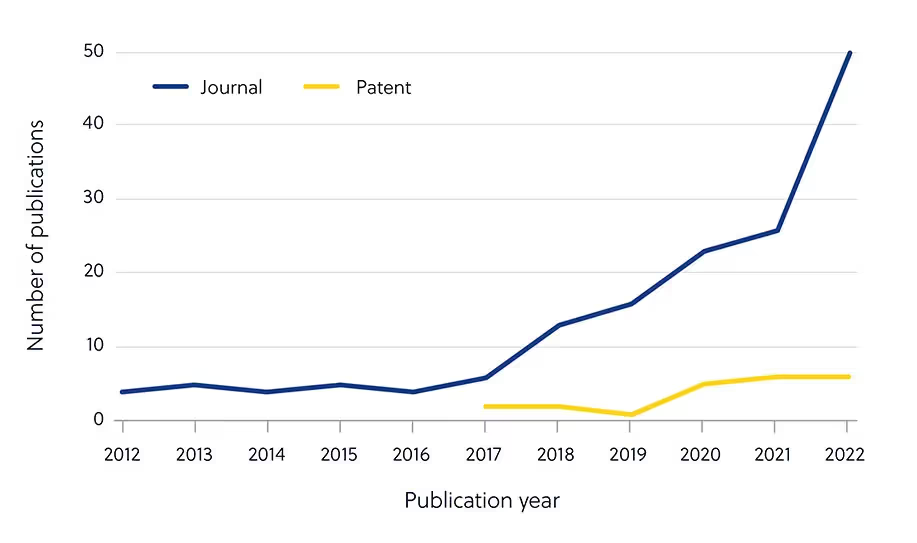
인공지능(AI)의 발전으로 알고리즘을 활용해 잠재적인 신규 분자를 식별하는 항균제 개발이 가속화되었습니다. 학술지 논문 수는 꾸준히 증가하고 있지만, 그에 상응하는 특허 출원 급증은 나타나지 않고 있어 대부분의 항균제 AI 연구가 아직 학술적 단계에 머물러 있음을 시사합니다(그림 5).
그림 5. AI 접근 방식을 활용한 항균제 개발 관련 논문 및 특허의 급격한 증가(학술지 – 파란색, 특허 – 노란색).
다제내성균의 증가는 인류 건강에 심각한 위협이 되고 있으며, 새로운 항생제와 항균 소재 개발이 시급합니다. AI의 광범위한 활용은 아직 초기 단계이지만, 향후 연구의 효율성을 높이고 기간을 단축할 수 있는 가능성을 보여줍니다. AI가 화학 분야에 미치는 영향에 대한 인사이트 보고서, 거대언어모델의 부상, 그리고 생체재료가 다양한 치료 분야에서 새로운 방식으로 어떻게 활용되고 있는지 자세히 알아보십시오.