요약
- 열에너지 저장은 용융염, 상변화 물질(PCM) 또는 가열된 암석과 같은 재료를 사용하여 잉여 에너지를 열이나 냉기로 포집한 후 필요할 때 방출합니다. 다수의 기술 경제성 및 수명 주기 분석에 따르면, 이 기술은 널리 사용되는 많은 재생 에너지 저장 기술보다 비용이 저렴하고 환경에 미치는 영향이 적으며, 기계적 또는 화학적 대안보다 에너지 효율과 에너지 밀도가 더 높습니다.
- 저장 매체는 크게 세 가지 범주로 나뉩니다. 물, 암석, 콘크리트, 벽돌, 세라믹, 흑연, 용융염과 같은 현열 재료는 비열 용량을 통해 열을 저장합니다. 파라핀 왁스, 염 수화물, 지방산, 폴리에틸렌 글리콜과 같은 상변화 물질은 고체와 액체 간의 상태 변화를 통해 열을 저장합니다. 제올라이트, 금속 수소화물, 수산화물과 같은 열화학 재료는 가역적인 화학 반응을 통해 열을 저장합니다.
- 학술지 및 특허 출판물은 지난 20년간 꾸준히 증가했으며, 2019년 이후 눈에 띄게 가속화되었습니다. CAS 콘텐츠 컬렉션(CAS Content Collection)의 개념 분석에 따르면 PCM, 태양열 집열기, 히트 펌프, 마이크로 캡슐화, 알칸, 파라핀, 폴리옥시알킬렌 분야에서 가장 빠른 성장이 나타났으며, 복합 재료의 열전도율을 높이기 위한 흑연, 구리, 그래핀, 알루미늄의 사용도 증가하고 있습니다.
- 열에너지 저장은 현재 에어컨의 피크 부하 관리, 최대 1,800°C를 제공하는 산업용 열 배터리, 태양열 발전소의 전기 생산, 건축 자재 내 PCM을 활용한 건물 냉난방 등 다양한 사용 사례에서 상업적 배포 단계에 도달했습니다. 그 외에도 지속 가능한 담수화, 스마트 섬유, 광열 치료 및 약물 전달과 같은 생물의학 분야로 응용 범위가 확대되고 있습니다.
풍력이나 태양광과 같은 재생 에너지원은 배출량을 줄이는 데 매우 중요합니다. 그러나 이러한 에너지원을 최대한 활용하려면 바람이 불지 않거나 해가 비치지 않을 때를 대비해 잉여 에너지를 저장해야 합니다. 배터리 에너지 저장이 이러한 요구를 충족하기 위해 성장해 왔지만, 다른 비용 효율적이고 에너지 효율적인 방법은 없을까요?
열에너지 저장이 바로 그러한 방법 중 하나이며, 기술 경제성 및 수명 주기 분석을 포함한 다수의 분석 결과는 열에너지 저장이 널리 사용되는 많은 재생 에너지 저장 기술에 비해 비용이 저렴하고 환경에 미치는 영향이 적다는 점을 시사합니다. 또한 열에너지 저장 시스템의 에너지 효율과 에너지 밀도는 기계적 및 화학적 저장과 같은 다른 일반적인 에너지 저장 기술보다 높습니다.
{{microelectronics="/ads"}}
열에너지 저장은 건물 내부의 온도를 관리하는 독보적인 이점을 제공합니다. 이는 기온 상승과 폭염이 심화됨에 따라 매년 더욱 중요해지고 있는 과정입니다. 이러한 시스템은 낮 동안 열을 포집하고 기온이 떨어지는 밤에 수동적으로 방출합니다. 본질적으로 재생 가능한 자원에서 얻은 열에너지 저장은 대기 배출을 추가하지 않고도 건물을 시원하게 유지할 수 있으며, 이를 통해 화석 연료 기반의 에어컨 사용이 초래하는 부정적인 피드백 루프를 끊을 수 있습니다.
이러한 이점과 2015년 파리 협정에 명시된 2050년 탄소 중립 달성의 시급성을 고려하여, 우리는 이 기술이 어떻게 발전하고 있는지 이해하기 위해 과학 정보의 최대 인간 큐레이션 저장소인 CAS 콘텐츠 컬렉션TM을 분석했습니다. 문헌에서 핵심 개념들이 반복적으로 나타나는 것을 확인했으며, 이는 이러한 아이디어들의 교차점에서 더 많은 혁신이 일어날 수 있음을 시사합니다.
열에너지 저장의 작동 원리
열에너지 저장은 용융염, 상변화 물질(PCM) 또는 가열된 암석과 같은 재료를 사용하여 에너지를 열 형태로 포집 및 저장한 후, 나중에 다시 전기로 변환합니다. 열 배터리라고도 불리는 열에너지 저장 시스템은 미래에 사용하기 위해 잉여 열에너지(열 또는 냉기)를 포집하고 저장하는 혁신적인 기술입니다.
필요에 따라 열에너지를 흡수, 저장 및 방출할 수 있는 특수 소재와 공정을 활용함으로써, 이러한 시스템은 에너지 효율성과 신뢰성을 최적화하는 데 중요한 역할을 합니다. 이는 저장된 열을 고온 산업 공정에 직접 사용하거나 해당 공정에 필요한 증기를 만드는 데 사용할 수 있기 때문에 산업 배출량을 줄이는 데 매우 유용합니다.
표 1에서 볼 수 있듯이 열에너지를 저장할 수 있는 재료의 종류는 매우 다양합니다.
표 1: 열에너지 저장 재료의 종류 및 예시.
출판 동향은 광범위한 기회를 보여줍니다
How is thermal energy storage technology evolving, and is it close to widespread commercialization? Our analysis of the CAS Content Collection reveals not only precipitous growth in publications relating to thermal energy storage, but also numerous related concepts that show where breakthroughs are likely to occur.
We found steady, consistent growth in both journal and patent publications over the last 20 years (see Figure 1).
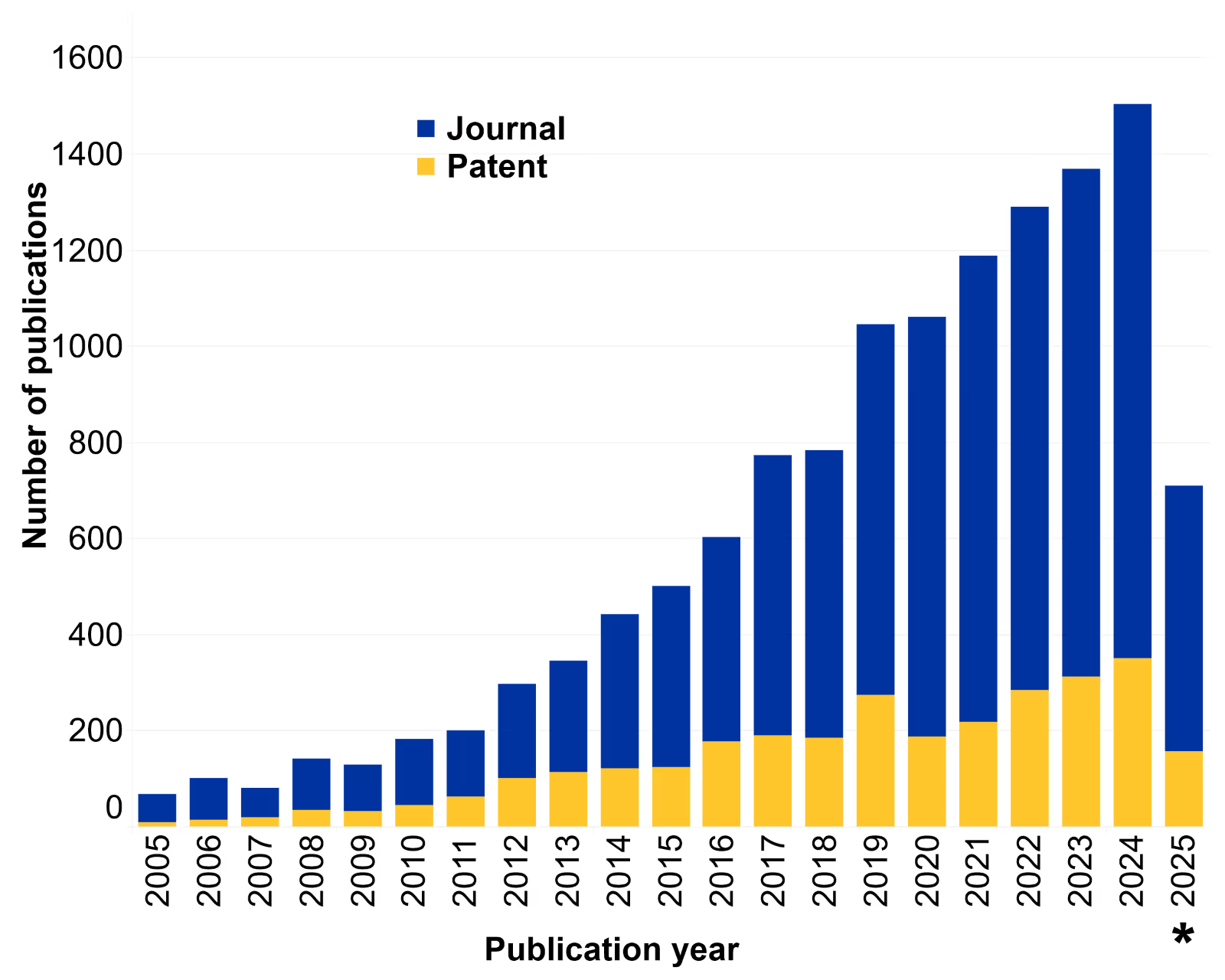
Growth has been notable since 2019, and the continued increase in patents shows that these technologies are reaching commercial viability.
We deepened our analysis further by mapping the number of publications to specific topical sections in the CAS Content Collection, and this shows the broad applicability of thermal energy storage to numerous fields (see Figure 2).
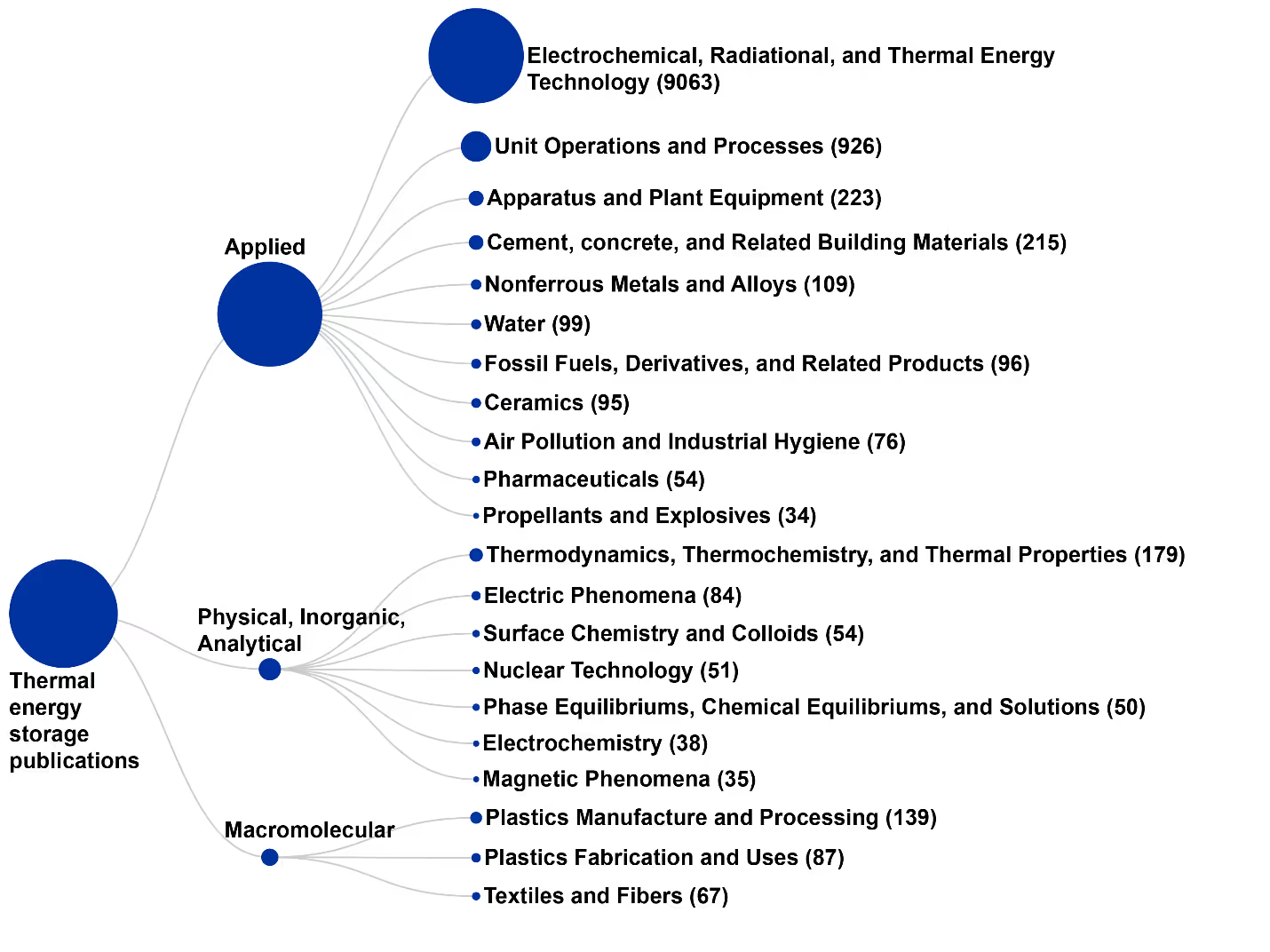
As expected, most publications are related to the CAS topical section on electrochemical, radiational, and thermal energy technology, followed by other understandably related sections such as unit operations and processes, apparatus, and thermodynamics. The topical section on concrete and other construction materials has many publications, which mostly address incorporating PCMs to improve buildings’ energy efficiency. The concrete containing PCMs will absorb the heat during the day when the outside temperatures are high, shielding the indoors from high temperatures, then release the heat during cooler outdoor temperatures.
We found notable numbers of publications in topical sections relating to energy, such as applications in wind and solar energy to balance supply and demand. Thermal energy storage can also help transition nuclear energy from its traditional base load power generation to become adaptable to varying power demands.
물과 관련된 출판물 수는 열에너지 저장이 지속 가능한 전천후 담수화 분야에서도 기회를 제공함을 보여줍니다. 태양 에너지로부터 생성된 열에너지를 저장하고 지속적으로 공급함으로써, 이러한 시스템은 염수의 증발을 유도할 수 있습니다.
Some of the more unique topics with thermal energy storage publications involve various materials. The topical section on non-ferrous metals and alloys has a considerable number of publications due to these materials’ use in the construction of thermal energy storage systems, and a few studies also reported their use as PCMs.
플라스틱 제조 및 가공 관련 주제도 수많은 출판물에 등장하는데, 이는 열에너지 저장 응용 분야에서 효과적인 것으로 밝혀진 다양한 PCM 조성물을 포함하는 고분자 때문일 가능성이 높습니다. 섬유 분야 역시 열에너지 저장 재료를 사용하여 스마트 섬유 및 감온 변색 직물을 만드는 데 두드러지게 나타납니다.
PCM의 열에너지 저장 기능은 광열 치료, 표적 약물 전달, 제약 등 다양한 생체의학 응용 분야에도 유용합니다.
Concept co-occurrences bring materials and usage together
아이디어의 교차점을 평가하고 혁신이 일어날 지점을 파악하는 또 다른 방법은 개념 쌍의 동시 출현을 조사하는 것입니다. 2022년부터 2024년까지의 기간을 대상으로 이러한 쌍과 그 성장세를 분석했습니다(그림 3 참조).
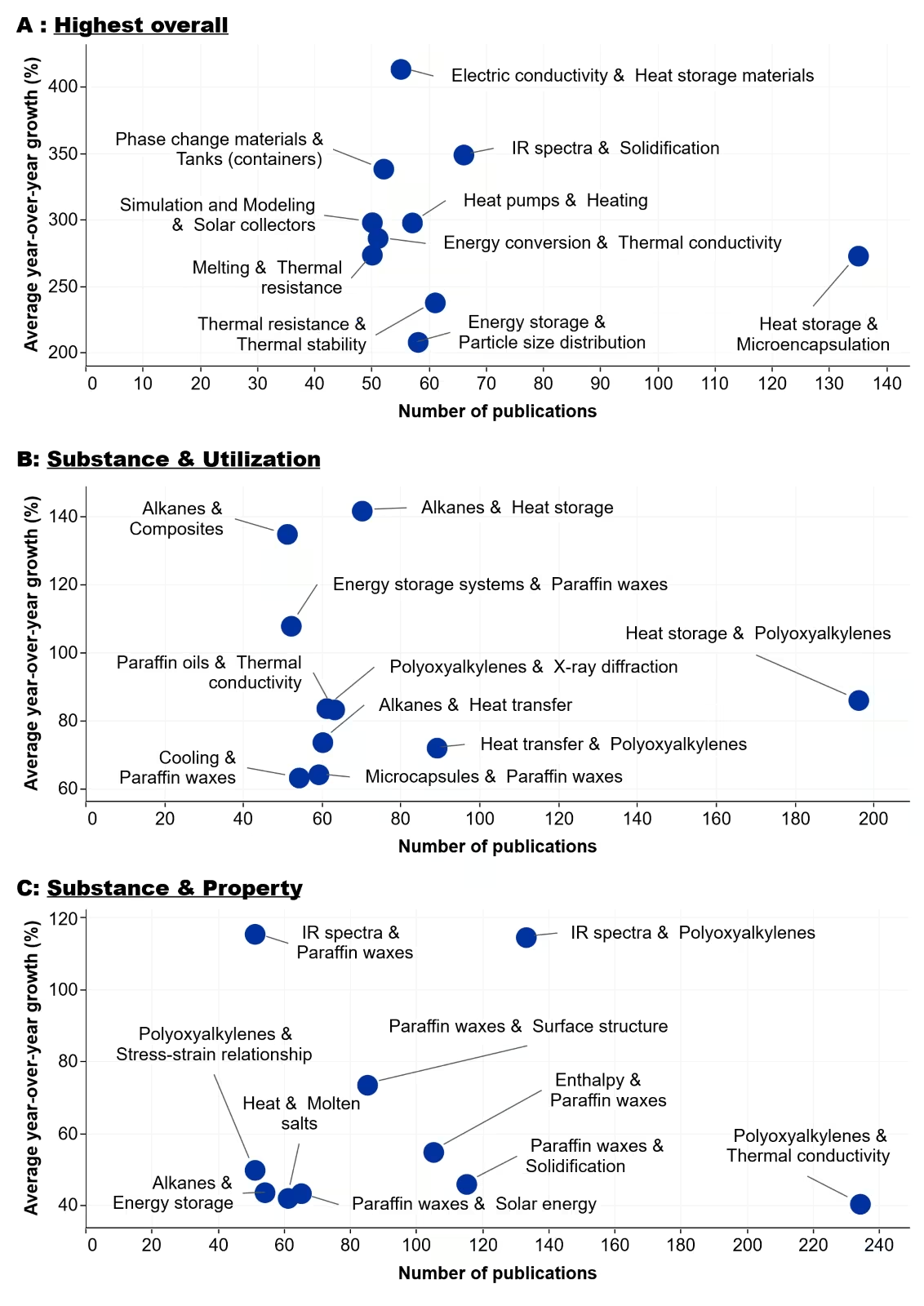
Figure 3A shows the top 10 concept pairs with the highest growth. PCMs, solar energy collectors, and heat pumps are some of the concepts that grew significantly. Microencapsulation, a technique used to increase thermal conductivity and prevent reactivity of the PCMs with the surrounding materials, stands out due to the high number of publications and growth rate. This technique has been used to improve the overall efficiency of thermal energy storage processes.
We further narrowed the high-growth concept pairs by looking into combinations of substance class concepts and application/usage/process concepts, and the top 10 such concept pairs are shown in Figure 3B.
Alkanes, paraffin, and polyoxyalkylenes are among the highest-growing substance classes in recent years. Following these are concepts such as microcapsules and composites. As paraffin wax is often encapsulated to form microcapsules to improve its stability and cyclability, we saw that these concepts had high growth. Alkanes, another high-interest topic, are often combined with materials such as polymers, various forms of carbon, and inorganic materials to improve thermal conductivity, avoid leakage, and provide chemical stability.
Figure 3C shows high-growth concept pairs made of substance class concepts and property concepts. Other than molten salts, the high-growth substance classes are similar to the ones found in Figure 3B. The properties often associated with them are infrared (IR) spectra, surface structure, enthalpy, solidification, and solar energy.
The stress-strain relation of PCMs such as polyoxyalkylenes are often studied to identify their structural integrity and optimize performance. IR spectra often co-occurs with PCMs due to its use in studying the chemical structure, phase transitions, and thermal stability of PCMs.
또한 물질 간의 동시 발생 및 사용 현황을 조사했습니다(그림 4 참조).
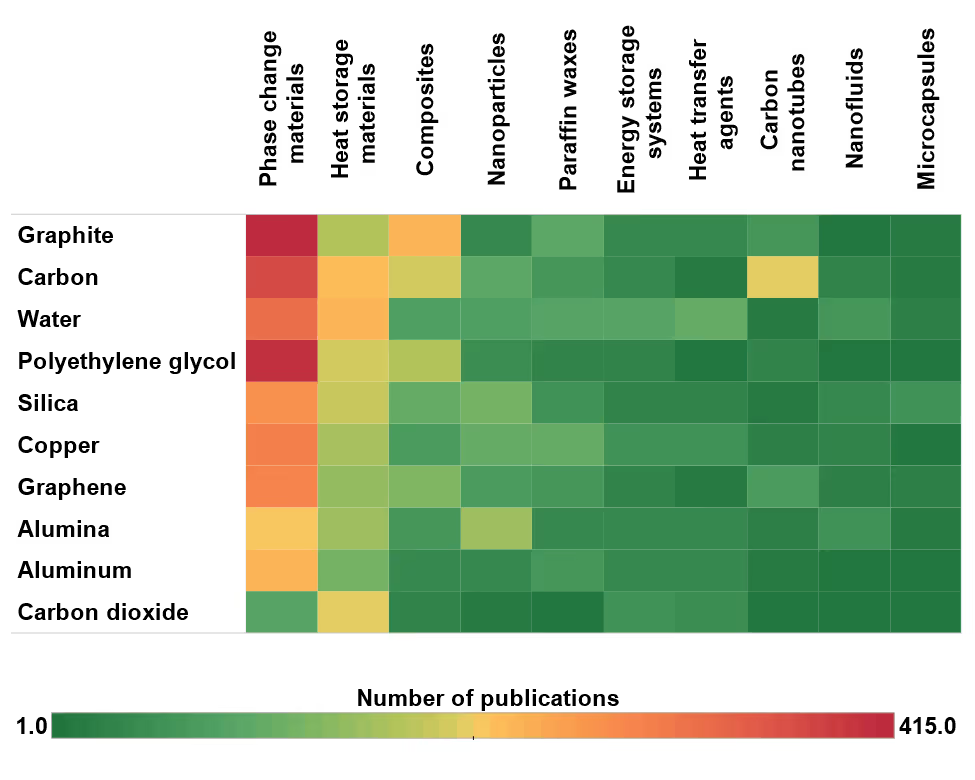
흑연은 상변화 물질(PCM)에 가장 많이 사용되는 물질 중 하나입니다. 흑연과 PCM을 포함한 복합체는 흑연의 높은 열전도율과 다공성 구조 덕분에 열에너지 저장 성능을 향상시키는 데 사용됩니다.
흑연과 마찬가지로 구리, 그래핀, 알루미늄 또한 열전도율을 높이기 위해 PCM과 결합됩니다. 폴리에틸렌 글리콜을 함유한 복합체 역시 가장 널리 보고된 상변화 물질 중 하나입니다. 이러한 동시 발생 사례는 이미 열에너지 저장 분야에서 핵심적인 역할을 하는 물질과 향후 추가 연구 가치가 있는 물질이 무엇인지 보여줍니다.
시장으로 진입하는 열에너지 저장 솔루션
많은 기업이 이미 다양한 분야에서 열에너지 솔루션을 상용화하고 있습니다. 특허 증가 추세에서 볼 수 있듯이, 이는 해당 기술이 실용화 단계에 접어들었음을 의미합니다. 주요 사례는 다음과 같습니다.
- 피크 부하 관리: Ice Energy는 전기 요금이 비쌀 때 전력 소비를 줄일 수 있도록 열에너지 기반의 냉방 솔루션을 제공합니다. 한편, Sunamp는 태양 에너지나 심야 전력을 활용하여 온수 솔루션을 가동합니다.
- 산업용 에너지: Electrified Thermal Solutions는 열 배터리를 제조하여 재생 에너지를 열 형태로 저장한 뒤, 산업 현장에서 최대 1800°C의 일정한 열을 공급합니다.
- 전력 생산: 여러 기업이 집광형 태양열에서 발생하는 열로 증기를 생산하여 전력을 생성합니다. 잉여 열은 용융염에 저장되었다가 햇빛이 없을 때 전력 생산에 사용됩니다.
- 건물 냉난방: Microtek은 건축 자재에 PCM을 사용하여 실내 열을 저장 및 방출함으로써 에너지 소비를 절감합니다.
또 하나의 유용한 도구
경제 활동과 인간의 편안함을 유지하면서 탄소 배출을 줄이고 넷제로를 달성하려면 수많은 혁신적 솔루션이 필요합니다. 열에너지 저장은 재생 에너지 및 에너지 효율화와 결합할 수 있는 가치 있는 선택지입니다. CAS Content Collection 분석 결과, 이 기술에 대한 관심이 높아지고 있으며 연구 개념들이 중요한 재료, 물질 및 용도를 중심으로 수렴하고 있습니다. 더 많은 혁신 기술이 시장에 출시됨에 따라, 열에너지 저장은 기후 변화의 영향을 완화하기 위한 우리의 노력에서 필수적인 요소가 될 것입니다.