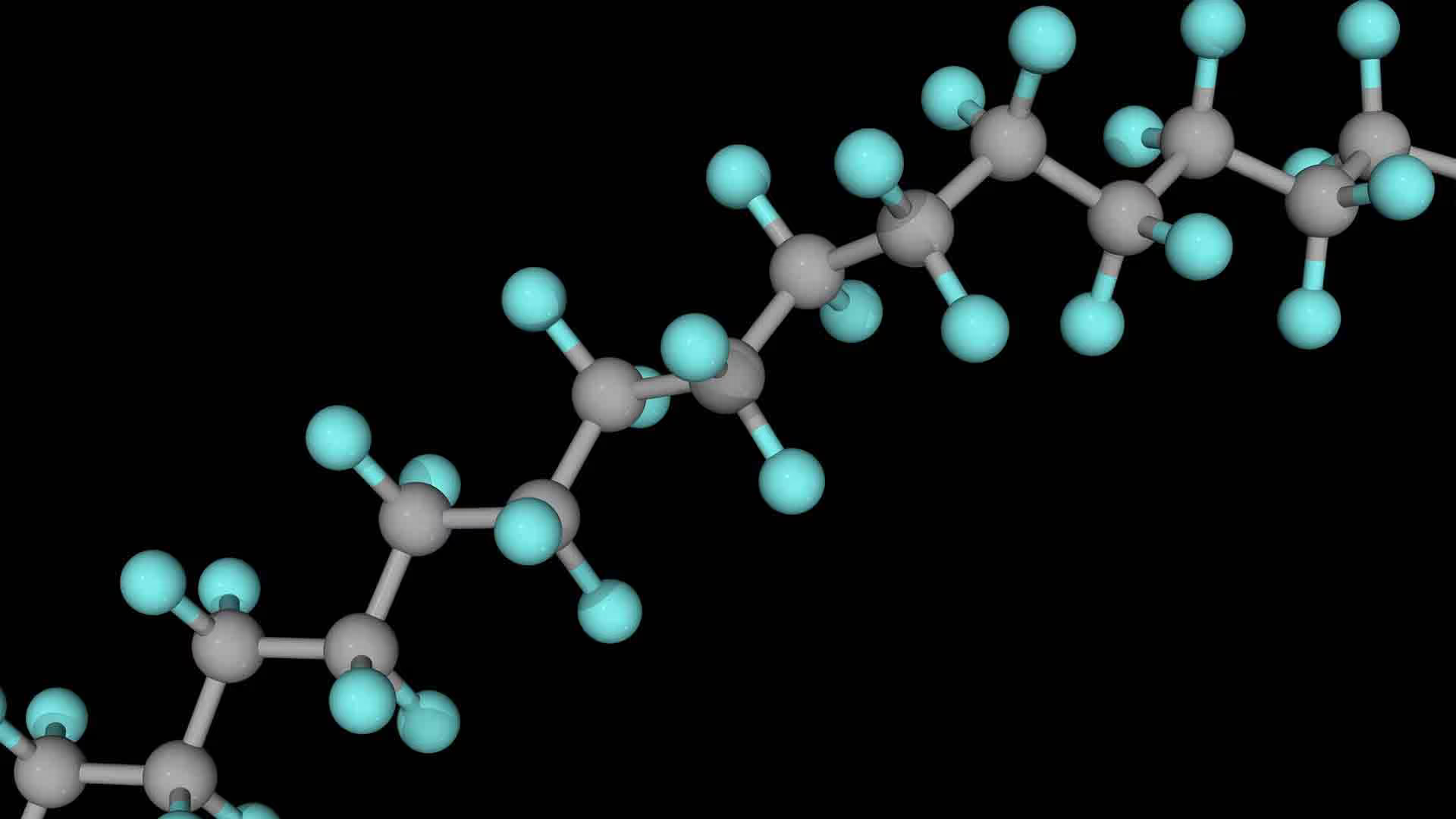
Polytetrafluoroethylene (PTFE), molecular model. Synthetic fluoropolymer of tetrafluoroethylene.

PFAS 환경: 규제, 응용 분야 및 대체제 이해

Per- and polyfluoroalkyl substances, commonly known as PFAS, represent a class of man-made, highly fluorinated organic molecules characterized by exceptionally strong carbon-fluorine bonds. These bonds create materials with remarkable properties: resistance to chemical and physical degradation, water and oil repellency, emulsification capabilities, and high-temperature stability.  

Such characteristics have made PFAS valuable across numerous industries, including common household products (non-stick cookware, personal care items, etc.), pharmaceuticals, plastics, electronics, firefighting, cosmetics, automotive, aerospace, and energy storage.

{{pfas="/ads"}}

However, those same properties — and the strength of the carbon-fluorine bonds — have raised concerns about the environmental persistence of PFAS and potential impacts on human health. As a result, regulatory bodies worldwide are responding with evolving rules and restraints, and consumers are increasingly calling for alternatives.

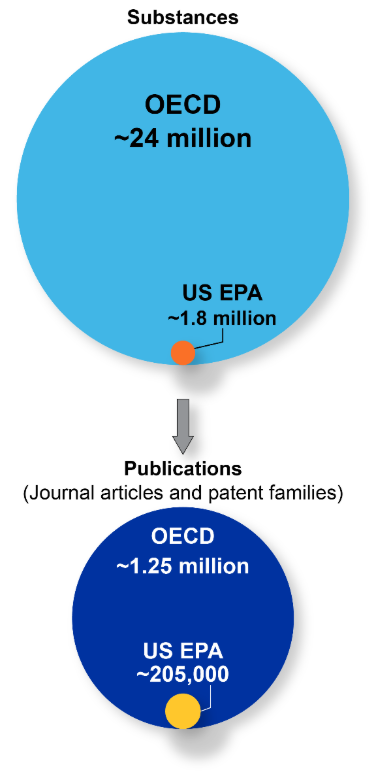
To establish a deeper understanding of PFAS prevalence in scientific publications, we conducted systematic chemical structure-based searches within the CAS Content CollectionTM, the largest human-curated repository of scientific information. Our analysis revealed striking differences in PFAS identification based on varying regulatory definitions (See Figure 1):

  • Following the Organization for Economic Cooperation and Development (OECD) 2021 definition guidelines (which include compounds containing even a single -CF₃ or -CF₂ group), approximately 24 million distinct PFAS molecules were identified within the CAS Content Collection.
  • In contrast, when applying the more stringent United States Environmental Protection Agency (U.S. EPA) definition (requiring at least two -CF₂ or -CF₃ groups), the number of substances classified as PFAS decreased significantly to approximately 1.8 million compounds.

These numbers are significantly higher than the 10,000-15,000 PFAS compounds estimated to exist, and it means that far more products may be impacted by regulations or need formulation changes to achieve similar properties in their applications. By focusing on substances with established scientific or commercial relevance, we analyzed over 350,000 unique compounds appearing in more than one million scientific documents.

Comparison of OECD and US EPA data: top circle shows ~24M vs ~1.8M substances; bottom circle shows ~1.25M vs ~205K publications, connected by an arrow.
Figure 1: Substances and publications fitting the OECD and U.S. EPA’s definition for PFAS molecules. Source: CAS Content Collection.

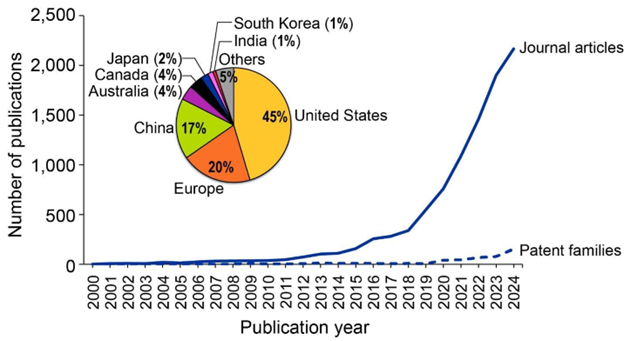
Despite a distinct increase in publications on PFAS mitigation or remediation over time (see Figure 2), the current volume of research is still insufficient given the widespread use and environmental impact of PFAS. It is important to note that the U.S. stands out as the most influential and proactive in terms of PFAS mitigation research, driving significant advancements in this field. The EU and China also emerge as key players, ramping up research initiatives to tackle PFAS-related challenges.  

Graph shows journal articles and patent families from 2000–2024, with journal articles rising sharply after 2015. Pie chart shows publication share by region: US 45%, Europe 20%, China 17%, and others
Figure 2: Trends for PFAS remediation and mitigation-related publications. The inset pie chart shows the geographical distribution for these publications. Source: CAS Content Collection.

This still underscores the necessity for intensified global efforts to develop effective methods for mitigating PFAS contamination, thereby ensuring environmental safety and protecting public health. Our analysis covers the evolving regulatory landscape and PFAS prevalence in 25 major applications. We’ve identified publication trends as well as potential alternatives in various applications, based on documents in the CAS Content Collection.

Geographic shifts and commercial patterns in PFAS literature  

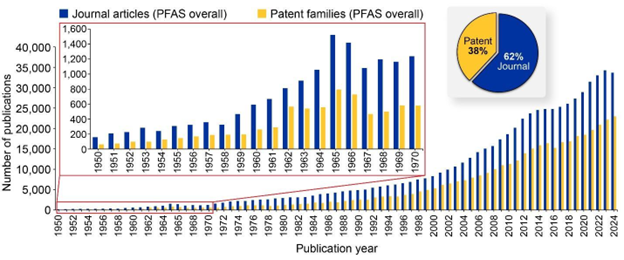
In our analysis, we examined 1 million documents from the CAS Content Collection that referenced over 350,000 unique PFAS compounds. Temporal analysis reveals a significant upward trend in the number of journal and patent publications over the past 70 years (see Figure 3). Despite stringent global regulations, the patent-to-journal ratio of 2:3 indicates that PFAS compounds remain widely used across various industrial applications.

Two nested bar charts showing PFAS journal articles and patents from 1950 through 2024. Pie chart shows overall journals as 62% and patents as 38%
Figure 3: Yearly trends for journal articles and patent families. The inset pie chart shows the volume of journals and patents within our dataset. Source: CAS Content Collection.

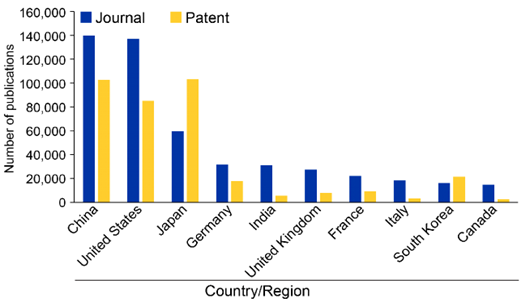
Our analysis of the global distribution of these publications reveals that while the U.S. remains prominent, Asian countries, particularly China and Japan, are also key centers for PFAS research and application (see Figure 4). This trend could result from the absence of stringent PFAS regulations in these regions. In addition, European countries show low patent publication numbers, suggesting a decreasing trend or reduced usage of PFAS in industries likely related to a potential selective PFAS ban in the EU.

Bar graph shows PFAS-related publications by country, with journal (blue) and patent (yellow) counts. China and the US lead, followed by Japan, Germany, and others
Figure 4: Geographical distribution of PFAS related publications. Source: CAS Content Collection.

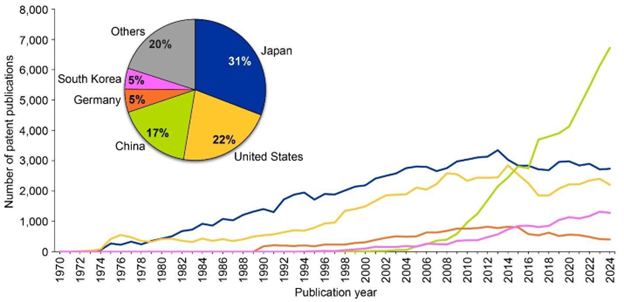
The commercial use of PFAS in various countries was assessed by analyzing the number of patents published by various industries in these regions (see Figure 5). Notably, Japan is at the forefront of using PFAS for the commercial applications, followed by the U.S. and China. The temporal analysis in Figure 5 of the patent publications by these countries reveals that China is the only country experiencing a significant increase in PFAS-related commercial patents, while commercial use has slowed in all other countries except South Korea.

Line graph shows commercial patent trends from 1970–2024 for Japan, US, China, Germany, South Korea, and Others. Pie chart shows patent share: Japan 31%, US 22%, China 17%, Others 20%, Germany and South Korea 5% each.
Figure 5: Yearly trends for commercial patent publications for the leading countries/regions. The inset pie chart shows the volume of commercial patents published by these countries/regions. Source: CAS Content Collection.

As we’ll see, these patterns reflect the widespread use of PFAS in several industries and applications and the diversity of regulatory approaches throughout geographic regions.

The changing PFAS regulatory landscape

Regulating PFAS presents complex challenges beyond simple elimination, requiring a delicate balance between reducing environmental and health risks while maintaining essential functions. The regulatory landscape is complicated by the diversity of PFAS compounds; scientific uncertainty regarding their toxicity, persistence, and bioaccumulation; and the critical role of these chemicals in sectors like healthcare, defense, and fire safety.  

Additionally, practical barriers exist in the process of removing or replacing PFAS, including detection limitations, remediation costs, and a lack of suitable alternatives for some critical applications. This necessitates nuanced regulatory approaches that prioritize phasing out non-essential uses, while managing careful transitions for applications where immediate elimination would create unacceptable disruptions or safety concerns.

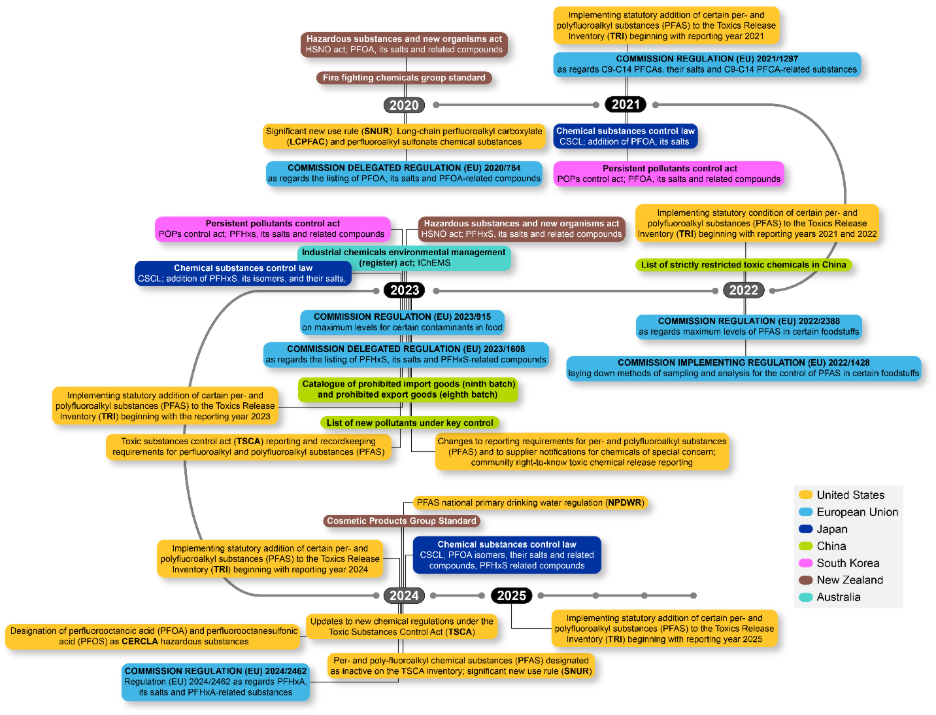
Different geographic areas have taken action to regulate PFAS over the last 15 years, with activity increasing in the last five years as public concerns mount over the effects of PFAS on the environment and human health (see Figure 6).

A timeline showing regulatory actions regarding PFAS from 2020 to 2025.
​​​Figure 6: The timeline of international regulatory actions restricting the use, manufacture, and import of PFAS for the period 2020-2025. Source: CAS Content Collection and publicly available information.

U.S. regulations

The U.S. EPA has implemented measures to selectively restrict or ban PFAS over time. In 2023, the agency introduced a new framework to establish a more rigorous review process: PFAS with negligible exposure and environmental release risk can be commercialized after receiving basic physical-chemical property data and ensuring PFAS can be disposed properly. PFAS with low, but not negligible release potential requires additional testing, such as toxicokinetic data, before manufacturing approval.  

For PFAS likely to cause significant environmental releases or exposures (like spray-applied stain guards), the EPA typically prohibits commercialization until extensive testing on physical/chemical properties, toxicity, and environmental fate is completed, unless a critical military need exists.

The EPA’s 2024 PFAS Strategic Roadmap designated the two most widely used and harmful PFAS, PFOA and PFOS, as well as their salts and structural isomers, as hazardous substances under the Comprehensive Environmental Response, Compensation, and Liability Act (CERCLA, commonly known as the Superfund). This designation has led to several reporting requirements and disclosure obligations for industry, property owners, and federal agencies, allowing the EPA to address more contaminated sites, take early actions, and expedite eventual cleanups.

There are also many state-level regulations that often mandate product notifications, compliance certifications for manufacturers and distributors, and outright bans on certain product categories with intentionally added PFAS. California, Maine, Washington, and others have implemented comprehensive bans on PFAS in various consumer product categories.  

Companies may struggle with varying state regulations, but these actions are driving the market away from PFAS chemicals despite the lack of strong federal laws. As public concern about these persistent "forever chemicals" increases, more states are proactively addressing the issue rather than waiting for federal intervention.  

EU PFAS regulations

The European Union (EU) generally has more stringent restrictions on PFAS than the U.S. under the Stockholm Convention. Member states have also enacted partial bans, such as Denmark, where the import and sale of clothing, footwear, and their waterproofing agents containing PFAS will be banned in most cases beginning July 2026.

The European Chemicals Agency (ECHA) estimates that, if current practices continue in a similar manner, 4.4 million metric tons of PFAS will be discharged into the environment over the next three decades. This scenario poses substantial risks to environmental and public health due to the persistent nature of PFAS emissions. As a result, in 2023, the ECHA collaborated with European authorities from Denmark, Germany, the Netherlands, Norway, and Sweden to put forward a proposal that would effectively ban all PFAS fitting the OECD definition (with certain exemptions) in Europe.

EU agencies have received thousands of comments regarding the proposed legislation, including concerns over potential job losses and supply chain disruptions. As of this writing, deliberations are continuing about a potential ban and any economic implications.  

Asia-Pacific regulations

The Stockholm Convention influences much of the PFAS regulations in the Asia-Pacific region. Countries including China, Japan, South Korea, Australia, and New Zealand have prohibited or restricted PFAS substances. However, the regulatory landscape in these countries continues to evolve, with several of them adopting progressive measures that mirror approaches taken in the U.S. and EU.

PFAS usage patterns by application

Overview

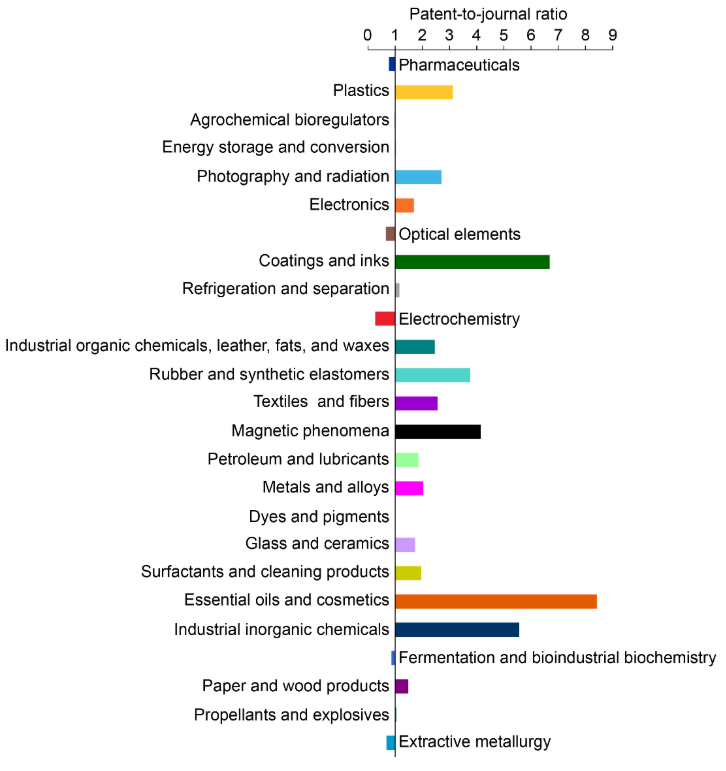
In our analysis of the CAS Content Collection, we classified publications into various applications based on CAS’s topical sections. We narrowed our focus to 25 major applications based on their high patent-to-journal ratio (see Figure 7).

Bar chart shows patent-to-journal ratios for PFAS applications. Highest ratios appear in pharmaceuticals, plastics, and agrochemical bioregulators. Data spans diverse fields from energy to cosmetics.
그림 7: CAS 섹션 데이터를 기반으로 한 PFAS 분자의 주요 응용 분야별 특허 대 학술지 비율. 출처: CAS Content Collection.

이어서, 독특한 불소 함량 프로필과 높은 특허/학술지 출판 비율을 기준으로 선정된 10가지 응용 분야 전반에 걸쳐 화학물질과 과학적 개념 간의 관계를 심층 분석했습니다.

플라스틱

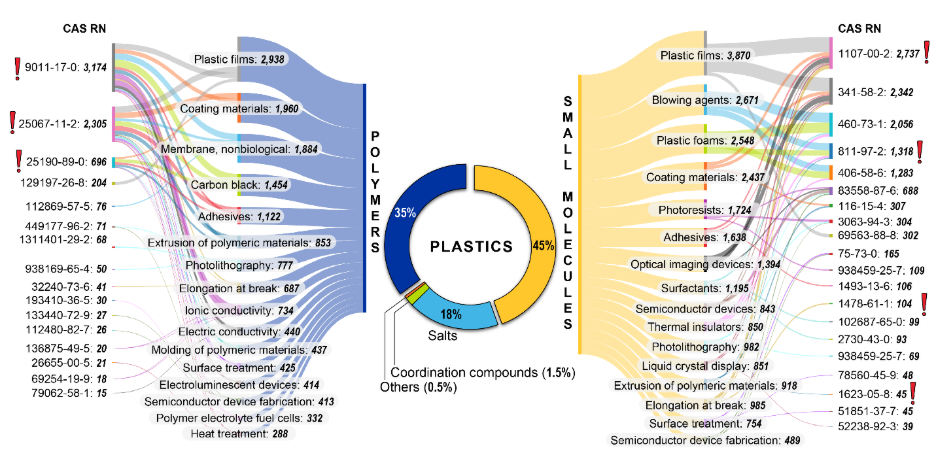
PFAS는 통합되어 향상된 내화학성, 열 안정성, 마찰 감소 등 중요한 성능 특성을 부여하기 위해 다양한 플라스틱 포뮬레이션에 사용됩니다. 그림 8에서 볼 수 있듯이, 저분자 화합물과 고분자가 주요 PFAS 물질 분류입니다.

기존 플라스틱에서 PFAS는 제조 과정 중 플라스틱 표면 간의 접착을 방지하는 이형제 및 안티블로킹 첨가제 역할을 합니다. PFAS는 플라스틱 식품 포장재에 광범위하게 사용되어 왔으며, 발견된 바에 따르면 식품으로 이동하여 인체 노출에 대한 우려를 불러일으키고 있습니다. 식품 포장재의 경우 폴리에틸렌, 실리콘 수지 및 오일과 같은 수많은 대체재가 이미 존재합니다.

Sankey diagram shows PFAS use in plastics, split into polymers, small molecules, salts, and others. Red exclamation marks flag EPA-monitored substances. Pie chart shows small molecules (45%) dominate, followed by polymers (35%) and salts (18%).
그림 8: CAS 섹션 데이터에서 도출된 플라스틱 응용 분야 내 PFAS의 생키(Sankey) 다이어그램. 빨간색 느낌표(!)는 미국 환경보호청(EPA)이 모니터링하는 PFAS 분자를 나타냅니다. 출처: CAS Content Collection.

플라스틱에 자주 사용되는 PFAS 분자의 기능을 파악하기 위해 주요 과학적 개념과 PFAS 물질의 동시 발생을 분석했습니다. 그림 8에서 볼 수 있듯이, 1107-00-2(4,4-(헥사플루오로-이소프로필리덴)디프탈산 무수물) 및 341-58-2(2,2’-비스(트리플루오로메틸)-4,4’-디아미노비페닐)와 같은 일부 PFAS 분자는 플라스틱 필름 및 광학 이미징 장치를 다루는 간행물에서 두드러지게 나타납니다. 9011-17-0(헥사플루오로프로필렌-비닐리덴 플루오라이드 공중합체) 및 25067-11-2(헥사플루오로프로필렌-테트라플루오로에틸렌 공중합체)와 같은 다른 물질은 카본 블랙 혼입, 플라스틱 필름, 코팅 재료 및 멤브레인과 같은 여러 응용 개념 전반에 걸쳐 나타납니다.

기타 응용 분야

CAS Content Collection 내 PFAS 관련 문헌을 분석한 결과, 농약 생체조절제, 에너지 저장 및 변환, 사진 및 방사선, 전자제품(특히 반도체 제조 및 배터리 기술에 사용되는 PFAS), 코팅 및 잉크, 고무 및 합성 엘라스토머, 냉매 및 분리 물질 등 수많은 산업적 응용 분야를 검토했습니다. 이러한 응용 분야 전반에 걸쳐 저분자 물질은 고분자 및 염과 함께 주요 물질 분류 중 하나입니다. 또한 정유 및 화장품, 섬유 및 직물과 같은 소비재 범주에서의 PFAS 물질도 분석했습니다. PFAS는 이러한 응용 분야에서 광범위하게 사용되지만, 해당 범주들은 가장 실행 가능한 대체 물질을 보유하고 있기도 합니다.

문헌상 수치적으로 가장 널리 퍼진 응용 분야는 제약이라는 점에 주목할 필요가 있습니다. 다양한 약물, 약물 운반체, 약물 전달 시스템 및 그 기능 연구와 관련된 PFAS 참조문헌을 포함하는 문서를 약 56만 건 발견했습니다. 그러나 제약 응용 분야의 PFAS 분자는 기술적으로는 OECD의 PFAS 정의를 충족하지만, 일반적으로 다른 장쇄 PFAS 분자와는 다른 화학 구조를 특징으로 합니다. 또한 제약은 의약품에서의 중요한 역할과 현재 비불소화 대체제의 부족으로 인해 PFAS 분자의 “필수적 사용”으로 분류되고 있습니다.

이러한 응용 분야에 대한 심층적인 논의를 원하시면, 전체 보고서를 다운로드하십시오.

PFAS 단계적 퇴출의 과제

당사의 전체 보고서는 PFAS에 대한 전례 없는 분석을 제공하며, 이 중요한 화학 물질군에 대한 이해를 변화시키는 데이터 기반의 관점을 제시합니다. CAS Content Collection에 대한 포괄적인 조사를 통해 PFAS의 세계가 규제 및 과학적 담론에서 일반적으로 이해되는 것보다 훨씬 더 방대하고 구조적으로 다양하다는 사실을 밝혀냈으며, 이는 정책 개발 및 전환 계획에 중요한 시사점을 제공합니다.

분석을 통해 밝혀진 구조-기능 관계는 왜 PFAS가 산업 전반에 깊숙이 통합되었는지를 보여줍니다. 즉, PFAS의 고유한 특성은 응용 요건에 맞춰 조정된 특정 불소 패턴을 통해 의도적으로 설계된 것입니다. 이는 PFAS의 기술적 가치와 적절한 대체제를 찾는 것이 어려운 이유를 설명합니다.  

당사의 글로벌 규제 분석에 따르면, 규제 환경은 서로 다른 속도와 접근 방식으로 파편화되어 진화하고 있습니다. 이는 다국적 기업에 복잡한 규정 준수 환경을 조성하며, 기업들이 다양한 요건에 적응함에 따라 지역별 제조 및 혁신 변화가 일어날 가능성이 높음을 시사합니다. 예를 들어, EU의 포괄적인 접근 방식과 미국의 보다 선별적인 연방 전략 간의 대조는 새롭게 부상하는 우려 화학 물질을 다루는 데 있어 예방 원칙과 위험 기반 규제 사이의 근본적인 긴장을 강조합니다.

미래의 PFAS 환경은 기술 혁신, 규제 진화, 시장 변화 간의 상호 작용에 의해 형성될 것입니다. PFAS 포트폴리오에 대한 구조적 이해를 바탕으로 포괄적이고 응용 분야별 전략을 개발하는 조직이 이러한 복잡한 전환기를 헤쳐 나가는 데 가장 유리한 위치를 점할 것입니다. 기술적 타당성에 대한 증거 기반 평가를 통해 규제 논의에 선제적으로 참여하는 기업들은 환경 및 공중 보건을 보호하는 동시에 핵심 기술을 보존하는 보다 효과적인 정책 접근 방식을 형성하는 데 기여할 것입니다.

보고서 다운로드

Related CAS Insights

__wf_예약_상속

인공 감미료 뒤에 숨겨진 과학 파헤치기

__wf_예약_상속

다기능성 화장품: '만능' 제품의 개발

__wf_예약_상속

카나비노이드 연구의 학계 동향

Gain new perspectives for faster progress directly to your inbox.